Table of Contents >> Show >> Hide
- When Nature Dresses in Neon, It’s Usually Not for You
- Meet the Dutch Photographer Behind the Lens
- Flamboyant But Dangerous: Creatures From the Series
- 1. Poison Dart Frogs: Rainbow Skins, Serious Toxins
- 2. Flamboyant Cuttlefish: A Walking Color Bomb
- 3. Blue-Ringed Octopus: Tiny but Terrifying
- 4. Venomous Snakes in High Definition
- 5. Spiky Lizards and Armored Dragons
- 6. Striking Insects With Serious Hardware
- 7. Underwater Assassins: Cone Snails and Jellyfish
- Why We’re So Obsessed With Beautifully Dangerous Animals
- How Photographers Capture Dangerous Animals Safely
- From Fear to Fascination: What These Photos Teach Us
- What It Feels Like to Stand Behind the Lens (Experience Section)
- Conclusion: Beauty, Danger, and a New Way of Looking
Some animals lurk in the shadows, perfectly camouflaged. Others march through the jungle dressed like they’re
heading to a neon rave. Dutch adventure photographer Matthijs Kuijpers has spent decades chasing
the second group: brilliantly colored, often venomous creatures that blur the line between beauty and danger. His
now-iconic series, featured on Bored Panda, pulls viewers nose-to-nose with poison dart frogs, venomous reptiles,
and other cold-blooded showstoppers, revealing just how dramatic nature can get when survival is on the line.
With a career built over nearly three decades of traveling the world to document rare, surprising, and endangered
cold-blooded animals, Kuijpers doesn’t just photograph wildlife he curates a gallery of evolution’s boldest
experiments. His work taps into something we can’t resist online: high-definition close-ups of animals that are as
dangerous as they are flamboyant, perfectly suited to the visual, scroll-happy world of modern social media.
When Nature Dresses in Neon, It’s Usually Not for You
The star creatures in this 22-photo series are not simply “pretty.” Many of them are walking warning labels. In
biology, this strategy is called aposematism bright, high-contrast colors that signal to would-be
predators: “Eat me and you’ll regret it.” Poison dart frogs, for example, wear electric blues, blazing yellows,
and hot reds precisely because they are full of powerful toxins. Their colors make them easy to remember, which is
exactly the point: one bad experience, and a predator learns to avoid anything that looks remotely similar.
Scientists have shown that these warning colors often evolve gradually, with predators and prey “negotiating” over
countless generations. The more dangerous the animal, the more boldly it can advertise itself. In other words, a
tiny frog that can stop your heart gets to dress like a highlighter. For photographers like Kuijpers, that’s a
dream: strong, saturated colors, complex textures, and the thrill of knowing that, in the wild, this visual drama
doubles as a matter of life and death.
Meet the Dutch Photographer Behind the Lens
Matthijs Kuijpers is not your casual weekend wildlife shooter. Based in the Netherlands, he has dedicated more than
25 years to tracking down rare and often misunderstood creatures, particularly reptiles and amphibians. His
portfolio focuses heavily on animals that many people instinctively fear snakes, frogs, lizards, and other
cold-blooded species that usually get cast as villains in movies and myths.
Instead of leaning into the horror angle, Kuijpers flips the script. His images lean into
portraiture rather than simple documentation. Eyes are razor sharp. Backgrounds are clean and
soft. Colors burst off the screen. He frames a poison dart frog or a viper the way others might frame a celebrity
or fashion model. The result is disarming: you may be looking at one of the most toxic animals on the planet, but
your first reaction is, “Wow, that’s gorgeous.”
This approach mirrors a broader trend in macro and wildlife photography, where photographers aim to
transform fear into fascination. Instead of showing creepy creatures as monsters, they reveal their
delicate structures, vivid patterns, and important roles in fragile ecosystems. For audiences scrolling Bored
Panda, that mix of danger, beauty, and education is irresistible.
Flamboyant But Dangerous: Creatures From the Series
While the Bored Panda feature includes 22 individual images, the animals themselves fall into a few unforgettable
categories. Think of this as a highlight tour of the “cast” the kinds of creatures that make Kuijpers’ work both
thrilling and slightly nerve-wracking to look at.
1. Poison Dart Frogs: Rainbow Skins, Serious Toxins
If there were a fashion week for amphibians, poison dart frogs would own the runway. These tiny frogs from Central
and South America wear combinations of cobalt blue, sunshine yellow, scarlet, and jet black that look almost
hand-painted. Some species are so toxic that indigenous hunters historically used their skin secretions on blow
darts to bring down prey.
Kuijpers’ close-ups capture the glossy texture of their skin and the almost toy-like proportions of their bodies.
The unsettling part? They look harmless even cute until you remember that some species contain enough toxin to
harm multiple humans. Their beauty is literally a do-not-touch sign, rendered in neon.
2. Flamboyant Cuttlefish: A Walking Color Bomb
In the ocean, few creatures are as dramatic as the flamboyant cuttlefish. This small cephalopod flashes purples,
yellows, and whites in pulsing waves across its skin, like a living lava lamp. Those colors can be a mating signal,
a camouflage trick, or a threat display and in this case, the threat is real. The flamboyant cuttlefish is
believed to have toxic flesh, making it a “look, don’t eat” special.
Under Kuijpers’ lens, the cuttlefish becomes pure visual chaos in the best way: ruffled arms, shifting patterns,
and eyes that seem to evaluate you as much as you’re evaluating them. The image is the marine equivalent of a
strobe-lit nightclub, quietly reminding you that not everything dazzling is safe to touch.
3. Blue-Ringed Octopus: Tiny but Terrifying
The blue-ringed octopus is proof that small does not equal harmless. Barely the size of a golf ball, this animal is
one of the most venomous marine species known. When threatened, electric-blue rings flash across its body
nature’s version of a glowing hazard sign. Its neurotoxin can paralyze muscles and interfere with breathing, and
there is no widely available antidote.
Photographs of this species are both mesmerizing and chilling. Those glowing rings are gorgeous in a macro shot,
but they also communicate a hard boundary: admire from afar. In a Kuijpers-style portrait, the blue-ringed octopus
looks almost jewel-like, floating against a dark background, a reminder that danger in the ocean often comes in
very small packages.
4. Venomous Snakes in High Definition
From bright green tree-dwelling snakes coiled like living vines to pit vipers with intricately patterned scales,
venomous snakes are made for close-up photography if you can do it safely. Their eyes, heat-sensing pits, and
overlapping scales create incredible textures. In Kuijpers’ portraits, you can count the individual scales on a
snake’s head and see the faint reflection of light in its eyes.
Snakes in these images often sport warning colors of their own: bands of yellow, black, and red; iridescent sheens;
or stark contrast between their bodies and their surroundings. Even without fangs visible, every viewer instinctively
leans back from the screen proof that our brains have been well-trained to respect a triangular head and a steady,
unblinking gaze.
5. Spiky Lizards and Armored Dragons
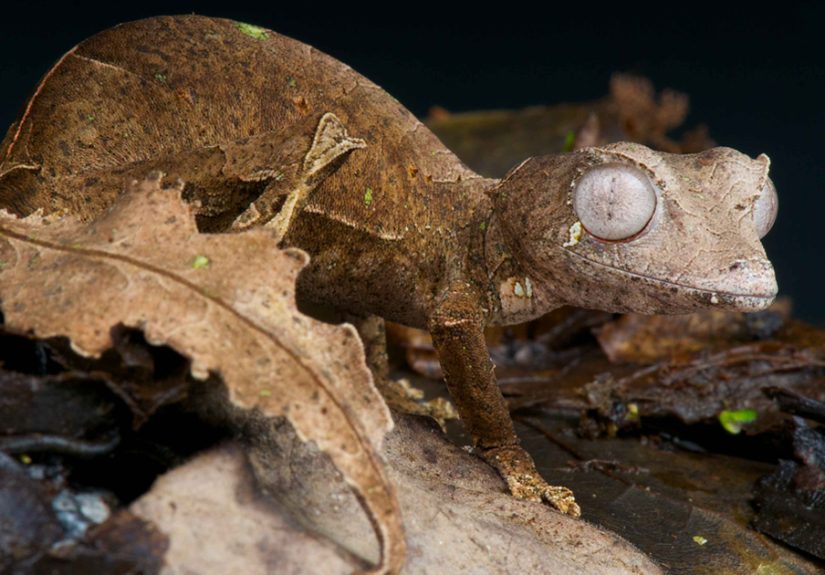
Not all dangerous animals rely on venom. Some are walking medieval weapon racks. Spiny lizards, thorny devils, and
other heavily armored reptiles use their ornate, jagged shapes to deter predators. In macro images, those spikes and
plates look like alien architecture.
Kuijpers’ style emphasizes the sculptural quality of these animals. Strong side lighting brings out the ridges and
shadows, while tight compositions place the viewer right at eye level with a creature that looks like it could star
in a fantasy epic. The message is clear: evolution doesn’t just build efficient survivors sometimes it builds
surreal works of art that happen to be capable of drawing blood.
6. Striking Insects With Serious Hardware
Insects might be small, but many are surprisingly dangerous or at least well-armed. From brightly colored caterpillars
with urticating hairs to beetles and wasps with potent stings, these creatures are easy to overlook until you see
them magnified.
Macro photography reveals domed compound eyes, delicate antennae, and microscopic textures that give each insect
its own character. In the context of Kuijpers’ series, these insects share a visual theme with frogs and reptiles:
flamboyant color patterns that double as warning signals, reminding predators and nosy humans to keep their
distance.
7. Underwater Assassins: Cone Snails and Jellyfish
Some of the most dangerous animals in the world drift through the water with deceptive grace. Cone snails, with
their beautifully patterned shells, can inject venom through a harpoon-like tooth. Certain species are capable of
delivering a sting strong enough to seriously harm or even kill a human. Box jellyfish, meanwhile, are almost
invisible in the water, but their tentacles can cause searing pain and potentially fatal reactions.
In photographs, these animals look ethereal: domes and tendrils glowing in soft light, shells spiraling in perfect
geometry. The contrast between their delicate beauty and their lethality makes them ideal subjects for a series that
celebrates both flamboyance and danger.
Why We’re So Obsessed With Beautifully Dangerous Animals
Scroll through any wildlife photography feed and you’ll notice a pattern: the brightest animals, the sharpest teeth,
and the weirdest shapes always get the most engagement. Humans are wired to pay attention to things that could help
or hurt us, and creatures that look like living caution tape hit both buttons at once.
A series like Kuijpers’ does more than collect likes, though. It challenges our reflex to label some species as
“ugly” or “evil.” A snake or a frog doesn’t become less important because we’re afraid of it. In fact, these
animals often play critical roles in their ecosystems controlling pests, balancing food webs, and acting as early
warning systems for environmental change. When we see them in such lovingly lit detail, it becomes harder to dismiss
them as disposable villains.
How Photographers Capture Dangerous Animals Safely
Getting these kinds of shots is nowhere near as simple as walking up and pointing a camera. Responsible wildlife
photographers operate under a few non-negotiable rules:
- Keep your distance. Long lenses, macro lenses, and sometimes remote camera setups allow
photographers to fill the frame without entering an animal’s comfort (or attack) zone. - Let the animal decide the distance. Ethical photographers avoid chasing, cornering, or
provoking animals. If the subject is stressed heavy breathing, defensive postures, attempts to escape it’s
time to back off. - Know the species. Before a shoot, professionals research the animal’s behavior, venom or
toxin risks, and any legal protections or permits required. Some endangered species can’t be photographed
commercially without official permission. - Prioritize habitat over the shot. Crushing plants, flipping rocks, or disturbing nests just to
get a better angle can do lasting damage. A good photo is never worth harming the ecosystem it comes from. - Work with experts. Many of the most dramatic images you see online were captured with the help
of local guides, herpetologists, or dive professionals who understand how to stay safe and keep the animal safe
too.
The result is a delicate balancing act: get close enough visually to make the viewer feel the animal’s presence,
while staying far enough physically to avoid turning a photo shoot into an emergency.
From Fear to Fascination: What These Photos Teach Us
At their core, these 22 flamboyant portraits are about reframing. Instead of thinking, “Ugh, a poisonous frog,”
the viewer is encouraged to think, “What an incredible, finely tuned survival machine.” The intense colors become a
visual language of evolution: every stripe, spot, and ring has a purpose.
This kind of visual storytelling is powerful for conservation. When people see an animal as beautiful, they’re more
likely to care about the forest, reef, or wetland it depends on. Dangerous animals are often targeted out of fear,
but Kuijpers’ photographs argue that respect not eradication is the healthier response. You don’t have to hold
a venomous snake or pet a toxic frog to admire it. In fact, the most respectful way to appreciate them might be
through a screen, a page, or a gallery wall.
What It Feels Like to Stand Behind the Lens (Experience Section)
Imagine walking into a rainforest at dawn with your camera pack digging into your shoulders. The air is dense,
humid, and buzzing with insect noise. A local guide stops suddenly and points to a leaf at eye level. There, no
bigger than the tip of your thumb, sits a frog glowing like a piece of candy orange, blue, and black, perfectly
still. You know this species is highly toxic. You also know it’s the exact kind of subject you’ve traveled halfway
around the world to photograph.
You crouch down slowly, careful not to shake the branch or slip in the mud. Your heart rate ticks up, not because
the frog is about to attack, but because you’re balancing a tripod, a heavy lens, and your own excitement. Every
tiny movement matters. A single misstep could send the frog bouncing deeper into the foliage, taking your perfect
shot with it.
Through the viewfinder, the world simplifies. The clutter of the jungle melts into soft green blur, and all that
remains is the frog’s glassy eye and patterned skin. You adjust your aperture to get just enough of the animal sharp
while keeping the background dreamy. A droplet of water on the leaf catches the light, forming a tiny, bright
accent. You fire off a few frames, then pause to let the frog breathe and reposition naturally.
On another day, you might be lying flat on a warm rock, camera angled toward a coiled snake in the distance. The
animal is calm, basking. You’re further back than the photo will ever reveal, using a long lens to compress the
perspective. From your vantage point, you can see tongue flicks and slow, steady breathing no signs of stress or
aggression. You wait for the moment when the head lifts just slightly and the light hits the eye. Click. That single
frame might end up being the one that makes people stop mid-scroll.
Underwater, the experience is even more surreal. Hovering above a coral reef, you spot a small shape moving across
the sand: a flamboyant cuttlefish, colors rippling across its skin. You keep your distance, letting the animal
dictate the encounter. With each flashing pattern, you fire the shutter, mindful of your buoyancy so you don’t crash
into fragile corals or stir up sand that could cloud the scene. The ocean is quiet, and for a moment, it feels like
you and the cuttlefish are the only two beings in the world.
Later, back at your laptop, the real magic sinks in. Details you couldn’t fully appreciate in the field leap out at
you on the screen: microscopic ridges on a snake’s scales, subtle gradients in a jellyfish’s bell, reflections in a
frog’s eye that show the forest, the sky, and your own silhouette. You start to understand why so many people say
macro and wildlife photography change the way they see the world. Once you’ve seen how complex a single “scary”
animal really is, it’s hard to go back to thinking of it as just a threat.
Over time, these experiences stack up. You learn to read animal body language, to recognize when a subject is
relaxed or uncomfortable, and to call it a day when conditions aren’t right. You also notice a shift in yourself:
where there was once pure fear, there’s now a mix of caution, respect, and curiosity. The creatures that once made
you shudder become the ones you’re most passionate about protecting. In that sense, every image of a flamboyant,
dangerous animal is also a self-portrait of the photographer’s journey from “no way” to “wow.”
Conclusion: Beauty, Danger, and a New Way of Looking
The 22 images in this Dutch photographer’s Bored Panda feature aren’t just viral eye candy. They’re invitations to
look closer at animals we’re often taught to fear and avoid. Poison dart frogs, flamboyant cuttlefish, venomous
snakes, and tiny but powerful marine hunters all become ambassadors for their species radiant, risky, and
impossible to ignore.
By combining technical skill, ethical fieldwork, and a genuine respect for his subjects, Kuijpers proves that
dangerous animals don’t need to be demonized. They can be appreciated from a safe distance, through a lens that
highlights their role in the bigger story of life on Earth. In a world where so many ecosystems are under pressure,
that shift in perception matters. Sometimes, all it takes to care about a creature is seeing its portrait in the
right light.