Table of Contents >> Show >> Hide
- What Were WWII Death Marches?
- 10 Survivor Accounts That Still Raise the Hair on Your Arms
- 1) Lilly Appelbaum Malnik: From Hiding to AuschwitzThen the Road to Bergen-Belsen
- 2) Lily Mazur Margules: Stutthof’s Shadow and a March That Ended in East Prussia
- 3) Barbara Marton Farkas: Kitchens, Extra Food, and the Thin Edge Between Life and Death
- 4) Sam Itzkowitz: Escape During a Bombing Raid
- 5) Manya Friedman: Evacuated From GleiwitzWalking Into the Unknown
- 6) Morris Rosen: “Forced Evacuation” From Gross-Rosen to Theresienstadt
- 7) Agi Geva: Liberated From a Death March by US Troops
- 8) Irving Roth: Auschwitz to BuchenwaldA March That Broke a Brotherhood
- 9) Gerda Weissmann Klein: Three Months, Thousands of Women, and Fewer Than 150 Left
- 10) Lester Tenney: The Bataan Death MarchA “Transfer” Built to Destroy
- What These Accounts Reveal (Beyond the Horror)
- Conclusion: Why Reading These Stories Still Matters
- Bonus: of “What It Felt Like” (Patterns Survivors Repeated Again and Again)
In the last stretch of World War II, as armies closed in and the Third Reich started wobbling like a folding chair on uneven pavement, the Nazis (and other captors across the war) pushed prisoners onto the roads. These weren’t “relocations” in any normal sense. They were forced marches designed to move human beings like cargoexcept cargo usually gets fed so it doesn’t “expire” mid-shipment.
Survivors of World War II death marches describe a specific kind of horror: not one dramatic moment, but hours stacked on hourshunger, cold, fear, and a relentless demand to keep moving. The phrase “death march” wasn’t a headline invented later; it came from prisoners who had to live it. And what makes the accounts chilling isn’t only the violence. It’s the eerie normality of footsteps, day after day, while the world around them collapsed.
What Were WWII Death Marches?
“Death marches” most often refers to the forced evacuations of concentration camp prisoners in 1944–1945. As Allied forces approached, the SS moved inmates away from campspartly to keep prisoners from being liberated and partly to hide evidence of crimes. In practice, this meant long treks under heavy guard, typically with little food, little water, and brutal punishments for anyone who couldn’t keep up.
The marches weren’t limited to one region. Some started at camp gates; others began after chaotic transfers by rail, ship, or truck. In the Pacific, Allied prisoners of war endured infamous forced marches toomost notably the Bataan Death March. Different locations, different uniforms, same grim math: exhaustion plus cruelty equals mass death.
What follows are ten survivor accountsten people who lived through the world’s worst “road trip,” and later found words for what words can barely hold. Each story is distinct. Together, they sketch the larger truth: survival was never guaranteed, and humanity showed up in flashesin a shared crust, a warning whispered, a hand that pulled someone upright for one more step.
10 Survivor Accounts That Still Raise the Hair on Your Arms
1) Lilly Appelbaum Malnik: From Hiding to AuschwitzThen the Road to Bergen-Belsen
Lilly’s story begins with the kind of wartime improvisation nobody should need: going into hiding and living under a false identity. She managed it for two years, until she was denounced and deported to Auschwitz-Birkenau. When evacuations began, her survival depended on endurancemoving with the march even when every instinct screamed to stop.
Her account carries a brutal lesson about “after.” Liberation didn’t always happen at the roadside with a band playing. In Lilly’s case, the march ended with liberation at Bergen-Belsen by British forcesafter a path that started with betrayal and ran through systematic terror.
2) Lily Mazur Margules: Stutthof’s Shadow and a March That Ended in East Prussia
Lily was forced into the ghetto after the German occupation of Vilna, and later pushed through a chain of camps and labor sitesKaiserwald, Duenawerke, and then Stutthof after a sea transfer across the Baltic. If you’re wondering how someone survives a storyline with that many chapters, the answer is: by focusing on the next page, not the whole book.
Her death march ended in Krumau, East Prussia, in 1945. The specificity matters. Survivors often recall geography like a scar map: not because they love trivia, but because place names became proof that the nightmare was realand that they walked out of it.
3) Barbara Marton Farkas: Kitchens, Extra Food, and the Thin Edge Between Life and Death
Barbara’s path ran from the Oradea ghetto to Auschwitz, where she worked in the kitchensan assignment that could mean slightly more access to food. In a system built to starve people into disappearance, “slightly more” could be the difference between standing and falling.
She was later deported again and forced onto a death march. Toward the end of the war, the Red Cross rescued her. Afterward, she returned to Arad and worked as a biochemistan outcome that feels almost unbelievable until you remember how many survivors rebuilt their lives with a quiet, stubborn insistence: “I’m still here.”
4) Sam Itzkowitz: Escape During a Bombing Raid
Sam’s early war years included flight, return, and entrapmentfleeing occupied Poland, coming back for provisions, then being forced into a ghetto and deported to Auschwitz. As the Soviet army advanced, he and other prisoners were sent deeper into Germany, ending up in the Landsberg area within the Dachau camp system.
His death march story pivots on a split-second opportunity: he escaped during a bombing raid and was later liberated by American forces. It’s a chilling reminder that “survival strategy” sometimes meant being ready for chaosbecause chaos could crack open a door that policy never would.
5) Manya Friedman: Evacuated From GleiwitzWalking Into the Unknown
In January 1945, Manya was evacuated from Gleiwitz, a subcamp of Auschwitz. She describes the confusion at the start: a sudden commotion, orders to move, and no clear information about where they were going. That uncertainty is its own kind of violenceyour body is exhausted, and your mind has to sprint ahead anyway.
The march ended at Ravensbrück. Survivors often describe arriving in darkness, in a new place that still operated by the same brutal rules. The horror wasn’t only the walking. It was learning that the road could lead to another cage.
6) Morris Rosen: “Forced Evacuation” From Gross-Rosen to Theresienstadt
Morris Rosen’s death march began at a Gross-Rosen subcamp in February 1945 and ended at Theresienstadt. His testimony captures the emotional whiplash of those days: rumors about armies moving, sudden halts to work, and the scramble to grab what little could helplike blanketsbefore marching.
Morris’s account also shows how death marches attacked spirit as well as body. People tried to interpret what was happening, to locate meaning or predict outcomes. When you’re being marched at gunpoint, “planning” becomes an act of defiance: a way of insisting your future still exists.
7) Agi Geva: Liberated From a Death March by US Troops
Agi survived Auschwitz-Birkenau and Plaszow, then forced labor in a factory in Calw, Germany. By 1945, the Nazi system was collapsing, but collapse didn’t mean mercy. It often meant more movementmore attempts to keep prisoners from being found alive.
On April 28, 1945, US troops liberated Agi from a death march. That detail matters because liberation was frequently messy: patrols encountering skeletal columns of people, guards scattering, civilians staring, survivors trying to understand whether the nightmare was actually ending.
8) Irving Roth: Auschwitz to BuchenwaldA March That Broke a Brotherhood
Irving Roth and his brother were deported to Auschwitz in 1944. They survived Auschwitzan achievement that should never have had to exist as a sentenceand then endured a death march to Buchenwald.
At Buchenwald, Irving and his brother were separated and never saw each other again. Death marches didn’t only kill with bullets or exposure; they also shredded families and friendships at the exact moment people needed them most. Survival could come with a lifelong echo: “I lived, but we didn’t all live.”
9) Gerda Weissmann Klein: Three Months, Thousands of Women, and Fewer Than 150 Left
Gerda Weissmann Klein’s story is often told through the stark numbers that frame her march: about 2,000 women began, and fewer than 150 survived to be liberated. But numbers aren’t the storythey’re the doorway into it.
She reached liberation at the end of a three-month death march in the hills of southern Czechoslovakia, on the eve of her 21st birthday. Later accounts describe how visibly starvation had marked herdetails that feel almost unreal until you remember the war specialized in making the unreal routine.
10) Lester Tenney: The Bataan Death MarchA “Transfer” Built to Destroy
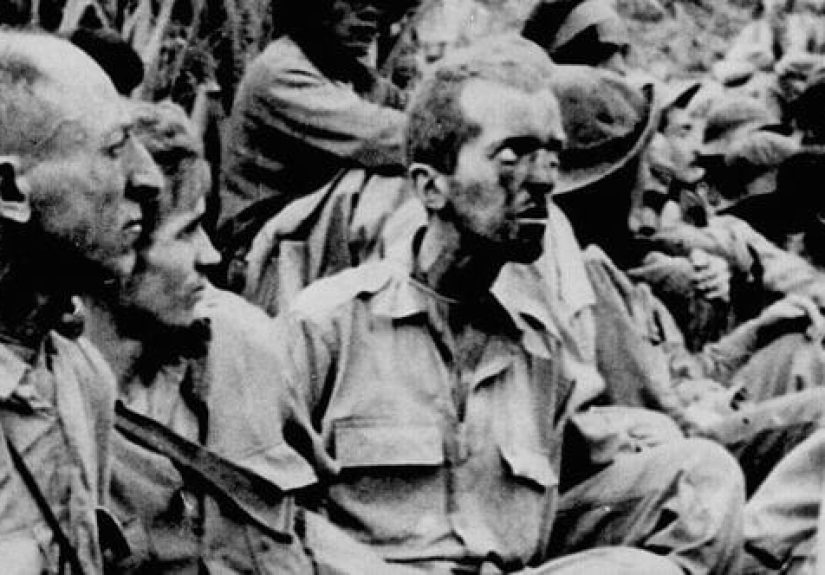
In April 1942, after the Battle of Bataan, Filipino and American troops surrendered and were forced into what became known as the Bataan Death March. Survivors recall the march as a punishing transfer to Camp O’Donnelllong, crowded, and lethal, with little food or water and harsh treatment from guards.
Lester Tenney, a tank commander with the 192nd Tank Battalion, survived the Bataan Death March and later spoke about what came after: more deadly conditions in captivity, transport on “hell ships,” forced labor, and the lingering moral weight of being one of the ones who returned when so many did not.
What These Accounts Reveal (Beyond the Horror)
Death march survivor testimony tends to circle back to a few themes, and they’re strangely practical. Hunger turns time into a stopwatch. Cold turns clothing into policy. And fear turns every decisionshare food or hoard it, help someone up or conserve energyinto a moral exam nobody signed up to take.
Yet survivors also describe moments that don’t fit the Nazis’ intended narrative. People looked out for each other. Some whispered warnings. Others traded tiny skillshow to tie a rag around a foot, how to breathe through panic, how to keep your eyes on the horizon when the horizon felt like a lie.
Conclusion: Why Reading These Stories Still Matters
“WWII death marches” can sound like a history termsomething boxed neatly in a textbook. Survivor accounts refuse that neatness. They show how systems fail, how cruelty becomes administrative, and how survival can be both a victory and a burden.
If you read these stories all the way through, you’ll notice something else: the survivors aren’t only telling us about the past. They’re handing us a measurement tool. When we see dehumanization todayanywherewe can recognize it faster, because we’ve heard what it sounds like when footsteps become a sentence.
Bonus: of “What It Felt Like” (Patterns Survivors Repeated Again and Again)
Survivors often talk about death marches in a way that surprises people: not as one continuous scream, but as a sequence of tiny problems that kept trying to become final. Your feet blister. Then your shoes fail. Then you improvise with cloth, paper, anything. Hunger isn’t just “I’m hungry”; it becomes a constant negotiation with your own thoughts. People describe obsessing over imaginary meals the way modern folks scroll restaurant menus for funexcept this time the craving is your brain trying to keep you alive.
Cold has its own personality on a march. It doesn’t attack like a villain in a movie. It sits on you. It makes your muscles stiff and your judgment sloppy. Survivors describe learning to move in a rhythm: not too fast (you’ll burn out), not too slow (you’ll draw attention). Your body becomes a reluctant accountant, counting calories you don’t have and steps you didn’t agree to take.
One haunting pattern is how quickly “normal” changes. On the road, “normal” might mean that someone who falls behind gets beaten. After enough days, the mind tries to protect itself by filing that away as routinebecause reacting with full horror every time would shatter you. That doesn’t mean survivors stopped caring. It means they were trapped in a world where caring had to be rationed like food.
Another pattern is the role of rumor. People traded information like currency: “The front is near.” “The guards are nervous.” “There’s a town ahead.” Sometimes rumors were wrong. But even wrong rumors could keep someone moving for another hour. Hope, on a death march, often came in bite-sized portions.
Survivors also describe the strange clarity of small kindnesses. A sip of water passed down a line. A stranger sharing a scrap of cloth. A quick warning“Don’t step out of line”that might save your life. These gestures weren’t sentimental. They were tactical compassion: proof that the captors hadn’t fully rewritten the rules of being human.
Liberation, when it came, could feel unreal. Some survivors describe fear even at the moment of rescuebecause “good news” had been a trap before. Others remember the shock of being seen: not as a number, not as a problem to move, but as a person. And then comes the afterlife of survival: rebuilding a body, rebuilding trust, rebuilding language for what happened. Many survivors spent decades telling their stories not because they enjoyed revisiting pain, but because forgetting felt like letting the march continuethis time into silence.