Table of Contents >> Show >> Hide
- What Exactly Is a “Real” Easter Egg?
- 1. Standin’ on a Corner Park – Winslow, Arizona
- 2. Busted Plug Plaza – The World’s Largest Fire Hydrant
- 3. Mopion Island – The Cartoon Desert Island That’s Real
- 4. UFO Welcome Center – Bowman, South Carolina
- 5. Zagreb’s Hidden Solar System – Croatia
- 6. The Desert of Maine – A “Mini Sahara” in New England
- 7. The World’s Smallest Working Post Office – Ochopee, Florida
- 8. The Monster House Window – Boulder, Colorado
- 9. “Homeless Jesus” – Davidson, North Carolina
- 10. Atari’s Buried E.T. Cartridges – Alamogordo, New Mexico
- Turning the World Into Your Own Easter Egg Hunt
- Extra: What It’s Like to Hunt Real Easter Eggs Around the World
In video games and movies, “Easter eggs” are those little hidden jokes,
secret rooms, or sly nods that creators tuck away for obsessives to find.
But you don’t have to sit in front of a screen to go Easter egg hunting.
All over the real world, artists, city planners, and slightly eccentric
geniuses have hidden surprises in plain sighttiny islands, giant fire
hydrants, secret solar systems, and even a buried pile of notoriously bad
video games.
The original Listverse feature “10 Real Easter Eggs Hidden Around The
World” rounded up some of the strangest of these real-world secrets. In
this expanded, updated take, we revisit those same bizarre spots, add
context from travel guides, local news, and museum-style writeups, and show
you how to turn them into your own global scavenger hunt. Think of this as
a travel list, urban legend playlist, and nerdy treasure map all rolled
into one.
What Exactly Is a “Real” Easter Egg?
The term “Easter egg” started in tech and gaming culture to describe
intentional hidden featuressomething you’re not meant to stumble across
unless you’re really paying attention. Over time, fans started using the
phrase for real-life oddities, too: a secret symbol carved into a city
square, a sculpture with a double meaning, or a tiny building that turns
out to be way more important than it looks.
To count as a “real Easter egg” in this list, a place has to check a few
boxes:
- It’s hidden in plain sight (or at least not advertised loudly).
- It has a story, joke, or twist behind it.
- Finding it feels like solving a side quest in a game.
With that in mind, pack your curiosity (and maybe some sunscreen). Here are
ten of the strangest real-world Easter eggsfrom American roadside
oddities to a full solar system secretly tucked into a European capital.
1. Standin’ on a Corner Park – Winslow, Arizona
How a Song Lyric Turned Into a Real-Life Easter Egg
If you’ve ever belted out “Well, I’m standin’ on a corner in Winslow,
Arizona…” you probably assumed it was just a catchy line written for
rhythm. The town of Winslow, however, took that lyric very personally.
Today, there’s an entire mini-park dedicated to that one verse of “Take It
Easy” by the Eagles and Jackson Browne.
Standin’ on a Corner Park features a life-size bronze statue of a
guitar-toting troubadour, a two-story trompe-l’oeil mural with the famous
“girl in a flatbed Ford,” andbecause Route 66 never misses a photo opan
actual vintage truck parked nearby. The park opened in 1999 and has since
become one of the most-photographed stops on the Mother Road. Visitors
line up to literally stand on the painted “corner” and recreate the lyric.
How to Experience It
Winslow is a small town, and the park sits right in the heart of downtown.
You don’t need tickets or a lot of time; you can swing by, snap a few
photos, browse the local shops, and be back on the highway in 20 minutes.
But the Easter egg feeling comes from the moment your brain connects the
lyric you’ve heard a hundred times with a real physical street corner under
your feet. It’s like the universe winked back at classic rock fans.
2. Busted Plug Plaza – The World’s Largest Fire Hydrant
A Giant Inside Joke in Columbia, South Carolina
Public art is often serious, abstract, and quietly labeled with a tiny
plaque. Columbia, South Carolina looked at that tradition and said,
“Actually… what if we built a 40-foot fire hydrant that looks like it was
hit by a giant truck?”
That’s Busted Plug Plaza, a colossal concrete and steel hydrant by local
artist Blue Sky. It weighs hundreds of thousands of pounds, leans at a
wild angle, and used to sit dramatically “leaking” water into a small
pool. For years, drivers would round the corner downtown and suddenly see
this enormous busted hydrant, as if a city for giants had crashed into our
dimension.
Why It’s an Easter Egg
On paper, it’s just public art. In real life, it feels like a joke between
the city and anyone paying attention: a familiar, everyday object blown up
to impossible scale and staged mid-disaster. Recently, the sculpture was
moved from its original spot and now rests in a field outside townanother
weird twist in its story and an even stranger surprise if you happen to
stumble across it on a country drive.
3. Mopion Island – The Cartoon Desert Island That’s Real
The Tiny Caribbean “Easter Egg Island”
Close your eyes and imagine a classic cartoon desert island: a tiny circle
of sand, floating alone in a blue ocean, crowned by a single umbrella or
palm tree. Now open your eyes and head for the Grenadines, because that
place actually exists.
Mopion Island, a pure-sand islet near Petit St. Vincent in the Caribbean,
is barely bigger than a generous living room. There’s no dock, no bar, no
resortjust a single thatched umbrella in the middle of blindingly white
sand. Sailors and resort guests stop here to swim, picnic, or scribble
their names on the umbrella’s wooden pole before the tide and wind reshape
the sand again.
How to Experience It
Mopion is only accessible by boat, usually via a local charter or from
nearby boutique resorts. Step off the dinghy and you’re basically standing
on a travel poster. It’s an Easter egg in the purest sense: a tiny,
almost-imaginary place you’d never find unless you already knew to look.
4. UFO Welcome Center – Bowman, South Carolina
A DIY Spaceport in Someone’s Backyard
Most small towns have a water tower and a church. Bowman, South Carolina
also has a homemade UFO parked in a backyard, built almost entirely by one
man with a lot of scrap materials and even more commitment to the bit.
The UFO Welcome Center is a ramshackle, multi-level flying saucer made of
wood, fiberglass, insulation, and whatever else its creator, Jody
Pendarvis, could get his hands on. The saucer sits up on supports and was
originally designed so the central pod could be raised and lowered by
motors. Inside, there’s a mishmash of wiring, chairs, handwritten signs,
and the vibe of a sci-fi treehouse built by a true believer.
Why It Feels Like a Hidden Easter Egg
This isn’t an official museum or theme park set. It’s literally in a yard
off a rural road. If you didn’t know it was there, you’d drive right past.
But for road-trippers, UFO buffs, and fans of wonderfully eccentric folk
art, it’s like stumbling into a secret levelcomplete with a host who
claims he’s ready to greet extraterrestrial visitors at any moment.
5. Zagreb’s Hidden Solar System – Croatia
The Grounded Sun and the Nine Views
In downtown Zagreb, Croatia, there’s a polished bronze sphere sitting in a
pedestrian street. Many people see it as just a sculpture called
“Grounded Sun.” But in 2004, artist Davor Preis quietly turned it into the
center of a city-sized Easter egg: a perfectly scaled model of the solar
system scattered through town.
The project, known as “Nine Views,” placed tiny metal planets on buildings
and street corners at distances that match their real orbits on a scale of
about 1:680 million. Earth is only a couple of centimeters wide, a short
walk from the bronze sun. Pluto is nearly nine kilometers away, tucked
into a completely different neighborhood.
How to Hunt the Planets
For years, there was no official map; locals slowly discovered the planets
and started sharing their locations online. Even today, tracking them down
feels like a scavenger hunt. You walk the city, follow clues, turn
cornersand suddenly spot a tiny, labeled sphere bolted to a wall. You’re
in the middle of a European capital, but you’re also standing “in orbit.”
It’s one of the most quietly brilliant real-world Easter eggs on Earth.
6. The Desert of Maine – A “Mini Sahara” in New England
When Bad Farming Reveals a Hidden Landscape
New England is known for forests, rocky coasts, and lobsternot dunes.
That’s why the Desert of Maine in Freeport feels so surreal. Tucked in a
piney, green state, this private attraction is an expanse of pale,
wind-rippled sand that looks like someone copied and pasted a chunk of
desert into the wrong climate.
The desert is actually a layer of glacial sand left over from the last ice
age. For centuries, it stayed hidden beneath fertile topsoil. Then a
19th-century farming family overgrazed and exhausted the land, stripping
away the soil and exposing the sand underneath. Over time, the sand spread
until it swallowed fields, fences, and buildings. In the 1920s, a new
owner turned it into a tourist attraction complete with tours, trails, and
quirky props.
Why It’s an Easter Egg
Drive past the entrance and you’d never guess there’s a “desert” inside
the trees. Once you step onto the sand, though, it feels like you’ve
walked through a portal. The Desert of Maine is a geological accident, a
cautionary tale about land use, and a perfect example of the world hiding
something unexpected just below the surfaceliterally.
7. The World’s Smallest Working Post Office – Ochopee, Florida
A Tiny Shed Doing a Big Job
If you saw the Ochopee Post Office from the road, you’d probably assume it
was a toolshed or maybe a roadside fruit stand. In reality, this
61-square-foot building in the Florida Everglades is the smallest working
post office in the United States.
The structure started life as a storage shed on a tomato farm. When the
town’s main store and post office burned down in the early 1950s, the
shed was hastily converted into a replacement. Somehow, the temporary fix
became permanent. Today, a single clerk works inside, handling mail for
local residents (including members of nearby Native communities) and
stamping postcards for busloads of amused tourists.
The Easter Egg Twist
Unlike a typical landmark, the Ochopee post office doesn’t scream “tourist
attraction.” It’s a real piece of infrastructure that just happens to look
like someone shrunk a normal building in the wash. The surprise comes when
you step inside and realize this tiny box genuinely functions as a fully
official U.S. post office, complete with its own ZIP code and daily route.
8. The Monster House Window – Boulder, Colorado
Monsters, Inc. Moves to the Suburbs
Boulder, Colorado is known for hiking trails, craft breweries, and
outdoorsy types in puffy jackets. But in one quiet neighborhood, there’s a
house with a very different claim to fame: two life-sized statues of Mike
Wazowski and James P. “Sulley” Sullivan from Monsters, Inc.
permanently stationed in the front window.
Locals nickname it the “Monster House.” The statues stand right at the
glass, looming over the street like they just stepped out of the movie.
Residents say the figures get seasonal costumesSanta hats, Halloween
sheetsas if the homeowner is fully committed to the bit of living with
two Pixar roommates.
Why It Qualifies as an Easter Egg
There’s no sign and no explanation. You won’t find it on many official
tourism guidesmostly on local forums, social posts, and word of mouth.
It’s the definition of a modern Easter egg: a pop-culture in-joke tucked
inside a regular suburban scene, waiting to startle or delight anyone who
happens to walk past at night.
9. “Homeless Jesus” – Davidson, North Carolina
A Sculpture That People Keep Calling the Cops On
Outside St. Alban’s Episcopal Church in Davidson lies a bronze figure
stretched out on a bench, wrapped in a blanket. At first glance, many
passersby assume it’s a real person sleeping outdoors. Some have even
called the police to report a homeless man in distressonly to discover
it’s a sculpture titled Homeless Jesus.
Created by Canadian artist Timothy Schmalz, the piece shows Jesus as a
unhoused person, identifiable only by the wounds in his feet peeking out
from under the blanket. The parish accepted the piece as a reminder to
care for the marginalized, and it quickly became both a spiritual symbol
and a lightning rod for debate. Some residents loved the honesty of it.
Others found it “creepy” or uncomfortable.
The Hidden Message
As an Easter egg, it’s not “hidden” physicallyanyone can see it. But its
meaning reveals itself slowly. Many visitors only realize it’s Jesus after
reading the plaque or noticing the nail marks. The sculpture flips your
expectations of what a religious statue “should” look like and forces you
to confront how you react to real people in similar situations. It’s a
social Easter egg encoded in bronze.
10. Atari’s Buried E.T. Cartridges – Alamogordo, New Mexico
The Urban Legend That Turned Out to Be True
For decades, gamers swapped a rumor that sounded too perfect to be real:
after the disastrous failure of the Atari 2600 game
E.T. the Extra-Terrestrial in the early 1980s, Atari supposedly
dumped hundreds of thousands of unsold cartridges in a New Mexico landfill
and buried them under concrete. It was the industry’s version of a ghost
storyhalf joke, half cautionary tale.
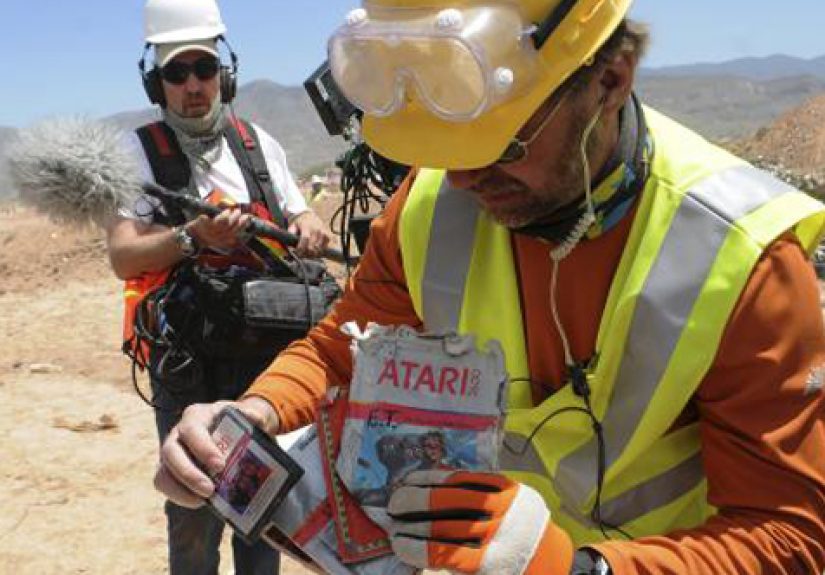
In 2014, a documentary crew and a team of archaeologists actually excavated
the landfill in Alamogordo. To everyone’s delight, they hit a layer of
crushed video games: E.T., Centipede, Missile Command,
and others, still wrapped in old packaging. Only a small portion of the
estimated hundreds of thousands of games could be recovered, but it was
enough to prove the legend true. The dig turned into a nerdy festival,
complete with fans, historians, and the game’s original designer on site.
The Ultimate Real-World Easter Egg
This is a literal Easter egg about Easter eggsa hidden hoard of physical
copies of a famously bad game that, in itself, contains one of early
gaming’s classic digital secrets. Today, some recovered cartridges sit in
museums or private collections, tiny plastic relics of a time when the
video game industry nearly imploded under its own hype.
Turning the World Into Your Own Easter Egg Hunt
Think Like a Game Designer, Travel Like a Player
Once you know these places exist, you start to see the world differently.
A random statue might have a pop-culture reference hidden in it. A small
side street might hold the “secret” angle for a famous selfie. A bronze
ball in the middle of a European city might secretly be the sun in a
citywide solar system.
If you want to chase more real-world Easter eggs:
-
Check local blogs and alternative city guides, not just official tourism
sites. -
Look up “weird landmarks,” “hidden gems,” or “local oddities” for any
place you’re visiting. -
Follow coordinates and clues from fanssometimes Reddit threads and niche
travel blogs are better than any guidebook. -
When something looks slightly “off” or out of place, don’t ignore it.
That’s usually where the side quest starts.
Real Easter eggs aren’t about ticking off another famous monument. They’re
about the joy of discovering something unexpected and feeling, for a
moment, like the world has secret “developer notes” sprinkled through it
just for you.
Extra: What It’s Like to Hunt Real Easter Eggs Around the World
The Standin’-on-a-Corner Moment
Imagine you’ve been on the road all day, the kind of long highway slog
where the playlist loops and the coffee runs out. The Eagles come onof
course they doand as you mumble through “Take It Easy,” your GPS quietly
announces, “Approaching Winslow, Arizona.” You laugh, pull off out of
curiosity, and suddenly you’re literally standing on the corner you’ve
heard about your whole life.
There’s a bronze figure at your side, a mural reflecting a red flatbed
truck, and real traffic humming by. Other travelers you’ve never met are
smiling because they’re in on the same joke. That’s the magic of a real
Easter egg: the feeling that the universe and your playlist secretly
coordinated a surprise just for you.
From Mopion to the Desert of Maine
Now shift scenes. One week you’re stepping off a boat onto Mopion Island,
squinting at a single umbrella in an ocean of turquoise. There’s no bar, no
noiseonly waves, sand, and the sudden awareness of how small and absurdly
lucky you are to be standing on a sandbar that looks like it was doodled
into existence by a cartoonist.
A year later, you’re in Maine, of all places, kicking at sand in the Desert
of Maine while spruce trees lurk at the edge of your vision. You read the
story about glacial silt and overworked farmland, and suddenly this odd
attraction turns into a layered Easter egg: part geology lesson, part
environmental warning, part roadside curiosity. In both cases, you’re on
land that technically “shouldn’t” be therefrom a storybook island to a
misplaced desertand your brain files them under the same tag: secret
level unlocked.
Solar Systems, Tiny Buildings, and Quiet Statements
In Zagreb, the Easter egg is cerebral. You might wander past the Grounded
Sun sculpture without giving it a second thought. But once you learn about
the hidden planets, every walk becomes a hunt. You find a little steel
sphere labeled “Earth” on a street corner, then Mercury further back, then
Mars near a cafe. By the time you track down distant Pluto on the other
side of the city, you’ve memorized half the downtown layout without
realizing it. The city has turned itself into a puzzle, and you’ve solved
it step by step.
Ochopee’s tiny post office, on the other hand, is quietly practical. There
are no quirky signs shouting “World’s Smallest!” when you drive upjust a
small box by the road. The humor is subtle: postal workers doing a very
serious, very real job inside what looks like an elaborate dollhouse. When
you walk away with a postcard bearing that unique postmark, it feels like
you’ve collected a trading card from reality itself.
When an Easter Egg Makes You Think
Not every Easter egg is lighthearted. The Homeless Jesus bench in
Davidson hits differently. You might approach it with the same playful
curiosity you bring to other hidden landmarks, only to realize this one is
aimed straight at your conscience. People have called the police on the
statue, genuinely worried for a stranger sleeping outside. Others sit on
the bench and pray.
That’s a different kind of secret messageless “inside joke,” more
“moral glitch in the matrix.” It reminds you that surprise and discomfort
can live side by side, and that some real-world Easter eggs are meant to
change you, not just entertain you.
The Landfill That Proved the Legend
Finally, there’s the Atari landfill. You don’t have to be a retro gamer to
appreciate how bizarre it is that people once gathered in the desert to
cheer for someone digging up trash. Yet if you watch footage from the
2014 excavation, the mood feels more like a festival than a construction
site. Fans in vintage T-shirts, documentary cameras rolling, and then
suddenlythere it is: crushed cardboard, shattered plastic, and unmistakable
E.T. labels in the dirt.
What they found wasn’t just a pile of cartridges; it was confirmation that
stories we half-assume are myths can sometimes be literal truth. The real
Easter egg wasn’t just in the landfill. It was in the moment everyone
realized, “Wow, they really did this.”
Why These Experiences Stick With You
Years after you visit any of these places, you might forget the nearby
hotel or what you ordered for lunch. But you won’t forget standing on a
lyric, finding a planet the size of a marble, mailing a letter from a
building smaller than your bedroom, or watching a documentary prove that a
legendary failure was so dramatically bad it earned its own archaeological
dig.
Real-world Easter eggs work because they make the planet feel slightly
enchanted. They reward curiosity, reward paying attention, and reward the
kind of traveler who doesn’t just ask, “What’s the top 10 things to do
here?” but also, “What’s hiding in plain sight that nobody puts on a
postcard?” Once you start looking for them, the whole world becomes one
big, open-world gameno console required.