Table of Contents >> Show >> Hide
- 1. Clark Gable and Loretta Young Did Not Just Make a Movie Together
- 2. Joan Crawford Allegedly Appeared in a Stag Film
- 3. Cary Grant and Randolph Scott Were “Just Roommates”
- 4. Rock Hudson’s Marriage Was a Studio Cover Story
- 5. Ingrid Bergman Was Treated Like a Fallen Saint
- 6. Bette Davis and Joan Crawford Hated Each Other Every Waking Second
- 7. Lupe Vélez Died in a Toilet After a Botched Suicide
- 8. Jean Harlow Was Killed by the Very Beauty Regimen That Made Her Famous
- 9. Marilyn Monroe Was Murdered Because She Knew Too Much
- 10. Lana Turner, Not Her Daughter, Really Killed Johnny Stompanato
- Why These Rumors Still Feel Weirdly Modern
The Golden Age of Hollywood sold audiences glamour by the gallon: satin gowns, perfect lighting, divine cheekbones, and stars who always seemed to wake up looking like they had their own wind machine. But behind that polished sheen was a rumor mill with the horsepower of a freight train. Studio publicists, gossip columnists, rival stars, bitter exes, and bored moviegoers all played their part. In Old Hollywood, image was not just important; it was practically a second bloodstream.
That is why the juiciest stories from classic Hollywood still refuse to die. Some whispers turned out to be more or less true. Some were half-true and improved for dramatic effect, because reality simply was not scandalous enough for the people selling newspapers. And some were pure nonsense that clung to stars like cigarette smoke in a velvet banquette. What makes these tales fascinating is not just the shock value. It is the way they reveal how Hollywood really worked: who got protected, who got punished, and who became a legend for reasons that had almost nothing to do with acting.
So dim the lights, cue the orchestra, and keep one eyebrow raised. Here are 10 of the most sordid rumors from the Golden Age of Hollywood, along with the messy truth, the maybe-truth, and the “please stop repeating that at dinner parties” version.
1. Clark Gable and Loretta Young Did Not Just Make a Movie Together
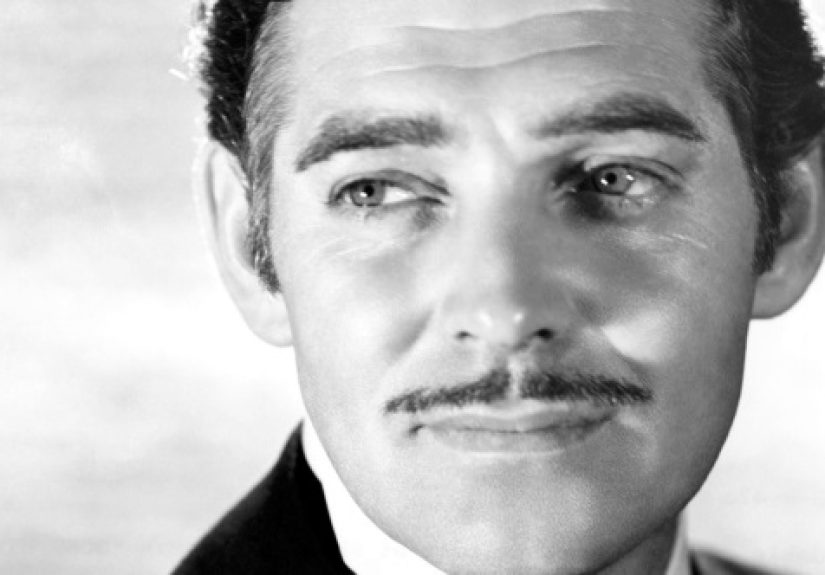
For years, one of Hollywood’s most famous “open secrets” floated through fan magazines and industry chatter: Clark Gable and Loretta Young’s relationship during The Call of the Wild allegedly produced a child. Publicly, Young presented Judy Lewis as an adopted daughter, which fit the era’s obsession with protecting a female star’s wholesome image. Privately, the resemblance between Judy and Gable was the kind of coincidence that makes gossip columnists reach for a fresh typewriter ribbon.
What makes this rumor so potent is that it eventually crossed the line from whisper to accepted history. Judy Lewis later wrote openly about her parentage, turning one of Old Hollywood’s most persistent rumors into one of its clearest examples of studio-era concealment. It was not just a love story hidden from the public. It was a carefully managed illusion designed to protect careers, reputations, and a moral code that always seemed stricter for actresses than for leading men. Old Hollywood loved a romance, but only when the studio approved the ending.
2. Joan Crawford Allegedly Appeared in a Stag Film
If Joan Crawford had a hobby, it was surviving. If Hollywood had a hobby, it was trying to make that harder. One of the nastiest rumors that followed Crawford for decades claimed that before she became a star, she had appeared in an explicit stag film under her birth name, Lucille LeSueur. This rumor had everything scandal culture adores: sex, blackmail, a struggling young actress, and the possibility of studio fixers hustling around Los Angeles with envelopes and threats.
The trouble is that the evidence remains frustratingly murky. Some people close to Crawford claimed such material existed. Crawford herself denied it. Biographers have argued over whether the rumor was rooted in fact, magnified by enemies, or weaponized by family members and blackmailers. No definitive copy has ever emerged in public circulation. That uncertainty is part of what keeps the rumor alive. It is not just about whether the film existed; it is about how easily Hollywood could erase, buy, bury, or deny a story when the star involved was valuable enough. Crawford’s image was built on discipline, polish, and ruthless reinvention. Naturally, rumor culture responded by trying to drag her all the way back to the mud.
3. Cary Grant and Randolph Scott Were “Just Roommates”
Ah yes, the classic Hollywood phrase “just roommates,” which has done more suspicious heavy lifting than a moving company. Cary Grant and Randolph Scott lived together on and off for years, posed for domestic-looking publicity photos, and became the subject of constant speculation about whether their relationship was romantic. Gossip writers hinted. Fans wondered. Hedda Hopper practically turned innuendo into a cardio routine.
Here is the honest version: nobody can prove every emotional or physical detail, and much of the evidence is filtered through biographies, recollections, and a time when queer lives were routinely hidden or rewritten. But the speculation did not come from nowhere. Their shared domestic life, public image, and the homophobic culture surrounding them made them prime targets for rumor. Whether one sees them as lovers, soulmates, intimate companions, or simply two men whose closeness made the public uncomfortable, the rumor says as much about Hollywood’s panic over male intimacy as it does about Grant and Scott themselves. Old Hollywood could show a man riding off a cliff, punching a villain, and kissing the heroine in a hurricane, but two handsome men sharing a home? Suddenly everyone needed smelling salts.
4. Rock Hudson’s Marriage Was a Studio Cover Story
Rock Hudson was marketed as the all-American dreamboat, which made rumors about his private life a direct threat to the fantasy Hollywood was selling. When he married Phyllis Gates, many observers suspected the marriage was less romantic whirlwind and more public-relations fire extinguisher. The idea was simple: if questions about Hudson’s sexuality were getting louder, a traditional marriage might make them quieter.
The rumor endured because it fit the machinery of the studio system almost perfectly. Hudson’s career was built in an era when image management was industrial-grade, and being publicly identified as gay could have ended a leading man’s career overnight. Gates later said she did not know Hudson was gay when they married, while others close to him believed the marriage was arranged by his powerful agent, Henry Willson. That tension is exactly why the rumor remains so compelling. It lives in the gap between personal testimony and the hard reality that classic Hollywood often treated marriage as a prop department extension. In this town, a wedding ring could be jewelry, commitment, camouflage, or all three before lunch.
5. Ingrid Bergman Was Treated Like a Fallen Saint
Sometimes the sordid rumor is not that something happened. It is the moral panic that grows around it like ivy on a mausoleum. Ingrid Bergman’s affair with Roberto Rossellini became an international scandal because America had decided she was not merely a movie star but a kind of secular saint. When the affair became public and she became pregnant, the public reaction was so dramatic that a U.S. senator attacked her on the Senate floor. That is not gossip; that is a national tantrum in formalwear.
The rumor element came in the way Bergman’s image was recast overnight. She was no longer the luminous heroine of Casablanca; she was painted as a symbol of moral collapse. Hollywood and the public alike seemed personally offended that a screen image had turned out to belong to a real woman with a messy personal life. The actual scandal was serious enough, but rumor culture turned Bergman into a warning label. The lesson was brutally simple: if Hollywood gives you a halo, it may yank it off with enough force to take your scalp with it.
6. Bette Davis and Joan Crawford Hated Each Other Every Waking Second
No Old Hollywood rumor roundup is complete without Bette Davis and Joan Crawford, the patron saints of side-eye. Their feud has become so legendary that it now exists in a cartoonishly oversized form: two grande dames allegedly spending every moment plotting each other’s destruction like fur-coated Bond villains. The truth is more interesting. Yes, the rivalry was real. Yes, there were slights, resentments, professional sabotage, and enough ego to knock Earth slightly off its axis. But the feud was also amplified by the publicity ecosystem because audiences adored the spectacle.
That means the most famous version of the Davis-Crawford war is probably both true and overproduced. Their clashes around awards campaigns and the aftermath of What Ever Happened to Baby Jane? were very real, yet the mythology grew because Hollywood loves female rivalry almost as much as it loves a comeback. It flatters the audience into thinking they are seeing behind the curtain while actually watching a more theatrical curtain. The feud survives because it offers everything: talent, vanity, revenge, camp, and the kind of grudge energy that could power a mid-size city.
7. Lupe Vélez Died in a Toilet After a Botched Suicide
This is one of the cruelest Old Hollywood legends ever recycled, and it deserves to be treated with suspicion rather than a smirk. The lurid version says Lupe Vélez staged an elegant suicide, became sick, stumbled into the bathroom, and died with her head in a toilet. It is the sort of story that sounds tailor-made for people who think humiliation is funnier when it happens to women, foreigners, or stars who were never granted full dignity in the first place.
Biographical research has pushed back hard on that version. The more credible accounts say Vélez died in bed after taking Seconal while pregnant and in deep distress. In other words, the famous toilet tale was not just sordid; it was likely false, and it stuck because it turned tragedy into grotesque slapstick. The ugliness of the rumor tells us plenty about how Hollywood remembered certain women: not as complicated artists, but as caricatures available for one last punchline. Vélez deserved better than to become a cruel anecdote with a bathroom punchline attached.
8. Jean Harlow Was Killed by the Very Beauty Regimen That Made Her Famous
Jean Harlow’s death at 26 practically invited rumor. She was the platinum-blonde bombshell, so naturally people began telling themselves that her glamor must have destroyed her. One version claimed her famous hair treatments poisoned her. Another blamed negligence, denial, or bizarre pseudo-medical stubbornness. When a young star dies suddenly, people do not just want an explanation; they want a poetic explanation, preferably one that feels like a moral fable.
But real life is usually less dramatic and more merciless. Harlow died of kidney failure, and later accounts have challenged the most sensational rumors around her death. Still, the beauty-killed-the-beast narrative has proved remarkably sticky. Why? Because Hollywood audiences love stories in which the machine that creates stardom also devours the star. It feels neat, tragic, and mythic. It is also a reminder that rumor often survives because it is emotionally satisfying, not because it is accurate.
9. Marilyn Monroe Was Murdered Because She Knew Too Much
If rumor were an Olympic event, Marilyn Monroe’s death theories would be standing on the podium wearing three medals and waving to the crowd. The official ruling was probable suicide by barbiturate overdose, but speculation began almost immediately and never really packed its bags. Was she involved with John F. Kennedy? Robert F. Kennedy too? Did powerful men help cover up embarrassing relationships? Was there a cover-up without a murder? Was there a murder without proof? Old Hollywood turned into a conspiracy machine the minute Monroe died.
What keeps this rumor alive is not just Monroe’s fame. It is the fact that she sat at the intersection of sex, politics, celebrity, and secrecy. That combination creates endless narrative fuel. Yet even some biographers who believe there was image management or institutional embarrassment stop short of claiming solid proof of murder. In other words, the Monroe mystery may contain smoke without proving a fire of the kind conspiracy culture prefers. But if a star embodied the dangerous collision between private vulnerability and public fantasy, it was Marilyn. She became less a woman in these rumors than a national obsession dressed in sequins.
10. Lana Turner, Not Her Daughter, Really Killed Johnny Stompanato
The killing of Johnny Stompanato, the gangster boyfriend of Lana Turner, was officially ruled a justifiable homicide after Turner’s teenage daughter Cheryl Crane said she stabbed him while defending her mother. That would already be enough drama for six movies and a prestige miniseries. Naturally, rumor culture decided it needed more. A rival theory long suggested that Lana herself actually killed Stompanato and that Cheryl took the blame or was steered into a protective version of events.
Decades later, that alternative theory still resurfaces in books and magazine features. Yet the official account remains the official account, and the case became famous precisely because it blurred the line between household melodrama and tabloid fever dream. Whether people believe the accepted version or the darker alternate one, the story reflects a recurring Hollywood pattern: when beauty, violence, organized crime, and motherhood collide, the public refuses to leave the scene quietly. Lana Turner was not just an actress anymore. She became a glossy screen idol trapped in a crime story that audiences never stopped trying to rewrite.
Why These Rumors Still Feel Weirdly Modern
Spending time with stories like these is a strange experience, because they feel both ancient and extremely current. On one hand, the details belong to another world: gossip columnists with terrifying reach, studio fixers working the shadows, stars whose contracts practically included moral surveillance, and fan magazines acting like glitter-covered intelligence agencies. On the other hand, the mechanics are exactly the same as today. People still turn celebrities into symbols, still confuse image with identity, and still cling to the most dramatic version of events because it is more entertaining than uncertainty.
That is part of the enduring experience of diving into Golden Age Hollywood scandals. You start by expecting camp and old-fashioned gossip, and you end up finding a crash course in media literacy. The stories are delicious, yes, but they are also revealing. Every rumor forces the same questions: Who benefited from this story? Who got shamed by it? Who got protected? Who had the power to bury evidence, and who had the power only to deny, smile, and keep showing up for close-ups? Once you start asking those questions, classic Hollywood stops looking like a fantasy kingdom and starts looking like a brutally efficient branding machine with better lighting.
There is also something oddly intimate about reading these stories now. When modern audiences watch an old Cary Grant comedy or a Joan Crawford melodrama, they are not just watching a performance. They are watching someone who lived under constant narrative attack, strategic reinvention, or suffocating scrutiny. The glamorous surface becomes more impressive, not less. It takes real nerve to project ease when rumor is clawing at the dressing-room door.
And then there is the emotional whiplash. Some rumors are genuinely funny in a wicked, theatrical way, especially when they involve ego wars, dramatic entrances, and all the classy pettiness money could buy. But others are reminders of how cruel celebrity culture can be, especially toward women, queer stars, immigrants, and anyone who did not fit the official template. A false story could become permanent. A private crisis could turn into mass entertainment. A tragedy could be rewritten as a punchline. Once you see that pattern, the laughs get sharper and the sadness gets heavier.
Maybe that is why Golden Age Hollywood gossip remains irresistible. It is not just about scandal. It is about mythology under pressure. It is about what happens when a culture that worships beauty cannot tolerate complexity. The stars were sold as gods, then punished for being human, and finally embalmed in legend. Some of those legends are partly true. Some are nonsense in evening wear. But all of them tell us something about fame, power, desire, and the public appetite for a juicy story that sounds too good not to repeat.
And that, really, is the final trick of Old Hollywood. Even now, long after the spotlights dimmed and the gossip columns faded, the rumors still know how to hit their mark.