Table of Contents >> Show >> Hide
- Before You Tell Anyone: A Quick (Non-Scary) Pre-Game Checklist
- Way 1: The Direct Conversation (In Person or on a Call)
- Way 2: The Written Message (Text, Email, or a Letter)
- Way 3: The “Show-and-Tell” Approach (A Gentle Lead-In)
- Bisexual-Specific FAQs: What People Might Say (and What You Can Say Back)
- If It Doesn’t Go Well: Protect Your Peace Without Losing Yourself
- Conclusion: Your Story, Your Pace
Coming out as bisexual can feel like you’re about to hit “send” on the most personal group chat message of your life.
Your brain is running twenty tabs at once: What if they don’t get it? What if they say something weird?
Do I need a speech? (Good news: you do not need a speech. You also do not need a PowerPoint, confetti cannon, or
dramatic background musicunless that’s your brand.)
Here’s the truth: there’s no single “right” way to tell someone you’re bisexual. The best approach is the one that feels
safest, clearest, and most like you. This guide breaks it down into three practical waysplus what to say, how to
handle common reactions, and how to protect your peace if someone responds poorly.
Before You Tell Anyone: A Quick (Non-Scary) Pre-Game Checklist
Think of this as stretching before a workoutor checking the weather before a road trip. You’re not “overthinking.”
You’re being smart with your heart.
1) Check your safety and your support
- Physical safety: If you have any reason to think someone might react with aggression, it’s okay to wait, choose a different person, or tell them in a safer setting.
- Emotional safety: Even “nice” people can say clumsy things. Plan a reset: a friend you can text, a walk, a comfort show, or an “I’m logging off for tonight” snack.
- Practical safety: If you rely on someone for housing, money, transportation, or school support, consider timing and privacy carefully. You deserve stability.
2) Decide what you want them to know (and what you don’t)
You get to choose how much detail to share. Some people just want to say the label. Some want to explain what bisexuality
means to them. Some are still exploring and want to share that, too.
- You can say “bisexual,” “bi,” “bi+,” “queer,” “pan,” or “I’m still figuring it out.”
- You don’t have to “prove” your identity with dating history.
- You can set boundaries: “I’m not up for questions about my private life.”
3) Pick the right moment
A good time looks like this: you’re not rushed, the other person isn’t distracted, and you can leave (or end the call)
if you need to. A bad time looks like this: during family dinner, right before a big exam, or five seconds before someone
has to run to soccer practice.
Way 1: The Direct Conversation (In Person or on a Call)
This is the classic option: you say it out loud, in real time. It can feel intensebut it’s also straightforward, and you
can read their tone immediately.
Why it works
- Clarity: Your message is less likely to be misunderstood.
- Connection: If they’re supportive, you get that warmth right away.
- Control: You can steer the conversation and set boundaries in the moment.
What to say: simple scripts (pick your flavor)
Short and clear:
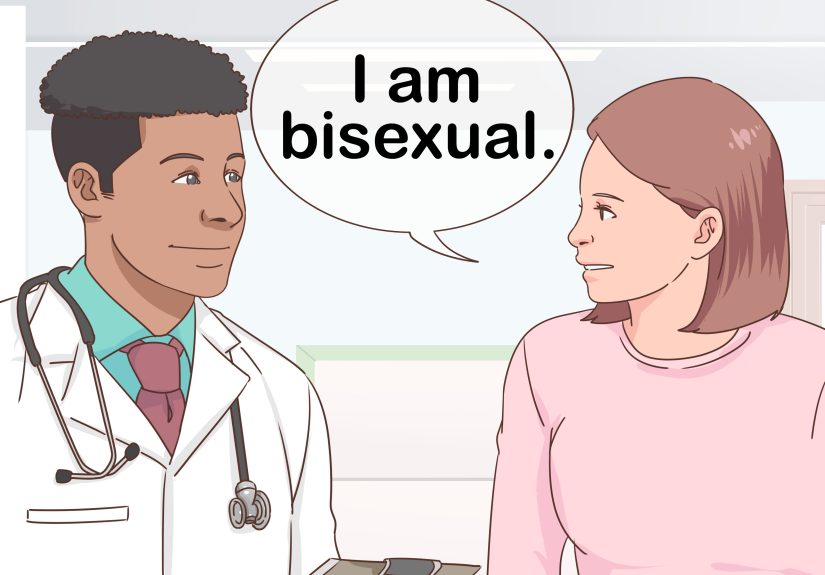
“I want to tell you something important about me. I’m bisexual.”
Warm and personal:
“I trust you, so I want to be honest with you. I’m bisexual, and I’m sharing this because you matter to me.”
Boundary-friendly:
“I’m bisexual. I’m happy to answer a few questions, but I’m not comfortable talking about anything too personal.”
If you’re still exploring:
“I’ve been learning more about myself, and I think I’m bisexual (or somewhere under the bi+ umbrella). I’m still figuring it out, but I wanted to share where I’m at.”
How to handle common real-time reactions
If they say something supportive:
- “Thank you. That means a lot.”
- “I’m really glad I told you.”
If they say something awkward-but-not-mean:
- “I know this might be new for you. I’m telling you because I want you in my life.”
- “You don’t have to have the perfect words. Just respect me.”
If they try to debate you (“Are you sure?”):
- “I’m not asking for permission. I’m sharing something true about me.”
- “I’ve thought about this a lot. I’m sure enough to tell you.”
If they need time:
- “That’s okay. You can take time to process. I’d appreciate kindness while you do.”
Way 2: The Written Message (Text, Email, or a Letter)
If speaking face-to-face feels like stepping onto a stage with a spotlight, writing can feel like turning the lights down
and choosing your words calmly. It’s also great if you’re worried you’ll freeze, cry, laugh, or accidentally start talking
about penguins to avoid the moment. (No judgment. Penguins are fascinating.)
Why it works
- You can edit: Say what you mean without rushing.
- They can process: Some people respond better when they have time to think.
- Less pressure: You’re not managing their reaction in real time.
A copy-and-paste template you can personalize
“Hey, I want to share something personal because I trust you. I’m bisexual. I’m still the same person, and I’m not looking for a big reactionjust respect and support.
If you have questions, I can answer some, but I’d like you to be thoughtful. Thanks for being someone I can be real with.”
Pro move: include a next step
- “If you want to talk later, I’m free after school/work.”
- “If you need time, that’s okayjust let me know you got this.”
- “Please don’t share this with anyone else unless I say it’s okay.”
One practical tip: if you’re nervous about their first response, send the message when you have support lined uplike a friend
on standby, or a moment when you can take a break after. You deserve a soft landing.
Way 3: The “Show-and-Tell” Approach (A Gentle Lead-In)
This approach is like easing into a cold pool instead of cannonballing. You start with something relatedan article, a story,
a celebrity coming out, a school topic, a show plotlinethen you share your own truth when it feels natural.
Why it works
- It tests the waters: You can see how they respond to bisexuality in general.
- It educates without a lecture: It gives context before you make it personal.
- It reduces biphobia “surprises”: You’re not dropping the topic out of nowhere.
Easy ways to start
- Bring up something you saw: “I read something about bisexuality and how people misunderstand it. It really stuck with me.”
- Ask a values question: “What do you think about people coming out? Do you think it’s still a big deal?”
- Use media as a bridge: “This character’s storyline hit me harder than I expected.”
Then make it personal (smooth transition lines)
“Actually… part of why I’m bringing this up is because I’m bisexual.”
“I’ve been thinking about this a lot, and I’m ready to share: I’m bi.”
Set the tone with boundaries (especially helpful for bisexual folks)
Bisexual people sometimes run into specific misconceptionslike being told they’re “confused,” that it’s “a phase,” or that
it’s “just for attention.” You can preempt that with one calm sentence:
- “This isn’t a phase. It’s how I experience attraction.”
- “I’m not asking you to analyze itjust to respect it.”
- “I’m sharing this because I trust you, not because I want a debate.”
Bisexual-Specific FAQs: What People Might Say (and What You Can Say Back)
“So… you’re half gay and half straight?”
Not quite. Bisexuality generally means attraction to more than one gender. It doesn’t require “equal” attraction, and it
doesn’t come with a math test. (If anyone hands you a calculator, you’re allowed to leave.)
You can say: “It just means I can be attracted to more than one gender. It’s not a 50/50 split.”
“But you’ve only dated one gender.”
Dating history isn’t an identity receipt. People can know their orientation before they date anyoneand plenty of straight people
aren’t asked to provide a relationship résumé to be believed.
You can say: “Who I’ve dated doesn’t change who I am.”
“Are you sure you’re not just confused?”
Exploring doesn’t equal confusion, and bisexuality isn’t indecision. Some people’s understanding of themselves becomes clearer over time
that’s growth, not confusion.
You can say: “I’m sharing this because I’m confident enough to name it.”
“Does this mean you’ll cheat?”
Nope. Orientation doesn’t determine character. Attraction is not the same as action, and being capable of attraction to multiple genders
doesn’t mean someone can’t be loyal.
You can say: “Being bisexual doesn’t say anything about my values or how I do relationships.”
If It Doesn’t Go Well: Protect Your Peace Without Losing Yourself
Ideally, people respond with love, curiosity, and respect. Sometimes they do. Sometimes they respond like they’ve never met a human emotion before.
If the reaction is disappointing, that’s painfulbut it doesn’t make your identity less real.
Do these three things first
- Pause: You don’t have to keep arguing. You can say, “I’m going to step away. We can talk later if you can be respectful.”
- Reach for support: Text a trusted friend, talk to a counselor, or connect with an LGBTQ+ support organization or group.
- Recenter: Eat something, shower, take a walk, watch something comfortinganything that reminds your nervous system you’re safe.
Remember: you control your privacy
You get to decide who knows. If you tell one person, that doesn’t give them permission to tell everyone. If privacy matters, say it directly:
“I’m trusting you with this. Please don’t share it with anyone else.”
If you’re not ready to come out (or not to everyone)
That is completely valid. Coming out isn’t a homework assignment you forgot to turn in. You’re allowed to move at your own pace, choose your people,
and prioritize your well-being. Being bisexual is true whether you announce it or not.
Conclusion: Your Story, Your Pace
Telling someone you’re bisexual can be a big momentbut it doesn’t have to be a big performance. Whether you choose a direct conversation,
a thoughtful message, or a gentle lead-in, the goal is the same: share your truth in a way that respects your safety, your boundaries,
and your timing.
The best-case scenario is that the person responds with care and curiosity. If they don’t, that’s a reflection of their understanding,
not your worth. You deserve people who can hold your truth with respect.
Experiences People Often Describe (About )
People who come out as bisexual often say the “before” is the loudest part. The moment can live in your head for daysor monthswhile you
rehearse sentences in the mirror, delete drafts, rewrite drafts, and then suddenly decide the best plan is to become a professional monk who
never speaks again. (Relatable.)
A common experience is starting with the safest person first: a best friend who already gives “I will hype you up in any situation” energy.
Many people describe that first supportive reaction as a physical exhalelike their shoulders drop an inch and they realize they’ve been
carrying a backpack full of stress. Sometimes the friend says exactly the right thing (“Thanks for telling meI’ve got you”).
Sometimes it’s clumsy (“Wait, does that mean you like everyone?”). Even then, people often remember the intent more than the wording.
Another frequent experience is the “bi-specific” misunderstanding. Some bisexual people say they were met with skepticism: a parent insisting
it’s “just a phase,” a friend joking that it’s “for attention,” or someone treating it like a temporary stop on the way to another label.
When that happens, people often describe a strange mix of emotionshurt, frustration, and the urge to over-explain. With time, many learn a
powerful lesson: you can offer a simple explanation once, but you don’t have to become a full-time educator to be valid.
Lots of people share that coming out isn’t one momentit’s a series. You might tell one friend, then a sibling, then a different friend,
then maybe a parent, then maybe nobody for a while because you’re tired and would like to return to your regular scheduled programming.
That stop-and-start rhythm is normal. So is changing your approach: some people love direct conversations, others prefer a message that lets
them choose the words carefully. Many say writing helped them feel brave without feeling cornered.
People also describe the relief of finding language that fitsespecially if they worried they weren’t “bi enough.” Some say they felt pressure
to have a certain relationship history before using the word bisexual, and then realized identity isn’t a permission slip you earn. Others
describe discovering the “bi+” umbrella and feeling seen by labels that emphasize attraction to multiple genders without requiring a perfect
50/50 split.
And finally, many bisexual people talk about the joy of being known. Not by everyonejust by the right people. The moment someone responds with
genuine respect can feel like getting your name pronounced correctly for the first time: small, simple, and surprisingly huge.