Table of Contents >> Show >> Hide
- Why Early Foreshadowing Works So Well
- 1. Skyfall The Opening Credits Quietly Predict M’s Death
- 2. Saving Private Ryan The Prologue Reveals Who Survives
- 3. How I Met Your Mother Tracy’s Name Appears Years Before the Finale
- 4. Back to the Future Doc’s Clocks Preview the Clock Tower Climax
- 5. Forrest Gump The Opening Suitcase Previews Forrest’s Life
- What These Early Twist Reveals Have in Common
- Experience-Based Reflections: Why Rewatching Twist Stories Feels So Good
- Conclusion
- SEO Tags
Note: This article contains major spoilers for Skyfall, Saving Private Ryan, How I Met Your Mother, Back to the Future, and Forrest Gump. Proceed only if your spoiler shield is fully charged.
Great plot twists are usually treated like buried treasure. Writers hide them under layers of misdirection, directors distract us with pretty camera moves, and actors perform emotional cartwheels to keep us looking the wrong way. Then, after two hoursor nine seasonsthe story yanks off the mask and says, “Surprise!”
But some movies and TV shows are sneakier than that. They reveal the truth almost immediately. Not loudly, of course. They do not wave a giant neon sign that says, “The ending is right here, please take notes.” Instead, they tuck the big reveal into an opening credit, a throwaway joke, a background prop, a framing device, or a symbolic image. The audience sees it. The audience ignores it. Later, the audience gasps, rewinds, and mutters, “Oh no. It was there the whole time.”
That is the delicious magic of early foreshadowing. It rewards rewatching, makes the story feel carefully built, and gives viewers the rare pleasure of being fooled by something that was technically not hidden. Below are five movies and shows that give away their big twist right at the startand still manage to make the reveal land beautifully.
Why Early Foreshadowing Works So Well
Foreshadowing is not just a fancy word film students use while wearing black turtlenecks. It is one of storytelling’s most reliable tools. A good opening clue creates a contract with the viewer. The story is saying, “Everything you need is already here, but you will not know how to read it yet.”
The best examples work because the clue has two meanings. On the first viewing, it looks like mood, comedy, set dressing, or theme. On the second viewing, it becomes evidence. A cemetery is not just spooky. A clock is not just cute production design. A name in a sitcom is not just a punchline. Suddenly, the beginning becomes the ending wearing a very convincing fake mustache.
1. Skyfall The Opening Credits Quietly Predict M’s Death
The clue at the start
The James Bond franchise loves stylish opening title sequences. They are full of silhouettes, weapons, water, smoke, dramatic typography, and the occasional visual metaphor that looks like it has been attending expensive therapy. In Skyfall, the title sequence is not just beautiful; it is practically gossiping about the ending.
Early in the credits, Judi Dench’s name appears over imagery connected to graves and death. At first glance, it feels like standard Bond atmosphere: elegant, ominous, and mildly obsessed with mortality. But once you know where the story goes, the image becomes much sharper. The film is preparing us for the death of M, Bond’s stern, brilliant, and quietly vulnerable boss.
The twist it gives away
By the end of Skyfall, Bond and M retreat to Bond’s childhood home, Skyfall, for a final stand against Raoul Silva. The film strips away the sleek spy-world machinery and turns into something more personal: old house, old wounds, old loyalties. During the climax, M is fatally wounded and dies in Bond’s arms.
The opening credits do not simply say, “M is doomed,” but they do dress her name in funereal imagery. It is the kind of clue that passes as style the first time and feels almost indecently obvious the second time. The movie does not cheat. It tells us where we are going. We are just too busy enjoying Adele, Daniel Craig’s cheekbones, and the general luxury of Bond sadness to notice.
Why it works
The reason this early spoiler works is that Skyfall is not only about who lives or dies. It is about legacy. M’s death matters because she represents the old guard, the moral burden of intelligence work, and Bond’s complicated loyalty to authority. The opening titles hint at the funeral, but the emotional meaning of that funeral has to be earned across the whole film.
2. Saving Private Ryan The Prologue Reveals Who Survives
The clue at the start
Saving Private Ryan begins with an elderly veteran visiting a military cemetery with his family. The scene is solemn, quiet, and respectful. Then the film cuts into one of cinema’s most intense depictions of the D-Day landing at Omaha Beach. For much of the movie, viewers are encouraged to assume the old man may be Captain John Miller, played by Tom Hanks, because Miller is the emotional center of the story.
But the opening gives away the answer if you look closely. The elderly man’s connection is not to the Rangers we follow through most of the film. He is Private James Francis Ryan. The mission’s targetthe paratrooper everyone is trying to findis the man standing at the grave in the future.
The twist it gives away
The final reveal confirms that the old man is Ryan. He survived the war, lived a long life, and returned to pay respects to Miller, the man who died helping bring him home. That revelation reframes the opening scene. What seemed like a general tribute becomes deeply specific: Ryan is not just remembering World War II; he is confronting the impossible weight of being saved.
The opening therefore gives away the survival of the title character. We do not know the cost yet, but we know the result. Ryan lives. The suspense shifts from “Will they find him?” to “What will it take?” That is a much heavier question.
Why it works
This is not a cheap trick. In fact, knowing Ryan survives makes the film more tragic, not less. The emotional tension comes from watching Miller’s squad pay a terrible price for a mission that some of them do not even believe is fair. The opening tells us survival is possible. The ending tells us survival can feel like a lifelong debt.
3. How I Met Your Mother Tracy’s Name Appears Years Before the Finale
The clue at the start
For a show built around one giant question, How I Met Your Mother had an almost dangerous habit of teasing its audience. The entire premise is future Ted telling his children the extremely long, wildly detailed, occasionally suspicious story of how he met their mother. Viewers spent years guessing her identity. Was it Victoria? Stella? Zoey? Someone holding a yellow umbrella and emotional baggage?
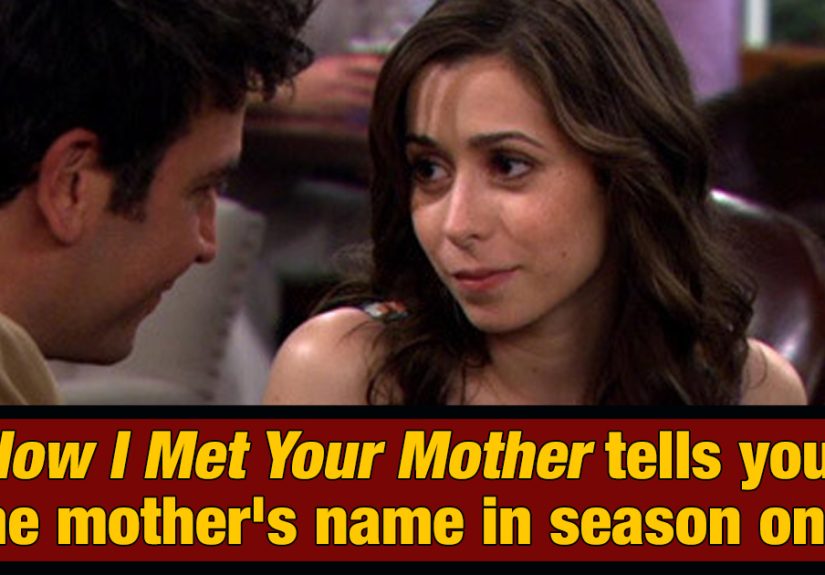
Then, in the season one Thanksgiving episode “Belly Full of Turkey,” the show drops a clue so cheeky it practically deserves its own tiny sitcom. Ted meets a stripper who says her real name is Tracy. Future Ted then tells his kids that this is the true story of how he met their mother. The kids react with shock, and Ted quickly says he is joking.
The twist it gives away
Years later, the series finale reveals that the Mother’s name is Tracy McConnell. That means the season one joke was not just a joke. It was also a real clue hidden inside a fake-out. The children’s shocked reaction suddenly makes more sense: if their mother’s name is Tracy, hearing their dad say he met “Tracy” at a strip club would definitely make them sit up straighter. Family story time had briefly become family emergency time.
What makes this so clever is that the show uses comedy as camouflage. The audience laughs, accepts Ted’s correction, and moves on. After all, sitcoms make throwaway jokes all the time. But this one had a long fuse.
Why it works
The clue works because it is not presented as mythology. It is presented as a gag. In a drama, a mysterious name might feel suspicious. In a sitcom, it feels disposable. How I Met Your Mother used its own format against the viewer, hiding a major answer in the rhythm of a punchline.
4. Back to the Future Doc’s Clocks Preview the Clock Tower Climax
The clue at the start
The opening of Back to the Future is a masterclass in visual storytelling. Before Marty McFly even arrives, the camera tours Doc Brown’s home and shows us clocks, gadgets, dog food, news reports, plutonium clues, and enough eccentric science equipment to make a safety inspector faint into a clipboard.
Among the many clocks is a reference to Harold Lloyd’s famous clock-hanging image from the silent film Safety Last!. It looks like a cute detail, the kind of old-movie joke a filmmaker might toss in for cinema lovers. But it also foreshadows the film’s climax, where Doc Brown hangs from the Hill Valley clock tower while trying to reconnect the cable that will send Marty back to 1985.
The twist it gives away
Back to the Future does not have a dark twist in the same way as a thriller, but it does give away the shape of its ending. The opening tells us that clocks will matter, that time will become physical, and that someone may end up dangling from a clock face in spectacularly stressful fashion.
When Doc finally climbs the clock tower during the lightning storm, the opening reference snaps into place. The movie has already shown us a miniature version of its finale. We just did not know we were looking at a blueprint.
Why it works
This kind of foreshadowing is satisfying because it is playful rather than grim. Back to the Future is built like a Swiss watch wearing high-top sneakers. Every setup pays off. Every joke has a second job. The clock imagery at the beginning does not spoil the fun; it makes the ending feel inevitable in the best possible way.
5. Forrest Gump The Opening Suitcase Previews Forrest’s Life
The clue at the start
Forrest Gump begins with a feather floating gently through the air before landing near Forrest, who sits on a bench with a suitcase and a box of chocolates. It is one of those openings that seems purely symbolic at first. The feather suggests fate, chance, innocence, and the strange way life carries people into places they never planned to go.
But the scene also gives away key pieces of Forrest’s journey. When Forrest opens his suitcase, we glimpse objects connected to major chapters of his life: a ping-pong paddle, references to Bubba Gump shrimping, and the Curious George book that links childhood, memory, and the next generation. Even his muddy shoes point back to the famous running sequence.
The twist it gives away
The “twist” in Forrest Gump is not one shocking revelation. It is the realization that the quiet man on the bench has already lived an unbelievably large life. The opening does not tell his story in dialogue; it displays it in objects. His suitcase is basically a portable spoiler cabinet.
On first viewing, the items feel like random personal belongings. On rewatch, they become chapter markers. The movie is telling us, from the start, that Forrest has been a soldier, athlete, friend, businessman, runner, son, father, and witness to American history. The feather may drift, but the film’s structure is carefully packed.
Why it works
This opening works because it matches Forrest’s personality. He does not announce himself as extraordinary. He simply sits down and starts talking. The clues in the suitcase do the same thing. They do not brag. They wait patiently for the story to catch up.
What These Early Twist Reveals Have in Common
These five examples may come from different genresspy thriller, war drama, sitcom, sci-fi comedy, and sentimental epicbut they all use the same storytelling principle: the beginning becomes more meaningful after the ending. That is a powerful design choice because it turns the audience into a detective on the second viewing.
In Skyfall, the clue is visual and symbolic. In Saving Private Ryan, it is hidden in the framing device. In How I Met Your Mother, it is buried inside a joke. In Back to the Future, it is production design. In Forrest Gump, it is a collection of personal objects. Each story gives away something important, but none of them ruins itself. Why? Because a twist is not only about information. It is about emotional timing.
Knowing that M will die does not tell us how Bond will feel. Knowing Ryan survives does not tell us what Miller’s sacrifice will mean. Knowing the Mother’s name does not tell us how audiences will react to the finale. Knowing Doc will hang from a clock does not make the lightning storm less fun. Knowing Forrest has a ping-pong paddle does not explain the wild, tender, strange life behind it.
Experience-Based Reflections: Why Rewatching Twist Stories Feels So Good
There is a special kind of joy in rewatching a movie or show after you know the big reveal. The first viewing is about surprise. The second viewing is about proof. You stop asking, “What happens next?” and start asking, “How did they hide this from me while showing it directly to my face?” It is humbling. It is also slightly annoying, like losing a chess match to a pigeon that turns out to be a grandmaster.
From a viewer’s experience, early foreshadowing creates one of the strongest forms of trust between audience and storyteller. When a twist comes out of nowhere, it may shock us, but it can also feel random. When the twist was planted from the beginning, the reveal feels earned. We may not have solved the puzzle, but we can see that the puzzle was fair. That fairness matters. It is the difference between a magician performing a brilliant trick and someone simply turning off the lights and stealing your wallet.
Movies like Back to the Future are especially satisfying because every visual detail seems to have a purpose. Watching the opening again feels like opening a drawer full of tiny promises. The clocks are not just clocks. The news report is not just background noise. Doc’s chaotic home is not just a funny mess; it is a map of the story’s mechanics. That kind of rewatch value is one reason the film still feels fresh decades later.
With How I Met Your Mother, the experience is different. TV stretches time. A clue planted in season one may not pay off until years later, when the audience has changed, the culture has changed, and half the viewers have developed strong opinions about whether Ted Mosby should be allowed near a blue French horn. The Tracy clue works because it feels casual. It reminds us that long-form storytelling can hide secrets in plain sight, then wait patiently while fans build entire theory civilizations around everything else.
Saving Private Ryan shows that giving away an ending does not destroy suspense when the real subject is moral weight. Many viewers remember the opening cemetery scene emotionally before they understand it structurally. On rewatch, the scene becomes almost unbearable because you know exactly whose grave Ryan is visiting and why he asks whether he has lived a good life. The answer matters because the film has already shown the cost of his survival.
Skyfall offers another lesson: style can carry story. Title sequences are easy to treat as decorative, especially in franchise films where they are part of the ritual. But the best openings are not wallpaper. They are overtures. They introduce images, anxieties, and symbols that the movie will later develop. Once you notice M’s death imagery, the opening titles feel less like a music video and more like a prophecy in designer clothing.
And then there is Forrest Gump, where the experience of rewatching is softer. The suitcase clues do not scream, “Plot twist!” They whisper, “This life has already happened.” That is fitting for a movie about chance, memory, and storytelling. Forrest carries his history with him, literally and emotionally. The audience just needs time to understand what each object means.
For writers, filmmakers, bloggers, and serious movie fans, these examples offer a valuable lesson: a twist does not have to be hidden in darkness. Sometimes the boldest move is to place it in the opening scene and trust the audience not to recognize it yet. The trick is context. A clue without context looks harmless. A clue with context becomes unforgettable.
That is why these movies and shows remain fun to discuss. They prove that spoilers are not always outside the story. Sometimes the story spoils itself on purposeand somehow, that makes the ending even better.
Conclusion
The best early twist reveals are not mistakes. They are invitations. Skyfall, Saving Private Ryan, How I Met Your Mother, Back to the Future, and Forrest Gump all show how smart storytelling can hide major answers in plain sight. Whether the clue is a graveyard image, a veteran’s identity, a suspicious name, a clock gag, or a suitcase full of life chapters, each example proves that beginnings matter more than we think.
These stories do not lose power because they reveal too much early. They gain power because the reveal changes how we understand everything that came before. That is the beauty of great foreshadowing: it lets the audience be wrong honestly, then rewards them for coming back and looking again.