Table of Contents >> Show >> Hide
Few questions can humble a human ego faster than this one: what, exactly, happens after death? We can launch rockets, build artificial intelligence, and argue about oat milk with terrifying confidence, yet this one mystery still sends us back to philosophy, religion, medicine, memory, and, naturally, the internet comment section.
That is exactly why a viral online thread about what happens after we die struck such a nerve. The 54 replies collected from it were funny, bleak, hopeful, oddly poetic, and very online. Some people imagined absolute nothingness. Some pictured heaven, hell, or a private paradise. Others went full gamer mode and suggested spectator mode, a transfer to another universe, or a cosmic reset button. One answer basically treated the afterlife like a metaphysical recycling program. Another sounded like the universe had been written by an overcaffeinated screenwriter at 3 a.m. Honestly? Respect.
What makes the thread so fascinating is not whether any one answer is “correct.” It is how neatly these guesses reveal the way people think about mortality. Strip away the jokes, and most of the responses are really about fear, love, unfinished business, memory, and the stubborn hope that existence means more than a hard shutdown.
Why This Question Refuses To Die Online
The internet loves mysteries, but this one is personal. Questions about the afterlife are not trivia-night material. They show up when people lose a parent, survive a medical scare, sit beside a hospice bed, or suddenly realize that being alive is both amazing and wildly temporary.
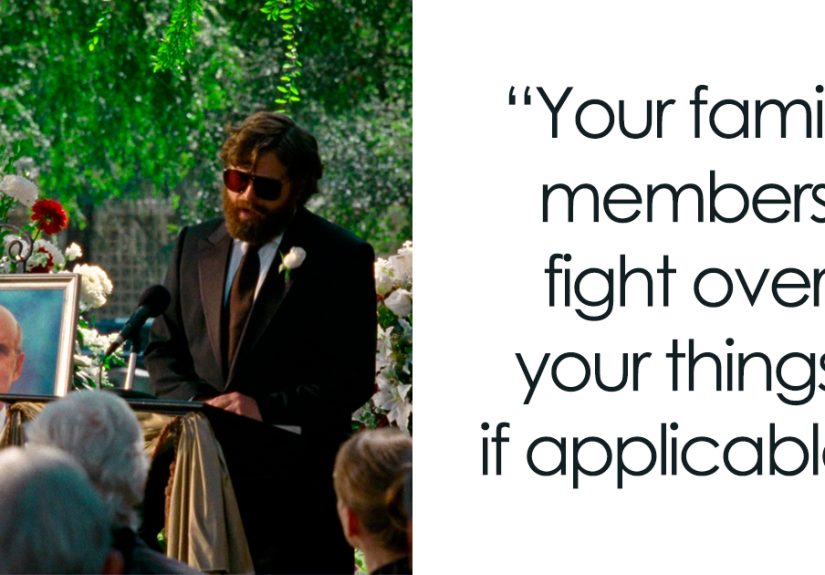
That emotional tension explains why online discussions about death tend to swing between two extremes: dead-serious reflection and chaos goblin humor. In one breath, people say they hope to see loved ones again. In the next, they joke that the real afterlife is relatives selling your stuff for far less than you paid for it. Dark? Yes. Human? Also yes.
And Americans are hardly indifferent to the topic. Belief in some kind of afterlife remains mainstream, which means every debate about death is also a debate about religion, spirituality, science, identity, and what counts as a meaningful life. Even people who do not subscribe to formal religion often build their own patchwork theories from memory, personal experience, philosophy, and vibes. A lot of vibes.
What The 54 Guesses Really Boil Down To
If you zoom out, the 54 speculations in the thread can be grouped into a handful of major afterlife theories. Different wording, same existential playlist.
1. The Hard-Stop Theory: Nothingness
This was one of the most common positions in the thread, and it is probably the bluntest. No pearly gates. No life review. No cosmic customer service desk. Just nonexistence. For some people, that idea is terrifying. For others, it is deeply comforting. No stress. No deadlines. No awkward family group chats. Just the end.
What is interesting is how often “nothingness” was described not as horror, but as peace. The logic is simple: if consciousness ends, then fear ends with it. You do not suffer the absence of experience because there is no “you” left to register the absence. It is a cold theory, but not always a cruel one.
2. The Reunion Theory: Heaven, Hell, Or Some Better Neighborhood
Another cluster of responses leaned into the classic religious framework: judgment, reunion, paradise, punishment, or some combination of the above. This theory survives because it answers emotional questions that science does not try to answer. Will love continue? Will justice be done? Will grief be reversed? Will the story make sense at the end?
Even commenters who doubted organized religion still seemed drawn to a softer version of this view. Not necessarily a theological heaven with official architecture, but some kind of place or state where relationships continue and the people we miss are not truly lost. The idea may be impossible to prove, but emotionally, it does heavy lifting.
3. The Recycling Theory: Reincarnation, Stardust, And Cosmic Reuse
Some of the thread’s most poetic answers imagined death as transformation rather than termination. Maybe consciousness returns in another form. Maybe we become part of the universe again. Maybe whatever makes us “us” dissolves, disperses, and recombines. This is where the language gets beautiful fast: energy, dust, cycles, return, renewal.
The appeal here is obvious. Recycling theories offer continuity without demanding a literal heaven. You do not need a throne room in the sky. You just need the assurance that death is not a total deletion but a change in state. To many people, that feels both spiritually rich and intellectually less rigid.
4. The Gamer Theory: Spectator Mode, Simulation Reset, Universe Hop
Because this is the internet, several answers treated death like a software event. Maybe you respawn. Maybe you get moved to spectator mode. Maybe you transfer to a timeline where you did not die. Maybe reality is a simulation and death is just logging out of the current level. Somewhere, a philosopher fainted and a Redditor got 4,000 upvotes.
These responses may sound playful, but they reflect a real modern instinct: we increasingly borrow the language of technology to describe consciousness. When religion loses cultural monopoly, metaphysics gets rewritten by gaming, science fiction, and quantum-flavored imagination. The result is half joke, half worldview.
5. The Legacy Theory: You Continue In Memory
Some replies sidestepped the supernatural entirely. Their point was simple: what happens after death is whatever happens in the lives you touched. Your body ends, but your influence does not. People remember your jokes, your kindness, your mistakes, your recipes, your stubborn opinions about thermostats. You continue in stories, habits, and consequences.
That may sound less dramatic than reincarnation or heaven, but it has a quiet power. It places meaning not in what happens after death, but in how you live before it. In other words, the afterlife might just be the long echo of an ordinary life lived well.
What Science Can Say, And What It Cannot
Science is very good at describing the physical process of dying. It can talk about organ failure, loss of circulation, declining oxygen, changes in brain activity, and the ways the body gradually shuts down. It can define death medically and legally. It can study patients who were resuscitated after cardiac arrest and ask what they remember. What it cannot do, at least not yet, is prove a soul, disprove one, or settle metaphysics once and for all.
That distinction matters. A lot. Medicine can describe dying; it cannot hand us a final answer about meaning.
Researchers studying near-death experiences have found that some people report vivid, life-changing perceptions during moments of extreme physiological crisis. These accounts often include peace, bright light, detachment from the body, unusual clarity, or a sense of encountering something vast. Scientists continue to debate what produces these reports. Some researchers focus on altered brain chemistry and oxygen deprivation. Others study unusual surges of brain activity close to death. The evidence is intriguing, but it is not a signed affidavit from the afterlife.
That is why the most honest scientific position is also the least dramatic: something meaningful seems to happen in some people’s subjective experience near death, but we do not yet know exactly what those experiences mean. Not satisfying, perhaps. But honest.
Why These Speculations Matter More Than They Seem
It would be easy to dismiss a thread like this as just another late-night internet spiral. But the guesses reveal something deeper. People are not only asking what happens after death. They are asking what makes life matter before death.
Someone who hopes for reunion is telling you love feels too important to vanish. Someone who prefers nothingness may be telling you peace matters more than immortality. Someone who imagines reincarnation may be drawn to justice, second chances, or cosmic continuity. Someone joking about spectator mode might be using humor to handle fear without letting fear win.
Even grief itself changes the way people answer the question. After losing someone, many people report feeling a continued bond with the dead, not necessarily as a ghost story, but as an ongoing relationship in memory, ritual, and identity. You keep talking to them in your head. You hear their phrases in your own voice. You become the person they helped shape. Death ends a life, but not necessarily a connection.
That is one reason end-of-life care today often includes more than symptom control. The best care recognizes that dying is not just biological. It is emotional, spiritual, relational, and practical all at once. People want pain relief, yes, but they also want dignity, comfort, meaning, and often a chance to say what still needs saying.
Experiences Related To Death That Keep This Question Alive
If the 54 guesses in the thread are the theories, then real-world experiences are the fuel that keeps those theories going. Again and again, people come back to stories: stories from intensive care units, hospice rooms, family living rooms, and hospital hallways at impossible hours when time feels strange and everybody whispers, even when no one asked them to.
Near-death experiences are probably the best-known example. A person’s heart stops. They are resuscitated. Later, they describe a sense of peace, a bright environment, a powerful presence, or a feeling of watching events from outside themselves. These reports do not prove an afterlife, but they do explain why so many people remain unconvinced by a purely mechanical story of consciousness. When a person says, “I was not just unconscious; I experienced something,” that tends to stay with everyone who hears it.
Then there is terminal lucidity, one of the most emotionally disorienting experiences families report. A loved one who has been confused, withdrawn, or unresponsive suddenly becomes clear again. They recognize relatives. They ask for water. They say something coherent, tender, or unexpectedly funny. For a few minutes or a few hours, they seem startlingly like themselves. Then the window closes. Clinicians still do not fully understand why this happens, but for families, it can feel miraculous and heartbreaking at the same time. It also tends to reshape how people think about mind, memory, and what remains hidden inside a fading brain.
There are also the quieter experiences that never make headlines. People dream vividly about someone who died and wake up feeling they were truly visited. A widower hears his wife’s favorite phrase in his mind at the exact moment he needs courage. Adult children sorting through a parent’s belongings feel, with unreasonable certainty, that the person is somehow present in the room. Skeptics call these products of grief. Believers call them signs. Most people, if they are being honest, live somewhere in between.
Hospice workers and palliative care clinicians often describe another pattern: when death is near, what matters most becomes surprisingly clear. People talk less about status and more about relationships. Less about achievement and more about comfort, forgiveness, gratitude, and presence. Even when no one knows what comes next, the final chapter often strips life down to its essentials. That alone can make death feel less like an abstract horror and more like a mirror held up to the living.
And grief itself creates experiences that are hard to reduce to neat categories. It affects sleep, appetite, concentration, mood, and even the body’s stress response. In that state, people do not just think about death intellectually. They feel around its edges. They negotiate with it. They reinterpret old memories through it. So when someone says, “I think we become stardust,” or “I think we just go dark,” or “I think the people we love are waiting,” that statement is rarely just a theory. It is often a coping mechanism, a prayer, a philosophy, or an emotional survival tool wearing a clever outfit.
That may be the most revealing experience of all: the fact that human beings keep making meaning, even at the edge of the unknowable. Especially there.
Final Thoughts
The online thread behind these 54 guesses did not solve the mystery of death. It did something more useful: it showed how people try to live with the mystery. Some answers were serious. Some were absurd. Some were touching enough to make you stare into space for a minute and forget why you opened the tab in the first place.
In the end, the most compelling thing about these speculations is not whether they are correct. It is that every theory about death doubles as a theory about life. If you think there is nothing, maybe peace matters. If you think there is judgment, maybe morality matters. If you think there is reunion, maybe love matters most. If you think the only afterlife is memory, then kindness, art, family, and the way you show up for other people matter more than ever.
So no, we still do not know what happens after death. But the 54 guesses from this online thread make one thing clear: humans are meaning-making creatures to the very end. We may not agree on what comes next, but we are united in refusing to believe that the question is too important not to ask.
And maybe that is the most human answer of all.