Table of Contents >> Show >> Hide
- Before You Choose a Garden Plan: Set Yourself Up to Win
- Plan #1: The “I Just Want It to Work” 4' x 8' Beginner Raised Bed
- Plan #2: The Salad-Bar Garden (4' x 4' Bed or a Cluster of Containers)
- Plan #3: The 4' x 4' Salsa Garden (Because Chips Need a Purpose)
- Plan #4: The Pizza (or Pasta) Garden in a 4' x 8' Bed
- Plan #5: The Three Sisters Garden (A Classic Companion-Planting Plot)
- Plan #6: The “Eat All Summer” Rotation + Succession Garden (3 Beds or 4 Blocks)
- How to Pick the Right Vegetable Garden Plan for You
- Extra: of Real-World Garden Experience (The Stuff People Learn the Hard Way)
- Conclusion: Your Best Garden Plan Is the One You’ll Actually Use
If you’ve ever stood in the produce aisle holding a limp bunch of “fresh” herbs and thought,
I could grow a better life than thiswelcome. Growing your own food is part practicality,
part therapy, and part comedy (because a squirrel will absolutely judge your tomato choices).
The good news: you don’t need a farm, fancy gear, or a degree in Plant Whispering.
You need a workable layout, realistic crops, and a plan that matches your space and attention span.
This guide shares six tried-and-true vegetable garden plansfrom a beginner-friendly raised bed
to a salsa garden that basically begs for tortilla chips. Each plan includes a suggested size,
a crop list, a simple layout, and the logic behind it so you can tweak it for your climate,
your household, and your taste buds. We’ll also cover the “before you plant” basics
(sun, soil, water, and timing), because even the best garden layout can’t outsmart shade and hard clay.
Before You Choose a Garden Plan: Set Yourself Up to Win
1) Sunlight: Your vegetables are solar-powered
Most fruiting vegetables (tomatoes, peppers, cucumbers, squash) want full sunthink 6+ hours of direct light.
Leafy greens and some roots can tolerate a bit less, but if your garden spot is shady,
pick a plan heavy on greens, herbs, and quick spring/fall crops.
2) Soil: Test it once, guess less forever
If you do one “responsible adult” thing for your garden, make it a soil test. It tells you pH and nutrients,
and helps you avoid the classic move of throwing random fertilizer at the problem like it’s confetti.
Many vegetables perform best in slightly acidic to near-neutral soil. If your soil is wildly off,
raised beds and containers let you “import” good soil and get growing sooner.
3) Water: Consistency beats heroics
Vegetables like steady moisture. Translation: deep watering on a schedule beats occasional flood-then-forget routines.
Raised beds drain faster; containers dry out fastest. If you’re busy or forgetful (no shame),
choose a plan that works well with drip irrigation, soaker hoses, or self-watering containers.
4) Timing: Plant what matches your season
Cool-season crops (lettuce, spinach, radishes, peas) prefer spring/fall. Warm-season crops
(tomatoes, peppers, beans, squash) want warmer soil and stable temperatures. Use a local planting calendar
and your average frost dates to time sowing and transplanting. A smart plan isn’t just where things goit’s when.
Plan #1: The “I Just Want It to Work” 4′ x 8′ Beginner Raised Bed
This is the classic starter: big enough to grow real food, small enough to manage, and shaped so you can reach the middle
without performing interpretive yoga. The strategy: put tall crops on the north side (so they don’t shade everything),
add a trellis for vertical space, and mix quick harvests with a few “anchor” plants.
Best for
- New gardeners who want a reliable first season
- Small yards and raised-bed setups
- Families who want a little bit of everything
Suggested crop list
- 1–2 tomatoes (caged or trellised)
- 2 peppers
- 1 trellis crop: cucumbers or pole beans
- Carrots or beets (a small block)
- Leaf lettuce (succession-planted)
- Green onions/scallions
- Basil or parsley near tomatoes
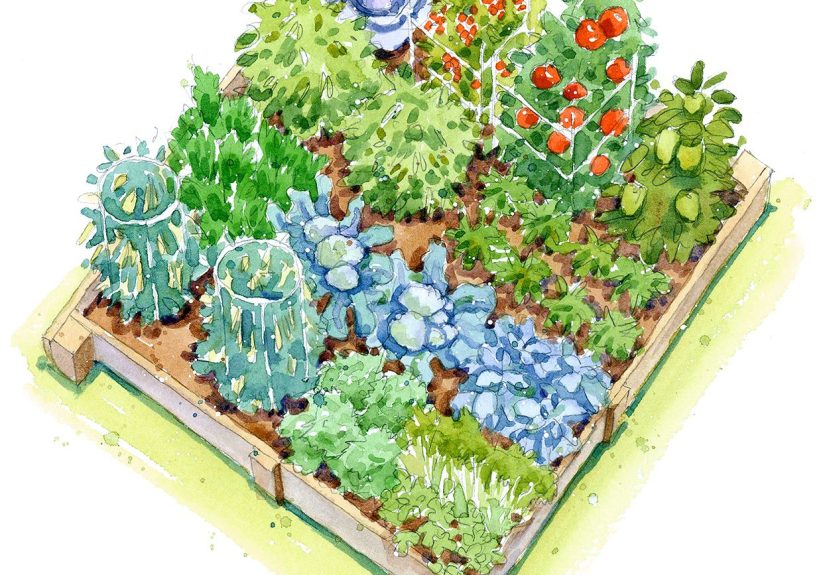
Simple layout (top view)
Why this works: tomatoes and a trellis crop produce for months; peppers keep coming if you keep picking;
carrots, scallions, and lettuce give you fast wins and frequent harvests. If your summer is brutally hot,
swap some lettuce for heat-tolerant greens (or plan lettuce for spring/fall instead).
Plan #2: The Salad-Bar Garden (4′ x 4′ Bed or a Cluster of Containers)
If your dream is to walk outside and build a salad like a woodland chef, this is your plan.
Salad gardens shine because they’re flexible, fast, and forgiving. Plus, nothing makes you feel more sophisticated
than harvesting arugula in pajamas.
Best for
- Cool-season growing (spring/fall)
- Patios, balconies, and small spaces
- Gardeners who want frequent harvests, not one giant zucchini surprise
Suggested crop list
- Leaf lettuces (mix colors and textures)
- Spinach or arugula
- Radishes (quick harvest)
- Carrots (short varieties work well)
- Green onions
- Parsley, dill, cilantro (as space allows)
- Optional: a cucumber in a large pot with a trellis (warm season)
Layout idea (4′ x 4′)
The secret weapon: succession planting. Sow small amounts every 7–14 days so you don’t end up
with 42 heads of lettuce on the same weekend. In warm climates, shift salad production to fall through spring,
and use shade cloth or afternoon shade when heat spikes.
Plan #3: The 4′ x 4′ Salsa Garden (Because Chips Need a Purpose)
Salsa gardens are popular for a reason: the ingredients are straightforward, the harvest is exciting,
and you can brag at parties in the very specific way gardeners love: “Oh, this? Homegrown jalapeños.”
The key is giving tomatoes enough space and support so they don’t flop onto everything like a dramatic actor.
Best for
- Raised beds or in-ground plots
- Gardeners who love tomatoes, peppers, and fresh herbs
- Small-space, high-flavor gardening
Suggested crop list
- 1 tomato (or 2 if you choose smaller varieties and support them well)
- 1–2 peppers (jalapeño, serrano, or bell)
- Onions (a short row or cluster)
- Cilantro (succession plantbolts quickly in heat)
- Optional: garlic or chives
Layout idea (4′ x 4′)
Pro tip: grow cilantro in spring and again in fall; in summer heat it tends to bolt (flower fast),
which is great if you want coriander seed… less great if you want leafy cilantro for pico.
If you preserve, this plan scales beautifullyadd a second bed and suddenly you’re “the salsa person.”
Plan #4: The Pizza (or Pasta) Garden in a 4′ x 8′ Bed
This is a kitchen garden with a themeand it’s shockingly motivating. You’ll water more consistently
when you’re imagining homemade sauce. The layout focuses on warm-season staples, plus herbs that thrive
along edges where you can pinch and snip without stepping into the bed like a garden villain.
Best for
- People who cook regularly and want ingredient gardening
- Warm-season growers with decent sun
- Gardeners who enjoy “I grew this” moments on weeknights
Suggested crop list
- 2 paste tomatoes (Roma-type) with sturdy support
- 2 sweet peppers (or one sweet, one hot)
- Onions (a small row)
- Garlic (plant in fall if your climate allows)
- Basil (near tomatoes)
- Oregano or parsley (edge plantings)
- Optional: 1 eggplant if you have space and heat
Layout idea (4′ x 8′)
This plan teaches an important gardening truth: the best “layout” includes airflow.
Crowding tomatoes invites disease pressure. Give them breathing room, mulch the soil to reduce splash,
and prune or trellis so leaves dry quickly after watering.
Plan #5: The Three Sisters Garden (A Classic Companion-Planting Plot)
The Three Sisters methodcorn, pole beans, and squash grown togetheris a brilliant example of
companion planting that uses vertical and horizontal space in the same footprint.
Corn provides a living trellis; beans climb and contribute nitrogen; squash sprawls to shade the soil
and slow weeds. It’s productive, beautiful, and honestly kind of magical when it works.
Best for
- Gardeners with a bit more room (at least a small plot)
- Families who want a fun “garden system” to try together
- Warm-season climates (these crops want warm soil)
Suggested size and layout
Aim for at least a 10′ x 10′ area so corn can be planted in blocks/hills for better pollination
(single straight rows often pollinate poorly). Create several mounds or “hills,” spaced a few feet apart.
Simple hill layout (example)
Planting sequence matters: plant corn first. When corn is about 6 inches tall, plant pole beans around it.
Then plant squash seeds around the outer edge of the mound, giving squash room to roam.
Choose vigorous squash varieties if you want weed-smothering powerbut give them space, or they’ll take it anyway.
Plan #6: The “Eat All Summer” Rotation + Succession Garden (3 Beds or 4 Blocks)
If you want a garden that keeps producing (instead of one big harvest and then empty soil),
the winning combo is succession planting + crop rotation.
Succession keeps your harvests coming. Rotation reduces pests and diseases that build up when the same plant family
grows in the same spot year after year.
Best for
- Gardeners who want steady harvests over months
- People growing tomatoes/peppers yearly (rotation matters)
- Anyone ready to level up from “random plants everywhere” to “I have a system”
Recommended setup
Use three 4′ x 8′ beds or four in-ground blocks. Assign each bed/block a “job” by plant family,
and rotate those jobs each year. Example categories:
- Bed A: Solanaceae (tomatoes, peppers, eggplant)
- Bed B: Legumes (beans, peas) + soil-building amendments
- Bed C: Brassicas (broccoli, kale, cabbage) + roots/greens
- Bed D (if you have 4): Cucurbits (cucumbers, squash, melons) + onions/garlic edges
Season-long planting rhythm (example)
- Early spring: peas + spinach + radishes in one area
- Late spring: replace finished peas/spinach with beans or basil
- Summer: keep harvesting beans; tuck in quick crops in small gaps
- Late summer: sow fall greens (lettuce, spinach) where early crops were removed
This plan is less about a single “perfect diagram” and more about using the same real estate multiple times.
It’s how small gardens produce big results: not by expanding the garden, but by keeping it employed.
How to Pick the Right Vegetable Garden Plan for You
- If you’re brand new: Start with Plan #1 (4′ x 8′ beginner bed).
- If you want quick wins: Plan #2 (salad garden) delivers fast harvests.
- If you love cooking: Plan #3 (salsa) or Plan #4 (pizza/pasta) feels instantly useful.
- If you want a “system”: Plan #6 (rotation + succession) keeps food coming longer.
- If you want something historic and fun: Plan #5 (Three Sisters) is a classic for a reason.
Extra: of Real-World Garden Experience (The Stuff People Learn the Hard Way)
Here’s what tends to happen once you’ve tried a few vegetable garden plans in the real worldwhere weather
has plot twists and pests didn’t read your intentions. First, most gardeners discover that the “perfect layout”
matters less than the “repeatable routine.” A simple plan you water consistently will beat an ambitious plan you
ignore during a busy week. That’s why raised beds and containers are so popular: they make it easier to control soil,
easier to reach plants, and easier to notice problems earlylike when your basil suddenly looks like it joined a bug buffet.
Another experience-based truth: vegetables don’t grow on your schedule. Lettuce can go from “tiny baby leaves” to “bitter
and bolting” faster than you can say “I’ll harvest tomorrow.” That’s why succession planting feels like a cheat code.
When you sow a small patch every week or two, you stop gambling your entire salad future on one planting date.
Gardeners who do this once often become evangelists. They’ll corner you at social events. They’ll say things like,
“So anyway, I’m doing a two-week sowing interval.” You’ll nod politely while backing away.
You’ll also learn that spacing is emotional. At planting time, you’ll look at an empty bed and think,
“I can fit so many tomato plants in here.” And you technically canbrieflyuntil July arrives and the jungle forms.
Airflow becomes a real thing, not a rumor. Leaves stay wet longer. Disease pressure increases. Harvesting turns into
an obstacle course. The experienced move is to plant fewer big plants and use the extra space for quick crops
(radishes, scallions, lettuce in spring/fall) or for mulching and walking access. A garden that’s easy to tend gets tended.
Then there’s the great container lesson: pots dry out fast. Like, “water in the morning and again by lunch” fast
in hot weather. Gardeners who succeed with patio vegetables usually size up containers (bigger holds moisture longer),
add mulch on top, and group pots together so they create a slightly more humid microclimate. You’ll also learn that
drainage holes are not optional. A bucket without holes is not a planter; it’s a watery waiting room for root rot.
Finally, you’ll develop a sixth sense for timing. You’ll notice soil temperature and nighttime lows matter as much as
the calendar. You’ll learn that some crops (like cilantro) are seasonal personalities: fabulous in cool weather,
dramatic in heat. And you’ll start planning backward from meals: “If I want fresh salsa in July, I need tomatoes thriving by then,”
or “If I want fall greens, I should sow them while it still feels like summer.” That’s when gardening gets really satisfying
not because everything is perfect, but because you’re working with the season instead of arguing with it.
Conclusion: Your Best Garden Plan Is the One You’ll Actually Use
A great vegetable garden plan isn’t about perfectionit’s about fit. Fit for your space, your climate,
and your daily life. Start small, pick a plan with crops you genuinely like to eat, and build from there.
Add succession planting if you want steadier harvests, and add crop rotation if you want healthier beds year after year.
And if something goes sideways (it will), call it “field research” and try again. That’s gardening.