Table of Contents >> Show >> Hide
- Why Stainless Steel Had an 80s Moment
- What Counts as “Stainless Steel Cups and Saucers”?
- Where You’d See Them in the 1980s
- The Stainless Steel Basics (Without a Chemistry Lecture)
- Design Clues That Scream “80s” (In a Good Way)
- How to Tell Vintage From “Vintage-Style”
- Buying 80s Stainless Steel Cups and Saucers Today
- Cleaning and Restoring Without Ruining the Finish
- Using Them Today: Retro Style, Modern Habits
- Collector Notes: Styles You Might Run Into
- Bottom Line: Why They’re Worth the Hunt
- Experiences That Make 80s Stainless Steel Cups and Saucers Feel Like Time Travel (Extra )
Somewhere between cassette tapes and shoulder pads, the 1980s also gave us a very specific kind of everyday cool:
stainless steel cups and saucers. They weren’t precious. They didn’t need babysitting. They showed up ready for workwhether that work was
surviving a diner breakfast rush, riding along in a camping box, or hanging out in a breakroom next to a suspiciously strong pot of coffee.
Today, those same cups are back in style for the exact reasons they never really stopped making sense:
they’re durable, easy to clean, and have that unmistakable clink that sounds like “refill, please.”
If you’re hunting for a true vintage setor just want the retro vibe without the dramathis guide covers what makes 80s stainless steel cups and saucers special,
how to spot the good stuff, and how to keep them looking sharp without sanding them into sad metal pancakes.
Why Stainless Steel Had an 80s Moment
The 80s loved a “modern” look: shiny surfaces, clean lines, and a little bit of futuristic optimism. In kitchens and home goods,
metals (chrome, brushed steel, stainless) signaled “high-tech,” even if the most advanced device in the house was a microwave that could only do
two things: “cook” and “incinerate popcorn.”
Stainless steel cups and saucers fit that mood perfectly. They looked sleek, felt sturdy, andunlike many trends from the decadeactually held up under pressure.
Plus, stainless steel drinkware played nicely with the era’s lifestyle shifts: more casual entertaining, more on-the-go routines, more interest in practical,
long-lasting kitchen gear.
What Counts as “Stainless Steel Cups and Saucers”?
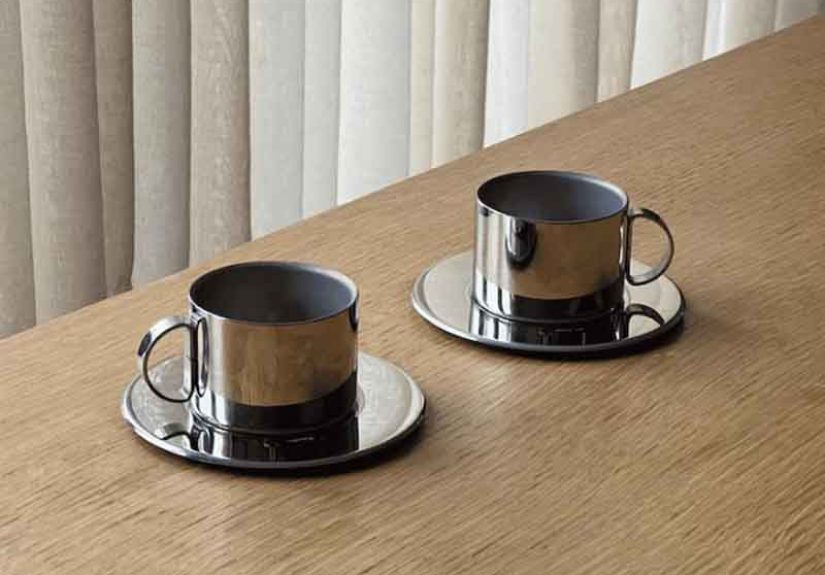
In plain terms: a stainless steel cup (often for coffee, tea, or espresso) paired with a matching stainless saucer.
The saucer isn’t just decorativeit’s a spill-catcher, a heat buffer, and a place to set a spoon or sugar packet without baptizing your table in cream.
Common 80s-style shapes you’ll see
- Demitasse / espresso cups: smaller, often rounded, sometimes with a compact handle.
- Diner-style coffee cups: medium-size, built for repeated refills and quick turnover.
- Stackable cups: designed to nest neatlybecause storage was a real thing even before “small-space hacks” became an internet sport.
- Wide saucers: made to catch drips and give your cup a stable landing zone.
Where You’d See Them in the 1980s
Not every household had stainless steel cups and saucers, but they were common in places where durability mattered more than delicate aesthetics.
Think of them as the “work boots” of drinkware.
1) Diners, cafés, and restaurant back-of-house
Restaurants love anything that’s hard to break, easy to sanitize, and quick to reset between customers. Stainless cups check all three boxes.
They’re also lightweight enough to carry in stacks and tough enough to survive the inevitable “oops” moments.
2) Office breakrooms and community spaces
If you’ve ever seen a mug disappear in an office kitchen and never return, you understand why stainless made sense.
It’s durable, low-fuss, and doesn’t shatter when someone opens the cabinet like it’s a game show door.
3) Camping kits and road-trip gear
Stainless steel is a classic for travel and outdoor use because it handles bumps, drops, and temperature swings better than glass or ceramic.
In the 80s, a stainless cup-and-saucer set could be part of a practical picnic kit: coffee in the morning, cocoa at night, and minimal cleanup in between.
The Stainless Steel Basics (Without a Chemistry Lecture)
Most food-friendly stainless steel drinkware is made from alloys designed to resist corrosion. The “stainless” part comes from chromium,
which forms a thin protective layer on the surface. That invisible shield helps prevent rust and keeps the metal looking good with normal use.
What does “18/8” or “18/10” mean?
You’ll often see stamps like 18/8 or 18/10. It’s shorthand for the approximate percentage of
chromium and nickel in the alloy (for example, ~18% chromium and ~8% nickel).
Many everyday kitchen items use alloys commonly associated with “18-8” style stainless (often linked with 300-series stainless like 304).
Can stainless steel still get spots or rust?
Yep“stainless” isn’t “stain-never.” Vintage cups can show:
- Water spots: minerals from hard water drying on the surface.
- Tea/coffee film: buildup that dulls shine over time.
- Pitting: tiny crater-like spots, often tied to harsh cleaners or chloride exposure (think certain bleaches).
- Surface rust: sometimes from contact with rusty items or abrasive pads that leave behind particles.
Design Clues That Scream “80s” (In a Good Way)
If you’re trying to identify an authentic 80s stainless steel cup and saucer set, look for a combination of form and finish:
utilitarian, slightly futuristic, and designed for real use.
Signature details
- Brushed or satin finishes: less mirror-shiny, more “professional kitchen.”
- Geometric handles: squared-off, looped, or minimalistic shapes.
- Compact proportions: especially in espresso setstight, tidy, and meant to stack or store well.
- Simple stamped markings: material stamps or country-of-origin marks (often subtle).
- Matching saucers with a defined cup “seat”: a shallow ring that keeps the cup from sliding.
How to Tell Vintage From “Vintage-Style”
Plenty of modern stainless cups mimic retro styling. That’s not badjust different. Here’s how collectors and thrifters separate “actually vintage”
from “inspired by vintage.”
Quick authenticity checklist
- Weight and feel: older pieces often feel slightly heavier or more rigid than ultra-thin modern budget sets.
- Construction: look for solid seams and clean rivets (if present). Wobbly handles are a red flag.
- Patina: gentle micro-scratches and soft dulling in high-touch areas can be normal for real vintage.
- Consistent wear across the set: a saucer that looks brand-new with a heavily worn cup might be a mismatch.
- Stamping style: older stamps can look simpler (and sometimes less “marketing-heavy”) than modern branding.
Buying 80s Stainless Steel Cups and Saucers Today
Whether you’re curating a retro coffee bar or just want drinkware that can survive real life, you have a few good hunting grounds:
thrift stores, estate sales, flea markets, and resale marketplaces.
What to inspect before you buy
- Rims: run a finger carefullydents on the lip can feel rough and change how the cup drinks.
- Inside surface: avoid deep pitting or heavy corrosion inside (especially for hot beverages).
- Handle stability: gently wiggle; it shouldn’t flex much.
- Saucer flatness: set it on a flat surface; rocking can be annoying (and spill-prone).
- Odor check: musty storage smells usually wash out, but anything oily/chemical is a pass.
Do you need a full set?
Not necessarily. Some people collect mismatched cups for a more authentic “found” look.
But if your goal is a cohesive 80s stainless steel cup and saucer set, prioritize:
matching finish (brushed vs polished), similar cup size, and saucers that fit securely.
Cleaning and Restoring Without Ruining the Finish
Stainless steel is tough, but it has feelingsmainly about scratches and harsh chemicals.
The goal is to remove stains while keeping the surface smooth and the finish consistent.
Everyday cleaning (the “keep it simple” method)
- Wash with warm water and mild dish soap.
- Use a soft sponge or microfiber cloth (skip steel wool and harsh scouring pads).
- Rinse well and dry immediately to reduce water spotting.
Removing dullness, tea film, or stubborn spots
For vintage pieces, gentle abrasives and mild acids can helpused correctly.
A popular option is an oxalic-acid-based cleanser designed for stainless steel; it’s often used to tackle mineral stains and discoloration.
The key is short contact time, soft tools, and a thorough rinse.
Big “don’ts” (unless you enjoy regret)
- Don’t use bleach or chlorine-based cleaners on stainless drinkwarethey can damage the protective layer and lead to pitting.
- Don’t scrub aggressively against the grain on brushed finishes; it can create permanent streaks.
- Don’t let strong cleaners sit too longvintage steel can be less forgiving depending on wear and micro-scratches.
Using Them Today: Retro Style, Modern Habits
The fun part about 80s stainless steel cups and saucers is that they work in both directions:
they look vintage, but they behave like a modern “buy it once” item.
Easy ways to bring them into your routine
- Espresso corner upgrade: pair stainless demitasse cups with a simple tray and a jar of sugar cubes for instant café vibes.
- Brunch serving hack: use saucers for lemon wedges, jam packets, or mini pastries.
- Kid-proof option: stainless cups are a practical alternative to breakable mugs (especially in busy households).
- Outdoor coffee ritual: keep a set with your camping gear for a “real cup” feel without the fragility.
Collector Notes: Styles You Might Run Into
Because stainless drinkware was often utilitarian, many sets don’t have flashy brand marks.
You’ll see patterns more than names: brushed steel espresso cups with compact handles, stackable diner cups with sturdy saucers,
and minimalist modernist sets that look like they came from a design showroom and a restaurant supply catalog.
A helpful tip: if you find a stamped alloy marking (like 18/8 or 18/10) and the set feels solid with clean construction,
it’s usually a good sign you’re dealing with higher-quality stainlessvintage or not.
Bottom Line: Why They’re Worth the Hunt
80s stainless steel cups and saucers are the rare retro item that’s both stylish and genuinely useful.
They bring a crisp, industrial edge to a coffee setup, handle daily wear better than delicate ceramics, andbonusmake your morning latte feel
like it’s being served in a diner where everyone calls you “hon.”
Whether you’re collecting a true vintage stainless steel cup and saucer set or buying modern pieces with an 80s vibe,
focus on quality construction, a comfortable rim, and easy-to-maintain finishes. The best sets aren’t just display pieces.
They’re meant to be usedpreferably while you’re listening to a playlist that includes at least one song with a synth that sounds like a spaceship.
Experiences That Make 80s Stainless Steel Cups and Saucers Feel Like Time Travel (Extra )
Stainless steel cups and saucers don’t just hold coffeethey hold moments. Not in a magical way (sadly, they won’t automatically improve your life),
but in the very real way that certain objects become shorthand for a whole era. People who grew up around these sets often describe the same sensory details:
the light weight in your hand, the cool metal feel before the drink warms it, and that unmistakable sound when cup meets saucerclean, bright, and a little dramatic.
It’s the audio equivalent of someone flipping on fluorescent kitchen lights at 6 a.m. and announcing, “Alright, who wants coffee?”
One classic experience is the “diner refill rhythm.” The cup sits on the saucer like it means business. A server tops it off, the coffee level rises,
and the cup goes back down with a soft clink that signals you’re officially staying a little longer. Stainless cups make that moment feel almost ceremonial,
like your breakfast is part of a reliable routine. Even if the routine is just “eat pancakes the size of a steering wheel and pretend Monday isn’t real.”
Another deeply 80s-adjacent memory is the “family gathering beverage station.” Picture a countertop lined with cups,
a bowl of sugar packets, and maybe a jar of instant coffee that’s been open since the Reagan administration. Stainless steel cups fit right in:
they look tidy, they stack, and they don’t require gentle handling. If you were a kid, you might have been handed one and told,
“Herehot chocolate, but don’t run.” Stainless made adults feel safer about hot drinks around moving children, because at least the cup itself
wasn’t going to shatter into a thousand tiny sparkly regrets.
And then there’s the thrifting experiencearguably the most modern way to connect with these pieces.
Finding an 80s stainless steel cup and saucer set in the wild is a small victory: it’s tucked between random plates, a lonely gravy boat,
and something that may or may not be an ashtray. You pick up the cup, feel that reassuring heft, and check the bottom for markings.
You look for the matching saucer like you’re solving a mystery. If you find a full set? That’s not shoppingthat’s treasure hunting.
The best part is the cleanup afterward: you bring it home, wash it, and watch it transform from “forgotten shelf item” to “actually pretty cool.”
Using them today can feel like borrowing a tiny piece of history without turning your kitchen into a museum.
Stainless cups are perfect for a “slow morning” ritual: espresso, tea, or even iced coffee served in a cup that looks like it belongs in a vintage café.
They also make ordinary moments feel more intentionallike the saucer is quietly saying,
“We’re not just sipping caffeine. We’re having an experience.” Which is funny, because the original 80s purpose was often the opposite:
practical, durable, no-nonsense. That’s the charm. Stainless steel cups and saucers aren’t precious. They’re reliable.
They show up, do the job, and somehow still manage to look cool doing it.