Table of Contents >> Show >> Hide
- Before we meet the heroes: what “a medal for bravery” means here
- 1) Sergeant Stubby (Dog) the decorated WWI trench legend
- 2) Cher Ami (Pigeon) the message that saved a trapped battalion
- 3) G.I. Joe (Pigeon) the “call off the strike” flight
- 4) Winkie (Pigeon) the first Dickin Medal recipient
- 5) Apollo (Search-and-Rescue Dog) representing the K-9 responders of 9/11
- 6) Lucca (Military Working Dog) the explosives detector who brought everyone home
- 7) Kuno (Military Dog) honored for valor on an operational mission
- 8) Judy (Dog) the only dog officially registered as a POW
- 9) Simon (Cat) the only feline Dickin Medal recipient
- 10) Staff Sergeant Reckless (Horse) a packhorse with Purple Hearts
- What these medals really honor (and what they don’t)
- Experiences related to “10 Amazing Animals Awarded A Medal For Bravery” (extra reflections)
- Conclusion
Humans love giving medals to other humans. But every so often, we look at the teammate who can’t salute, can’t sign a waiver,
and absolutely would rather be sniffing a tennis ball than a battlefield… and we still say, “You earned this.”
From messenger pigeons that delivered life-or-death notes to military dogs that detected explosives, stories of animals
awarded a medal for bravery aren’t just feel-good trivia. They’re reminders that courage can come in fur, feathers,
paws, hoovesand occasionally a very serious whisker situation.
Before we meet the heroes: what “a medal for bravery” means here
Different countries and organizations recognize animal heroism in different ways. In this article, you’ll see a few major
categories:
-
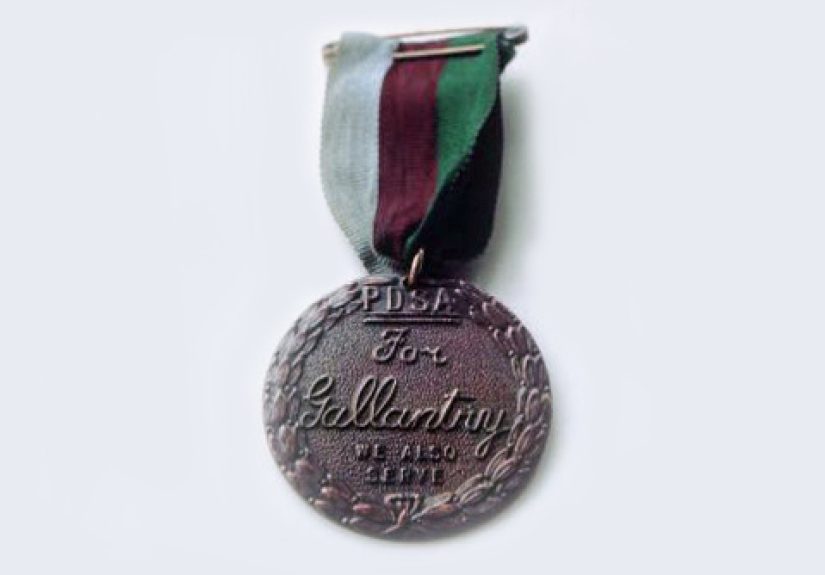
The PDSA Dickin Medal (often nicknamed the “animals’ Victoria Cross”) for conspicuous gallantry or devotion
to duty. -
Military decorations sometimes associated with specific animal service stories (especially for famous units
and mascots). -
U.S.-based recognition such as the Animals in War & Peace Medal of Bravery, created to honor animals who
served in American conflicts and public service.
Now, let’s meet ten medal-winners whose bravery earned official recognitionand permanent spots in the “Who’s a good hero?”
hall of fame.
1) Sergeant Stubby (Dog) the decorated WWI trench legend
If you’ve ever wished your coworker would take initiative, consider Sergeant Stubby. This small dog became a mascot of the
U.S. 102nd Infantry Regiment in World War I and ended up participating in multiple operationsan era when “HR policy” was
mostly a suggestion and trench life was brutally hard.
Why he was honored
Stubby’s story is famous for battlefield alertness and morale-boosting companionship. Reports credit him with warning troops
of danger (especially gas attacks) and helping locate injured soldiersessentially becoming a four-legged early warning system
with better hearing and zero interest in paperwork.
The medal moment
Stubby became one of the most celebrated American war dogs and was publicly presented with medals recognizing his service.
Whether you view him as a mascot, a symbol, or a true working dog, he’s a foundational story in American animal-hero history.
Legacy
Today, Sergeant Stubby is remembered through museum collections and exhibits that keep his story (and his decorations) in the
historical recordproof that “good boy” can be a military-grade title.
2) Cher Ami (Pigeon) the message that saved a trapped battalion
Cher Ami is one of the most famous messenger pigeons in U.S. historybecause when radios failed and time ran out, a pigeon
delivered a message that helped prevent disaster.
Why she was honored
During World War I, Cher Ami delivered a critical message under extreme conditions to help a U.S. unit pinned down and cut off
from allies. The details vary across retellings, but the key point doesn’t: the delivery mattered, and it worked.
The medal moment
Cher Ami received major recognition for bravery, including a French military honor (the kind usually reserved for humans doing
extraordinary things). When a pigeon earns a medal typically given for valor, history is basically shouting, “Yes, that counts.”
Legacy
Cher Ami’s story is still used to explain how crucial animal messengers were before modern communications became reliable in
combat.
3) G.I. Joe (Pigeon) the “call off the strike” flight
In World War II, timing was everything. For one Allied unit in Italy, timing was nearly tragicuntil a U.S. Army pigeon named
G.I. Joe delivered a message fast enough to stop a planned attack from hitting friendly forces.
Why he was honored
G.I. Joe’s flight carried a last-minute order to cancel a bombing run after Allied troops advanced sooner than expected.
This is the kind of moment that turns “bird” into “lifesaver.”
The medal moment
G.I. Joe was awarded the PDSA Dickin Medalan internationally recognized top honor for animal gallantry.
He’s often cited as the only American pigeon to receive the Dickin Medal during WWII.
Legacy
His story is preserved in military histories and U.S. Army pigeon records, and it’s a classic example of how animal bravery
sometimes looks like “just keep flying.”
4) Winkie (Pigeon) the first Dickin Medal recipient
The PDSA Dickin Medal was created during WWII to recognize animals whose courage changed outcomes. The very first recipient?
A pigeon named Winkiebecause apparently the earliest “animals’ Victoria Cross” went to a bird that refused to quit.
Why she was honored
Winkie helped make rescue possible after an aircraft went down at sea. With no precise radio position available, her return
home provided the information needed to narrow down where to search.
The medal moment
Being awarded the first-ever Dickin Medal isn’t just a personal trophy (well, featheral trophy). It set the
standard for how animal gallantry would be publicly recognized.
Legacy
Winkie’s story is one reason historians still call pigeons the “quiet heroes” of wartime communications.
5) Apollo (Search-and-Rescue Dog) representing the K-9 responders of 9/11
Heroism doesn’t only live in old war photos. After the September 11 attacks, search-and-rescue dogs worked through dangerous,
exhausting conditions to locate victims and support human responders. One dog, Apollo, became a symbol for all of them.
Why he was honored
Apollo was among the first police K-9s on the scene at Ground Zero, working alongside his handler as part of the rescue and
recovery efforts. His story stands for a wider reality: dogs showed up, did the job, and kept going when the work was emotionally
brutal.
The medal moment
Apollo (along with guide dogs Roselle and Salty) received the PDSA Dickin Medal in recognition of courage and
devotion to duty following 9/11an extraordinary moment where animal bravery in a modern disaster response was honored at the
highest level.
Legacy
Apollo’s recognition helped spotlight the training, welfare, and long-term care needs of working dogs and their handlers.
6) Lucca (Military Working Dog) the explosives detector who brought everyone home
Some heroes don’t kick down doors; they sniff them. Lucca, a U.S. Marine Corps specialized search dog, is widely credited with
preventing casualties by locating explosives during patrols.
Why she was honored
Over a long service career, Lucca completed hundreds of missions and is frequently described as having no human casualties on
her patrolsexactly the kind of record that makes a handler both proud and permanently stressed.
The medal moment
Lucca received the PDSA Dickin Medal, becoming the first U.S. Marine Corps dog to receive that honor. It’s a
headline-worthy recognition because it connects modern military working dogs to a tradition of animal gallantry going back to WWII.
Legacy
Lucca’s story is also about veterinary medicine and recoveryhow military and civilian teams care for injured working dogs and
help them live good lives afterward.
7) Kuno (Military Dog) honored for valor on an operational mission
Kuno is a more recent example of animal bravery being formally recognizedshowing that medals for animal gallantry aren’t
just historical artifacts. They’re still happening.
Why he was honored
Kuno was recognized for valor and devotion to duty during an operational mission where his actions helped protect human teammates.
Accounts emphasize speed, obedience under pressure, and the bond between dog and handler.
The medal moment
Kuno received the PDSA Dickin Medal, placing him in the same honored lineage as wartime messenger pigeons and
legendary service dogsdifferent era, same theme: when it mattered, he delivered.
Legacy
His recognition has also fueled public conversation about how nations support service animals after deployment, including medical
care and retirement planning.
8) Judy (Dog) the only dog officially registered as a POW
Judy’s story reads like an endurance test disguised as a biography. She served as a ship’s mascot, survived wartime chaos, and
became famous for helping people endure extreme hardship during WWII.
Why she was honored
Judy is remembered for guiding and supporting people through dangerous conditions and for being officially registered as a
prisoner of waran astonishing and rare designation for an animal.
The medal moment
Judy was awarded the PDSA Dickin Medal for extraordinary wartime service. The medal recognized not just a single
“movie-scene moment,” but sustained bravery and devotion across years.
Legacy
Judy’s story highlights a quieter kind of courage: persistence, comfort, and the ability to keep humans moving forward when
everything says “stop.”
9) Simon (Cat) the only feline Dickin Medal recipient
Cats have a reputation for doing what they want, when they want. Simon apparently wanted to be a wartime morale officer and
rodent-control specialistbecause he became the only cat to receive the Dickin Medal.
Why he was honored
Serving aboard HMS Amethyst during the 1949 Yangtze Incident, Simon was recognized for continued “duty” that helped protect
scarce supplies and raise morale. Sometimes heroism looks like keeping the ship’s food from becoming rat snacks.
The medal moment
Simon received the PDSA Dickin Medal, a rare public acknowledgment that animals other than dogs and pigeons also
played meaningful roles in military history.
Legacy
Simon’s fame endures because his story is oddly relatable: do your job, help your crew, and accept praise with the calm confidence
of a cat who already knew he was great.
10) Staff Sergeant Reckless (Horse) a packhorse with Purple Hearts
Staff Sergeant Reckless was a Korean War packhorse with the U.S. Marine Corpsfamous for carrying supplies under dangerous
conditions and moving through routes she learned so well she could often travel them on her own.
Why she was honored
Reckless repeatedly carried ammunition and supplies during intense fighting. Her reliability mattered because every successful
trip meant Marines had what they needed, when they needed it.
The medal moment
Reckless was awarded multiple honors associated with her service, including two Purple Hearts (a detail that still
surprises peoplebecause yes, animals have been recognized alongside human units in notable ways). She was also later recognized
with the PDSA Dickin Medal and U.S.-based honors for animal bravery.
Legacy
Reckless has become a symbol of animal contribution in military history, with memorials and museum features that keep her story
visible for new generations.
What these medals really honor (and what they don’t)
It’s tempting to read these stories as “animals are fearless.” But the more accurate takeaway is: animals can be trained, bonded,
and guided into extraordinary service by humanssometimes in environments they did not choose.
That’s why the best modern writing about animal bravery medals also talks about welfare: responsible training,
medical care, retirement, and the emotional support handlers often need after working alongside animals in high-stress settings.
A medal should be the start of respectnot the end of responsibility.
Experiences related to “10 Amazing Animals Awarded A Medal For Bravery” (extra reflections)
If you’ve ever stood in a museum gallery staring at a small medal beside an animal’s photo, you know the feeling: it’s equal parts
awe, gratitude, and a tiny lump in your throat that shows up uninvited. People often expect these stories to be “cute.”
Then they realize the medal is real, the stakes were real, and the animal didn’t understand politics or strategyonly training,
trust, and the voice (or hand signal) of the person they followed.
One powerful experience is reading the human accounts that surround the animals. Handlers and veterans often describe
working dogs the way you’d describe a teammate who never gossips and never quits: consistent, focused, and weirdly calming when
everything else is chaos. In public demonstrationslike police K-9 showcases or military working dog eventsyou can see how much
of “bravery” is built from repetition. The dog isn’t improvising a heroic speech; it’s doing the task it practiced a thousand times,
even when the environment is loud, confusing, or frightening. Watching that up close changes the way you think about courage.
It becomes less about drama and more about discipline.
Another experience that sticks with people is how small the artifacts can be. A pigeon’s story might be summarized in a sentence:
“Flew 20 miles in 20 minutes.” But if you pause and imagine itdark sky, wind, exhaustion, and the simple instinct to get homeyou
realize how astonishing that is. When museums display preserved equipment, old photographs, or unit notes, it adds texture:
the past stops being a movie and starts being a chain of ordinary decisions that became extraordinary outcomes.
For pet owners, these stories also hit on a personal level. You look at your own dog refusing to go outside because the grass is
“too wet,” and then you read about a search-and-rescue dog working for hours in hazardous conditions. It doesn’t make you feel guilty
(your dog is allowed to be dramatic). It makes you curious: what could animals do with the right training and care?
That curiosity is why many people end up volunteering, donating, or supporting service-dog programs after reading animal medal stories.
The “experience” isn’t just emotional; it becomes practical.
There’s also a quieter, important experience: learning to hold two truths at once. Yes, these animals were brave. And yes, humans
placed them in demanding roles. When people attend memorials for working dogs or read about medals like the Dickin Medal, they often
come away with a deeper respect for ethical handlingsafe training methods, proper rest, and lifelong veterinary support. The best
versions of these experiences don’t glorify conflict; they honor service while insisting on humane treatment.
Finally, these stories create a shared language across generations. A kid can understand “the pigeon saved people” instantly.
An adult might notice the logistics, the communication failures, the teamwork, and the cost. Either way, the takeaway is the same:
bravery isn’t always a speech. Sometimes it’s a sprint, a flight, a sniff, a steady trot down a dangerous pathand the quiet bond
between a human and an animal who trusted each other enough to keep moving.
Conclusion
The ten animals in this list earned medals for bravery in wildly different ways: delivering messages, detecting explosives,
supporting rescue work, guarding scarce supplies, and carrying what humans needed to survive. Their awards aren’t just shiny circles
on ribbonsthey’re public proof that animals have played real roles in human history, and that we can choose to remember those roles
with both gratitude and responsibility.