Table of Contents >> Show >> Hide
- The Letter That Turned “Killer Robots” Into a Global Policy Debate
- What Counts as an AI Weapon?
- Why Musk and Roboticists Wanted a Ban
- The Case Against a Blanket Ban
- Where the UN Debate Stands Now
- Why This Debate Matters Beyond the Battlefield
- Experiences From the Autonomous Weapons Debate
- Conclusion
- SEO Tags
Artificial intelligence already writes emails, recommends shoes, and occasionally suggests a movie so wrong it feels personal. What many researchers do not want it doing is deciding who lives and who dies on a battlefield. That is the heart of the fight over AI weapons, and it is why Elon Musk, roboticists, and other technology leaders have spent years urging the United Nations to draw a hard line against lethal autonomous weapons.
The phrase “AI weapons” sounds dramatic enough to sell movie tickets, but the real debate is more specific and more serious. It is not about banning every military tool that uses software, sensors, or automation. It is about whether machines should be allowed to identify, select, and attack targets without meaningful human control. In plain English: should an algorithm be trusted with a kill decision? Many experts say absolutely not. Others say the answer is more complicated. And that tension is exactly why this story still matters.
The Letter That Turned “Killer Robots” Into a Global Policy Debate
In 2017, Elon Musk joined more than one hundred founders and leaders from AI and robotics companies in an open letter to the United Nations Convention on Certain Conventional Weapons. Their warning was blunt: lethal autonomous weapons could become the “third revolution in warfare,” after gunpowder and nuclear weapons. That is not exactly subtle language, but subtlety was never the point. The signers wanted policymakers to notice that the technology behind autonomy was moving fast, and that the legal rules were jogging behind in untied shoelaces.
The 2017 letter built on earlier warnings from researchers who had already argued that offensive autonomous weapons beyond meaningful human control should be prohibited. By then, the concern was no longer theoretical. Machine vision was improving. Navigation systems were getting cheaper. Drones were spreading. And the same AI tools built for civilian convenience could be repurposed for military targeting. That dual-use problem is one reason the alarm bells got loud. The same code that helps a car recognize a pedestrian or a warehouse robot avoid a shelf could, in another setting, help a weapon identify a person or vehicle.
Musk was the most famous name on the list, so headlines often treated the story like a celebrity cameo in a policy seminar. But the real significance was the coalition itself. This was not just one billionaire tweeting in all caps from the digital penthouse. It was a broad group of people close to the technology saying: we know where this road could lead, and we would prefer not to sprint there blindfolded.
What Counts as an AI Weapon?
The definition problem
One reason the autonomous weapons debate gets tangled so easily is that “AI weapons” is an umbrella term big enough to shelter half a military procurement catalog. Some systems use automation for navigation, defense, or threat detection. Others assist human operators by sorting data, flagging objects, or recommending targets. The most controversial category is the one often described as lethal autonomous weapons systems: weapons that, once activated, can identify, select, and engage targets without further human intervention.
That distinction matters. A human-controlled drone is not the same thing as a weapon that searches for targets and fires on its own. A missile defense system designed to react in fractions of a second is not the same as a roaming system that patrols an area and decides who qualifies as a target. Policy arguments become messy when those categories get blended into one dramatic stew labeled “robot war.”
Why “meaningful human control” became the magic phrase
Critics of autonomous weapons often focus on one concept: meaningful human control. It sounds like a phrase invented by a committee, which is usually a bad sign, but here it serves a useful purpose. The idea is that human beings should remain responsible for critical decisions about the use of force. That means a real person, with judgment and accountability, should be involved in deciding whether a target is lawful, whether the attack is proportionate, and whether conditions have changed.
Supporters of regulation love this phrase because it captures an ethical boundary. Opponents of a sweeping ban sometimes dislike it because it can feel vague. How much control is meaningful? Is pressing “approve” enough? Is setting mission parameters hours earlier enough? Is supervising a swarm the same as controlling it? These are not word games. They are the legal and moral hinges of the whole issue.
Why Musk and Roboticists Wanted a Ban
1. Speed can outrun human judgment
One of the central fears is that autonomous weapons would move at machine speed while accountability moves at human speed, which is to say much slower and with more coffee breaks. If weapons systems can identify and strike targets faster than people can evaluate context, there is a risk that conflict escalates before commanders fully understand what is happening. Researchers have warned that this could create “flash war” dynamics, where action and reaction spiral on timelines too short for meaningful review.
2. Cheap, scalable violence is a terrifying business model
The 2017 open letter also warned that once developed, autonomous weapons could be mass-produced inexpensively and used widely. Nuclear weapons are difficult to build and control. Autonomous weapons, by contrast, could spread like consumer electronics with worse branding. If the hardware becomes cheap and the software reusable, the barrier to entry drops. That raises the possibility of proliferation to smaller states, militias, criminal networks, or anyone with enough money, enough code, and too little conscience.
3. Accountability gets blurry fast
If an autonomous weapon kills civilians unlawfully, who is responsible? The commander? The manufacturer? The programmer? The state? The person who trained the model? The person who signed off on deployment after skimming the briefing on page 48? Critics argue that the more decision-making shifts from humans to machines, the harder it becomes to assign responsibility when things go wrong. International humanitarian law depends heavily on accountability. Autonomous weapons threaten to turn that into a game of ethical hot potato.
4. Machines are bad at moral judgment
Even advocates of military AI often admit that context matters in war. Civilians move unpredictably. Combatants blend into crowded environments. Surrender, injury, and changing intentions can alter the legal status of a person in seconds. Critics argue that sensors and classifiers may process signals, but they do not understand human meaning. A machine may detect movement. It may infer a weapon. It may assign confidence scores with impressive statistical swagger. But statistics are not moral judgment, and confidence is not wisdom.
The Case Against a Blanket Ban
Not everyone agrees that an outright ban is the best answer. Some defense officials and analysts argue that autonomy is already embedded in many systems and can, in certain cases, improve precision, reduce operator overload, and strengthen defensive capabilities. The Pentagon’s public position has emphasized that commanders and operators must exercise appropriate levels of human judgment over the use of force, rather than embracing a total prohibition on all autonomous functions.
There is also a strategic argument. Major military powers are often reluctant to ban technologies they believe adversaries may continue to develop. In that view, a sweeping ban sounds noble but fragile. Critics of the ban approach say the better path is a mix of legal review, doctrine, technical safeguards, operational limits, and human supervision. In other words, regulate the dangerous stuff, preserve useful defensive autonomy, and avoid pretending that software will politely stay out of war because diplomats asked nicely.
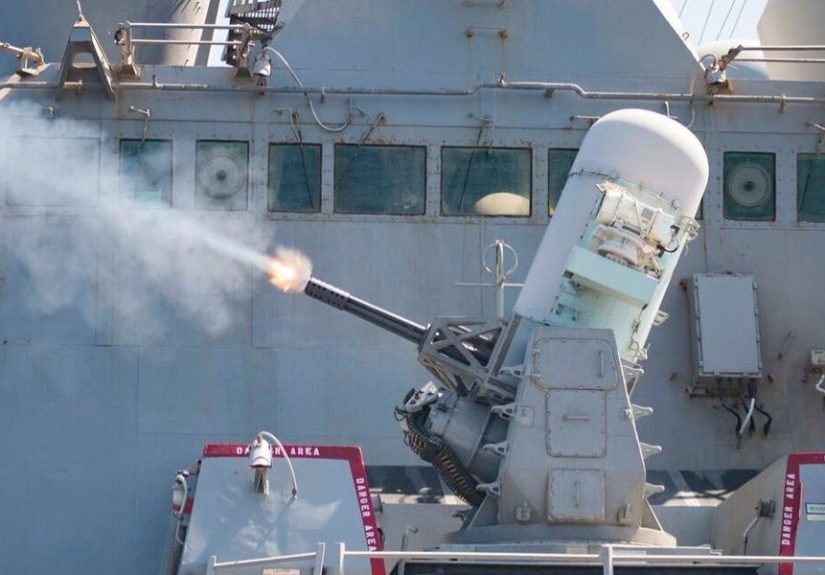
That argument has real force. Some autonomous or semi-autonomous defensive systems have existed for years. Militaries also use AI for logistics, intelligence processing, navigation, and decision support. So the strongest policy proposals today usually do not say “ban everything with AI.” They say prohibit systems that operate without human control over life-and-death decisions, and tightly regulate the rest. Think less sledgehammer, more legal scalpel.
Where the UN Debate Stands Now
The issue has not vanished into diplomatic fog. Far from it. UN discussions on lethal autonomous weapons systems have continued through the Convention on Certain Conventional Weapons process, and broader UN attention has expanded. In late 2024, the UN General Assembly adopted a resolution on lethal autonomous weapons systems by an overwhelming vote, showing that concern is not limited to a few activists or tech executives with a flair for alarming headlines.
Recent UN debates increasingly point toward a two-tiered framework: prohibit some autonomous weapons outright and regulate others. The strongest proposals focus on banning systems that cannot be used in compliance with international humanitarian law or that operate without sufficient human control and oversight. At the same time, governments continue arguing over definitions, scope, and whether the law should require “meaningful human control,” “appropriate human judgment,” or some cousin phrase born in the diplomatic word factory.
The Secretary-General has repeatedly called for a legally binding international instrument by 2026. That does not guarantee one will appear on schedule. International negotiations are not exactly famous for speed. Still, the trend line is clear. The conversation has moved from fringe warning to mainstream governance problem. The world is no longer asking whether autonomy in weapons deserves attention. It is arguing about how hard the guardrails should be.
Why This Debate Matters Beyond the Battlefield
The AI weapons debate is really a debate about human authority in an automated world. Once societies accept that machines can make lethal decisions in war, the moral boundary shifts. And boundaries, once shifted, rarely send a polite apology card and move back. Concerns about surveillance, policing, border enforcement, and algorithmic bias all hover nearby. If the principle becomes “the machine was accurate enough,” then the definition of acceptable force may quietly expand.
That is why this issue attracts such a strange but revealing coalition: roboticists, legal scholars, human rights groups, diplomats, military analysts, and yes, the occasional celebrity CEO. They are not all saying the same thing, but many agree on one point: delegating human killing to machines is a line worth debating before the technology normalizes it by default.
And that may be the most important lesson. Technology policy often arrives after the product launch, when the software is already installed and the apology statement is already being drafted. Autonomous weapons are one of the few areas where the world still has a chance to set rules before the future becomes the emergency.
Experiences From the Autonomous Weapons Debate
One of the most revealing experiences around the debate over AI weapons is how often people from very different fields end up describing the same discomfort in different words. Engineers call it a reliability problem. Lawyers call it an accountability problem. Human rights advocates call it a dignity problem. Soldiers may call it a command problem. Put them all in one room and they will disagree about policy, but many eventually circle back to the same uneasy truth: once a machine is given too much control over lethal force, the human role starts shrinking at exactly the moment it should matter most.
Another recurring experience is that the closer people get to the technical details, the less likely they are to treat the issue like simple science fiction. Public discussion often jumps straight to humanoid robot soldiers marching through smoke like a bad streaming thriller. Real experts usually sound less cinematic and more concerned. They worry about sensor limits, false positives, changing environments, spoofing, data quality, software errors, and badly framed objectives. In other words, the anxiety is not powered only by futuristic imagination. It is powered by very ordinary engineering experience: systems fail, edge cases happen, and reality is rude to clean demos.
Diplomats working on the issue often describe another experience: definitions are maddening. Countries may agree that humans should remain responsible, yet disagree sharply about what that responsibility must look like in practice. Some support strong treaty language. Others prefer softer principles and national review processes. The experience of negotiating those differences has shown that states can agree on the danger in broad terms while still fighting over every legal comma. That may sound frustrating, and it is, but it also reveals something useful. The debate is not stalled because no one cares. It is difficult because the stakes are high and the categories are genuinely hard.
There is also an experience common among researchers who signed open letters years ago: watching their early warnings move from the edge of public conversation to the center of it. For a long time, calls to ban killer robots were treated by some critics as overblown. Then machine learning advanced, drone warfare expanded, and conflicts around the world showed how quickly digital tools can change targeting and operational tempo. That shift gave earlier warnings a more practical, less speculative feel. The debate matured. So did the concern.
Perhaps the most important experience, though, is the growing realization that this is not really a story about Elon Musk, even if his name helps headlines do their cardio. It is a story about governance arriving just in time, or too late. People who have worked on arms control, AI ethics, and humanitarian law often describe the same lesson: once a weapon class becomes normal, banning or tightly constraining it becomes much harder. The experience of past arms-control campaigns hangs over this issue like a very stern ghost. That is why the autonomous weapons debate feels urgent. It is not because the future is coming. It is because part of it is already here, and the rulebook is still being written.
Conclusion
Elon Musk and the roboticists who called for a ban on AI weapons helped push an uncomfortable question into public view: should machines ever be allowed to make lethal decisions without meaningful human control? Years later, that question is still unresolved, but it is no longer easy to ignore. The strongest case for regulation is not built on panic. It is built on law, accountability, ethics, and the very practical knowledge that automated systems do not become wise just because they become fast.
The strongest case against a blanket ban is also serious: some autonomy may improve defense, reduce reaction time, and help militaries operate more effectively. That is why the most credible path forward is likely not a slogan, but a framework. Ban the systems that place lethal decisions beyond meaningful human control. Regulate the rest aggressively. Keep humans responsible. Keep law relevant. And keep the phrase “killer robot” where it belongs: as a warning label, not a procurement goal.