Table of Contents >> Show >> Hide
- Why Monster Makeovers Based on Kid Drawings Work So Well
- What 50 Finished Monsters Reveal About Children’s Imagination
- From Crayon Chaos to Finished Character
- The Real Result Is Bigger Than 50 Cool Pictures
- Why Audiences Keep Falling in Love With These Monster Transformations
- What Artists, Parents, and Teachers Can Learn From This Idea
- Two Years, 50 Monsters, and the Lessons Hidden in the Ink
- Final Thoughts
- SEO Tags
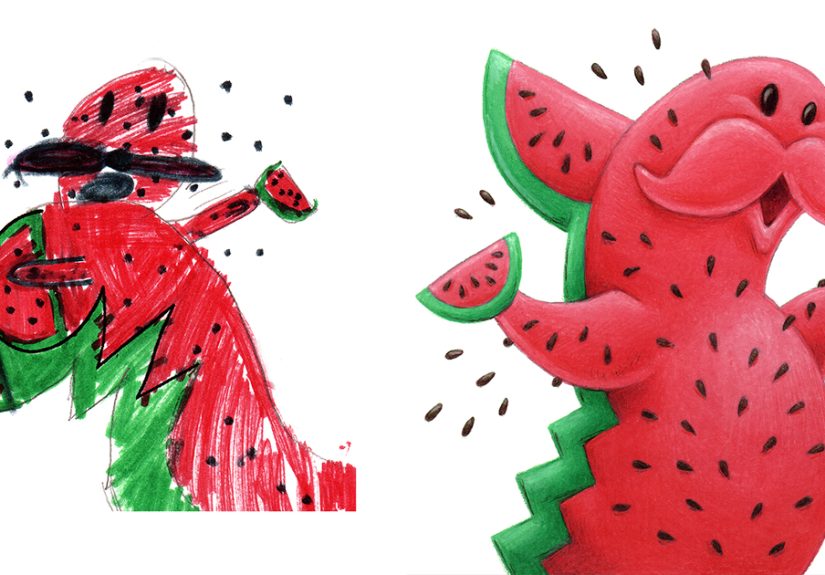
Give a child a marker, five minutes, and absolutely no concern for anatomy, and you may get the greatest creature designer alive. That is the secret hiding behind this wonderfully weird idea: take kids’ monster drawings, keep the imagination intact, and turn those scribbles into finished illustrations without sanding off the magic. Over the last two years, that simple premise has produced a gallery full of monsters that are funny, charming, spooky, crooked, glorious, and far more memorable than half the polished characters adults spend months trying to perfect.
What makes the concept so irresistible is not just the visual before-and-after. It is the creative handshake between a child and an adult artist. One person invents with total freedom. The other interprets with craft, restraint, and enough humility not to “fix” what was never broken in the first place. The result is more than fan service for doodles. It is a reminder that imagination often arrives messy, off-center, and wearing seven teeth on one side of its face.
In this article, we are diving into why these 50 monster transformations hit so hard, what the finished illustrations reveal about kid creativity, how the drawing process works, and why audiences keep falling in love with projects that turn children’s art into professional-level monsters. And yes, we are also giving full respect to the mighty artistic power of the random eyeball.
Why Monster Makeovers Based on Kid Drawings Work So Well
Monsters are the perfect subject for a collaboration between children and illustrators because monsters do not need permission to make sense. A pirate has expectations. A dog should usually resemble a dog. But a monster? A monster can have one shoe, four elbows, and a neck like a bent straw, and nobody files a complaint. In fact, the stranger it is, the better it often works.
That freedom gives kids a huge head start. Children do not design creatures by consulting genre rules or worrying about whether a silhouette is “market-ready.” They draw from instinct. They combine fear, humor, curiosity, and nonsense in a single shape. An adult artist then steps in and asks the most useful question in the whole process: what if I treat every odd decision in this drawing as intentional?
That is where the magic happens. A giant lopsided mouth becomes personality. A handful of wild spikes becomes hair, armor, or attitude. Tiny stick legs become comic contrast. A floating scribble behind the character becomes smoke, slime, or some suspiciously dramatic cape action. Instead of correcting the drawing, the illustrator amplifies it.
This is also why the final artwork often feels more alive than a character designed from scratch on a blank page. The original child’s drawing already contains surprise. It already broke the rules before the adult artist even picked up a pencil or stylus. The illustrator is not inventing chaos; they are translating it.
What 50 Finished Monsters Reveal About Children’s Imagination
After enough transformations, patterns start to emerge. Kids consistently create monsters with strong emotional signals. They may not use the language of professional character design, but they absolutely understand mood. A jagged mouth can read as mischievous. One oversized eye can feel curious or alarmed. Heavy brows turn a blob into a grump in less than a second. Children know how to communicate with shapes long before they know how to explain the theory behind it.
Another striking pattern is how often kids prioritize identity over realism. Their monsters are not trying to be biologically plausible. They are trying to be memorable. That is a valuable distinction. Adults often get trapped in asking whether a creature could exist. Children jump directly to whether it feels fun, weird, scary, silly, or unforgettable. That instinct is closer to strong visual storytelling than many grown-ups would like to admit.
There is also a kind of fearless compression in kid art. A child can combine a dragon, a chicken, a vacuum cleaner, and a bad mood into one character and somehow make it look completely confident. No committee. No second-guessing. No fifteen-slide deck about brand positioning. Just one creature saying, “Hello, I breathe smoke and probably hate bedtime.”
That confidence is part of the appeal of the finished results. Each polished monster still carries the emotional DNA of the original sketch. You can tell when an illustrator has respected that source material, because the final image does not feel generic. It feels like a collaboration across age, skill level, and imagination.
From Crayon Chaos to Finished Character
Step 1: Reading the Drawing Instead of Correcting It
The first job is interpretation. The artist studies the child’s drawing the way a translator studies a handwritten note from a very enthusiastic poet. Which lines are structural? Which shapes matter most? What is the emotional center of the creature? The goal is not technical accuracy. The goal is fidelity to feeling.
Step 2: Preserving the Weirdness
The best monster redraws do not flatten the quirks. They keep the asymmetry, the awkward proportions, and the wildly specific oddities that made the original memorable. If the monster has one tiny arm and one giant club-like hand, that stays. If the eyes are floating at two different heights like they had a disagreement, that stays too. Smooth everything out, and the drawing loses its soul.
Step 3: Adding Texture, Depth, and Personality
This is where professional craft enters the room wearing fancy boots. An illustrator can add shadow, fur, scales, slime, lighting, gesture, perspective, and facial nuance while still honoring the child’s idea. A flat purple shape becomes a fuzzy creature with weight. A triangle-toothed mouth becomes a grin with texture and menace. Scribbled scribbles become smoke, moss, feathers, or cosmic energy. The monster gets upgraded, but it does not lose its original passport.
Step 4: Letting Story Sneak In
The strongest results often imply a whole narrative. You are no longer looking at just a monster. You are looking at a monster who definitely lives under a staircase made of cereal boxes, steals left socks, and laughs like a broken kazoo. That storytelling layer matters because children’s drawings are often narratives in disguise. They are not only shapes on paper; they are characters already trying to tell you who they are.
The Real Result Is Bigger Than 50 Cool Pictures
Yes, the finished monster gallery is entertaining. Yes, people love a good before-and-after. But the real result is deeper than visual novelty. Projects like this prove that children’s art deserves to be treated as meaningful creative material, not just refrigerator decoration waiting for a tragic cleaning day.
When adults take children’s drawings seriously, kids receive a powerful message: your ideas are worth noticing. Your imagination has shape. Your weird little creature with spaghetti limbs and worried eyebrows is not nonsense. It is invention. That kind of validation matters. It supports confidence, encourages storytelling, and gives children evidence that creativity is not some optional side quest. It is a real way of thinking.
That message also matters for adults, frankly. Somewhere along the road, many people trade curiosity for polish. They stop drawing because the result no longer looks “good.” But monster projects based on kid drawings quietly argue for a healthier creative model: start strange, stay playful, and trust that originality usually arrives before refinement.
In other words, these illustrations are not just charming. They are a small rebellion against the idea that art must begin with perfection. Sometimes art begins with a green crayon, a circle, twelve legs, and a heroic lack of concern about symmetry.
Why Audiences Keep Falling in Love With These Monster Transformations
There is an emotional double-hit built into this format. First, viewers enjoy the raw inventiveness of the child’s original drawing. Then they enjoy the skill of the final illustration. One gives you surprise; the other gives you payoff. Together, they create a mini story with a setup and a punchline.
The audience also gets to witness generosity in action. The adult artist is not showing off in a vacuum. They are lifting up someone else’s idea and saying, “This was already good. I just helped you see it another way.” In an internet culture full of performative cleverness, that kind of creative generosity feels refreshing.
There is also nostalgia at work. Many viewers see these monster transformations and instantly remember their own childhood doodles: the robots with impossible weapons, the dinosaurs with suspiciously human eyebrows, the haunted houses that looked more like cake with windows. The finished illustrations reconnect people with a freer version of their imagination, the one that drew first and asked questions never.
And let us be honest: monsters are fun. They can be spooky without being upsetting, goofy without being boring, and expressive without being realistic. A well-drawn monster is one of the fastest routes to delight. A well-drawn monster based on a kid’s scribble is delight with extra seasoning.
What Artists, Parents, and Teachers Can Learn From This Idea
For Artists
Stop assuming you need a perfect prompt to make compelling character art. Sometimes the best source material is a drawing made by someone who does not yet know which rules they are “supposed” to follow. Borrow that energy. Design from surprise, not just structure.
For Parents
Children’s drawings are not clutter by default. They are records of thought. If a child keeps drawing monsters, superheroes, or oddly emotional potatoes, that repetition is not random. It may be storytelling, experimentation, humor, emotional processing, or simple joy. Paying attention to those patterns can tell you a lot about what excites them.
For Teachers
Drawing is not just decoration around “real learning.” It can support writing, memory, expression, and idea development. A monster-drawing prompt can lead to character descriptions, short stories, classroom discussions, design thinking, and collaborative art projects. Suddenly, one doodle becomes a whole lesson with teeth.
For Everyone
Creativity grows when people feel safe making unusual choices. The success of these monster projects comes from honoring ideas before judging them. That is useful in art, but it is also useful in brainstorming, writing, problem-solving, and just plain human communication. Sometimes the most productive room is the one where nobody says, “That looks wrong,” too early.
Two Years, 50 Monsters, and the Lessons Hidden in the Ink
After spending two years turning kid drawings into monsters, the biggest surprise is not how funny or visually inventive the final illustrations can be. It is how much the process changes the adult holding the pen. At first, the job looks simple: take a rough drawing and make it look polished. But after enough monsters, you realize that the real challenge is not rendering. It is listening.
Children do not draw the way trained artists are taught to draw. They prioritize what matters emotionally, not what makes anatomical sense. If a monster’s mouth is huge, that probably means the mouth matters. If the feet are tiny and the eyebrows are huge, that is not a mistake. That is hierarchy. Kids are often more direct than adults about where the personality lives in an image. Working from their drawings forces you to stop imposing your own logic and start paying attention to theirs.
That shift can be humbling. Adults are used to improving things by smoothing them out. We clean edges. We correct proportions. We chase consistency. But many of the best monsters come alive only when you resist that urge. The wobble in the line is part of the charm. The mismatch between the left side and the right side is part of the character. The “wrong” number of fingers might actually be the best decision on the page. Drawing from kid art becomes an exercise in creative restraint: you are adding skill, but you are also protecting spirit.
There is another lesson hiding here too. Not every monster needs to be scary. In fact, many of the strongest ones are equal parts creepy and adorable. A creature can have fangs and still look like it wants a snack and a nap. That tonal mix feels very true to childhood imagination. Kids are excellent at making things that are a little spooky but never fully hopeless. Their monsters often feel like roommates chaos selected by lottery.
Over time, the project also changes the way you look at unfinished ideas in general. A rough concept does not automatically mean a weak concept. A strange sketch may hold more originality than a technically impressive but predictable design. When you spend enough time translating children’s monsters, you begin to respect drafts more. You start noticing the energy inside the first impulse. You become less obsessed with whether an idea looks impressive immediately and more interested in whether it feels alive.
Maybe that is why these monster redraws resonate with so many people. They are funny to look at, sure, but they also make a quiet argument about creativity itself. Imagination does not always enter neatly. It barges in wearing uneven shoes, trailing slime, and insisting on extra eyeballs. The job of the artist is not to shut the door on that chaos. The job is to welcome it in, hand it a chair, and ask whether it would like to be rendered in watercolor, ink, or digital paint.
So yes, the results are 50 monsters. But they are also 50 reminders that creativity thrives when people feel free to invent first and refine later. That may be the biggest result of all. Beneath the claws, googly eyes, and glorious nonsense, these drawings prove something useful: originality is often hiding inside the very thing adults are tempted to call messy. Good thing monsters never cared about being neat.