Table of Contents >> Show >> Hide
- Why Outdoor Photos Make People Stop Scrolling
- What Makes an Outdoor Picture “The Best”?
- Outdoor Photography Ideas Worth Sharing
- How to Take a Better Outdoor Picture
- Why Community Photo Prompts Feel So Addictive
- Outdoor Photography and Responsible Adventure
- Specific Examples of Outdoor Photos That Work
- Experiences Related to “Hey Pandas, Post The Best Picture You Have Taken Outdoors”
- Conclusion
- SEO Tags
There is a special kind of magic in outdoor photography. One minute, you are walking past a puddle, a tree, a squirrel with suspiciously dramatic timing, or a sunset that looks like it hired its own lighting crew. The next minute, you have a picture that feels bigger than the moment itself. That is the charm behind the phrase “Hey Pandas, Post The Best Picture You Have Taken Outdoors”: it invites everyday people to share outdoor photos that are not just technically beautiful, but personally meaningful.
Outdoor pictures do not need a $5,000 camera, a helicopter, or a photographer wearing fifteen pockets and speaking only in aperture settings. They need attention. They need patience. Sometimes they need good shoes. Whether the image is a mountain glowing at sunrise, a dog proudly conquering a muddy trail, a bird caught mid-flight, or a backyard flower wearing dew like jewelry, the best outdoor photo usually tells a story before it shows off.
This article explores why outdoor photography connects so strongly with online communities, what makes a picture memorable, and how anyone can capture a better image outside without turning nature into a personal photo studio. Spoiler: the squirrel does not sign model releases.
Why Outdoor Photos Make People Stop Scrolling
Online communities love outdoor photography because it feels real. In a digital world full of filters, staged rooms, and suspiciously perfect coffee foam, a genuine outdoor photo can feel like opening a window. It reminds viewers that light changes, clouds move, animals do not take direction, and nature has absolutely no respect for your planned shooting schedule.
The appeal of a prompt like “Hey Pandas, Post The Best Picture You Have Taken Outdoors” is that it lowers the barrier. It does not ask, “Are you a professional landscape photographer?” It asks, “Did you capture something wonderful?” That difference matters. A blurry but heartfelt image of a child chasing bubbles in golden light may carry more emotional power than a technically flawless shot of a mountain that feels cold and distant.
What Makes an Outdoor Picture “The Best”?
The best outdoor picture is not always the sharpest, brightest, or most expensive-looking. It is often the one with the strongest combination of light, composition, timing, emotion, and story.
1. Light That Gives the Scene a Mood
Outdoor photography lives and breathes by light. Early morning and late afternoon are favorites for a reason: the sun sits lower, shadows soften, and colors become warmer. Photographers often call this period the golden hour, which sounds fancy but basically means “nature turned on beauty mode.”
Midday light can be harsh, especially in open spaces, but it is not useless. Strong sunlight can create bold contrast, graphic shadows, and dramatic silhouettes. Cloudy days can be excellent for portraits, forest scenes, flowers, and close-up details because the sky acts like a giant softbox. In other words, bad light is often just light you have not negotiated with yet.
2. Composition That Guides the Eye
A strong outdoor photo gives the viewer a path to follow. That path might be a trail leading into the woods, waves pulling the eye toward the horizon, a fence line crossing a field, or a person standing small beneath a giant sky.
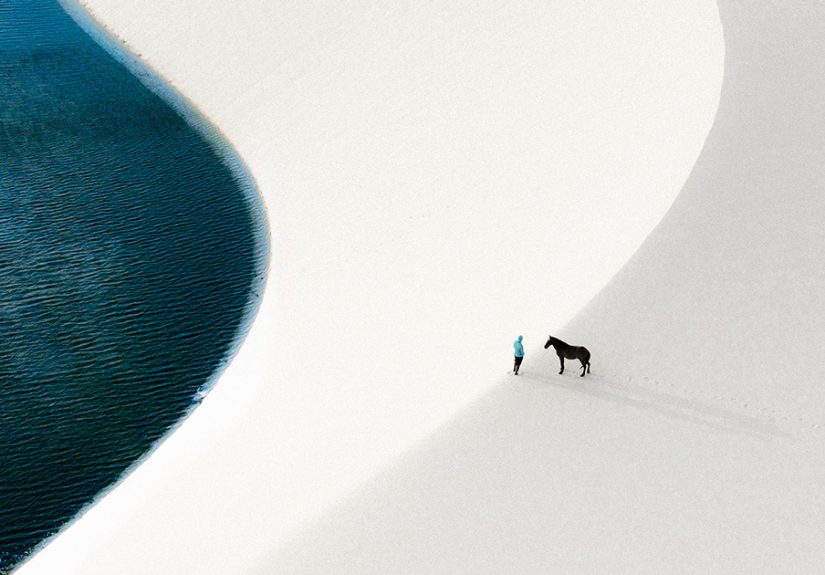
Simple composition tools can help. The rule of thirds places important subjects away from the dead center. Foreground elements, such as rocks, flowers, leaves, or reflections, add depth. Leading lines make the image feel intentional. Negative space can make a subject feel peaceful, lonely, powerful, or wonderfully tiny against the universe.
The trick is not to cram everything into the frame. A photo of a mountain, a lake, a dog, a sign, a sandwich, and your thumb may be historically accurate, but it is not always visually poetic.
3. Timing That Captures a Real Moment
Outdoor photography rewards patience. Birds turn their heads. Clouds reveal sunlight. A wave breaks. A dog shakes water everywhere and creates a masterpiece of chaos. Timing can transform a normal image into one people remember.
Great photographers often wait longer than casual observers expect. They return to the same location. They watch patterns. They learn how animals behave, how light moves across a landscape, and where shadows fall. The best shot may happen five seconds after most people put the camera away.
Outdoor Photography Ideas Worth Sharing
For anyone responding to the prompt “Hey Pandas, Post The Best Picture You Have Taken Outdoors,” the possibilities are endless. The best subject may be far away, but it may also be three steps from your front door.
Landscape Photos
Landscapes are classic because they give viewers a sense of scale. Mountains, beaches, deserts, forests, rivers, canyons, and open fields all work beautifully when the photo includes a clear focal point. A person, tree, cabin, road, or patch of light can prevent a large scene from feeling empty.
For stronger landscape images, try arriving before sunrise or staying until after sunset. Use a tripod when light is low. Look for reflections in lakes, puddles, wet streets, or calm tidal pools. And do not forget to turn around. Sometimes the best light is happening behind you while you are heroically photographing the wrong direction.
Wildlife Photos
Wildlife photography can be thrilling, but it comes with responsibility. A good outdoor picture should never come at the expense of an animal’s safety. The best wildlife images are made with patience, distance, and respect.
Use zoom instead of approaching too closely. Stay quiet. Avoid sudden movements. Never feed wildlife for a picture. Do not disturb nests, dens, or resting animals. If an animal changes its behavior because of you, that is your cue to back away. The photo is not worth becoming the villain in a nature documentary.
Outdoor Portraits
Outdoor portraits can feel fresh and natural because the environment adds context. A portrait on a hiking trail says something different from a portrait in a city park, on a beach, or under a glowing streetlamp after rain.
For flattering portraits, place your subject in open shade or use soft morning or evening light. Watch the background carefully. A tree branch sticking out of someone’s head may be natural, but it rarely says “timeless portrait.” Encourage relaxed movement: walking, laughing, looking away, fixing a jacket, holding a camera, or simply standing in the wind like they are about to release an indie folk album.
Macro and Small-Detail Photos
Some of the best outdoor images are tiny. A drop of water on a leaf, frost on grass, bark texture, footprints in mud, a bee on a flower, or sunlight hitting a spiderweb can become surprisingly powerful when framed with care.
Small scenes are perfect for beginners because they teach observation. You do not need to travel to a famous national park. You can practice in a backyard, school garden, sidewalk, or local park. The world gets more interesting when you stop treating small things like background decoration.
How to Take a Better Outdoor Picture
Plan, But Leave Room for Surprise
Planning improves outdoor photography. Check the weather. Know when the sun rises and sets. Think about the direction of light. Bring enough battery power and storage space. Wear practical clothing, because nothing ruins artistic focus like realizing your shoes have declared war on your feet.
At the same time, outdoor photography requires flexibility. A cloudy day may ruin your sunset plan but create perfect conditions for forest photos. Wind may ruin a flower close-up but make grass, hair, or fabric look alive. A sudden fog may turn an ordinary road into a cinematic scene. Nature is not late; it is improvising.
Use the Gear You Already Have
Many unforgettable outdoor photos are taken with phones. Modern smartphones can handle landscapes, portraits, close-ups, and low-light scenes surprisingly well. A dedicated camera gives more control, but control only helps if you know what you want the picture to say.
For camera users, basic landscape settings often include low ISO, a medium aperture for depth of field, and careful focus. Shooting in RAW can help preserve editing flexibility. A tripod is useful for low light, long exposure, and careful composition. A polarizing filter can reduce glare and deepen skies, while a neutral density filter can blur water or clouds during longer exposures.
Still, the most important piece of gear is not in the camera bag. It is attention. Very annoying, because attention is harder to buy online.
Edit Honestly
Editing is part of modern photography, but it should support the image rather than bury it under digital fireworks. Adjust exposure, contrast, color, crop, and sharpness with intention. If the sky becomes radioactive orange and the grass looks like it was imported from a video game, maybe gently step away from the saturation slider.
For nature and wildlife images, honesty matters. If an animal is captive, say so. If major elements were added or removed, be transparent. Viewers appreciate beauty, but they also appreciate trust.
Why Community Photo Prompts Feel So Addictive
Community prompts work because they turn photography into conversation. A person posts a picture of a misty lake. Someone else shares a desert sunset. Another person uploads a raccoon looking like it just discovered taxes. Together, these images create a shared gallery of personal experience.
The phrase “Hey Pandas” gives the prompt a friendly, casual tone. It tells people they do not need to be perfect. They just need to participate. That is powerful because photography can feel intimidating. Many beginners worry their images are not “good enough.” But in a community setting, the best picture is often the one with a story attached.
A photo becomes more memorable when the caption adds context: “I took this after hiking for three hours,” “This was my first sunrise after moving to a new city,” “My dog immediately fell into the lake after this,” or “I waited twenty minutes for this bird and then sneezed right after the shot.” That human detail makes the image stick.
Outdoor Photography and Responsible Adventure
The growing popularity of outdoor photography is wonderful, but it also creates pressure on natural spaces. Beautiful places can become crowded when images go viral. Trails widen when people step off-path for better angles. Wildlife can be stressed by people getting too close. Delicate plants can be damaged by one “quick” pose.
Responsible photography means leaving places as good as, or better than, you found them. Stay on marked trails when required. Pack out trash. Respect signs and closures. Keep a safe distance from cliffs, water, wildlife, and storms. No photo is worth injury, rescue, or environmental harm.
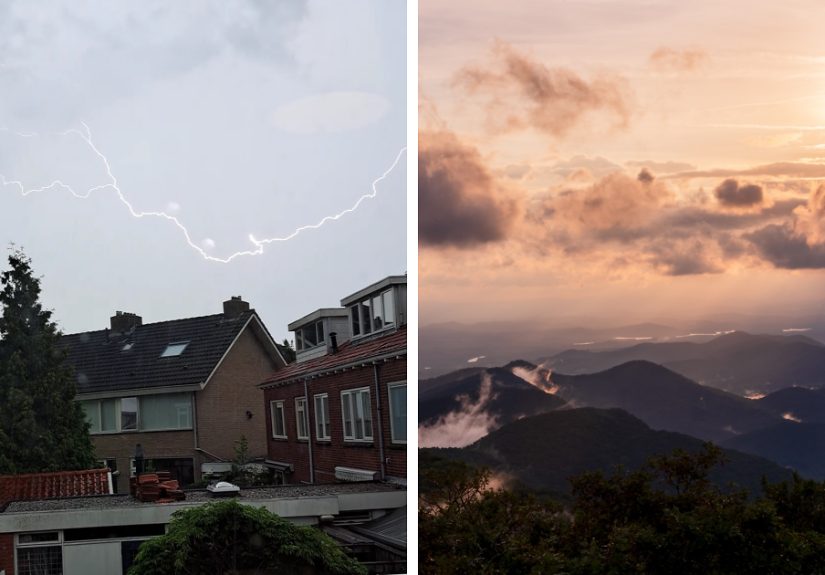
Lightning safety deserves special attention. If thunder is close enough to hear, the storm is close enough to be dangerous. Dramatic storm clouds can be photogenic, but photographers should move to safe shelter rather than gamble with metal tripods, open ridges, or exposed shorelines.
Specific Examples of Outdoor Photos That Work
A strong outdoor submission might be a sunrise over a quiet fishing pier, with the dock forming leading lines toward the sun. It might be a child standing under a huge tree, showing scale and wonder. It might be a close-up of rain on a window with blurred city lights behind it. It might be a hawk photographed from a respectful distance, wings spread against a clean sky.
Another excellent example could be a mountain trail photo where the foreground includes wildflowers, the middle ground shows hikers, and the background reveals snow-covered peaks. That layered structure creates depth. Or imagine a beach image after sunset, where the last color reflects in wet sand and a single silhouette walks across the frame. Simple, emotional, and no need for a motivational quote in curly font.
Urban outdoor photography counts too. Street murals, public gardens, rain-soaked sidewalks, bridges, markets, rooftops, and neighborhood basketball courts all tell outdoor stories. Nature and city life often overlap in beautiful ways: vines on brick, birds on power lines, sunlight between buildings, or a tree stubbornly thriving beside concrete.
Experiences Related to “Hey Pandas, Post The Best Picture You Have Taken Outdoors”
The best outdoor picture often comes with a memory that refuses to stay quiet. Maybe you woke up before sunrise, convinced yourself you were making a noble artistic sacrifice, and then stood in the cold wondering whether birds have a secret union agreement about appearing after coffee. Then, just when you were ready to quit, the sky changed. A thin pink line opened over the horizon, the water caught the color, and suddenly the morning felt less like poor decision-making and more like a gift.
That is the emotional center of outdoor photography. It rewards people for showing up. Not always with perfect weather, not always with dramatic wildlife, and definitely not always with clean shoes. But it rewards attention. You notice how fog softens the shape of trees. You see how late light turns an ordinary fence into a pattern. You realize that a shadow can be a subject, that a puddle can be a mirror, and that a crow on a lamp post can look like it is judging the entire neighborhood.
Many people discover their favorite outdoor photo by accident. They may go out intending to photograph a sunset and instead capture their friend laughing with windblown hair. They may try to photograph a deer and end up loving the image of empty woods after the deer disappears. They may aim at a waterfall and later notice that the best part of the frame is a tiny rainbow in the mist.
There is also something grounding about taking pictures outdoors. It slows the mind. A person looking for a photo begins to look more carefully at the world. The walk becomes less about reaching a destination and more about collecting small visual surprises. Even a familiar route can change: the same sidewalk, the same trees, the same park bench, but different light, different weather, different mood.
Sharing those pictures in a community adds another layer. Someone else may see beauty in the frame that the photographer almost missed. A simple caption can turn a photo into a tiny story: “This was taken after the rain stopped,” “My grandfather used to walk here,” “I nearly stepped in mud for this,” or “The bird left one second later.” These details create connection. They remind viewers that photos are not only about what was seen, but about who was there to see it.
So when a prompt asks, “Hey Pandas, Post The Best Picture You Have Taken Outdoors,” it is really asking for proof that people are still noticing the world. It is asking for mountains and gardens, beaches and backyards, pets and parks, sunsets and snowstorms, tiny mushrooms and giant skies. It is asking for the moment when someone lifted a camera or phone and thought, “Wait. This is worth keeping.”
And honestly, that is a beautiful thing. In a world where everyone scrolls too fast, an outdoor photo says, “Pause here.” Maybe the picture is grand. Maybe it is goofy. Maybe it features a duck with the confidence of a small-town mayor. But if it makes someone stop, smile, remember, or want to go outside, then it has done its job.
Conclusion
“Hey Pandas, Post The Best Picture You Have Taken Outdoors” is more than a fun community prompt. It celebrates the way photography turns ordinary outdoor moments into shared memories. The best outdoor pictures combine light, timing, composition, patience, and respect for the world being photographed. They can come from national parks, city streets, backyards, beaches, forests, or the humble patch of grass where your dog decided to become a supermodel.
Anyone can improve their outdoor photography by paying attention to light, simplifying the frame, waiting for meaningful moments, and treating nature responsibly. The goal is not perfection. The goal is presence. Take the picture, tell the story, protect the place, and share the moment. The internet has plenty of noise; a good outdoor photo is a little window of fresh air.