Table of Contents >> Show >> Hide
- Why 1920s Mugshots Hit Different
- 10+ Vintage Mugshots That Prove Crime Had a Dress Code
- 1) Al Capone (1929) The Boss Who Looked Like the Boss
- 2) Charles Ponzi (c. 1920) The Original “Finance Bro” Mugshot
- 3) Nathan Leopold (1924) The “I Read Too Much” Stare
- 4) Richard Loeb (1924) The Baby Face With Courtroom Gravity
- 5) Nicola Sacco (1920) The Working-Class Portrait of a National Firestorm
- 6) Bartolomeo Vanzetti (1920) The Eyes That Refuse to Shrink
- 7) Ruth Snyder (1928) A Mugshot That Doesn’t Ask for Sympathy
- 8) Henry Judd Gray (1928) The Salesman Who Couldn’t Sell His Way Out
- 9) John Dillinger (1924) The Future “Public Enemy” Prototype
- 10) Harry Pierpont (1920s) The “Sharp Suit, Sharper Plans” Energy
- 11) Clyde Barrow (1926) Baby Face, Bad Future
- 12) William Edward Hickman (1927) The Mugshot That Was Already a Headline
- 13) Gordon Stewart Northcott (1928) When “Photogenic” Is the Wrong Word
- Bonus: 14) Jane Ross (1929) The “Pacific Coast’s First Female Solo Bank Robber” Mug Book Moment
- What These “Look-Serving” Mugshots Actually Teach Us
- Conclusion
- Extra: The Mugshot Rabbit HoleWhat It’s Like to Chase 1920s Faces Through Archives (500+ Words)
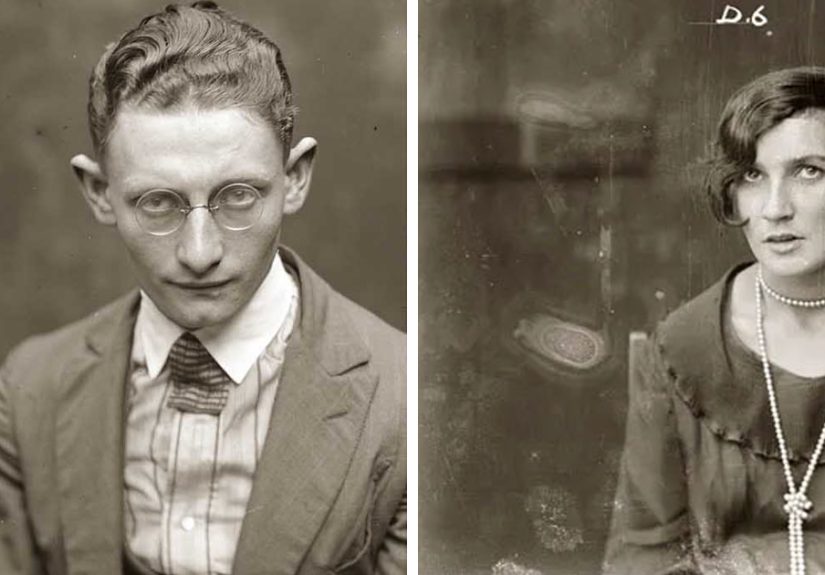
The 1920s were the Roaring Twenties for a reason: jazz got louder, hemlines got higher, and somehow even
police photography developed a little razzle-dazzle. If you’ve ever looked at vintage mugshots and thought,
“Why does this person look like they’re auditioning for a silent film?”welcome. You are among your people.
This is a tour through 1920s mugshots and booking photos from notorious cases: Prohibition heavy hitters,
headline-grabbing murders, “trial of the century” defendants, and a few lesser-known faces who still managed to
deliver peak Roaring Twenties energy. It’s history, it’s true crime, and yessome of these folks absolutely
served (time… and cheekbones).
Quick note: We’re not here to glamorize crime. The harm was real. But historical photos are also real
artifactstiny time capsules of fashion, expression, and that weird moment when a camera shutter freezes a life
in mid-collapse.
Why 1920s Mugshots Hit Different
Early 20th-century law enforcement photography leaned into standardization: straight-on, profile, clear lighting,
minimal drama. In practice, though, the results feel cinematic. The clothing is formal. The hair is deliberate.
The faces are… unexpectedly modern. A lot of suspects showed up dressed like they were heading to a bank, a trial,
or a very intense dinner partysometimes all three.
And because many criminals of the era were public obsessions (thanks, newspapers), mugshots became part evidence,
part spectacle. The modern “true crime” fixation didn’t invent itselfit inherited a roaring head start.
10+ Vintage Mugshots That Prove Crime Had a Dress Code
1) Al Capone (1929) The Boss Who Looked Like the Boss
Capone’s Prohibition-era reputation is basically its own genre, and his mugshot energy matches: steady gaze,
composed face, the vibe of a man who thinks the booking process is merely an inconvenient meeting.
What makes this one “serve” is the contrastCapone’s criminal empire versus a photo that reads like a formal
portrait in a suit-and-tie world. It’s the Roaring Twenties gangster aesthetic distilled into one frame:
confident, controlled, and somehow already aware he’ll be remembered.
2) Charles Ponzi (c. 1920) The Original “Finance Bro” Mugshot
Before “Ponzi scheme” became a phrase people toss around on social media, it was just a man named Charles Ponzi
who turned mail-coupon arbitrage into a full-blown financial catastrophe. His mugshot feels almost polite
like he’d like to speak with the manager of consequences.
The look: tidy, restrained, and strangely approachable. The subtext: “I can explain.” The camera: “You sure can.
From a cell.”
3) Nathan Leopold (1924) The “I Read Too Much” Stare
Leopold and Loeb’s case became a national obsession, and part of the shock was how normal they looked:
educated, affluent, young. Leopold’s mugshot lands with an unsettling calmless panic, more calculation.
If Roaring Twenties mugshots have a “prestige drama” category, this is it. The styling is restrained; the
expression is controlled. It’s the visual of a person trying to remain superior while reality does not agree.
4) Richard Loeb (1924) The Baby Face With Courtroom Gravity
Loeb’s mugshot is a reminder that “youthful” and “dangerous” can sit in the same frame. The features are soft,
but the eyes carry a tension that doesn’t belong in a teenage face. It’s not Hollywood handsome. It’s
unnervingly human.
The “served” moment here is how the photo captures the era’s collision of privilege, publicity, and punishment:
well-groomed appearance, brutal crime, and a nation staring back.
5) Nicola Sacco (1920) The Working-Class Portrait of a National Firestorm
Sacco’s mugshot sits at the center of a case that became larger than any single photographpolitics, immigration,
labor tensions, and public protest. The face in the frame looks like countless other men of the era:
straightforward, weary, not trying to perform for the camera.
That’s exactly why it hits. In a decade of spectacle, Sacco’s image reads as stark documentation: a person caught
in forces far bigger than a booking room.
6) Bartolomeo Vanzetti (1920) The Eyes That Refuse to Shrink
Vanzetti’s mugshot is often remembered for its directness. There’s a steadiness that can feel like defiance,
resignation, or both at once. If you’re looking for “vintage police photos” that feel emotionally loud without
any theatrics, this is one of them.
Served: not in glamour, but in presence. The kind of photo you can’t scroll past, even a century later.
7) Ruth Snyder (1928) A Mugshot That Doesn’t Ask for Sympathy
Ruth Snyder’s case was sensational, and her Sing Sing mugshot carries that tabloid gravity. The styling is
practical. The expression is controlledalmost too controlled. It’s the look of someone trying to keep their
face from giving the story away.
What makes this “serve” is how modern it feels: a crisp, centered head-and-shoulders portrait that could be a
passport photo if the vibes weren’t… absolutely haunted.
8) Henry Judd Gray (1928) The Salesman Who Couldn’t Sell His Way Out
Gray’s mugshot looks like it belongs to someone who’s about to pitch you something you don’t needexcept the
only thing on offer is bad judgment. The face reads “respectable,” which is exactly what made the Snyder-Gray
case such a public obsession: domestic normalcy cracking into violence.
Served: the tight-lipped determination of a man realizing charisma has a limited warranty.
9) John Dillinger (1924) The Future “Public Enemy” Prototype
Dillinger’s 1924 mugshot catches him before the legend fully formsyoung, sharp-featured, still in the “this
was a mistake” chapter (it was not the last chapter). The image is pure early gangster blueprint: direct,
controlled, already refusing to look small.
It’s the kind of historic mug shot that makes you understand how the media later turned criminals into
characters. Dillinger didn’t just become famoushe looked like someone who could.
10) Harry Pierpont (1920s) The “Sharp Suit, Sharper Plans” Energy
Pierpont is strongly associated with the Dillinger gang orbit, and prison mugshot collections preserve him as
part of that wider network of criminals who learned from one another behind bars. His surviving images tend to
read as composed, almost manageriallike he’s about to organize a committee, except the committee is crime.
Served: the unsettling professionalism of people who treat violence like logistics.
11) Clyde Barrow (1926) Baby Face, Bad Future
Clyde Barrow’s 1926 Dallas mugshot is famous precisely because it looks like it should belong to a kid who
got caught sneaking into a movienot someone headed for a notorious outlaw legacy. Youthful face, plain setting,
matter-of-fact documentation.
That’s the gut-punch: the photo captures the “before” so clearly that history feels inevitable. Served: not by
style, but by the eerie clarity of a turning point.
12) William Edward Hickman (1927) The Mugshot That Was Already a Headline
Hickman’s mugshot circulated as part of a nationwide manhunt after a kidnapping and murder that gripped Los
Angeles and the country. The image has that press-photo immediacy: you can feel the newspapers printing it
before the ink is dry.
Served: the chilling reminder that some mugshots weren’t just recordsthey were mass media artifacts,
intentionally designed to be seen.
13) Gordon Stewart Northcott (1928) When “Photogenic” Is the Wrong Word
Northcott’s booking-era photos sit inside a case remembered for horror. The face in the frame looks oddly
ordinary, which is precisely what makes it disturbing. There’s no villain makeup in a real mugshotjust a
person, a camera, and the awful knowledge of what the person is accused of.
Served: the stark lesson that “looks” can’t warn you. That’s not styleit’s the most terrifying kind of realism.
Bonus: 14) Jane Ross (1929) The “Pacific Coast’s First Female Solo Bank Robber” Mug Book Moment
Jane Ross shows up in the late-1920s archive trail with a San Quentin mug-book entry that feels like a time
capsule of prison recordkeepingnumbers, dates, a face framed by institutional routine. The look is simple,
direct, and almost stubbornly unromantic.
Served: the pure documentary vibeno performance, just the hard stamp of the system saying, “You’re part of the
record now.”
What These “Look-Serving” Mugshots Actually Teach Us
The most striking thing about Prohibition-era criminals in mugshots isn’t that they look cool.
It’s that they look like peoplesometimes stylish, sometimes exhausted, sometimes terrifyingly plain.
These images sit at the crossroads of fashion history, media history, and criminal justice history.
Mugshots also flatten everyone into the same format: front-facing, no context, no soundtrack, no soft lighting.
That’s why the tiny human details feel loudthe tilt of a chin, a combed part, a stare that says “I’m not done
talking,” or “I have nothing left.”
If you’re searching for “1920s mugshots” or “vintage police photos,” you’re really searching for a kind of
accidental honesty. The camera wasn’t trying to make art. History did that on the way out.
Conclusion
The Roaring Twenties gave us jazz standards, Art Deco skylines, and a whole lot of newspaper ink devoted to crime.
The mugshots that survived are more than morbid collectibles: they’re sharp little windows into a decade when
public image matteredeven in handcuffs.
If you came for the “served when it comes to looks” energy, you got it. But the real takeaway is simpler:
these photos remind us how quickly ordinary faces can end up in extraordinary, irreversible stories.
Extra: The Mugshot Rabbit HoleWhat It’s Like to Chase 1920s Faces Through Archives (500+ Words)
If you’ve never tried searching for vintage mugshots, prepare for a very specific kind of time travel:
one part detective work, one part library crawl, and one part “why do I suddenly care about a booking number?”
The experience starts innocently. You type something like 1920s mugshot or Prohibition gangsters mugshots
and expect a neat list. Instead, you get fragmentsan archive entry here, a newspaper caption there, a photo
that exists in three resolutions but none of them are the one you want.
The first thing you notice is how much context matters. A mugshot alone is a face and a number; an archive record
turns it into a timeline. You begin to recognize the “language” of old criminal documentation: the blunt phrasing,
the clipped descriptions, the way institutions reduce a human life to height, weight, scars, and sentence length.
It can feel coldbecause it’s designed to be cold.
Then the emotional whiplash kicks in. Some photos look like accidental studio portraits: crisp collars, tidy hair,
shoulders squared. Others feel like someone was pulled out of a bad day and told not to blink. When you’re reading
case summaries beside those faces, the contrast can be brutal. That’s the point where curiosity has to grow a
conscience. True crime is easy to consume when it’s abstract; archival images make it uncomfortably specific.
You also start noticing fashion in a way that feels weirdly intimate. Not “influencer fashion”survival fashion.
A decade when a suit wasn’t just a look; it was respectability armor. Even people headed to court, even people
headed to prison, sometimes showed up in their best version of themselvesbecause looking “proper” could shape
how you were treated by strangers, juries, guards, and newspapers. That’s part of why these mugshots read as
“serving”: they’re carrying the era’s social rules on the body, right down to a hat brim or a pressed lapel.
And yes, there’s a collector’s thrill to itfinding a clean scan, a verified date, a caption that matches the
record. But the deeper you go, the more the experience becomes about pattern recognition: how public panic
cycles, how sensational stories spread, how some defendants become cultural symbols, and how the camera helps
freeze that symbol into something reusable. The 1920s perfected media spectacle around crime in ways that look
painfully familiar today.
If you want to explore responsibly, the best “experience tip” is to lean on primary sources when you can:
libraries, university collections, state archives, museum exhibits, and digitized newspaper repositories.
They’re not always the easiest to navigate, but they’re where the details get pinned downdates, locations,
and how a photo was actually used. It turns the rabbit hole into something closer to research than scrolling.
Finally, the strangest part: after hours of looking at these faces, you stop seeing “criminal mugshots” and start
seeing “historical portraits of consequences.” Not in a preachy wayjust in a human way. A camera caught a moment
where a life intersected the system, and the image survived longer than the noise around it. That’s why 1920s
mugshots keep pulling people back: they’re a century old, but they don’t feel finished.