Table of Contents >> Show >> Hide
- What Was the Perseverance Mars Rover Landing?
- When Did Perseverance Land on Mars?
- How People Watched Perseverance Land Live
- Can You Still Watch the Perseverance Landing?
- Why the Landing Was Called “Seven Minutes of Terror”
- Why Perseverance Matters
- Perseverance and the Search for Ancient Life
- What Was Ingenuity’s Role?
- How to Recreate the Live Landing Experience Today
- Best Viewing Tips for NASA Space Events
- Common Questions About Watching Perseverance Land
- Experiences Related to Watching Perseverance Land on Mars Live
- Conclusion
- SEO Tags
NASA’s Perseverance Mars rover landing was one of those rare space moments that made millions of people collectively hold their breath, refresh their browser tabs, and suddenly develop very strong opinions about parachutes. The rover successfully touched down inside Jezero Crater on February 18, 2021, after a dramatic final descent known as the “seven minutes of terror.” If you came here hoping to watch the live event in real time, the honest update is this: the live landing has already happened. The good news? NASA preserved the broadcast, mission-control commentary, descent footage, and educational materials, so you can still experience the landing almost exactly as the world saw it.
This guide explains how viewers watched Perseverance land live, where to find official replays today, what made the landing so thrilling, and why this rover remains one of NASA’s most important robotic explorers. Think of it as a time machine with better buffering.
What Was the Perseverance Mars Rover Landing?
Perseverance is part of NASA’s Mars 2020 mission, a major robotic exploration effort designed to study the geology, climate history, and potential ancient habitability of Mars. The rover launched from Florida in July 2020 and spent nearly seven months traveling through interplanetary space before reaching the Red Planet.
Its destination was Jezero Crater, a roughly 28-mile-wide basin that scientists believe once held a lake and river delta. On Earth, ancient river deltas are excellent places to preserve signs of past life because water can carry and deposit minerals, sediments, and organic material. NASA chose Jezero because it offered a scientific jackpot: rocks that could reveal whether Mars once had environments friendly to microbial life.
Perseverance was not sent to Mars merely to take pretty postcards, although it has absolutely overachieved in that department. Its job includes collecting rock and regolith samples, studying the planet’s past climate, testing technology for future human missions, and helping scientists understand whether life ever existed beyond Earth.
When Did Perseverance Land on Mars?
NASA’s Perseverance rover landed on Mars on Thursday, February 18, 2021. Live landing coverage began at 2:15 p.m. Eastern Time, with touchdown expected around 3:55 p.m. Eastern Time. The broadcast came from NASA’s Jet Propulsion Laboratory in Southern California, where mission teams monitored the spacecraft’s final approach.
The moment was especially intense because controllers on Earth could not joystick the rover like a video game. Mars was far enough away that radio signals took minutes to travel between planets. By the time engineers received updates, Perseverance had already completed each step on its own. In other words, the rover had to land itself while everyone on Earth waited like nervous parents outside an exam room.
How People Watched Perseverance Land Live
NASA made the landing accessible across several official platforms. Viewers could watch through NASA TV, the NASA website, the NASA App, YouTube, Facebook, Twitter, LinkedIn, Twitch, Daily Motion, and other streaming outlets. NASA also offered mission commentary, a clean feed from mission control, and special programming designed for different audiences.
Official NASA TV Broadcast
The main way to watch the landing live was through NASA TV. This broadcast included commentary from mission experts, real-time updates from the Jet Propulsion Laboratory, animations explaining the landing sequence, and reactions from mission control as each milestone was confirmed.
NASA YouTube and Social Channels
YouTube was one of the easiest options for global viewers. NASA’s official YouTube stream allowed people to watch the event on smart TVs, phones, laptops, and tablets. Social platforms also helped viewers follow quick updates, behind-the-scenes clips, and mission hashtags. The event was not just a scientific broadcast; it was a worldwide watch party with rockets, robots, and an unusually high number of people yelling at their screens in support of a six-wheeled machine.
Spanish-Language Coverage
NASA also aired a Spanish-language program called “Juntos perseveramos,” highlighting the mission and the contributions of Hispanic NASA professionals. This made the event more inclusive and gave more viewers a chance to connect with the mission in their preferred language.
Can You Still Watch the Perseverance Landing?
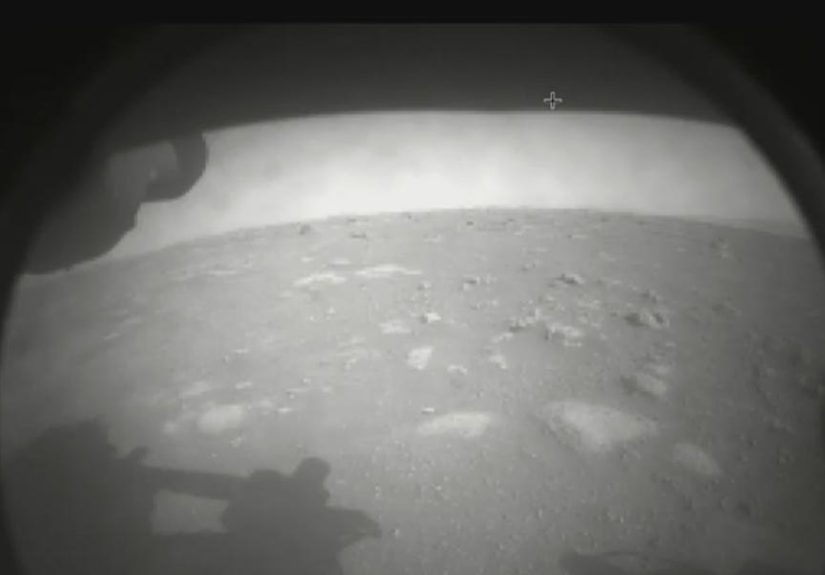
Yes. While the live landing is over, NASA’s official landing replays and descent videos remain available. The most famous video shows real footage captured by cameras on the spacecraft during entry, descent, and landing. It includes views of the parachute opening, the heat shield dropping away, the Martian surface approaching, and the sky crane lowering Perseverance to the ground.
That footage is historic because Mars landings had usually been seen through animations, telemetry, and post-landing images. Perseverance gave the public something much closer to a front-row seat. It was like watching a blockbuster movie, except the stunt team was a spacecraft, the set was another planet, and nobody could shout “cut” if something went wrong.
Why the Landing Was Called “Seven Minutes of Terror”
The final landing phase was called the “seven minutes of terror” because the spacecraft had to slow from extremely high speed to a safe touchdown in only a few minutes. During that time, hundreds of events had to happen in the correct order and at exactly the right moments.
Step 1: Atmospheric Entry
Perseverance entered the thin Martian atmosphere protected by a heat shield. Even though Mars has a much thinner atmosphere than Earth, the spacecraft was traveling so fast that friction created extreme heating. The heat shield protected the rover from temperatures that could have destroyed it before the science mission even began.
Step 2: Parachute Deployment
After surviving entry, the spacecraft deployed a supersonic parachute. This slowed the vehicle but could not finish the job alone. Mars’ atmosphere is too thin for a parachute-only landing of such a heavy rover.
Step 3: Powered Descent
Next came the powered descent stage, a rocket-powered system that helped guide the rover toward the surface. Perseverance used advanced landing technology, including terrain relative navigation, to compare images of the ground with onboard maps and steer away from dangerous hazards.
Step 4: The Sky Crane
In the final moments, the descent stage lowered Perseverance on cables using a sky crane maneuver. Once the rover’s wheels touched the Martian surface, the cables were cut and the descent stage flew away to crash at a safe distance. It sounds wild because it is wild. Yet the method worked beautifully for Curiosity in 2012 and again for Perseverance in 2021.
Why Perseverance Matters
Perseverance is often described as a laboratory on wheels, and that is not just a cute nickname. The rover carries sophisticated instruments designed to examine rocks, analyze chemical compositions, capture high-resolution images, study weather, and search for clues about ancient microbial life.
One of its most important jobs is sample caching. Perseverance drills into promising rocks, seals samples in ultra-clean tubes, and stores them for possible return to Earth by a future mission. Scientists can do a lot with rover instruments, but Earth-based laboratories offer far more powerful tools. A Mars sample returned to Earth could be studied for decades.
Perseverance and the Search for Ancient Life
The rover is not looking for little green neighbors waving from behind a rock. Instead, it is searching for possible biosignatures: chemical, mineral, or textural clues that could suggest ancient microbial life. Jezero Crater’s ancient lakebed and delta deposits are especially interesting because water is one of the key ingredients in the study of habitability.
NASA has emphasized that proving ancient life on Mars would require extraordinary evidence. Perseverance’s work is therefore careful, methodical, and patient. It studies the context of each rock, examines how water may have altered minerals, and selects samples that may hold the best scientific value.
What Was Ingenuity’s Role?
Perseverance also carried Ingenuity, a small experimental helicopter designed to test powered flight on another planet. At first, Ingenuity was expected to make only a short technology demonstration. Instead, it became one of the most charming overachievers in space exploration history.
Ingenuity proved that controlled flight was possible in Mars’ thin atmosphere. Its success changed how engineers and scientists think about future planetary exploration. Aerial scouts could help future missions inspect terrain, plan rover routes, and explore areas too dangerous for wheels.
How to Recreate the Live Landing Experience Today
If you want to experience Perseverance’s landing as close to live as possible, start with NASA’s official landing broadcast replay. Watch it without skipping ahead. Let the mission commentary build the tension. Follow the milestones as they are announced: cruise-stage separation, atmospheric entry, parachute deployment, powered descent, sky crane, and touchdown confirmation.
Then watch NASA’s actual descent footage. The replay is more than a highlight reel; it is a rare visual record of a spacecraft landing on another world. The moment when the rover swings gently under the sky crane above the Martian surface is unforgettable. It turns an engineering sequence into something deeply human: a machine built by thousands of people arriving safely on a planet no human has ever touched.
Best Viewing Tips for NASA Space Events
NASA broadcasts are educational, but they are also emotional. To enjoy them fully, treat them like major live events. Open the stream early, check your internet connection, and keep a backup platform ready in case one feed gets crowded. For families or classrooms, print a simple timeline of mission milestones so viewers can follow along.
It also helps to understand that mission control reactions are delayed. When a NASA team celebrates, they are usually celebrating a signal that left Mars several minutes earlier. That delay adds a strange kind of suspense. The spacecraft may already be safe, but Earth has not heard the good news yet.
Common Questions About Watching Perseverance Land
Is Perseverance landing live right now?
No. Perseverance landed on Mars on February 18, 2021. However, NASA’s official broadcast replays and landing footage are still available and remain the best way to watch the event.
Where did Perseverance land?
Perseverance landed in Jezero Crater, a location selected because it once contained an ancient lake and river delta. Scientists believe the area may preserve clues about Mars’ watery past.
Why was the landing so risky?
Mars landings are difficult because the atmosphere is thick enough to create dangerous heating but too thin to slow a spacecraft easily. Perseverance had to use a heat shield, parachute, powered descent, and sky crane system in a precise sequence.
What did Perseverance do after landing?
After landing, Perseverance began systems checks, imaging, science planning, and support for Ingenuity’s flight tests. It later began exploring Jezero Crater, collecting rock samples, studying ancient environments, and helping prepare for future Mars exploration.
Experiences Related to Watching Perseverance Land on Mars Live
Watching Perseverance land was not like watching an ordinary livestream. There was no dramatic camera angle showing the rover in real time from a nearby Martian tripod. There was no announcer shouting over roaring engines. Instead, the experience was built around data, commentary, animation, and human reaction. Somehow, that made it even more powerful.
The first experience many viewers remember is the waiting. The stream began before landing, so people had time to learn the mission basics, meet scientists and engineers, and understand why Jezero Crater mattered. That waiting period turned casual viewers into temporary mission-team members. You learned enough to care about every callout. Suddenly, words like “parachute deploy” and “powered descent” felt personal.
Then came the silence between milestones. A Mars landing is strange because the rover is acting alone while Earth listens from far away. When mission control announced that a signal had been received, viewers knew the event had actually happened minutes earlier. It created a feeling that was both scientific and emotional. You were not watching someone control a spacecraft; you were watching humanity receive messages from a brave little robot that had already done the impossible.
The touchdown confirmation was the unforgettable moment. Mission control erupted, but in the careful, masked, pandemic-era way of 2021. The celebration felt restrained and enormous at the same time. People clapped, raised arms, exchanged relieved looks, and let years of work turn into a few seconds of joy. For many viewers at home, it was a rare moment of shared optimism. The world had plenty of problems, but for that instant, a rover was safe on Mars, and that was enough.
The later release of the descent footage added a second wave of amazement. Seeing the parachute snap open above Mars, watching the surface grow closer, and observing the sky crane lower the rover made the landing feel real in a new way. It was no longer only a set of mission-control callouts. It became a visual journey from space to soil.
Teachers used the landing to inspire students. Families watched together from living rooms. Space fans followed every update like sports commentary. Even people who had never paid much attention to Mars found themselves impressed by the precision and courage behind the mission. Perseverance gave the public a reminder that exploration is not only about machines and measurements. It is also about curiosity, patience, teamwork, and the stubborn belief that the next horizon is worth reaching.
Rewatching the landing today still carries that feeling. You know the ending, but the suspense remains. You still feel the tension as the spacecraft enters the atmosphere. You still wait for the parachute. You still lean forward during powered descent. And when the words “touchdown confirmed” arrive, they still land with emotional force. That is the magic of Perseverance: it did not just land on Mars. It landed in the imagination of everyone who watched.
Conclusion
NASA’s Perseverance Mars rover landing was a landmark moment in space exploration and public science communication. It showed the world how complex Mars landings are, how much teamwork goes into robotic exploration, and why Jezero Crater could help answer some of humanity’s biggest questions about life beyond Earth.
Although the live event took place on February 18, 2021, the experience is far from over. Official replays, descent footage, mission updates, and rover images still allow viewers to follow Perseverance’s journey. Whether you are a space enthusiast, a student, a teacher, or simply someone who enjoys watching humans send excellent robots to terrifying places, Perseverance remains worth your attention.