Table of Contents >> Show >> Hide
- Understanding Moles and Melanoma
- The First 5 Signs: The ABCDE Rule
- Three More Red-Flag Signs of a Possibly Cancerous Mole
- How to Check Your Moles at Home (Without Freaking Out)
- When to See a Dermatologist
- What Happens If Your Doctor Is Concerned About a Mole?
- Real-Life Experiences: What It’s Like to Notice a Suspicious Mole
- The Bottom Line
Quick disclaimer: This article is for general education only and is not a substitute for professional medical advice, diagnosis, or treatment. If you’re worried about a mole or any spot on your skin, call a dermatologist or other qualified health professional as soon as possible.
Most of us don’t think too much about our moles until one suddenly looks a little… different. Maybe it got darker, a bit bigger, or just started giving off a “bad vibe.” Because skin cancer is the most common cancer in the United States, and melanoma can be life-threatening if it’s caught late, learning how to spot a suspicious mole is one of the most useful health skills you can have.
The good news? Early detection of melanoma is highly treatable, and many melanomas are first noticed by the person who has them. In this guide, we’ll walk through 8 key signs a mole may be cancerous, plus how to check your skin safely, when to see a dermatologist, and what usually happens next if a mole needs to be tested.
Understanding Moles and Melanoma
Moles (also called nevi) are common clusters of pigment-producing cells. Most people have between 10 and 40 moles, many of which show up in childhood or teen years and stay pretty stable over time. Most moles are harmless.
Melanoma is a type of skin cancer that starts in those pigment cells. It can develop in an existing mole or show up as a completely new spot. Not every weird-looking mole is melanoma, and not every melanoma looks dramatic. That’s why experts created a simple checklist to help you know when to get a mole checkedstarting with the classic ABCDE rule.
The First 5 Signs: The ABCDE Rule
Dermatologists often teach the ABCDE rule as an easy way to remember the most common warning signs of a potentially cancerous mole or melanoma.
1. Asymmetry: One Half Doesn’t Match the Other
Imagine drawing a line down the middle of your mole. If both halves look similar, that’s more typical of a benign (noncancerous) mole. If the halves do not matchone side is thicker, darker, or shaped differentlythat’s called asymmetry, and it can be a warning sign.
Asymmetry doesn’t guarantee cancer, but it’s one of the features that makes skin specialists pay close attention. When you see an obviously lopsided mole, it’s worth having a professional take a look.
2. Border: Irregular, Jagged, or Blurry Edges
Benign moles usually have smooth, well-defined borders, like someone traced them with a fine-tip marker. Suspicious moles, on the other hand, may have:
- Ragged or notched edges
- Blurry or fading borders that blend into the surrounding skin
- Scalloped shapes instead of a neat circle or oval
If a mole’s outline looks messy or uneven, especially compared with your other moles, it belongs on your “ask a dermatologist” list.
3. Color: Multiple or Uneven Colors
Most harmless moles are a single, uniform shade of light to dark brown. A mole that has several different colors can be more concerning. Colors to watch for include:
- Different shades of brown or black within one mole
- Patches of tan, red, pink, white, or blue
- Areas that suddenly get much darker than the rest of the mole
Think of it this way: if your mole starts to look like a tiny camouflage pattern or a galaxy of mixed colors, that’s not something to ignore.
4. Diameter: Larger Than a Pencil Eraser (But Smaller Can Still Be Suspicious)
Dermatologists often use the “pencil eraser rule.” If a mole is larger than about 6 millimeters (roughly ¼ inch across), it deserves a closer look. That said, it’s important to know:
- Some melanomas are smaller than 6 mm when they’re found.
- Size alone doesn’t diagnose anything; it just adds to the overall risk picture.
So while not every big mole is dangerous, a large or enlarging spot that also has other ABCDE features should be checked out promptly.
5. Evolving: Any Change Over Time
If you remember only one letter, make it E for Evolving. A mole that changes in any noticeable way should be taken seriously. That includes changes in:
- Size – getting larger, thicker, or suddenly “spreading”
- Shape – becoming more irregular
- Color – darkening, lightening, or adding new colors
- Texture – becoming scaly, crusty, or raised
Also pay attention if a mole starts itching, hurting, or bleeding without a clear reason. Change is one of the biggest red flags for skin cancer.
Three More Red-Flag Signs of a Possibly Cancerous Mole
The ABCDE rule covers five major warning signs, but dermatologists also look for a few additional clues that can help catch melanoma early.
6. The “Ugly Duckling” Mole
Most of your moles probably have a similar “look”similar size, shape, and color. The “ugly duckling” sign is a mole that clearly stands out from the rest. It might be:
- Darker or lighter than all your other moles
- Much larger or oddly shaped
- The only spot that looks different in a particular area
When you scan your skin, ask yourself: “Which mole looks most out of place?” If one jumps out as the odd one, that’s exactly the type a dermatologist will want to examine more closely.
7. A New or Unusual MoleEspecially After Age 30
It’s normal to get some new moles in childhood and young adulthood. But new moles that appear in your 30s, 40s, or later can be more concerning, especially if they look unusual.
Red flags include:
- A new dark spot that doesn’t look like your other freckles or moles
- A new growth that seems to appear “out of nowhere”
- A persistent patch of pigment that keeps slowly enlarging
Not every new spot is melanomamany are harmless seborrheic keratoses or sunspotsbut a new, atypical mole is always worth mentioning to your doctor.
8. Itching, Bleeding, Pain, or a Sore That Won’t Heal
Healthy moles usually mind their own business. If one suddenly becomes itchy, tender, painful, crusty, or starts bleeding without being scratched or injured, that’s a sign something may be wrong.
Pay attention to:
- A sore or scab on or near a mole that doesn’t heal
- A mole that oozes, leaks, or repeatedly bleeds
- A spot that feels differentmore sensitive, tingly, or just “off”
Any of these changes should prompt a visit to a healthcare provider, especially when combined with ABCDE features.
How to Check Your Moles at Home (Without Freaking Out)
Doing regular skin self-exams doesn’t mean turning into a full-time mole detective. A simple monthly check can go a long way. Here’s a calm, practical approach:
- Pick good lighting. Natural light or a bright bathroom works best.
- Use a full-length mirror and a hand mirror. You’ll need both to see your back, scalp, and behind your ears.
- Check everywhere. Melanoma can show up on areas that don’t see much sun: between toes, under nails, on the soles of the feet, on the buttocks, and even on the scalp.
- Look for the 8 signs. Scan for asymmetry, strange borders, color changes, size, evolving spots, ugly ducklings, new growths, and symptoms like itching or bleeding.
- Take photos. Snap clear, dated pictures of any mole you’re unsure about so you can track changes over time.
Your goal is not to diagnose yourselfthat’s your dermatologist’s job. Your job is to notice changes and bring them to a pro’s attention early.
When to See a Dermatologist
Make an appointment with a dermatologist or other qualified provider if:
- Any mole meets one or more of the ABCDE criteria
- You notice an obvious ugly duckling mole
- A mole is new, changing, itching, bleeding, or painful
- You’ve had sunburns, especially blistering ones, or used tanning beds
- You have a family or personal history of melanoma or other skin cancers
- You have many moles, very fair skin, or a lot of sun damage
Even if you’re not sure a spot looks “bad enough,” it’s absolutely okay to get it checked. Dermatologists would much rather say “this is fine” than diagnose a late-stage melanoma.
What Happens If Your Doctor Is Concerned About a Mole?
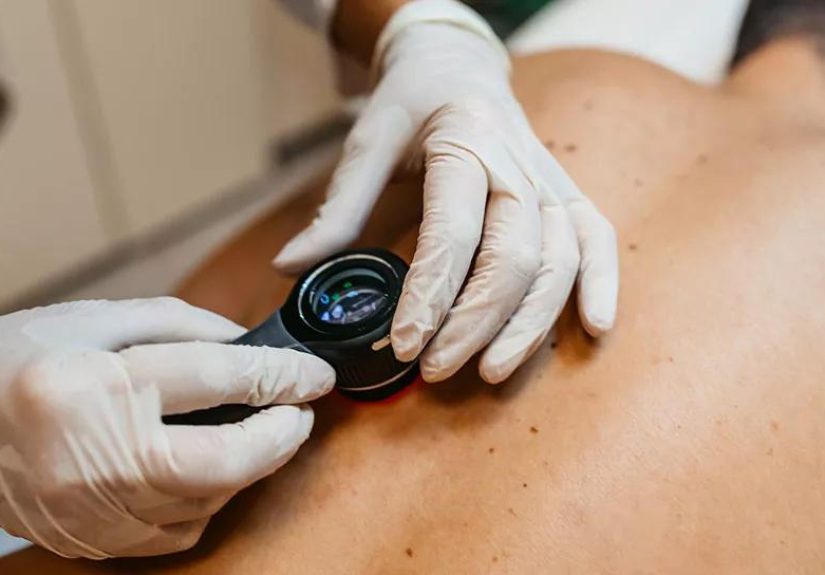
If your dermatologist thinks a mole looks suspicious, the next step is usually a skin biopsy. That might sound scary, but the procedure is typically quick and done right in the office under local anesthesia.
Here’s what to expect:
- Your doctor numbs the area with a small injection.
- A tiny piece, or sometimes the entire mole, is removed.
- The sample is sent to a pathology lab to check for cancer cells.
If the biopsy shows melanoma or another type of skin cancer, treatment often involves removing a bit more skin around the area (called a wide local excision). In early, thin melanomas, this may be all that’s required. More advanced cases may need additional tests or treatments, but the earlier melanoma is found, the better the outlook usually is.
Real-Life Experiences: What It’s Like to Notice a Suspicious Mole
Because health topics can feel abstract, it helps to think in stories. The following are composite examples based on common experiences people describe when they talk about spotting a cancerous or precancerous mole. They’re not about any single person, but they reflect patterns dermatologists often see.
“I Almost Ignored It Because I Was Busy”
Lisa was a 38-year-old mom who always had a few freckles and moles on her shoulders. One summer, she noticed a dark spot on her upper back in a photo someone took at the beach. It looked bigger and darker than the freckles around it, but life got busykids’ schedules, work, house stuff. For months, she forgot about it.
One day, while putting on sunscreen, she finally used a hand mirror to check her back. The spot was now clearly larger, darker, and slightly irregular at the edges. It also felt a bit itchy. She snapped a picture, compared it to the old beach photo, and realized it had definitely changed.
She booked a dermatology appointment “just to be safe.” Her dermatologist agreed it looked suspicious, did a biopsy, and the result came back as an early melanomacaught early enough that a minor outpatient surgery was all she needed. Today, she has a small scar, a big sense of relief, and a new habit of scheduling annual skin checks.
Takeaway: Life gets busy, but your skin doesn’t care about your calendar. If a mole sticks in your mind or shows up in photos looking different, that’s your cue to follow up.
“My Partner Noticed the ‘Ugly Duckling’ I Couldn’t See”
Daniel, in his mid-40s, had moles scattered across his back that he rarely saw. His partner, though, noticed one spot that looked darker and more irregular than the rest. Every time they applied sunscreen before hiking, that one mole stood out. It had a jagged border and almost looked like two shades of brown mixed together.
Daniel felt fine and had no symptoms, but his partner kept gently saying, “That one looks weird.” To keep the peace (and, secretly, because he was a little worried now), he booked a skin exam. The dermatologist immediately called it an “ugly duckling” and biopsied it. It turned out to be an early-stage melanoma.
Takeaway: Sometimes the people who see your back or scalp more often than you do are your best early-warning system. If someone you trust says, “Hey, that mole doesn’t look right,” listen.
“I Thought It Was Just a Scratch That Would Heal”
Marisol noticed a tiny scab on her leg that never quite healed. She assumed she’d nicked herself shaving or bumped into something. Weeks went by. The spot would scab, bleed a little, then scab again. It didn’t hurt much, so she ignored it.
Eventually, she realized the surrounding skin had a faint brownish pigment and the area was always a little flaky. A quick internet search for “sore that won’t heal” was enough to convince her to get it checked. Her doctor diagnosed an early skin cancer, which was treated with a simple in-office procedure.
Takeaway: Skin cancers don’t always look like dramatic moles. A weird, stubborn “scratch” or “rash” that doesn’t heal is also worth a professional opinion.
How These Experiences Can Help You
Everyone’s story is different, but a few themes show up again and again:
- Change is often the first cluesize, color, shape, or symptoms.
- Friends, partners, and family members often spot things we can’t see ourselves.
- People rarely regret going in “too early,” but they do regret waiting when something was truly wrong.
- Most evaluations are quick, reassuring, and either rule out cancer or catch it early.
Instead of letting worry spiral, use that energy to make a plan: check your skin regularly, take photos of moles you’re unsure about, and schedule a skin exam if anything bothers you. That combination of awareness and action is one of the most powerful tools you have for protecting your health.
The Bottom Line
Learning how to tell if a mole might be cancerous doesn’t mean you have to become a dermatologist overnight. It means knowing the big warning signsthe ABCDEs, the ugly duckling sign, new or unusual spots, and moles that itch, bleed, or won’t healand being willing to act on them.
If you notice any of these 8 signs, don’t panic, but don’t ignore them either. Call a dermatologist, get a professional skin exam, and keep up with regular self-checks and sun protection. If there’s one thing skin cancer experts agree on, it’s this: when it comes to melanoma, early is everything.