Table of Contents >> Show >> Hide
- Start With a Simple Lighting Game Plan (So You Don’t End Up With a Glowy Mess)
- Backyard Lighting Ideas That Look Great and Solve Real Problems
- 1) Bistro String Lights: The Crowd-Pleaser That Works Almost Anywhere
- 2) Pergola, Gazebo, or Covered Patio? Add a Statement Pendant or Chandelier
- 3) Lantern Clusters: Portable, Flexible, and Weirdly Romantic
- 4) Path and Step Lighting: The “No One Trips” Upgrade
- 5) Uplighting Trees and Tall Plants: Instant Drama, Minimal Effort
- 6) Downlighting (a.k.a. “Moonlighting”): Soft Light That Doesn’t Scream
- 7) Fence and Wall “Grazing”: Make the Background Look Designed
- 8) Deck Rail and Stair LEDs: Small Details, Big Payoff
- 9) Water Feature Lighting: Let Reflections Do the Fancy Work
- 10) Fire Pit + Lighting: Create a Halo, Not a Stadium
- 11) Grill and Outdoor Kitchen Lighting: Task Light Where It Matters
- 12) Security Lighting That Doesn’t Ruin the Mood
- DIY-Friendly Low-Voltage Landscape Lighting (The Sweet Spot for Most Homes)
- Solar, Plug-In, or Hardwired? Choose What Fits Your Yard and Your Patience Level
- Make It Beautiful Without Making Enemies: Glare, Neighbors, and “Dark-Sky” Common Sense
- Maintenance Tips That Keep Your Backyard Lighting Looking “New”
- Conclusion: Your Best Backyard Lighting Is a Mix, Not a Single “Magic” Fixture
- Extra: Real-World Experiences Homeowners Have With Backyard Lighting (So You Can Skip the Learning Curve)
Your backyard has a day job (being green and pretty) and a night job (not becoming a spooky void where patio furniture goes to stub your toe). The good news: you don’t need a Hollywood budgetor a forklift of floodlightsto make your outdoor space feel warm, usable, and downright magical. With the right mix of backyard lighting ideas, you can turn “We should head inside” into “One more drink out here?”
This guide walks you through practical, good-looking outdoor lighting you can actually live with: cozy string lights, safer pathways, subtle landscape lighting, and a few “wow” tricks that make your yard feel bigger and more intentional. We’ll keep it fun, skip the jargon where possible, and focus on results you’ll notice the very first night.
Start With a Simple Lighting Game Plan (So You Don’t End Up With a Glowy Mess)
The fastest way to make outdoor lighting look expensive is… planning it like you meant to do it. Before you buy anything, stand outside at dusk and ask two questions: Where do we walk? and Where do we hang out? Everything else is bonus sparkle.
Use the “3-Layer” Rule: Ambient, Task, and Accent
- Ambient lighting sets the mood (string lights, pendants, lanterns, soft wall sconces).
- Task lighting helps you do stuff (grill lighting, outdoor kitchen lights, brighter coverage near steps).
- Accent lighting adds drama (uplighting a tree, grazing a fence, spotlighting a sculpture or planter).
Think of it like getting dressed: ambient is the outfit, task is the pockets (useful!), and accent is the accessory that makes people say, “Oh wowwhere’d you get that?”
Pick a Warm Glow That Flatters Humans (And Doesn’t Look Like a Parking Lot)
For most backyards, warmer light feels more invitingespecially around seating and dining. If you’ve ever seen a backyard that felt weirdly clinical, chances are it wasn’t the patio furniture’s fault. It was the lighting.
Add Controls Early: Timers, Dimmers, and Zones
A backyard that’s perfectly lit for dinner is often too bright for late-night hanging out. If you can, set up zones (patio, path, garden) and choose fixtures that can be dimmed or switched separately. Even a basic outdoor timer is a lifestyle upgrade: you’ll get the “always welcoming” vibe without having to remember to flip a switch like it’s 1998.
Backyard Lighting Ideas That Look Great and Solve Real Problems
1) Bistro String Lights: The Crowd-Pleaser That Works Almost Anywhere
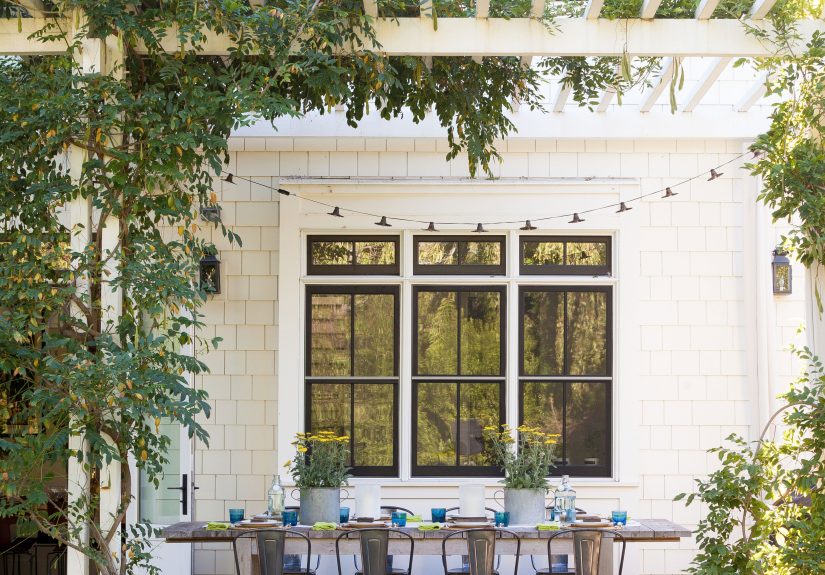
If backyard lighting had a greatest hits album, bistro string lights would be track one. They’re affordable, instantly cozy, and they make everything feel more “intentional,” including that chair you’ve been meaning to throw away since last summer.
Example setup: Hang strands in a gentle zig-zag over a dining table, anchored to your house on one end and a sturdy post or pergola on the other. Keep the strands high enough that tall friends don’t accidentally become part of the installation.
- Use outdoor-rated strands and outdoor-rated outlets.
- For windier yards, add a guide wire (so lights don’t sag like a tired hammock).
- Warm-toned bulbs feel more “dinner party” than “interrogation.”
2) Pergola, Gazebo, or Covered Patio? Add a Statement Pendant or Chandelier
Covered structures are basically begging for a “ceiling” light. A weather-rated pendant or chandelier gives you a focal point and better light for eating, games, or working outside. Bonus: it makes your backyard feel like an actual roomjust with better air circulation.
Style tip: If your outdoor decor leans casual (think: wicker, neutrals, lots of plants), woven or rattan-style fixtures add texture. If it’s more modern, a clean-lined matte fixture looks sharp without trying too hard.
3) Lantern Clusters: Portable, Flexible, and Weirdly Romantic
Lanterns are the ultimate “move the vibe where you need it” lighting. Put a cluster of different heights near a seating area, line a few along the edge of a patio, or place one at the end of a garden bench to make it look like you read books outdoors on purpose.
- Use LED candles for the flicker look without the “wind just ate my flame” problem.
- Mix materials (metal + glass + woven) to create depth without clutter.
- Try one lantern on a side table to make a small patio feel styled, not stuffed.
4) Path and Step Lighting: The “No One Trips” Upgrade
Pretty lighting is great. Lighting that keeps your guests from face-planting into the hydrangeas is even better. Add small path lights along walkways, plus dedicated step lights anywhere there’s a change in elevation (stairs, edges, retaining walls).
Placement idea: Instead of lining lights up like airport runway markers, stagger them slightly for a softer, more natural look.
5) Uplighting Trees and Tall Plants: Instant Drama, Minimal Effort
Want the fastest “wow”? Aim a spotlight up into a tree canopy or a tall ornamental grass. This creates shadows and texture, and it makes your yard feel layeredlike it has depth instead of just being a flat rectangle of “outside.”
- Place the light a few feet away from the trunk for a wider spread.
- Try two smaller lights instead of one super-bright beam for a more natural look.
- Angle carefully to avoid glare from the patio seating area.
6) Downlighting (a.k.a. “Moonlighting”): Soft Light That Doesn’t Scream
If you have a mature tree or an overhang, downlighting can mimic moonlight: gentle, flattering, and great for conversation areas. Mount a small fixture higher up and direct it downward so the ground gets illuminated, not your eyeballs.
7) Fence and Wall “Grazing”: Make the Background Look Designed
Fences are often the biggest surface in a yardand the most ignored at night. A few low fixtures aimed upward or along the base can “wash” the surface with light, making the whole space feel more finished.
Example: Put subtle lights behind tall plants along a fence line. You’ll get silhouette shadows and a cozy glow without spotlighting every single board.
8) Deck Rail and Stair LEDs: Small Details, Big Payoff
Deck lighting is where function and style high-five. Rail lights and stair lights help people move around safely and make the deck feel intentional. If your deck is the main “room” of your backyard, treat it like one.
9) Water Feature Lighting: Let Reflections Do the Fancy Work
If you have a pool, pond, or even a small fountain, light around it softly and let the reflected shimmer add movement. You don’t need intense brightness; the water will do the dramatic thing for you.
10) Fire Pit + Lighting: Create a Halo, Not a Stadium
Fire pits already provide lightjust not always in the “I can see my drink” way. Add a few low, warm fixtures nearby (or lanterns) so faces are visible, snacks are findable, and the ambiance stays cozy.
11) Grill and Outdoor Kitchen Lighting: Task Light Where It Matters
If you’ve ever tried to check chicken doneness using your phone flashlight, congratulations: you’ve discovered why task lighting exists. Add a dedicated light above the grill or prep areasomething brighter and aimed directly at your workspace.
12) Security Lighting That Doesn’t Ruin the Mood
Motion-sensor lights are greatwhen they’re aimed correctly and not blinding you every time a moth lives its best life near your porch. Choose fixtures that direct light downward, place them where you truly need visibility, and consider pairing motion sensors with softer ambient lighting so the yard never feels “off” when the bright light isn’t triggered.
DIY-Friendly Low-Voltage Landscape Lighting (The Sweet Spot for Most Homes)
If you want professional-looking landscape lighting without diving into full electrical work, low-voltage systems are usually the friendliest path. They use a transformer to step down household power to a lower voltage, then run cable to fixtures around the yard.
A Practical Mini-Checklist Before You Install
- Sketch your zones: entry/path, patio/seating, accent (trees, garden beds, focal points).
- Count fixtures + estimate load: keep your total system load within your transformer’s rating.
- Plan cable routes: avoid areas you dig often (future-you will be grateful).
- Test at night: place fixtures temporarily and power them on before committing.
Pro move: Install the path and step lights first (the “safety layer”), then add accent lights (the “wow layer”). You’ll get immediate improvement, and you won’t accidentally spend your whole budget making one tree look like it’s starring in a musical.
Solar, Plug-In, or Hardwired? Choose What Fits Your Yard and Your Patience Level
Solar Outdoor Lights
Solar path lights and spotlights are easy to install and great for low-commitment glow. They’re especially handy for renters or for areas far from power. The trade-off: brightness and consistency can vary based on sun exposure and season.
Plug-In Lighting
Plug-in string lights, lanterns, and some spotlights are a quick win for patios and pergolas. Just be smart about outdoor-rated cords and avoid running cords where they’ll sit in water or become permanent “temporary” wiring.
Hardwired Lighting
Hardwired fixtures (like permanent sconces or post lights) can look sleek and feel built-in. They’re best when you want a long-term upgrade and you’re comfortable bringing in a professional for safe installation.
Make It Beautiful Without Making Enemies: Glare, Neighbors, and “Dark-Sky” Common Sense
Outdoor lighting is supposed to improve your lifenot turn your backyard into the unofficial neighborhood lighthouse. A few simple choices keep your yard welcoming and reduce unnecessary spill:
- Direct light downward where possible (paths, seating, steps).
- Avoid bare bulbs at eye level (glare makes spaces feel harsher and less cozy).
- Use controls like timers or motion sensors so lights aren’t on all night “just because.”
- Choose warm light for most decorative areasyour yard will feel calmer and more inviting.
Maintenance Tips That Keep Your Backyard Lighting Looking “New”
- Wipe lenses and covers a few times a seasondust and pollen can noticeably dim output.
- Re-aim spotlights after storms or yard work (plants grow; beams drift).
- Replace in batches if color or brightness is inconsistentmixed bulbs can look patchy.
- Store portable lanterns during harsh weather if they aren’t rated for it.
Conclusion: Your Best Backyard Lighting Is a Mix, Not a Single “Magic” Fixture
The secret to a backyard that feels expensive isn’t one giant lightit’s layering. Start with safe movement (paths and steps), add cozy ambiance (string lights and lanterns), then sprinkle in accents (trees, fences, garden beds). You’ll end up with a space that’s functional for real life and gorgeous enough for “accidentally” taking photos when the lights come on.
Extra: Real-World Experiences Homeowners Have With Backyard Lighting (So You Can Skip the Learning Curve)
Based on common homeowner experiences (and the kind of lessons you only learn after your first “why is it so dark out here?” moment), backyard lighting tends to go through a predictable glow-up phase. The first install is usually optimistic: one strand of string lights, a handful of solar stakes, and the belief that everyone will suddenly want to play board games outside until midnight. Then reality arrivesoften in the form of a guest missing a step or someone trying to grill with a phone flashlight clenched between their teeth.
One of the most repeated “I wish I’d done this sooner” moments is adding step lighting or subtle path lighting. People often start with ambiance because it’s fun (and it photographs well), but the biggest quality-of-life upgrade is being able to walk to the seating area without doing the cautious shuffle. Once safety lighting is in place, the entire yard feels more usablekids can run around, guests feel relaxed, and you stop hovering like a concerned camp counselor every time someone heads toward the garden.
Another common experience: the too-bright regret. It’s easy to assume more light equals better light, especially when shopping online and the product description basically screams “DAYLIGHT POWERED SUN OF DOOM.” Homeowners who go big on brightness often end up dialing it backswapping cooler, harsher bulbs for warmer ones, aiming spotlights away from seating, or adding dimmers. The sweet spot tends to be “I can see faces and steps” rather than “I can perform surgery on this patio table.” The moment you get the balance right, people linger longerand the backyard stops feeling like a stage.
People also learn quickly that wind is a designer, too. String lights look dreamy until a gust turns them into a slapping, swaying tangle. A practical fix that experienced homeowners love is using a tensioned guide wire or choosing stronger anchor points. The goal is a gentle drape, not a nautical knot-tying competition. Likewise, lanterns and lightweight decor lights do best when grouped in sheltered spots, or when they’re heavy enough not to wander off during a storm like they’re auditioning for a travel show.
Finally, there’s the “zones changed everything” experience. Homeowners who separate lighting into zonespatio on one switch, path on another, accent lights on a thirdreport that their backyard feels more flexible. Bright for dinner and grilling, softer for hanging out, minimal lighting for late nights when you just want to see the dog without lighting up the entire county. If you take only one lesson from the collective backyard-lighting journey, it’s this: build your lighting in layers, control it in zones, and aim for cozy first. Your future self will thank youprobably while sitting outside, still chatting, long after sunset.