Table of Contents >> Show >> Hide
- What Exactly Is Allosaurus jimmadseni?
- Why This Discovery Matters
- The Fossils Behind the Name
- How Scientists Knew It Was a Different Species
- Where It Lived: The Morrison Formation
- Allosaurus jimmadseni vs. Allosaurus fragilis
- What the Discovery Says About Paleontology Today
- A Better Headline for the Story
- Related Experiences: Why Allosaurus jimmadseni Feels So Real to Modern Readers
- Conclusion
Every few years, paleontology delivers a reminder that dinosaurs still have a few plot twists left. Allosaurus jimmadseni is one of those delicious twists: a “new” dinosaur that was hiding in plain sight inside one of North America’s most famous Jurassic predator groups. That is the fun part. The even better part is that this animal was not dreamed up from a lonely tooth and a wish. It was identified from spectacular fossil material, including a remarkably complete skeleton from Utah and the famous “Big Al” specimen from Wyoming.
So yes, the title says “new dinosaur discovered,” but the real story is even more interesting. Allosaurus jimmadseni was formally described as a distinct species in 2020, even though key fossils had been found decades earlier. In other words, this is less “scientists tripped over a monster last Tuesday” and more “science finally solved a Jurassic identity mix-up.” That kind of slow-burn discovery is classic paleontology: dusty bones, careful comparison, years of preparation, and then suddenly the ancient past clears its throat and says, “Actually, I’m not who you thought I was.”
What Exactly Is Allosaurus jimmadseni?
Allosaurus jimmadseni is a large two-legged carnivorous dinosaur from the Late Jurassic of western North America. It lived during the Kimmeridgian stage, roughly 157 to 152 million years ago, in the older part of the Morrison Formation ecosystem. That makes it the geologically oldest known species of Allosaurus, older than the better-known Allosaurus fragilis, the species that usually gets the spotlight in books, museums, and every kid’s mental dinosaur playlist.
Like other allosaurs, it was built to be an apex predator. It had a big skull, serrated teeth, powerful hind limbs, long arms, and three sharp claws that were likely useful for gripping prey. This was not a polite nibbling herbivore. This was the kind of dinosaur that made the Jurassic floodplains feel like a place where everyone else needed a backup plan.
The name itself is a nice little tribute. “Allosaurus” means “different reptile” or “different lizard,” and “jimmadseni” honors James H. Madsen Jr., a major figure in the study of Allosaurus and Utah paleontology. So the full name basically carries both scientific distinction and a thank-you note from the fossil record.
Why This Discovery Matters
On the surface, adding one more species to a famous dinosaur genus might sound like a detail for specialists with very strong opinions about skull bones. But this discovery matters for a bigger reason: it shows that the Jurassic world changed over time more than people once assumed.
The Morrison Formation is famous for iconic dinosaurs like Stegosaurus, Diplodocus, Apatosaurus, and Allosaurus. For a long time, it was easy to imagine this formation as one giant, stable dinosaur super-neighborhood where the same cast lived together forever. Allosaurus jimmadseni complicates that picture in the best possible way. It suggests that earlier Morrison ecosystems had a different dominant Allosaurus species, and that later faunas were not simply carbon copies with slightly rearranged scenery.
In short, the discovery helps paleontologists track evolutionary turnover. One top predator species appears to have been replaced by another over millions of years. That may sound subtle, but in deep time, subtle changes are often the headline.
The Fossils Behind the Name
The Utah Specimen
The name-bearing specimen, known as DINO 11541, was found in Dinosaur National Monument in northeastern Utah. It was first discovered in 1990 during a paleontological inventory. What began as a few exposed bones turned into an excavation story worthy of a summer blockbuster for geology fans: the skeleton was so large and difficult to remove that crews used explosives to clear surrounding rock, jacketed the specimen in an enormous block, and flew it out by helicopter.
And then came the twist. The body was there, but the skull was missing. For a predator, that is kind of an important accessory. In 1996, researchers used radiological surveying equipment to detect the skull still hidden in the quarry wall. That find turned an already excellent specimen into a scientific jackpot.
The Famous “Big Al”
The second major specimen is MOR 693, better known as “Big Al,” discovered in Wyoming in 1991. If that name rings a bell, it is because Big Al became famous through documentaries and museum displays long before Allosaurus jimmadseni was formally named. For years, Big Al was commonly treated as Allosaurus fragilis. Later study showed that the specimen fit the new species instead.
This is one of the coolest parts of the story. A celebrity dinosaur did not stop being famous; it just got a more accurate name tag. Paleontology loves a dramatic reveal, even when the reveal happens in a lab instead of a jungle.
How Scientists Knew It Was a Different Species
Naming a new dinosaur species is not about spotting one bone and yelling “close enough.” Researchers compared the skull and associated bones of the Utah and Wyoming specimens with other known allosaur material across North American collections. The case for Allosaurus jimmadseni rests especially on cranial anatomy, which is where the animal starts showing off its own identity.
A More Slender Skull
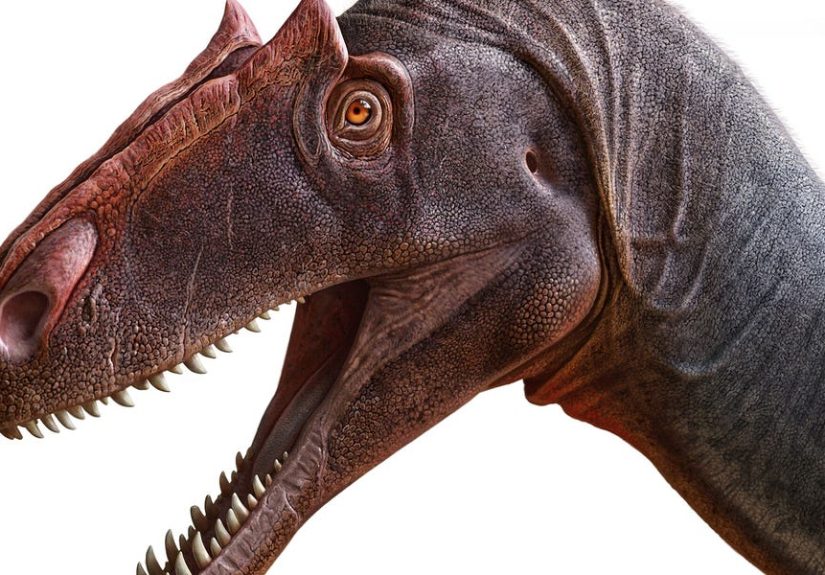
Compared with Allosaurus fragilis, A. jimmadseni had a narrower skull and differences in the back of the head that suggest a somewhat weaker skull build. Researchers also noted less overlap in its forward field of vision than in the younger species. That does not mean it was a poor hunter. It means it was built a bit differently, and those differences matter when scientists are trying to untangle evolution within a famous predator lineage.
Distinctive Crests and Facial Bones
One of the standout features is its ornamentation. Allosaurus jimmadseni had low, blade-like crests running from above the eyes toward the snout, along with distinctive features in the upper jaw and cheek bones. The jugal bone in particular differs from A. fragilis, and the nasal region forms a more pronounced crest. In plain English: if these two species met at a Jurassic costume party, a paleontologist would still pick them out from the skulls.
Those features are not just cosmetic trivia. Skull structure can reflect feeding mechanics, display features, species recognition, and long-term evolutionary change. In dinosaurs, the face often carries the clues that the rest of the skeleton politely leaves lying around for future scientists.
Where It Lived: The Morrison Formation
To understand Allosaurus jimmadseni, you have to picture its world. The Morrison Formation stretches across much of the western United States and is one of the richest sources of dinosaur fossils in North America. During the Late Jurassic, this region was not a single endless swamp, despite the occasional movie vibe. It included floodplains, rivers, braided stream systems, lakes, mudflats, and areas shaped by seasonal dryness.
Scientists describe the ecosystem as warm and semi-arid, with strong seasonality. In other words, it was not a lush tropical jungle every day of the week. Water, drought, sediment flow, and shifting habitats all helped shape which animals thrived and where their remains were preserved. That environmental complexity is part of why the Morrison Formation keeps producing new scientific insights after more than a century of study.
In rocks associated with Allosaurus jimmadseni, other dinosaurs included predators such as Ceratosaurus and Torvosaurus, as well as giant plant-eaters like Haplocanthosaurus and Supersaurus, plus stegosaurs such as Hesperosaurus. It was a spectacular ecosystem full of long necks, spikes, claws, and bad life choices if you were a smaller animal standing in the wrong place.
Allosaurus jimmadseni vs. Allosaurus fragilis
The easiest way to think about the difference is this: Allosaurus fragilis is the better-known later species, while Allosaurus jimmadseni represents an earlier form in the genus. Both were large theropod predators, both belonged to the Morrison Formation story, and both looked unmistakably “allosaur” to the average observer. But when paleontologists looked closely, the skull architecture told a more nuanced story.
A. jimmadseni had a more slender skull, different facial anatomy, and a straighter lower margin in the jugal region than A. fragilis. It also seems to come from older rock layers. Put together, those traits support the idea that the genus changed through time rather than remaining anatomically frozen while the Jurassic rolled on.
That matters because famous dinosaur names can sometimes become scientific junk drawers. Once a genus is well known, there is a temptation to shovel every similar specimen into it without asking whether multiple species are hiding inside. Allosaurus jimmadseni is a reminder that even superstar dinosaurs still need careful taxonomic housekeeping.
What the Discovery Says About Paleontology Today
One of the most exciting lessons here is that groundbreaking discoveries do not always come from brand-new quarries. Sometimes they come from returning to old specimens, reexamining anatomy, and asking sharper questions. That may not sound as cinematic as unearthing a skull at sunset, but it is exactly how science gets better.
The study of Allosaurus jimmadseni also shows why public lands, museum collections, and long-term fossil preparation matter so much. The Utah specimen came from Dinosaur National Monument. Big Al came from land under federal management before being transferred to a public repository. These fossils were not just found; they were preserved, studied, compared, and made available for future research.
That is an important point in an age when people sometimes imagine discovery as a lone genius moment. In reality, this species was revealed through teamwork: field crews, museum preparators, monument staff, researchers, public institutions, and years of patient anatomical work. Even dinosaurs, it turns out, require paperwork.
A Better Headline for the Story
If we wanted to be extra precise, the headline could be: “Famous Jurassic Predator Revealed as an Older, Distinct Species After Decades of Study.” But that is admittedly less clicky and sounds like a newspaper trying very hard not to smile. “New dinosaur discovered” gets the spirit right, even if the science is more refined: this was a newly recognized species, described from fossils that changed meaning as researchers learned to read them more carefully.
And that is part of what makes Allosaurus jimmadseni so fascinating. It is not just a new name on a fossil label. It is evidence that one of the most famous predatory dinosaur lineages in North America had more depth, more time, and more evolutionary texture than many people realized.
Related Experiences: Why Allosaurus jimmadseni Feels So Real to Modern Readers
There is a special kind of thrill that comes with learning about a dinosaur like Allosaurus jimmadseni. It is not the same as reading a list of facts in a textbook. It feels more like walking into a museum hall, stopping under a skeleton, and realizing that the animal in front of you has a story that kept changing long after it fossilized. That emotional jolt matters because paleontology is one of the few sciences where the objects of study are both incredibly old and strangely theatrical. A dinosaur skeleton does not just sit there; it performs.
Part of the experience is scale. You can read that Allosaurus was a top predator, but the words do not fully land until you imagine the skull, the claws, the teeth, and the long tail all working together in a living animal. Then the scientific details start to feel immediate. A narrower skull is no longer just a technical distinction. It becomes the face of a hunter. A crest is no longer just ornamentation. It becomes a signal, a silhouette, a species marker moving through dusty Jurassic light.
Another powerful experience connected to this discovery is the detective story itself. Many readers love dinosaurs because they seem dramatic, but Allosaurus jimmadseni adds a second layer of drama: the drama of interpretation. The bones were there for years. Big Al was famous. The Utah specimen was already extraordinary. Yet the deeper truth took time to emerge. That gives the story a very human dimension. Science is not just about finding things; it is about learning how to see them correctly.
There is also something deeply satisfying about the setting. Dinosaur National Monument and the Morrison Formation are not abstract ideas floating in a lecture slide. They are real places with cliffs, rock layers, heat, dust, and an almost unreasonable amount of deep time packed into stone. When you picture field crews working along those formations, hauling jackets of fossil bone, searching for missing skull material, and returning years later with better tools, the ancient world stops feeling remote. It becomes connected to the modern landscape of the American West.
For families, students, and casual dinosaur fans, this discovery also creates a different kind of experience: the delight of realizing that science is still unfinished. Kids often assume every cool dinosaur was discovered long ago and already came with a trading card. Allosaurus jimmadseni proves otherwise. Even within a famous genus, there are surprises left. Museums are not mausoleums for old knowledge. They are active laboratories where fossil identities can change, expand, and sharpen.
Finally, there is the imaginative experience. Once you know the basics, it is hard not to picture A. jimmadseni moving across a semi-arid floodplain, sharing its world with stegosaurs, giant sauropods, and rival predators. That image is not fantasy in the careless sense. It is informed imagination built from geology, anatomy, and fossil context. And that is one reason dinosaur discoveries remain so powerful: they let people combine evidence and wonder without having to choose between them.
In the end, the experience of learning about Allosaurus jimmadseni is really the experience of watching science stay alive. A fossil found in the 1990s becomes a new species in 2020. A famous specimen gets reinterpreted. A familiar dinosaur genus becomes more interesting, not less. That is a great feeling for readers, for museum visitors, and for anyone who likes their history with a little suspense and a lot of teeth.
Conclusion
Allosaurus jimmadseni is more than a new dinosaur name. It is a reminder that the Jurassic world was dynamic, that museum collections still hold major surprises, and that even the best-known predators can have hidden chapters waiting to be read. Formally described from exceptional fossils in Utah and Wyoming, this older Allosaurus species helps clarify how predators evolved within the Morrison Formation and how ecosystems shifted through time.
For dinosaur fans, that means the story of Allosaurus just got richer. For science, it means the map of Late Jurassic life in North America is a little sharper. And for the rest of us, it means the fossil record still knows how to spring a surprise millions of years late and somehow right on time.