Table of Contents >> Show >> Hide
English has a special talent: it can make the natural world sound like it’s doing improv comedy.
A group of pandas? An embarrassment. A bunch of crows? A murder. Owls meeting at midnight?
A full-on parliament. If you’ve ever read one of these and thought, “No way that’s real,” you’re not alone.
The twist is that many of these collective nouns are realdocumented, published, and repeated across dictionaries,
educational resources, and reputable nature organizations.
But here’s the fine print (the fun kind): “real” doesn’t always mean “common in everyday speech.”
Most biologists aren’t out there whispering, “Behold… a conspiracy of lemurs,” while taking field notes.
Still, these names exist for a reason: some grew out of centuries-old hunting and storytelling traditions, others stuck because they
fit an animal’s behavior so perfectly they feel inevitable, and a few survive simply because humans adore giving everything a nickname.
In this guide, you’ll get 50 quirky collective nouns for animalsplus how they started, how to use them without sounding like you’re
auditioning for a Renaissance fair, and a longer “been-there” section at the end for anyone who’s ever delighted in weaponizing vocabulary
at the zoo gift shop.
Why Do These Silly Group Names Exist?
Collective nouns are simply words used to describe groupsherd, flock, school, pack.
The quirky ones (like murder and ostentation) often come from a tradition sometimes called
“terms of venery,” where peopleespecially in medieval and early modern Europecreated clever, symbolic group names.
Think of them as the original meme captions, except written with quills and a very serious hat.
Some terms were meant to show off education or social status. Others were jokes that lasted longer than anyone expected.
And some simply capture what a group feels like: flamingos really can look like a dramatic fashion show, and “flamboyance”
is basically the only honest response.
“Real” Doesn’t Always Mean “Common”
A helpful way to think about quirky animal group names is to treat them like idioms: they’re recognized, recorded, and repeatable,
but not always used in daily conversation. Many animals have more than one accepted collective noun depending on context
(and frankly, mood). You might see “a kettle of hawks” used for hawks spiraling in a thermal, while “a cast of hawks”
appears as a general term.
So yes, these collective nouns are “real”but they live in a fun middle zone between formal language and cultural tradition.
That’s also why they’re perfect for blog posts, trivia nights, classroom hooks, and that one friend who keeps a note on their phone titled
“Words That Make Me Laugh.”
50 Real Collective Nouns That Sound Like Punchlines
Below are 50 collective nouns for animals that are widely documented. Some are classic, some are delightfully odd, and a few are so accurate
they feel like they were invented by the animals themselves.
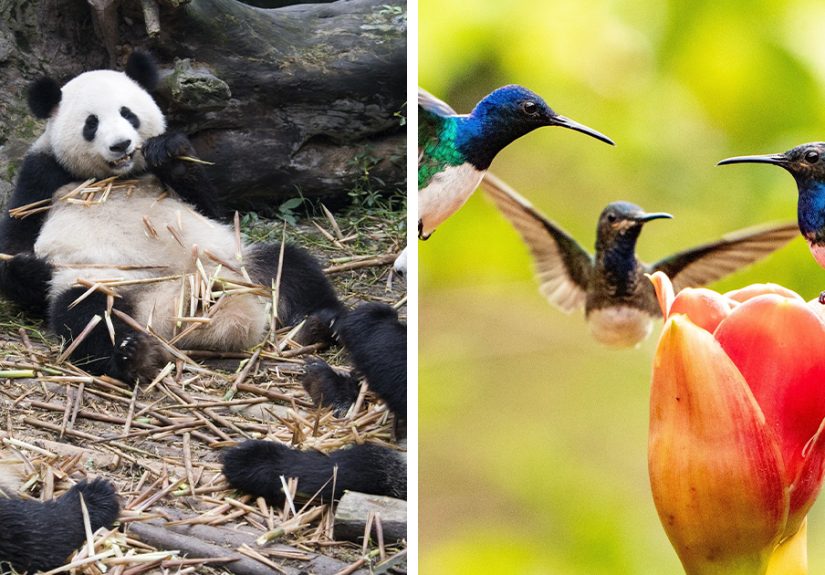
- An embarrassment of pandas Because pandas manage to be majestic and awkward at the same time, like a celebrity caught sneezing in HD.
- A murder of crows Dark feathers + eerie intelligence = a name that sounds like a true-crime podcast.
- A parliament of owls Owls look like they’re about to pass legislation on your bedtime.
- A flamboyance of flamingos Tall, pink, dramatic. This is less a noun and more a lifestyle.
- A dazzle of zebras Stripes in motion can look like optical art. “Dazzle” is basically a compliment.
- A crash of rhinoceroses Exactly what it sounds like: heavy, unstoppable, and not interested in your personal space.
- A bloat of hippopotamuses Hippos in water really do give “living inflatable furniture,” and the word commits to the bit.
- A thunder of hippopotamuses Same animal, different vibe: loud, powerful, and not here to be subtle.
- A convocation of eagles A very official-sounding gathering. Like graduation, but with talons.
- A congregation of alligators The swamp is in session. Please silence your phone.
- A colony of ants Efficient, organized, and somehow always doing more than you are.
- A troop of baboons “Troop” feels accurate because baboons move with purpose and strong opinions.
- A shrewdness of apes A group name that politely suggests, “They’re smarter than you think.”
- A kaleidoscope of butterflies Color, motion, and chaos in the prettiest possible way.
- A flutter of butterflies The softer option: like confetti with wings.
- A caravan of camels Classic and practicalcamels really do travel like a long, determined line of commuters.
- A clowder of cats Somehow both adorable and suspicious. (As cats prefer.)
- A pounce of cats When your “clowder” upgrades from lounging to chaos in 0.3 seconds.
- A nuisance of cats A name invented by someone who has tried to work from home with cats.
- A kindle of kittens So sweet it feels like it should come with a warning label.
- An army of caterpillars Slow-moving, yes. But also many, hungry, and extremely committed to leaves.
- A quiver of cobras If the word “quiver” doesn’t make you step back, the cobras will.
- A drove of donkeys Stubborn energy in plural form.
- A skulk of foxes Foxes look like they’re always plotting something mildly illegal but charming.
- A leash of foxes A slightly more formal version, like foxes wearing tiny ties.
- A tower of giraffes This is just honest. They’re basically walking architecture.
- A charm of goldfinches “Charm” fits because goldfinches look like they’re wearing cheerful little uniforms.
- A charm of hummingbirds Tiny aerial acrobats that deserve a group name as magical as they are.
- A cast of hawks Dramatic and sharplike a theater ensemble that only performs action scenes.
- A kettle of hawks Often used for hawks spiraling together on rising air, like steam from a pot (nature’s weird poetry).
- A cackle of hyenas Less “mean laugh,” more “the soundtrack of the savanna.”
- A conspiracy of lemurs Lemurs have “secret meeting” faces. This one needs no explanation.
- A mischief of mice Mice don’t just exist; they get into things. It’s a job.
- A passel of opossums “Passel” is delightfully folksy, like you spotted them near a porch light at 11 p.m.
- An ostentation of peacocks Peacocks didn’t come to blend in. They came to be perceived.
- A colony of penguins Penguins live like they’re part of a neighborhood association with strict dress code rules.
- A prickle of porcupines Accurate, vivid, and mildly threatening, in the best way.
- A gaze of raccoons Because raccoons stare like they know your passwords and are judging your choices.
- A den of rattlesnakes Straightforward, slightly ominous, and completely correct.
- A pit of rattlesnakes Same energy as “den,” but with more movie-trailer suspense.
- An unkindness of ravens Ravens are brilliant and intense; the name sounds like they’re about to write you a harsh review.
- A stench of skunks Not subtle, not polite, but painfully honest.
- A bed of sloths A group name that feels like a weekend plan.
- A scurry of squirrels Yes. This is exactly what they dotiny errands at full speed.
- A fever of stingrays Stingrays in a group can look like a moving ripple; “fever” gives it a dramatic edge.
- A bevy of swans Graceful, coordinated, and slightly intimidatinglike ballet dancers who could also fight.
- An ambush of tigers Tigers don’t do casual. Even the group name sounds tactical.
- A streak of tigers Same animal, more motionlike orange lightning with opinions.
- A cete of badgers A wonderfully old-school term that sounds like a secret club with membership rules.
- A sounder of boar A rugged, earthy word for a rugged, earthy animal. No notes.
- A swarm of bees The classic: loud, coordinated, and extremely not interested in being bothered.
- An obstinacy of buffalo The name practically digs in its heels and refuses to move.
- A coalition of cheetahs Somehow political and athletic at the same timelike a sprinting committee.
- An avalanche of snow geese When they lift off together, it can look like the sky is falling in feathered form.
- A cauldron of bats Especially in flight, bats can swirl like something out of a spooky storybook (minus the villain monologue).
How to Use Animal Group Names (Without Being That Person)
1) Match the word to the moment
If you’re describing behavior, pick a term that fits what you’re actually seeing. “A kettle of hawks” makes sense during a spiraling migration moment.
“A cast of hawks” works when you just mean “some hawks” without the fancy choreography.
2) Sprinkle, don’t dump
One quirky collective noun in a paragraph is delightful. Five in one sentence is a cry for help (or a very specific party theme).
Use them like seasoning: you want flavor, not a mouthful of salt.
3) When in doubt, admit it’s a fun fact
Try: “Technically, that’s called a flamboyance of flamingos.” The word technically does a lot of social work there.
It signals you’re sharing trivia, not submitting a formal wildlife report.
of Real-World Collective-Noun Experiences
If you’ve ever learned one of these names, you know what happens next: your brain turns into a walking “Did you know?” button.
You spot a group of birds and immediately start scrolling your mental dictionary like a slot machine: flock… gaggle… murmuration…
parliament? And the best part is that these moments don’t require a safari or a documentary budget. They show up in ordinary places,
in ordinary lifezoos, parks, backyards, road trips, and even scrolling a nature photo online when you’re supposed to be answering emails.
Zoos are basically collective-noun gyms. You pause at the flamingo exhibit and suddenly you’re not just looking at birdsyou’re witnessing a
flamboyance, which feels like a much bigger event. People nearby laugh, ask what you said, and now you’re accidentally hosting
a tiny vocabulary tour. That’s the secret superpower of these terms: they create instant curiosity. You’re not correcting anyone; you’re handing
them a delightful trivia snack.
In classrooms (or with kids in your life), quirky group names are the gateway drug to language. A child might not care about taxonomy, but they
will absolutely care that a group of pandas can be an embarrassment. Once they’re hooked, you can sneak in the science:
where pandas live, what they eat, how habitats work, and why conservation matters. Vocabulary becomes the spark, not the homework.
Birdwatching communities love these termssometimes ironically, sometimes earnestly, often both at once. You’ll hear someone say “murder of crows”
with a grin, then switch right back to practical language about species ID and behavior. That back-and-forth is the sweet spot: the words add
personality without replacing accuracy. It’s like wearing a funny hat to a serious meetingbriefly, tastefully, and only if the meeting needs it.
Even online, collective nouns have a special kind of sticky joy. A photo captioned “a scurry of squirrels” feels more vivid than “some squirrels,”
because it carries motion and mood. It’s a micro-story. And once you start noticing that, you realize why these terms survive: they make animals
feel closer, more characterful, more like neighbors than background scenery. They turn “look at that” into “tell me more.”
The next time you’re out for a walk and you see a cluster of birds or a busy patch of insects, try one of these names out loudjust once.
If it makes you smile, congratulations: you’ve joined the long, slightly ridiculous tradition of humans using language to make nature even more fun.
Wrap-Up
Collective nouns for animals sit at the perfect intersection of language, tradition, and personality. Some are centuries old, some are more modern,
and many are simply too good to let go. Whether you’re writing content, teaching, doing trivia, or just trying to make your friends laugh at the zoo,
these group names add color without needing a single extra photo filter.