Table of Contents >> Show >> Hide
- What Actually Happened: The Facts Behind the Headline
- Why the “Tree Smash” Went Viral
- Police Report vs. Social Media: Same Event, Different Lenses
- The Role of Weather: Why Storm Driving Gets Risky Fast
- Why Trees Win: A Quick (Non-Boring) Physics Moment
- Practical Lessons for Everyday Drivers
- What Happened After the Crash
- FAQ: Quick Answers People Keep Searching
- Conclusion: A Loud Reminder With a Quiet Ending
- Experiences: The Human Side of a One-Car Crash (Plus What People Learn the Hard Way)
If you’ve ever driven through the Hamptons in a storm, you already know the vibe: narrow roads, big vehicles,
surprise turns, and weather that says, “Good luck, pal.” Now add two famous brothers in a luxury SUV, a
commercial truck making a wide turn, and one extremely unbothered tree. That’s how a routine traffic incident
became the kind of headline that ricochets across the internet before the tow truck finishes backing up.
This article breaks down what happened, what officials said, why the story traveled so fast, and what everyday
drivers can learn from a “no one was hurt” crash that still managed to become a full-on cultural moment. We’ll keep
it factual, practical, and lightly funnybecause the goal is clarity, not chaos (and certainly not another tree
trying to trend).
What Actually Happened: The Facts Behind the Headline
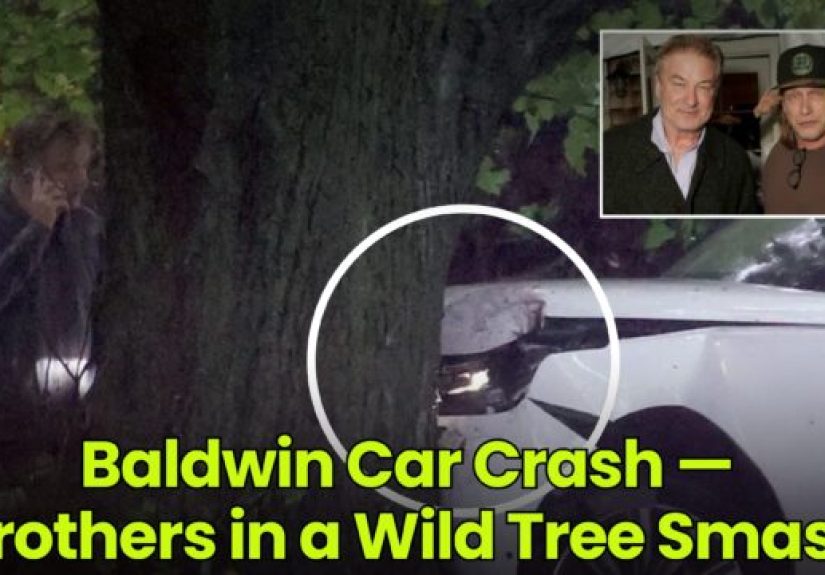
On October 13, 2025, actor Alec Baldwin was driving a white 2023 Range Rover in East Hampton, New York, with his
younger brother Stephen Baldwin riding as the passenger. During severe weather and slick road conditions, the SUV
struck a tree along the roadway after Baldwin tried to avoid a commercial truck that was turning. Authorities
reported no injuries and no citations issued.
In the hours after the crash, Baldwin addressed it publicly, describing an abrupt road situation involving a large
truck and explaining that he swerved to avoid a collisionresulting in the SUV hitting a tree instead. Both brothers
were able to exit safely, police responded, and the vehicle sustained noticeable damage.
Where and when did it happen?
- Date: October 13, 2025
- Location: East Hampton, New York (Hamptons area), along a main roadway (often referenced as State Route 27 / Pantigo Road)
- Conditions: Rainy, windy, and slipperyclassic “maybe today is a soup day, not a driving day” weather
Why the “Tree Smash” Went Viral
Here’s the thing: a single-vehicle accident with no injuries wouldn’t normally dominate celebrity news cycles.
But this one had the internet’s favorite ingredients:
- Famous faces: Two well-known brothers in the same car.
- A clear visual: A damaged SUV and a very solid tree make for instant “what happened here?” curiosity.
- A memorable explanation: Baldwin’s colorful description of the truck (and the tree) made the story easy to quoteand harder to ignore.
- Perfect timing: The brothers were in town for the Hamptons International Film Festival, which already had media attention nearby.
In other words: the crash didn’t become news because it was catastrophic. It became news because it was
shareableand because it’s rare to see a moment that’s both serious (road safety!) and oddly relatable
(“I did everything right, then physics showed up.”).
Police Report vs. Social Media: Same Event, Different Lenses
When a public figure posts about an accident, their account is often immediate, emotional, and framed from the
driver’s point of view. Official statements, meanwhile, are designed to be neutral: they record what happened,
note contributing factors, and avoid guessing about blame unless there’s clear evidence.
In this case, official reporting emphasized wet roadway conditions and the driver’s reaction to surrounding
traffic and turning vehicles. Later coverage also highlighted an important point: a circulating dashcam clip (shared
online) wasn’t necessarily part of the official case file, and officials described the incident as a one-car accident
with no injuries and no need for further investigation.
The takeaway isn’t “someone’s lying.” It’s simpler: social media tells you how it felt; police reports tell you what can be verified.
Both matter, but they serve different purposes.
The Role of Weather: Why Storm Driving Gets Risky Fast
Bad weather doesn’t just reduce visibilityit changes everything about how a vehicle behaves. Wet roads can reduce
tire grip, lengthen stopping distance, and make sudden steering inputs more dangerous. Add wind, pooled water, and
heavy vehicles making wide turns, and you get a situation where “normal” driving decisions can spiral quickly.
Common storm-day driving traps
- Overcorrecting: A quick swerve can shift weight and reduce traction, especially in heavier SUVs.
- Underestimating stopping distance: Braking performance drops on slick roads.
- Misreading big trucks: Commercial vehicles often need extra space to turn and may swing wide.
- Standing water: Hydroplaning risk rises even at moderate speeds.
None of this is meant to scold. It’s meant to explain why a crash can happen even when drivers are actively trying
to avoid something worse. Sometimes “doing your best” is still competing against rain, traction, and momentum.
Why Trees Win: A Quick (Non-Boring) Physics Moment
A tree is the ultimate “I’m not moving for you” object. Modern vehicles are built with crumple zones to absorb
impact energy, and safety systems like seat belts and airbags are designed to protect occupants during rapid
deceleration. That doesn’t make crashes “okay,” but it does help explain why serious-looking vehicle damage can
happen without serious injuriesespecially in lower-speed, single-vehicle incidents where restraints are used.
In plain English: cars are engineered to sacrifice sheet metal so people don’t have to. Your bumper can be replaced.
Your spine is a much worse parts order.
Practical Lessons for Everyday Drivers
If this story sticks with you for anything beyond celebrity trivia, let it be this: storm driving is a different sport.
Here are realistic, non-lecture-y ways to lower risk when the roads get messy.
1) Give big vehicles extra room (especially when they turn)
Commercial trucks may swing wide and can’t stop like a smaller car. If you see a truck setting up for a turn,
assume it needs space and time. Back off, slow down, and let it complete the maneuver.
2) Slow down earlier than you think you need to
The “oops” moment in rain often arrives because the driver is braking at the same spot they would on a dry day.
On slick roads, start reducing speed sooner and brake gently.
3) Avoid sudden swerves when possible
If you can safely brake in a straight line, that’s often more stable than a sharp steering correction. Of course,
every situation is uniquesafety firstbut the general principle is: smooth inputs keep traction.
4) Treat puddles like mystery novels
You don’t know what’s under the surface, how deep it is, or whether it’s hiding a tire-eating pothole. If you can
steer around standing water safely, do it.
5) If conditions are nasty, it’s okay to pause the mission
Pull over somewhere safe, wait out the worst of it, or choose a different route. “I’ll just push through” is how a
lot of weather-day stories startand how too many of them end.
What Happened After the Crash
Reports indicated that both Alec and Stephen Baldwin were uninjured, police responded on scene, and the SUV needed
attention due to damage. Public updates emphasized relief that no one was harmed. Baldwin’s wife, Hilaria Baldwin,
also publicly reassured followers that everyone was okay.
The story continued to evolve in the news cycle because additional coverage focused on the police summary of
contributing factors, the storm conditions, and the larger context of the brothers being in town for film festival
events.
FAQ: Quick Answers People Keep Searching
Was anyone injured?
No. Reporting and official statements indicated no injuries.
Who was in the car?
Alec Baldwin was driving, and Stephen Baldwin was the passenger.
What caused the crash?
Coverage described a combination of evasive action to avoid a turning commercial truck and wet, slippery roadway
conditions. Officials reported no citations issued.
Where did it happen?
East Hampton, New York, in the Hamptons area, along a major roadway.
Conclusion: A Loud Reminder With a Quiet Ending
The headline sounds wildtwo brothers, a luxury SUV, a storm, and a tree that absolutely refused to be impressed.
But the most important detail is also the simplest: everyone was okay.
If you strip away the celebrity angle, what’s left is a story many drivers recognize in spirit: bad weather, a sudden
traffic moment, and a split-second decision that doesn’t go as planned. The next time the sky turns gray and the
roads turn glossy, let this be your friendly reminder to slow down, give trucks space, and treat wet pavement like
it’s actively trying to humble youbecause sometimes it is.
Experiences: The Human Side of a One-Car Crash (Plus What People Learn the Hard Way)
When people talk about “crashes,” they often imagine dramatic scenes. But the most common real-world experience is
less cinematic and more disorienting: a sudden jolt, a spike of adrenaline, and a brain that immediately starts
running a checklistAm I okay? Is everyone okay? Where am I? Is it safe to get out? Even in a crash with no
injuries, the nervous system doesn’t care that the outcome was lucky. Your body still reacts like something serious
just happened, because it did.
Drivers who’ve been through a wet-road incident often describe the same frustrating feeling: it happens fast, and it
doesn’t feel like a “choice.” One second you’re navigating traffic, the next second your tires aren’t gripping the
way you expected. That’s why storm-day driving experiences tend to leave people with a new respect for traction.
Many say they used to think “slower” meant “cautious,” and later realized it also means “more options.” When you’re
going slower, you have more time to brake gently, more room to correct, and less momentum if something goes wrong.
Another common experience is the after-math logisticsbecause even when people walk away fine, the practical tasks
begin immediately. Most drivers end up doing some version of this sequence:
- Get to safety: Turn on hazard lights, check for oncoming traffic, and move to a safe spot if the vehicle can be moved safely.
- Check everyone: Passengers first. Then yourself. Shock can mask pain, so people often re-check a few minutes later.
- Call for help: Police or emergency services if needed, plus roadside assistance or a tow.
- Document calmly: Photos, location notes, and a quick summary of what happened while it’s fresh.
- Start the insurance process: The part nobody puts on Instagram, because it’s not “content”it’s paperwork.
People also talk about the emotional weirdness afterward. Even a minor crash can make someone feel embarrassed,
shaken, or oddly angry at inanimate objects. (Trees are popular targets for this, largely because they never apologize.)
Some drivers become temporarily jumpy in the same area or in similar weather, which is normal. Over time, most regain
confidence by driving more slowly in rain, leaving earlier, and creating “escape space” around larger vehicles.
And if the crash involves a public figure, there’s an extra layer that most everyday drivers never deal with:
attention. Cameras, strangers, headlines, hot takes, and the internet’s tendency to turn a messy moment into a meme.
That’s why “no one was hurt” matters so much hereit keeps the story in the realm of lessons learned instead of
tragedy. The best possible ending to any crash story is the boring one: people safe, authorities responsive, and a
hard-earned reminder to respect the roadespecially when it’s wet and unpredictable.