Table of Contents >> Show >> Hide
- Why Celebrity Look-Alikes Never Stop Being Funny
- The Celebrity Pairs That Keep Breaking Our Brains
- Sometimes It’s Not Just Two Celebrities
- Why Our Brains Fall for It So Easily
- Are We Really Looking at Similar Faces, or Similar Styling?
- The Business of Looking Like Someone Famous
- So… Are They Clones?
- What It Feels Like to Experience Celebrity Look-Alike Culture in Real Life
- Conclusion
Hollywood has always run on sequels, reboots, remakes, and the occasional aggressively moisturized vampire. So maybe it was only a matter of time before the internet started asking the truly important question: why do so many celebrities look suspiciously alike? At this point, celebrity look-alikes are less of a fun coincidence and more of a recurring side quest in pop culture. You open social media to see one famous face, only to realize it is another famous face wearing the same bone structure in a different font.
Of course, nobody is actually suggesting an underground celebrity cloning lab is churning out backup Margot Robbies and emergency issue Katy Perrys. But the resemblance between some stars is so strong that fans do a full double take, tabloids have a field day, and even the celebrities themselves sometimes join the joke. The result is one of the internet’s favorite forms of harmless chaos: pointing at two glamorous people and saying, “Be honest. Have we ever seen them in the same room?”
This fascination is bigger than gossip. Celebrity doubles tap into something weirdly human. We are built to recognize faces fast, compare them constantly, and remember the ones that matter to us. That means once two stars share a strong eyebrow, matching smile, or eerily similar eye shape, our brains start ringing alarm bells like a smoke detector with excellent taste. Add fame, social media, fan edits, red carpet photos, and the occasional look-alike contest, and suddenly the clone jokes practically write themselves.
So let’s lean into the bit. Here’s why celebrity look-alikes captivate us, which pairings keep confusing the internet, and what science says about why some unrelated people can seem uncannily similar.
Why Celebrity Look-Alikes Never Stop Being Funny
The simplest answer is that celebrity look-alikes are the perfect pop culture snack. They are visual, immediate, low-stakes, and deeply shareable. You do not need a graduate degree in cinema, genetics, or contouring to enjoy the experience. You just need eyes and a willingness to gasp dramatically.
Part of the appeal is that fame amplifies resemblance. When two ordinary people look somewhat alike, only their family group chat notices. When two globally recognizable actors, singers, or models share similar facial features, millions of people get invited into the confusion. That confusion becomes entertainment. Suddenly, interviews include questions about mistaken identity, fan communities trade side-by-side photos, and social media turns a resemblance into an ongoing public joke.
There is also something delightfully destabilizing about it. Celebrities are supposed to be singular. Their faces are brands. Their look is part of the package. So when another famous person strolls in wearing a near-compatible face, it messes with the idea that celebrity beauty is one of a kind. It suggests that even in Hollywood, where image is everything, the universe still loves a duplicate setting.
The Celebrity Pairs That Keep Breaking Our Brains
Natalie Portman and Keira Knightley
This is one of the all-time classics, the gold standard, the Mount Rushmore of celebrity doubles. These two have been compared for years, and the resemblance became pop culture legend because it was not just fan imagination. Their similarity was so noticeable that it became part of the conversation around their careers, especially in the early years when both were rising stars with delicate features, expressive eyes, and that particular quietly intense screen presence that makes period dramas look nervous.
Katy Perry and Zooey Deschanel
If Hollywood ever needed a built-in prank, this pairing would do nicely. Both women have striking blue eyes, dark hair, porcelain skin, and a vibe that can swing from whimsical to glamorous without breaking a sweat. The resemblance became so famous that it escaped the realm of “internet observation” and entered celebrity anecdote territory. Fans loved it because it felt like the kind of mix-up that could plausibly happen in real life, which only made the comparison funnier.
Amy Adams and Isla Fisher
Red hair, bright smiles, and the kind of warm screen energy that makes audiences immediately root for them. Amy Adams and Isla Fisher have spent years being placed side by side in look-alike conversations, and the pairing remains one of the internet’s favorites because the comparison feels both obvious and oddly charming. They do not just resemble each other physically; they also share a certain sparkling on-camera likability that makes the overlap feel even stronger.
Leighton Meester and Minka Kelly
Some celebrity similarities are mild. This one is not mild. Leighton Meester and Minka Kelly have such a strong resemblance that people have been doing double takes for ages. Similar coloring, similar facial proportions, similar camera-ready elegance. It is exactly the kind of pairing that makes fans stare at a photo for a few extra seconds like they are trying to solve a visual riddle.
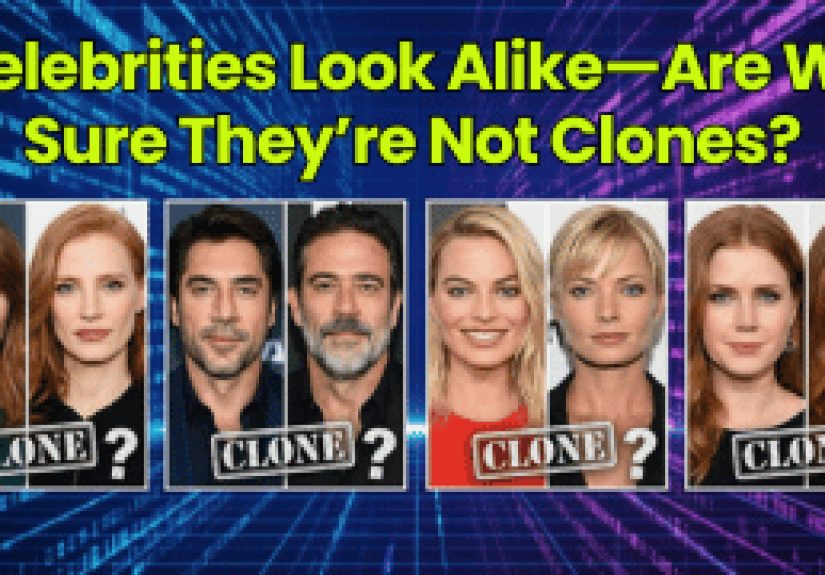
Margot Robbie, Jaime Pressly, and Samara Weaving
This is less a pair and more a cinematic triangle of confusion. Each of these actresses has been pulled into internet debates over who looks most like whom, and honestly, the answer changes depending on the photo, the hairstyle, and how recently you have had coffee. They are not identical, but they share enough facial symmetry, smile shape, and blonde bombshell energy to keep fans arguing forever. It is a reminder that celebrity resemblance is not always a perfect match. Sometimes it is a vibe cluster.
Javier Bardem and Jeffrey Dean Morgan
Look-alike conversations are not limited to actresses with impeccable cheekbones. This pair proves the phenomenon works across the board. Javier Bardem and Jeffrey Dean Morgan have repeatedly been cited as celebrity doubles because they share a rugged intensity, similar facial structure, and the kind of charisma that makes every movie poster look like trouble is on the way. They are not interchangeable, but at a glance, they can absolutely make someone squint.
Sometimes It’s Not Just Two Celebrities
The internet has expanded the celebrity look-alike game far beyond famous person versus famous person. Now it is also celebrity versus civilian, celebrity versus vintage icon, celebrity versus random runway model, and celebrity versus that one person on TikTok who looks so much like Rihanna that people briefly forget how reality works.
Social platforms supercharged this trend. TikTok, Instagram, and short-form video culture made it easier than ever for look-alikes to go viral. One moment someone is posting a casual clip in their bedroom; the next, the comment section is full of people asking whether Hollywood has launched a side-character expansion pack. These viral doubles are fascinating because they collapse distance. Fame suddenly feels less mythical when someone in normal lighting looks oddly like a global superstar.
Fashion has played with the idea too. Runway casts and editorial shoots have occasionally leaned into celebrity resemblance, knowing full well that a strategically styled model who vaguely echoes a famous face can trigger a thousand reposts before lunch. The resemblance becomes part of the spectacle. Viewers are not just looking at clothes anymore. They are solving a visual puzzle with excellent tailoring.
Why Our Brains Fall for It So Easily
Here is where things get even more interesting: the obsession with celebrity look-alikes is not just cultural. It is neurological and psychological too. Human beings are wired to detect faces quickly and to care a lot about them. That is useful when you are recognizing loved ones, reading emotion, or figuring out whether the person across the room is your boss or just a stranger with suspiciously similar glasses.
Researchers have found that familiarity changes how we process faces. When a face is known to us, whether it belongs to a family member, close friend, or major celebrity, our brains get better at spotting it under wildly different conditions. That means fans may recognize famous features even when the context changes, but it also means we are primed to overconnect dots when another face shares those same standout cues. In other words, once a celebrity face lives rent-free in your memory, you become extremely ready to see a version of it somewhere else.
There is also the matter of pattern recognition. Humans are incredibly good at building categories from limited visual information. Give us a strong jawline, similar eye spacing, familiar brows, and the right hairstyle, and the brain may decide, “Yes, close enough, alert the group chat.” This is the same broad cognitive tendency that helps us recognize faces in clouds, toast, and the front of a startled-looking car. Our minds would rather guess “face!” too often than miss one that matters.
Science has also offered a genuinely surprising twist: some unrelated look-alikes may share more than surface-level similarity. Research on real-world doppelgängers has suggested that people with very similar faces can also share certain genetic variants tied to facial features. That does not mean every celebrity double is a secret relative or a lab accident from a glossy science fiction thriller. It does mean resemblance is not always purely random. Sometimes biology creates overlapping designs, and culture does the rest.
Are We Really Looking at Similar Faces, or Similar Styling?
Both. And that is what makes this topic so deliciously messy.
Some celebrity resemblance is structural: facial proportions, smile shape, cheekbones, eyes, hairline. But styling can turn a mild resemblance into an internet emergency. The right haircut, makeup, pose, lighting, and expression can nudge two public figures into “wait a second” territory. A slicked-back bun can create one kind of twinship. Curtain bangs can launch another. Add a smoky eye and suddenly half the comments section is convinced cloning is back on the table.
That is also why some look-alike pairings feel stronger during certain eras of a celebrity’s career than others. Faces age. Hairstyles change. Fashion cycles mutate. The resemblance between two stars may peak for three red carpets, disappear for a decade, then reappear because one of them discovered a fringe. The clone theory survives because the evidence is always shape-shifting.
The Business of Looking Like Someone Famous
There is an entire mini-economy around resemblance now. Viral look-alikes gain followers. Contests draw crowds. Fashion and entertainment media cover double takes like they are public service announcements. And because fame is visual currency, looking like someone famous can create attention almost instantly.
Recent pop culture coverage has shown how look-alike contests, especially for beloved actors and internet boyfriends, can become full-blown events. They are funny because the resemblance is often just strong enough to be intriguing and just weak enough to be debatable. Everyone gets to participate. One person says, “He is identical.” Another says, “That is just a guy with the same haircut.” Democracy lives.
The best part is that the joke works even when the resemblance is not perfect. Maybe especially then. Celebrity look-alike culture is not a courtroom. It is a performance. Fans are not measuring skull ratios with scientific instruments. They are responding to aura, to silhouettes, to an eyebrow that unlocked a memory.
So… Are They Clones?
Sadly, no. Probably. Almost certainly.
The truth is far less sinister and far more entertaining. Human faces are built from a finite set of features, and our brains are trained to compare them constantly. Fame magnifies those comparisons. Social media turns them into jokes. Science tells us that resemblance can happen for real, and psychology explains why we notice it so quickly. Put all of that together and you get the perfect recipe for celebrity look-alike hysteria.
What makes it fun is not the fantasy that stars are secretly copied in a glamorous underground bunker. It is the reminder that even in a culture obsessed with individuality, echoes keep showing up. One actress resembles another. A singer looks like an actor. A civilian on TikTok accidentally becomes the alternate-universe version of a global icon. The world keeps producing doubles, and the internet keeps reacting like it has seen a ghost with excellent lighting.
And honestly, maybe that is enough. We do not need clones. We already have cheekbones, algorithms, and a species-wide addiction to spotting patterns. That is plenty.
What It Feels Like to Experience Celebrity Look-Alike Culture in Real Life
There is a very specific kind of confusion that happens when you see someone who looks like a celebrity, and it is difficult to describe unless you have lived through it. First, your brain freezes for a split second. Then it rushes through a bizarre mental checklist. Is that person famous? Why are they here? Why are they buying iced coffee like a normal mortal? Why do they look exactly like that actor but also somehow like a substitute version generated by the universe?
That moment is part surprise, part delight, and part tiny identity crisis. You trust your eyes, but not fully. You recognize the face, but the context feels wrong. It is like spotting your high school math teacher in an action movie. The details line up just enough to feel convincing, yet the overall situation refuses to cooperate.
Celebrity look-alike experiences are especially intense in the age of social media because we are all overtrained. We see famous faces constantly: movie clips, red carpets, interviews, fan edits, paparazzi shots, memes, campaigns, and old photos resurfacing every six business hours. That repeated exposure builds a strong visual memory. So when a stranger shares one or two of the right features, the recognition machinery in your head starts doing cartwheels.
Then comes the second layer of the experience: social confirmation. You show a friend. They gasp. Now it is real. Or they squint and say, “I mean… maybe if that celebrity had a cousin from Denver.” At that point, the fun begins. Half the entertainment comes from debate. A celebrity look-alike is never just a face comparison. It is a group project. Everybody becomes an amateur facial analyst with deeply held convictions about eyebrows, jawlines, and whether the nose is “giving” enough of the original.
Online, the feeling gets even stranger. A random video appears on your feed, and for one glorious second you believe a superstar has started posting low-budget content from an apartment with questionable overhead lighting. Then the caption reveals it is a look-alike, and your brain has to recalibrate. You are relieved, impressed, and slightly annoyed all at once. Congratulations: you have been successfully haunted by resemblance.
There is also something weirdly comforting about the whole thing. Celebrity culture can feel distant, polished, and untouchable. Look-alikes mess with that. They bring fame closer to ordinary life. They remind us that even the most recognizable faces are still built from human ingredients that can occasionally reappear in someone else. For a moment, stardom seems less like divine intervention and more like a lucky collision of features, timing, talent, and probably a very committed glam team.
That may be why people never get tired of the topic. Seeing a celebrity double feels like catching reality blinking. It creates a tiny crack in the polished surface of fame and lets in something playful. It is not just “this person looks like that person.” It is the thrill of almost-recognition, the comedy of being tricked by your own perception, and the collective joy of saying, “No, no, come look at this immediately.”
So the next time you spot a stranger who looks suspiciously like a movie star, do not panic. You are not losing it. Your brain is doing what brains do: hunting for familiar patterns, overachieving a little, and turning everyday life into accidental entertainment. Which, honestly, is how half the internet works anyway.
Conclusion
Celebrity look-alikes endure because they sit at the perfect intersection of science, fame, and comedy. Some resemblances are driven by real facial overlap, some by styling, some by cultural memory, and some by our brain’s tendency to spot familiar patterns before it has all the evidence. But whatever the cause, the effect is always the same: we stare, we compare, and we send the photo to someone with zero context and the message, “Explain this.”
And that is why the clone jokes never die. Not because we truly believe Hollywood is printing backup celebrities, but because celebrity doubles are one of the few corners of internet culture that still feel joyful, unserious, and universally understandable. It is just faces, confusion, and vibes. Beautiful, chaotic vibes.