Table of Contents >> Show >> Hide
- Why Unity Matters in a Public Health Crisis
- What COVID-19 Taught Us About Health, Trust, and Community
- COVID-19, Vaccines, and the Case for Shared Responsibility
- Long COVID and the Need for Compassionate Unity
- Mental Health Is Public Health
- What Unity Looks Like in Practice
- A Practical Call for Unity Going Forward
- Conclusion
- Shared Experiences: What “Unity” Looked Like During COVID-19 (Extended Reflection)
If the COVID-19 pandemic taught us anything, it’s this: viruses do not care about our politics, our group chats, or that one uncle who “did his own research” at 2:00 a.m. A virus spreads through people, but so does something elsetrust. And trust, unlike toilet paper in 2020, does not magically restock itself overnight.
“COVID-19 and a call for unity” is not just a nice slogan for a banner or a public service announcement. It is a practical public health strategy. When communities work together, people get accurate information faster, treatment sooner, and support when they need it most. When we fragment, misinformation grows, vulnerable people fall through the cracks, and every response becomes harder than it needs to be.
This article takes a clear-eyed look at what COVID-19 revealed about public health, vaccine confidence, mental health, health equity, and community resilienceand why unity still matters now. Not the fake kind of unity where everyone pretends to agree on everything. The useful kind: shared facts, shared responsibility, and shared care.
Why Unity Matters in a Public Health Crisis
Unity during a pandemic does not mean uniformity. It does not require identical opinions, identical risk tolerance, or identical life circumstances. A parent with a newborn, a nurse working double shifts, an immunocompromised adult, and a college student living in a dorm will all make decisions differently. That is normal.
What unity does require is a common baseline: respect for evidence, honest communication, and a willingness to protect people who face higher risk. In public health terms, this creates better conditions for prevention, treatment access, and recovery. In plain English: fewer people get seriously sick, and communities recover faster.
COVID-19 exposed how interconnected modern life really is. One person’s decision to stay home while sick, wear a mask during a surge, or help a neighbor get to a clinic can affect a chain of outcomes far beyond their own household. The pandemic reminded us that individual choices matterbut systems, institutions, and community relationships matter too.
What COVID-19 Taught Us About Health, Trust, and Community
1) Science evolves, and guidance can change
One of the hardest lessons for the public was understanding that changing guidance is not always a sign of incompetence. Sometimes it is a sign that science is doing exactly what science is supposed to do: update recommendations as evidence improves.
COVID-19 guidance changed over time because the virus changed, immunity patterns changed, testing availability changed, and treatment tools improved. That reality frustrated many people, especially when they were already exhausted. But a moving target requires responsive policy, not copy-paste advice from year one.
The healthier way to frame this is simple: changing guidance is easier to accept when institutions clearly explain why it changed, what remains true, and what people should do next. Unity grows when communication is transparent, not when messaging tries to sound perfect.
2) Trust is infrastructure, not decoration
We often talk about hospital beds, ventilators, vaccines, and staffing. All important. But COVID-19 showed that trust is also infrastructure. If people do not trust public health agencies, clinicians, or local leaders, even the best tools can sit unused.
Trust is built locally: through doctors who answer questions without shaming people, community leaders who translate guidance into plain language, employers who support sick leave, and neighbors who make it possible for someone to isolate safely without losing their rent money. In other words, trust is less about slogans and more about whether institutions show up when it counts.
3) Health equity is not a side issue
COVID-19 did not create every inequity in American health care and public healthbut it exposed and amplified many of them. Access to transportation, paid leave, internet service, primary care, insurance, and safe housing all shaped who could get tested, who could get vaccinated, who could recover at home, and who suffered the most severe consequences.
That means a serious call for unity cannot stop at “let’s all be nice.” It must include practical barriers: clinic hours, language access, disability access, pharmacy deserts, childcare, and economic pressure. Unity without access is just good branding.
4) Misinformation spreads faster than patience
COVID-19 misinformation thrived in uncertainty, fear, and polarization. Some false claims sounded scientific. Others sounded personal (“my friend’s cousin said…”). Many spread because they were emotionally satisfying, not because they were accurate.
A key lesson here is that fact-checking alone is not enough. Effective communication also requires listening. People are more likely to consider evidence when they feel heard, not mocked. Public health messaging works better when it respects concerns, explains tradeoffs, and offers clear next steps instead of talking down to people.
Unity is not built by winning internet arguments. It is built by creating environments where reliable information is easier to find than rumorsand where trusted messengers are present before the next crisis starts.
COVID-19, Vaccines, and the Case for Shared Responsibility
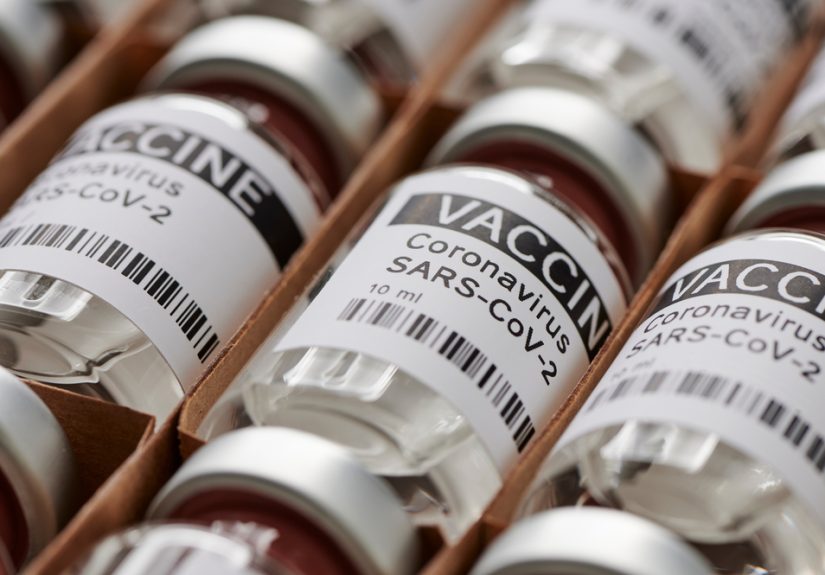
Vaccines became one of the most visibleand divisiveparts of the COVID-19 response. Yet the basic public health case remained consistent: vaccination helps reduce the risk of severe illness, hospitalization, and death, and vaccine recommendations may be updated over time as the virus evolves.
The debate often got trapped in all-or-nothing thinking. In reality, public health decisions are usually about risk reduction, not magical guarantees. A seatbelt does not prevent every injury, but we still understand its value. Vaccination works the same way: it is one layer of protection in a broader strategy that can include testing, treatment, ventilation, staying home when sick, and extra precautions during periods of higher transmission.
A call for unity on vaccines does not require everyone to become a scientist overnight. It requires a willingness to use credible medical guidance, ask informed questions, and avoid turning health decisions into identity badges. It also requires institutions to communicate honestly about benefits, risks, side effects, and uncertainty without sounding evasive.
What unity looks like in vaccine conversations
- Asking questions without assuming bad faith.
- Using trusted clinicians and local health professionals as messengers.
- Explaining how vaccine updates work in plain language.
- Acknowledging rare adverse events while keeping risk in context.
- Making vaccination convenient, affordable, and accessible.
In short: confidence grows when people feel respected and informednot pressured and confused.
Long COVID and the Need for Compassionate Unity
One reason unity still matters is that COVID-19 did not end cleanly for everyone. For many people, recovery has been long, unpredictable, and deeply disruptive. Long COVID can affect people after mild or severe infection, and symptoms can vary widelyfrom fatigue and brain fog to shortness of breath, sleep problems, and heart palpitations.
This is where social unity becomes personal. A person dealing with ongoing symptoms may look “fine” and still struggle to work, concentrate, or manage daily tasks. Compassionate workplaces, schools, and families make a real difference. Flexible scheduling, medical leave, patient-centered care, and simple belief (“I hear you”) are not small things. They are part of the recovery system.
Public conversations about COVID-19 often focus on acute infection, but unity also means not abandoning people after the headlines fade. Communities need a longer memory than the news cycle.
Mental Health Is Public Health
Another major lesson from COVID-19 is that mental health is not separate from pandemic response. Fear, grief, burnout, social isolation, financial stress, disrupted routines, caregiving pressure, and uncertainty affected millions of peoplesometimes all at once. Even people who were never infected still experienced pandemic-related mental strain.
The good news is that the pandemic also accelerated conversations about mental health support, including telehealth, digital tools, and community-based interventions. Those advances should not be treated as temporary emergency patches. They should be strengthened and made more equitable.
A real call for unity includes emotional care: checking in on friends, normalizing counseling, supporting frontline workers, and making space for different grief timelines. Some people lost loved ones. Some lost jobs. Some lost years of stability. Some are still rebuilding. Unity means we stop measuring pain like it’s a competition.
What Unity Looks Like in Practice
Big speeches are easy. Operational unity is harder. Here’s what it can look like in everyday systems:
In families
Create a simple plan for illness: who stays home, who helps with groceries, who checks on older relatives, and what symptoms trigger a call to a clinician. Planning before a crisis lowers panic and arguments later.
In workplaces
Encourage people to stay home when sick without punishing them financially or culturally. “We care about wellness” means very little if employees feel pressure to show up with a fever and a cough because the meeting “couldn’t possibly be an email.”
In schools and campuses
Use clear communication and predictable protocols. Families may not love every decision, but they are more likely to cooperate when guidance is consistent, easy to understand, and tied to practical support.
In local communities
Partner with trusted organizations already doing the work: faith communities, neighborhood groups, schools, clinics, libraries, and community-based nonprofits. During COVID-19, many successful outreach efforts worked because they used familiar messengers and met people where they wereliterally and culturally.
In public discourse
Resist the temptation to treat every disagreement as proof of evil intent. Some people need better information. Some need better access. Some need time. Unity improves when we separate deliberate disinformation from ordinary confusion and respond accordingly.
A Practical Call for Unity Going Forward
COVID-19 is not just a history lesson. It is a stress test we are still learning from. The next major health emergencywhether another respiratory virus, an emerging infectious disease, or something we are not yet trackingwill again challenge how well we communicate, cooperate, and care for one another.
If we want a stronger response next time, unity must be built in advance. That means:
- Investing in public health workforce and local health infrastructure.
- Improving health communication and community engagement before crises escalate.
- Reducing barriers to prevention, treatment, and follow-up care.
- Supporting high-risk populations without stigma.
- Treating misinformation as a community-level challenge, not just an online annoyance.
- Maintaining respect for evidence while admitting uncertainty when it exists.
The strongest pandemic response is not powered by panic. It is powered by trust, preparation, and cooperation.
Conclusion
“COVID-19 and a call for unity” is not about pretending the pandemic was simple. It was not. It was messy, painful, political, exhausting, and unequal. But that is exactly why unity matters. In a complex crisis, unity is how we make complicated things workable.
We do not need perfect agreement to protect public health. We need shared purpose: reduce harm, protect vulnerable people, support recovery, and communicate with honesty. When communities choose evidence over ego and care over contempt, public health gets strongerand so does democracy.
The next crisis will come with its own chaos. Let the legacy of COVID-19 be this: we learned that unity is not a sentimental extra. It is a life-saving habit.
Shared Experiences: What “Unity” Looked Like During COVID-19 (Extended Reflection)
One of the most powerful parts of the COVID-19 era was how ordinary people quietly became part of the public health response without ever using that phrase. A neighbor dropping off soup. A teenager setting up a video call for a grandparent. A pharmacist answering the same vaccine question for the hundredth time with the same calm tone. A teacher learning three platforms in one semester and somehow still remembering every student’s name. None of that looked dramatic on television, but it was the real architecture of survival.
Many families experienced unity in imperfect ways. They argued about risk, holidays, masks, school, travel, and what counted as “safe enough.” But even in those disagreements, people often found small acts of cooperation: testing before gatherings, calling vulnerable relatives first, postponing events when someone felt sick, or choosing outdoor meetups. That kind of unity was not cinematic. It was awkward, negotiated, and deeply human.
Frontline workers lived a different version of this story. Health care teams, long-term care staff, emergency responders, cleaners, lab workers, and support staff carried enormous pressure for long stretches of time. People often remember the hero language, but what sustained many workplaces was not just praiseit was teamwork, routines, and mutual backup. Someone covered a shift. Someone brought food. Someone noticed burnout and said, “Go home. I’ve got this.” In crisis conditions, unity often sounded like practical sentences.
Communities also got creative. In many places, public health messaging worked best when it came through trusted local voices rather than distant institutions. Churches hosted outreach. Barbers, community leaders, and local nonprofits shared information in plain language. Artists and local media helped explain prevention and vaccination in ways that felt familiar instead of official and intimidating. That creativity mattered because people do not only process facts intellectuallythey process them socially.
At the same time, many people experienced isolation, grief, and anger. Any honest reflection on COVID-19 has to make room for that. Unity does not erase trauma. It helps carry it. Some people are still recovering physically. Others are still recovering financially or emotionally. A call for unity now means remembering those realities instead of rushing into collective amnesia because everyone is tired of the topic.
If there is a lasting lesson in these experiences, it is this: unity is strongest when it is local, practical, and compassionate. It is less about big declarations and more about reliable behavior. Check in. Share accurate information. Respect risk differences. Help people access care. Give people room to ask questions. And when someone is struggling, do not make them prove it beyond reason. During COVID-19, the communities that held together were usually not the ones with zero conflict. They were the ones that kept choosing care, again and again, even when everyone was exhausted.