Table of Contents >> Show >> Hide
- Why DIY Home Decor Works So Well
- Start With the High-Impact, Low-Regret Projects
- DIY Decor Ideas That Make a Home Feel Expensive
- Best DIY Home Decor Projects by Room
- Thrifted and Upcycled Decor: The Secret Weapon
- How to Make DIY Decor Look Cohesive
- Common DIY Home Decor Mistakes to Avoid
- DIY Home Decor on a Realistic Budget
- Personal Experiences With DIY Home Decor
- Conclusion
DIY home decor has a special kind of magic. It turns a perfectly normal Saturday into a mission to “just paint one little thing,” and somehow by Sunday evening you’re standing in a room that feels fresher, brighter, and far more you. That is the beauty of decorating your home with your own hands: it is not only about saving money, though your wallet will absolutely send a thank-you card. It is about personality. It is about giving a plain room a pulse.
In a world of showroom-perfect interiors and algorithm-approved beige everything, DIY decorating gives your home something far more valuable than trendiness: character. Maybe that means a thrifted side table you tiled yourself, a wall gallery made from family photos and flea-market frames, or a lampshade covered in fabric that would make your grandmother proud and your guests slightly jealous. Whatever your style, DIY home decor lets you shape your space in a way that feels personal, practical, and actually fun.
This guide breaks down the best DIY home decor ideas, how to approach them without creating chaos, and where to focus your effort for the biggest visual impact. Whether you live in a tiny apartment, a suburban house, or a place where the “entryway” is technically just a hopeful section of wall, you can make your home look more polished without blowing your budget.
Why DIY Home Decor Works So Well
There is a reason DIY decorating keeps showing up in stylish homes. It solves several problems at once. First, it helps you decorate on a budget. Second, it allows you to customize pieces that would otherwise look generic. Third, it gives older items a second life, which is great for sustainability and even better for avoiding the emotional drama of throwing out a perfectly decent dresser just because it looks tired.
DIY projects also help a home feel layered. Store-bought decor can be beautiful, but when every object looks like it came from the same shelf, a room can feel flat. Mixing handmade accents, repurposed furniture, soft textiles, greenery, and thoughtful lighting creates warmth. That is what makes a home feel lived in rather than staged like a waiting room for very stylish ghosts.
Start With the High-Impact, Low-Regret Projects
If you are new to DIY home decor, begin with projects that give you a visible payoff without requiring expert-level carpentry, twelve power tools, or a crisis hotline for wallpaper mistakes. The smartest beginner projects are reversible, affordable, and easy to finish in a day or weekend.
1. Paint Something That Isn’t a Whole Room
Paint is one of the fastest ways to change how a space feels, but you do not need to repaint every wall to get the effect. Try painting a front door, a console table, floating shelves, a mirror frame, or even the inside back panel of a bookcase. A small hit of color can wake up an otherwise sleepy room.
Good DIY home decor is often less about dramatic renovation and more about strategic contrast. A dark side table in a pale room adds depth. A soft sage bookshelf in a neutral office feels calm and intentional. A painted dresser in a guest room can become the focal point without forcing you to redecorate everything else.
2. Upgrade Hardware Like a Person Who Has Secrets
Changing knobs, pulls, hooks, and curtain hardware is one of those tiny decorating moves that makes people assume you know what you are doing. The truth is you mostly need a screwdriver and a willingness to compare finishes for longer than seems reasonable.
Swap builder-grade cabinet pulls for something more distinctive. Replace plain dresser knobs with ceramic, brass, wood, or vintage-inspired styles. Add wall hooks in an entryway, bedroom, or bathroom to make storage look intentional. Hardware is the jewelry of a room, except it does not get lost in couch cushions.
3. Create DIY Wall Art That Does Not Look Like a School Project
Wall art is often where homes either come alive or quietly give up. The good news is you do not need expensive originals to make a statement. DIY wall decor can be incredibly sophisticated when you focus on scale, texture, and framing.
Try one of these ideas:
- Frame fabric, wallpaper scraps, or vintage maps
- Create abstract art using layered paint in a limited color palette
- Build a gallery wall with thrifted frames painted to feel cohesive
- Hang woven baskets, trays, or handmade textile pieces for texture
The trick is consistency. Even when the pieces are eclectic, use a common thread like color, frame style, or spacing. That keeps the display feeling curated rather than like the wall lost a bet.
DIY Decor Ideas That Make a Home Feel Expensive
Expensive-looking rooms are rarely about buying the most expensive things. They are about balance, texture, and restraint. A smart DIY decorator knows how to use simple materials in a polished way.
Layer Textiles for Instant Warmth
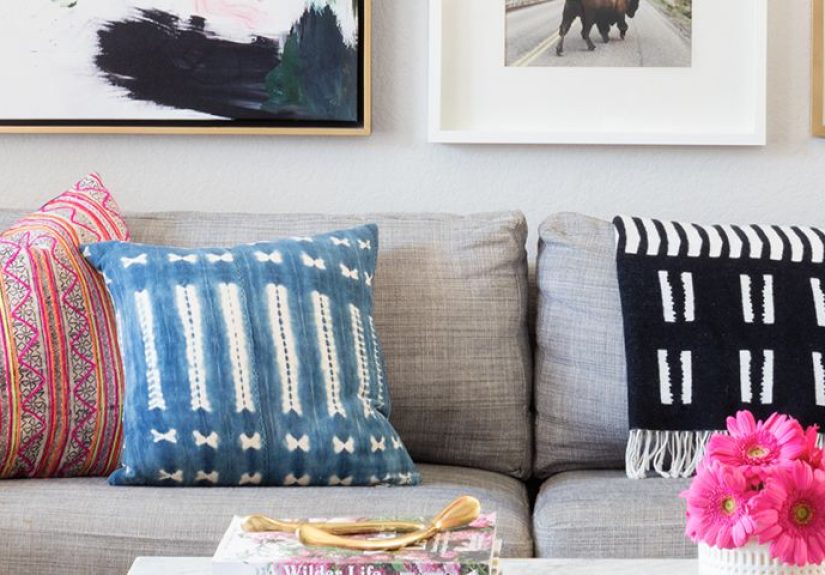
Textiles do a lot of heavy lifting in home decor. A room with layered curtains, throw pillows, a soft rug, and cozy bedding will almost always feel richer than a room that relies only on furniture. DIY options here are wonderfully approachable. Sew or no-sew pillow covers. Hem curtains to the right length. Recover a bench cushion. Make a table runner from linen or cotton fabric. Add trim or contrast edging to plain drapes.
Texture matters just as much as color. Pair smooth cotton with nubby woven fabric, boucle, velvet, or natural fibers. Even a neutral room feels more complete when materials vary. That is how you get depth without shouting.
Refresh Lamps and Lighting
Lighting can change the mood of a room faster than almost anything else. One of the most underrated DIY home decor moves is upgrading a lamp or lampshade. Paint a lamp base. Wrap it in rope or fabric. Add a pleated, patterned, or scalloped shade. Convert an interesting object into a table lamp if you are comfortable with a basic lamp kit.
If that sounds too adventurous, simply swapping lampshades or installing plug-in sconces can make a major difference. Better light equals better atmosphere, better selfies, and better odds that your living room will finally stop looking mildly confused.
Use Plants Like a Stylist, Not a Jungle Wizard
Houseplants are one of the easiest ways to soften a room and add life. DIY plant stands, painted pots, propagation walls, and grouped containers can elevate the look without much cost. You do not need a rainforest in your living room. One tall plant in a bare corner, a trailing vine on a shelf, and a small cluster on a windowsill can do the job beautifully.
Decorating with plants works especially well when you vary height and shape. Put one plant on a stool, another in a hanging planter, and a third in a ceramic pot on a side table. Suddenly the room feels considered, and you get the bonus thrill of pretending you are a person who remembers watering schedules.
Best DIY Home Decor Projects by Room
Living Room
The living room is where DIY decor can make the biggest visual impact. Start with the walls, coffee table, and lighting. Add a painted accent table, a handmade tray, customized throw pillows, or a thrifted cabinet with new hardware. Build a gallery wall or lean oversized art for a casual look. If the room feels flat, layer in books, greenery, candles, and baskets. Styling matters. Empty surfaces are elegant; abandoned-looking surfaces are not.
Bedroom
Bedrooms benefit from soft, tactile DIY upgrades. Make a headboard cover, create art above the bed, swap bedside lamps, or add a bench at the foot of the bed with a new upholstered top. Even changing bedding and adding a lumbar pillow can make the room feel intentionally designed. A small peel-and-stick wallpaper section behind the bed can mimic an accent wall without the commitment of full-room drama.
Kitchen
You do not need a full renovation to make a kitchen feel better. Paint stools, update cabinet hardware, line open shelving with peel-and-stick material, or create labeled pantry storage with matching jars and baskets. A framed chalkboard, tiled tray, or DIY herb station can add personality without getting in the way of actual cooking, which is important if your kitchen already serves as a restaurant, office, and emotional support center.
Bathroom
Bathrooms love small-scale projects. Add framed art, replace a mirror frame, install hooks, use matching containers, or hang a shelf above the toilet. A DIY bath mat, patterned shower curtain, or wall treatment can make the room feel far less neglected. If your bathroom currently says, “I am functional and slightly annoyed,” a few thoughtful upgrades can change that fast.
Entryway
The entryway sets the tone for the whole house. A simple bench, hooks, mirror, tray for keys, and basket for shoes can make a tiny entrance feel organized and inviting. Try painting a console table, making a custom doormat, or hanging a narrow shelf with a lamp and small vase. First impressions matter, even when the first thing people see is the place where you panic-drop your mail.
Thrifted and Upcycled Decor: The Secret Weapon
If you want DIY home decor with real personality, thrifting is your best friend. Older pieces often have better shapes, sturdier construction, and more charm than many mass-produced alternatives. A dated table can become a tiled statement piece. A worn dresser can look fresh with paint and new pulls. Vintage trays, bowls, crates, and mirrors can become stylish storage and decor with only minor updates.
The best thrift flips focus on what the item could be, not what it currently is. Look at lines, scale, and materials. Ignore bad paint color, dusty shelves, or tragic knobs. Those can be fixed. What you want is good structure. Think of it as furniture matchmaking with a little sanding.
How to Make DIY Decor Look Cohesive
The difference between “charming” and “chaotic” usually comes down to editing. To keep your decor cohesive, choose a loose visual direction before you start. That does not mean everything must match. It means everything should feel like it belongs in the same conversation.
Use these design anchors:
- A repeated color palette throughout the room
- Two or three main materials, such as wood, metal, and linen
- A balance of old and new pieces
- Enough empty space to let individual items stand out
If you mix styles, do it with intention. Pair vintage with modern. Add handmade pieces next to clean-lined furniture. Use baskets, books, and plants to bridge different looks. Rooms feel collected when there is variety, but they feel elegant when there is also restraint.
Common DIY Home Decor Mistakes to Avoid
Not every project is a good idea, no matter how convincing the tutorial may seem at 11:47 p.m. Before diving in, avoid these common mistakes:
- Doing too much at once: Change a few things, then step back and assess.
- Ignoring scale: Tiny art on a huge wall will look timid, not tasteful.
- Choosing trend over function: A beautiful piece that does not work for your life becomes decor with resentment.
- Forgetting lighting: Even gorgeous decor struggles in bad light.
- Skipping prep work: Clean, sand, measure, and test first. Your future self deserves that respect.
DIY Home Decor on a Realistic Budget
One of the best things about DIY decorating is that you can scale it to your budget. You can refresh a room with twenty dollars and some patience, or spend more on a few statement upgrades. A realistic plan might include thrifted pieces, leftover paint, fabric remnants, and one or two splurge items that elevate the whole room. That is often smarter than buying ten random cheap accessories that only create clutter.
Great budget-friendly DIY home decor ideas include painting furniture, swapping hardware, making art, styling shelves, sewing pillow covers, creating planters, organizing with baskets, and reworking secondhand pieces. None of those require a full remodel. Most of them just require vision, effort, and perhaps one mildly messy afternoon.
Personal Experiences With DIY Home Decor
One of the most memorable things about DIY home decor is that it changes the way you relate to your home. A room stops being a backdrop and starts becoming a story. People who decorate this way often realize they are not just improving a space. They are building routines, memories, and confidence. The first time you paint a piece of furniture and it comes out better than expected, it feels weirdly powerful. You begin to look at everything differently. A chipped table is no longer junk. It is potential with bad marketing.
Many DIY experiences begin with necessity. Maybe the apartment walls are dull, the budget is tight, or the furniture does not quite fit your style anymore. So you improvise. You hang art prints in thrifted frames. You recover dining chairs instead of replacing them. You use leftover paint on plant pots, trays, and shelves until the room begins to feel more coordinated. The process is rarely glamorous. There is always a moment where the drop cloth slips, the painter’s tape behaves like a traitor, or a simple project somehow requires three trips to the hardware store. Still, those annoyances become part of the charm.
DIY home decor also teaches patience. A room rarely comes together in one weekend. Usually it evolves. You add a lamp one month, restyle the bookshelf the next, then finally find the perfect vintage mirror six weeks later when you were supposedly “just browsing.” That slow layering often creates better results than impulse decorating because each piece earns its place. The room begins to reflect your actual taste instead of whatever trend yelled the loudest online.
There is also a strong emotional side to handmade decor. A gallery wall filled with personal photos, postcards, sketches, and found objects says more than any mass-produced canvas ever could. A handmade table runner from a favorite fabric can carry memories of a trip, a family member, or a season of life. Even a simple DIY entryway hook rack can become part of daily rhythm, quietly making mornings easier and the house feel more welcoming.
Perhaps the most rewarding experience is realizing that perfection is not the goal. Slightly uneven brushstrokes, a reupholstered stool that is not magazine-level flawless, or a shelf styled three times before it feels right are not failures. They are proof that a real person lives there and cares. That is what makes DIY home decor special. It creates homes with personality, flexibility, and warmth. A finished project may look beautiful, but the bigger win is the confidence that comes after it. Once you have transformed one corner of your home, you start believing you can transform the next one too. And honestly, that is how many great homes are made: one lamp, one shelf, one bold little project at a time.
Conclusion
DIY home decor is not about copying a showroom or chasing every passing trend. It is about creating a home that feels comfortable, useful, and unmistakably yours. With a few smart projects, thoughtful materials, and a willingness to experiment, you can upgrade your space in ways that feel polished without feeling pretentious. Start small, choose projects with real impact, and let your home evolve over time. Style does not have to arrive in a box. Sometimes it arrives with a paintbrush, a thrift-store find, and a very ambitious weekend plan.