Table of Contents >> Show >> Hide
- 1) The Prime Directive: Water Has to Reach Every Dirty Surface
- 2) Prep Like a Scientist: Scrape, Don’t Rinse (Most of the Time)
- 3) Bottom Rack: The Heavy-Duty Cleaning Zone
- 4) Top Rack: Glassware, Cups, and the Land of “Please Don’t Break”
- 5) Silverware and Utensils: Small Items, Big Consequences
- 6) The “Spin Test” and Other Load-Saving Micro-Habits
- 7) Detergent, Rinse Aid, and Cycle Choice: The Chemistry Portion
- 8) What Shouldn’t Go in the Dishwasher (Even If It Fits)
- 9) Troubleshooting: When the Results Aren’t… Scientific
- 10) Energy-Smart Dishwashing: Clean Dishes, Lower Bills
- Domestic Science Field Notes: of Dishwasher Experiences
- SEO Tags
Welcome to the most underappreciated laboratory in your home: the dishwasher. It’s a steamy stainless-steel test chamber where
physics (water pressure), chemistry (detergent), and human psychology (why are the spoons always nested like they’re holding hands?)
collide nightly.
If your dishes come out gritty, spotted, or mysteriously still wearing last night’s marinara like a badge of honor, it’s rarely because
your dishwasher is “bad.” Most of the time it’s because the load was set up to failblocked spray arms, upside-up mugs catching dirty
water, or a rogue baking sheet acting like a shield for everything behind it.
This guide breaks down how to load a dishwasher properlytop rack vs. bottom rack, silverware strategy, plastics,
detergent, rinse aid, and the small checks that stop you from running the same load twice (which is like doing laundry twice because
you forgot… the existence of detergent).
1) The Prime Directive: Water Has to Reach Every Dirty Surface
Dishwashers don’t clean by “soaking.” They clean by spraying. Your job is to arrange items so water can hit the dirty sides,
detergent can do its job, and dirty water can drain away instead of pooling in little gross puddles.
- Expose the dirty side. Aim the mess toward the spraynot toward the walls.
- Make space for water flow. Overlapping dishes creates “shadow zones” that stay dirty.
- Prevent water traps. Anything that can hold water will hold water (and then redecorate your clean dishes with it).
Think of loading as building a tiny city where the sprinkler system actually has to reach every street. If you block the sprinklers with
a billboard (hi, cutting board), the neighborhood behind it is going to look… post-apocalyptic.
2) Prep Like a Scientist: Scrape, Don’t Rinse (Most of the Time)
Here’s the plot twist that starts family debates: you usually don’t need to pre-rinse dishes until they’re practically clean. Modern
dishwashers and detergents are designed to work with some food residue. Your real mission is simpler:
scrape off large chunks so they don’t clog filters or redeposit onto everything.
What to do before loading
- Scrape solids into the trash or compost.
- Soak only when needed (think: burnt-on sugar, dried egg cement, baked-on cheese lava).
- If dishes will sit, consider a quick rinse/hold cycle to prevent odors and drying-on.
Bonus “domestic science” note: if you rinse everything spotless, you can reduce what detergent has to grab onto, and you’ve also just
volunteered for an unpaid job as “human pre-wash cycle.” Bold career move.
3) Bottom Rack: The Heavy-Duty Cleaning Zone
The bottom rack is built for the big stuff: plates, pots, pans, casserole dishes, and anything that looks like it could survive a mild
earthquake. Water pressure is typically strongest down here, so put your toughest items where the action is.
Plates: aim dirty sides inward
- Slide plates between the tines, not perched on top like they’re trying to surf.
- Angle them so water and detergent can hit the full face and then drain.
- Leave a little breathing roomplates shouldn’t spoon each other.
Bowls and serving pieces
- Place bowls tilted downward so water doesn’t pool inside.
- For big serving bowls, position them at the back or sides so they don’t block water flow.
Pots, pans, and casserole dishes
- Put cookware on the bottom rack, open side down, angled toward the spray.
- Keep handles from blocking the spray arms or preventing racks from sliding in fully.
- Flat items (sheet pans, platters) belong along the sides or backnot in front where they can block detergent release.
Practical example: if you place a baking sheet at the very front by the door, it can act like a shield and keep detergent from spreading
through the load. Your dishwasher can’t clean what it can’t “reach”water or detergent.
4) Top Rack: Glassware, Cups, and the Land of “Please Don’t Break”
The top rack is for lighter, more delicate items and anything you don’t want blasted around. It’s also usually the safest spot for
dishwasher-safe plastics because it’s farther from the heating element in many machines.
Cups and glasses
- Load cups and glasses upside down so they don’t fill with water.
- Place them between tines so they sit stable and don’t crack.
- Give stemware spaceno clinking glass ballet during the wash cycle.
Small bowls and mugs
- Avoid overlapping bowls like shingles so tightly that spray can’t get between them.
- Angle mugs so water drains off, not into the base rim.
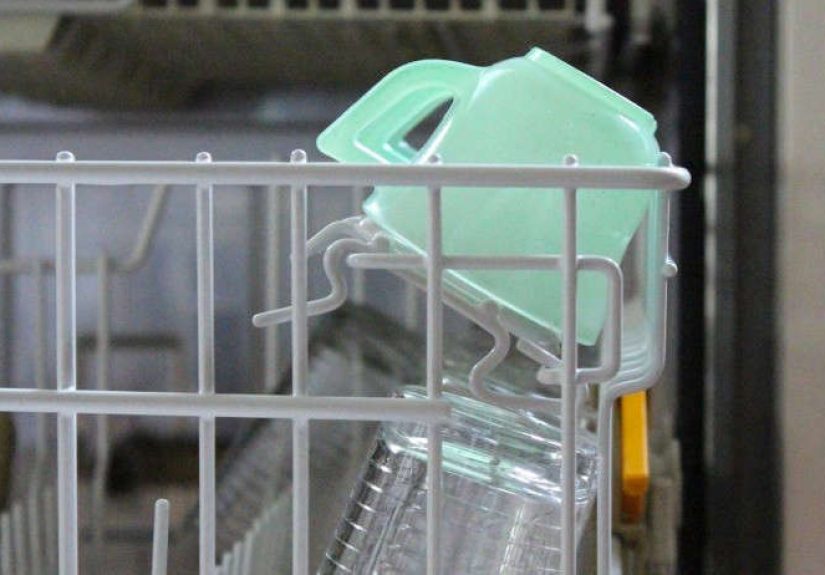
Plastics: top rack is your friend
If your plastic containers come out warped, it’s not a personal insult. Many dishwashers generate significant heat near the bottom during
drying. Lightweight plastics can also flip over and become “water traps,” collecting dirty water and refusing to dry.
- Place plastics on the top rack, angled for drainage.
- Use clips or stable positions so lids and containers don’t flip.
- Only wash plastics labeled dishwasher-safe.
5) Silverware and Utensils: Small Items, Big Consequences
Silverware is where good intentions go to die. You load everything “neatly” and still end up with one spoon that looks like it spent the
cycle inside a burrito. The enemy is nestingspoons stacked together, forks tangled, knives spooning (ironically).
Basket method (most common)
- Mix types (forks, spoons, knives) so identical pieces don’t nest.
- Alternate directions in crowded baskets to improve spray access.
- For safety, put sharp knives blade-down and handle-up when unloading is riskychoose the option that best fits your household.
Third rack / flatware tray method (if you have one)
A flat tray is basically the “cheat code” for clean cutlery: it separates pieces so water can reach every surface and reduces the odds of
poking yourself while unloading. Spread items out and avoid stacking utensils on top of each other.
Long utensils, spatulas, and lids
- Lay long utensils on the top rack or third rack (if designed for it) so they don’t block spinning arms.
- Slot lids and thin items where water can hit both sidesdon’t trap them flat against a wall.
6) The “Spin Test” and Other Load-Saving Micro-Habits
Before you hit Start, do a quick quality check. It takes five seconds and saves you the emotional damage of opening the dishwasher to a
plate that’s somehow both clean and still wearing oatmeal.
Do these quick checks
- Spin test: make sure the spray arms can rotate freely.
- Detergent door check: confirm nothing blocks the dispenser from opening.
- Jiggle test: lightly shake the racksthings should be secure, not crashing together.
- No “upright bowls”: anything shaped like a cup should be angled to drain.
Also: resist the temptation to treat dishwasher loading like a carry-on bag at the airport. If you can’t close the “overhead bin” without
force, you probably overloaded it.
7) Detergent, Rinse Aid, and Cycle Choice: The Chemistry Portion
Proper dishwasher loading is half the battle. The other half is giving the machine the right cleaning chemistry and enough time to work.
Detergent basics
- Use the detergent dispenser (don’t toss pods loose into the bottom unless your manual specifically allows it).
- Pods are convenient because they’re pre-measured.
- If you use powder or gel, avoid overfillingtoo much detergent can leave a film.
- Store detergent in a cool, dry place and don’t hoard it foreverfreshness matters.
Rinse aid: the secret weapon for spots
If you have hard water or you’re tired of towel-drying glasses like you’re polishing antiques in a museum, rinse aid can help. It reduces
water’s tendency to bead up, helping it sheet off dishes so fewer mineral spots and streaks remain.
Pick the right cycle (and don’t panic)
- Normal for everyday loads.
- Heavy for baked-on messes and cookware.
- Quick for lightly soiled items (not your “lasagna night” aftermath).
- Sanitize/High-temp when you want extra heatcheck that items are heat-safe.
- Air-dry saves energy; heated drying can improve dryness but uses more energy and can stress plastics.
8) What Shouldn’t Go in the Dishwasher (Even If It Fits)
A dishwasher is powerful, but it’s not a magical “safe for everything” portal. When in doubt, check your item’s label and your dishwasher
manual. Common items that often do better by hand:
- Cast iron (strips seasoning; invites rust).
- Wood (cutting boards, utensils; can warp and crack).
- Nonstick cookware (some is dishwasher-safe, but frequent cycles can shorten lifespan).
- Delicate crystal or hand-painted ceramics (risk of clouding or fading).
- Insulated mugs and some travel cups (seals and insulation can be damaged).
- Sharp chef’s knives (many manufacturers recommend hand-washing to protect edges and handles).
If an item is precious, sentimental, or cost you enough money that you still remember the purchase emotionally, treat it like a special
specimen: handle gently and don’t subject it to unnecessary heat and agitation.
9) Troubleshooting: When the Results Aren’t… Scientific
If dishes are still dirty
- Reduce overcrowding so water can reach surfaces.
- Re-aim dirty sides toward the spray.
- Make sure spray arms aren’t blocked and can spin freely.
- Scrape betterlarge food bits can redeposit.
- Choose a stronger cycle for heavy soils.
If glasses are spotted or cloudy
- Add or refill rinse aid.
- Check detergent amount (too much can cause film; too little can underclean).
- Consider water hardness solutions (rinse aid helps; some homes benefit from softening).
If plastics don’t dry
- Place plastics on the top rack and secure them so they don’t flip.
- Angle items for drainage.
- Use rinse aid and consider cracking the door after the cycle (if safe in your home).
One more not-so-secret: many dishwashers have a filter that needs periodic cleaning. If you notice funky smells, gritty residue, or weak
cleaning performance, check your manual for filter maintenance instructions.
10) Energy-Smart Dishwashing: Clean Dishes, Lower Bills
A well-loaded dishwasher isn’t just cleanerit’s more efficient. When you load correctly, you can run fewer repeat cycles, avoid excessive
pre-rinsing, and get better results on “Normal” instead of always blasting “Heavy.”
- Run full loads when possible.
- Scrape, don’t rinse to save water and time.
- Use air-dry when you can tolerate slightly damp plastics.
- Fix loading problems instead of re-running loads (repeat cycles are efficiency’s arch-nemesis).
Think of it as domestic science with a budget-friendly grant: better technique, fewer reruns, and no more late-night “Why is the peanut
butter spoon still dirty?” investigations.
Domestic Science Field Notes: of Dishwasher Experiences
In the wild, dishwashers don’t exist in pristine lab conditions. They live in real kitchens with toddlers, roommates, holiday casserole
dishes, and that one person who believes “a dishwasher is just a wet cabinet.” So let’s talk about the everyday experiences that turn
dishwasher loading into a recurring sitcom.
Experience #1: The Tupperware Rebellion. Plenty of people have opened the dishwasher to find a plastic lid flipped upside
down, filled with cloudy water like a tiny swamp. It happens because light plastics float, shift, and get knocked around by strong spray.
The “fix” is surprisingly low-drama: top rack, angled placement, and using clips or heavier items to keep lids from doing backflips mid-cycle.
Once you start loading plastics like they’re trying to escape (because they are), your dry cycle becomes noticeably less tragic.
Experience #2: The Spoon Nesting Mystery. There’s a special kind of confusion when every plate is spotless, but three spoons
come out with a peanut-butter tattoo. The culprit is almost always nestingspoons stacked so tightly that water can’t hit the surfaces.
The day many households discover “mix the silverware” is the day their dishwasher graduates from “mostly fine” to “quietly excellent.”
It also reduces that awkward moment when someone asks, “Why is this fork… crunchy?”
Experience #3: The Baking Sheet Shield. If you’ve ever loaded a big cookie sheet vertically in the front, you might have
accidentally built a force field that blocks water and detergent from reaching the back half of the bottom rack. The result looks like a
magic trick: the front dishes sparkle, the back dishes look like they were politely misted. Sliding flat items to the side or back is a
tiny change with huge “wow, it actually worked” energy.
Experience #4: The Great Family Loading Debate. Some people load plates facing the center. Others insist everything should
face the same direction. Some swear by handles-up silverware, others by handles-down. The honest truth is that different dishwasher designs
spray water differently, and what matters most is exposure and flow: don’t block the spray arms, don’t block the detergent door, don’t trap
water, and don’t nest utensils. When households stop arguing about “the one true way” and start checking the two or three real failure points,
the kitchen becomes a calmer placelike a spa, but with more macaroni.
Experience #5: The “Why Are My Glasses Spotted?” Era. Many people go through a phase where they assume their dishwasher is
broken because glasses look speckled or cloudy. Often it’s just hard water minerals drying onto the surface. Rinse aid helps water sheet off
so fewer droplets dry into spots, and it’s one of those small upgrades that feels like a life hack. (It’s not a hack. It’s chemistry.
Chemistry just happens to be dramatic.)
And finally, experience #6: The Satisfaction of the Perfect Load. Every so often you open the dishwasher and everything is
clean, dry, and arranged like it belongs in an appliance commercial. It’s oddly satisfyinglike a tiny, daily “I have my life together”
moment. The best part? That feeling doesn’t require perfection. It requires a handful of repeatable habits: scrape, aim, space, secure,
and run the spray-arm spin test. Do that, and your dishwasher becomes what it was always meant to be: a reliable assistant, not a recurring
plot twist.