Table of Contents >> Show >> Hide
- Who Was “The Red Girl”?
- Why Zia’s Costume Struck a Nerve
- Medieval History Was Never as Simple as “Knights and Princesses”
- Why Children Need More Than One Kind of Hero
- The Historian Dad Factor
- What Schools Can Learn From This Medieval Feast Moment
- How Parents Can Encourage Brave, Open-Ended Choices
- Why This Story Still Matters
- Real-Life Experiences and Reflections Inspired by Zia’s Costume
- Conclusion
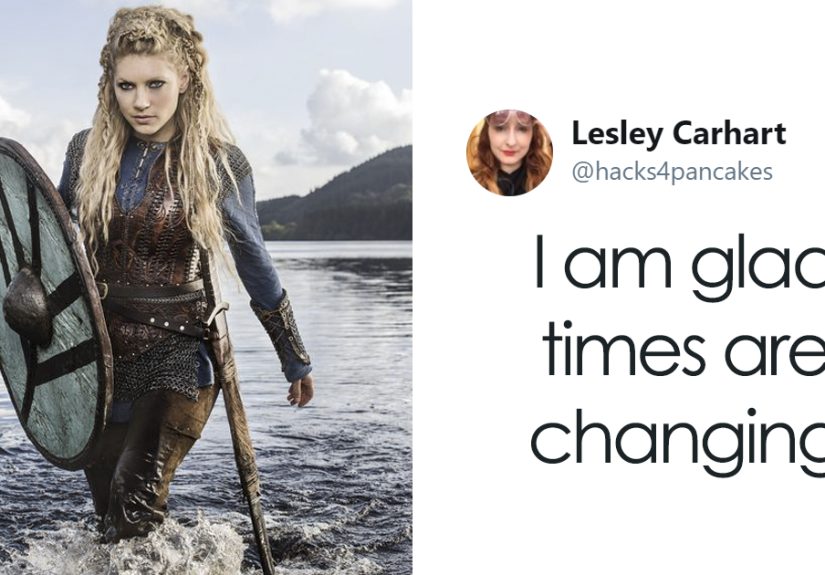
At most school medieval feasts, the costume choices are about as predictable as a cafeteria tray on pizza day. Boys show up as knights, kings, or sword-swinging warriors. Girls arrive as princesses, queens, or courtly ladies with sparkly accessories and the occasional plastic tiara trying very hard to look historically convincing. Then one 7-year-old girl named Zia walked in as a Viking fleet commander called “The Red Girl”and suddenly the whole lesson plan got a very stylish upgrade.
The story became popular after historian and TV presenter Dan Snow shared that his daughter had chosen a costume inspired by a little-known female Viking figure rather than following the usual “girls wear gowns, boys carry swords” classroom script. Her choice was playful, bold, historically interesting, and quietly powerful. It was not just a costume. It was a tiny rebellion with a shield.
What makes the moment so memorable is not that Zia rejected princesses. Princesses can be clever, brave, political, strategic, and occasionally more dangerous than anyone with a sword. The real point is that she had options. She saw history as a wide-open costume closet, not a two-rack store labeled “boys” and “girls.” And thanks to her historian dad, she had access to stories many children never hear: stories of women who led, fought, ruled, sailed, strategized, and made history without waiting for permission from a fairy godmother.
Who Was “The Red Girl”?
The name “The Red Girl” refers to Inghen Ruaidh or Inghen Ruiadh, often translated as “Red Girl” or “Red Daughter.” She appears in medieval Irish material connected to Viking activity in Ireland and is described as a female figure associated with command at sea. In modern summaries of Viking history, she is often presented as a rare example of a woman linked to fleet leadership during the Viking Age.
That does not mean every Viking woman was secretly running around with an axe before breakfast. History is more complicated than a movie trailer. Viking society included women with certain rights and social authority, but it was still not a modern equality paradise with longships and better braids. Women could hold household power, manage property in some circumstances, and appear in sagas as memorable figures, but formal political power remained largely male. That tension is exactly what makes figures like The Red Girl so fascinating.
For a child choosing a school costume, however, the lesson is wonderfully simple: history is full of more possibilities than we are usually taught. If a classroom feast can include knights, princesses, kings, monks, peasants, and jesters, it can absolutely make room for a Viking commander with excellent dramatic timing.
Why Zia’s Costume Struck a Nerve
Zia’s choice went viral because it touched something many parents, teachers, and former children recognize immediately: kids learn gender rules early, often before adults even realize they are teaching them. No one has to stand at the classroom door saying, “Boys to the armor, girls to the gowns.” The message is usually quieter. It arrives through toy aisles, movie posters, party themes, storybooks, comments from adults, and the mysterious cultural law that anything pink must apparently be handled with extreme gender caution.
Research on gender-typed toys has found that toys marketed to girls are often associated with appearance, nurturing, and domestic skills, while toys marketed to boys are more often connected with competition, danger, and action. That matters because play is not “just play.” It is how children rehearse identity, test courage, practice problem-solving, and imagine their future selves. A costume is not only fabric. It is a temporary passport into possibility.
When a girl dresses as a commander, astronaut, scientist, blacksmith, dragon-slayer, or medieval strategist, she is not rejecting femininity. She is expanding it. She is saying that bravery does not belong to one gender. Leadership does not come with a beard requirement. And historical imagination should not be limited by the color of the costume packaging.
Medieval History Was Never as Simple as “Knights and Princesses”
Pop culture has flattened the Middle Ages into a cartoon kingdom where men joust, women sigh from towers, and everyone mysteriously has clean teeth. Real medieval history was messier, stranger, harsher, and far more interesting. Women were queens, abbesses, landholders, diplomats, patrons, writers, rebels, regents, and sometimes military actors.
Joan of Arc: The Teenager Who Changed a War
Joan of Arc remains one of the most famous examples of a young woman stepping into a military role during the late Middle Ages. As a teenager, she helped inspire French forces during the Hundred Years’ War and became associated with the French victory at Orléans in 1429. Her life ended tragically, but her historical image has endured for centuries because she disrupted expectations so dramatically. She was young, female, religiously driven, politically inconvenient, and impossible to ignore.
Æthelflæd: The Lady of the Mercians
Another powerful figure was Æthelflæd, daughter of Alfred the Great and ruler of Mercia in the early 10th century. Known as the Lady of the Mercians, she helped defend and strengthen her territory against Viking pressure. She supported fortress-building, military strategy, and political consolidation. In simpler words: she did not sit around waiting for someone else to handle the hard stuff.
Viking Women and the Birka Warrior
Modern archaeology has also complicated old assumptions. A famous Viking warrior grave in Birka, Sweden, long assumed to belong to a man because it contained weapons and high-status warrior goods, was later shown through genomic research to contain female remains. Scholars still debate what such finds mean for gender roles, identity, and military status, but one lesson is already clear: when researchers assume “weapons equal male,” they may accidentally turn bias into history.
This is why Zia’s costume matters. She was not inventing a fantasy to win an argument. She was tapping into a real historical conversation: women’s roles in the past were often more varied than modern stereotypes allow.
Why Children Need More Than One Kind of Hero
Every child deserves a full menu of role models. Not just princesses. Not just warriors. Not just inventors, caregivers, athletes, artists, leaders, builders, explorers, and peacemakersbut all of them, mixed and matched with glorious freedom. A boy should be able to admire a nurturing healer without someone calling it “soft.” A girl should be able to admire a battlefield commander without anyone acting as if she has personally offended the glitter industry.
UNICEF advises parents to avoid toys and games that deliberately reinforce gender stereotypes and to give children chances to explore different kinds of play. The American Academy of Pediatrics emphasizes the developmental value of unstructured, social play with real interaction. Harvard educators have also discussed how deeply children absorb gendered messages around colors, clothes, and behavior. Together, these ideas point toward a healthier approach: let kids experiment.
That does not mean adults must ban princess dresses or knight costumes. The goal is not to replace one narrow script with another. The goal is choice. A girl can wear a princess gown on Monday, build a LEGO fortress on Tuesday, dress as The Red Girl on Wednesday, and announce on Thursday that she is now a dragon veterinarian. Childhood is supposed to be flexible. Adults are the ones who keep trying to install unnecessary software updates.
The Historian Dad Factor
Dan Snow’s role in the story is also important. He did not simply hand his daughter a costume and say, “Here, go make a point on the internet.” He shared knowledge. He opened a door to a lesser-known story and allowed her curiosity to walk through it wearing historically inspired confidence.
That is one of the best things adults can do for children: provide context without controlling imagination. A child asks about Vikings, and instead of giving a two-sentence answer, an adult says, “Actually, there were some fascinating women connected to Viking stories and history.” Suddenly, a costume becomes research. A school feast becomes a conversation. A shield becomes a question: Who else have we forgotten?
Parents do not need to be professional historians to do this. They only need to be curious enough to say, “Let’s look it up.” Children remember those moments. They remember when an adult took their interest seriously. They remember when someone helped them find a hero who looked different from the usual poster on the classroom wall.
What Schools Can Learn From This Medieval Feast Moment
School events are powerful because they turn learning into performance. A medieval feast is not just lunch with extra bread. It is a chance for students to embody history. But if the available roles quietly repeat stereotypes, the event can teach limitations along with dates and vocabulary.
Teachers can make these activities richer by offering a wider list of historical roles. Instead of saying “boys can be knights and girls can be princesses,” they can introduce students to queens who ruled, monks who copied manuscripts, merchants who traveled, craftspeople who made armor, farmers who sustained kingdoms, sailors who crossed dangerous seas, and women whose lives challenge easy assumptions.
Even better, students can research a figure and explain why they chose that costume. A child dressed as a Viking commander can tell classmates about The Red Girl. A student dressed as Joan of Arc can discuss courage and controversy. Someone dressed as an abbess can talk about education and religious authority. Suddenly the room is not a costume parade. It is a living museum with snacks.
How Parents Can Encourage Brave, Open-Ended Choices
Parents who want to support children beyond gender stereotypes do not need to deliver a TED Talk every time a child picks up a toy sword. Small changes help. Offer books about women explorers, male nurses, female scientists, gentle heroes, brave artists, and leaders of many backgrounds. Rotate toys so dolls, blocks, costumes, art supplies, sports gear, and science kits are available to everyone. Compliment effort, creativity, kindness, and courage more than appearance.
Language matters too. Instead of saying, “That is for boys,” try, “What do you like about it?” Instead of “You look pretty,” add, “You look powerful,” “You look imaginative,” or “You look ready to negotiate a peace treaty and possibly defeat a sea monster.” Children build self-image from the words adults hand them. Give them better tools.
Why This Story Still Matters
The reason Zia’s costume continues to resonate is that it captures a big issue in a small, charming scene. A child went to school in a costume. That is all. But inside that moment were questions about education, representation, gender stereotypes, historical memory, parenting, and the stories children inherit.
When girls only hear about princesses, they may miss the strategists. When boys only hear about warriors, they may miss the caregivers and diplomats. When history is reduced to narrow roles, every child loses something. A broader history does not erase beloved stories; it adds more doors, more mirrors, and more maps.
Zia’s Viking commander costume reminds us that children are often ready for a bigger story than the one adults planned. Sometimes they just need someone to mention that a figure like The Red Girl existed. Then they will do the restpossibly with an axe, a shield, and the calm confidence of someone who knows the assignment better than everyone else.
Real-Life Experiences and Reflections Inspired by Zia’s Costume
Many adults can remember a childhood moment when they were told, directly or indirectly, to stay inside a gender line. Maybe a girl wanted the pirate costume, but a relative pointed her toward the fairy wings. Maybe a boy wanted the purple backpack, but classmates laughed before he even reached the bus. Maybe a child wanted to play the king, the queen, the dragon, and the knight all at once, because children understand creative freedom better than most adults understand laundry settings.
One common experience for parents is watching a child choose something with pure joy, only to see that joy shrink when someone else labels it “wrong.” A daughter grabs a toy hammer and announces she is building a castle. Someone says, “That is a boy toy.” A son rocks a baby doll and practices being gentle. Someone jokes, “Careful, that is for girls.” These comments may seem small, but children collect them. Over time, they become invisible fences.
Stories like Zia’s help parents and teachers notice those fences before they become walls. Imagine a classroom where a medieval feast begins with a research day. Students pull names from a basket: Joan of Arc, Æthelflæd, Mansa Musa, Hildegard of Bingen, Ibn Battuta, Eleanor of Aquitaine, a Viking trader, a castle mason, a manuscript illuminator, a healer, a farmer, a sailor. Suddenly no one is trapped in the tired costume binary. The shy student can become a scholar. The energetic student can become a messenger. The girl who loves strategy can become a commander. The boy who loves art can become an illuminator. The classroom becomes less about looking “correct” and more about discovering human variety.
Parents can create the same feeling at home. When a child asks for a costume, ask what story they want to tell. Do they want to be brave? Mysterious? Funny? Powerful? Kind? Clever? Do they want a crown, a shield, a book, a map, a tool belt, or all five because bedtime is not for another hour and ambition is running high? These questions shift the focus from gender to imagination.
Another meaningful experience is seeing how children respond when they learn about overlooked historical women. Many kids are surprised, then delighted, then slightly offended that nobody told them earlier. That reaction is useful. It teaches them that history is not a finished shelf of dusty facts. It is an ongoing investigation. Who wrote the record? Who got remembered? Who was ignored? Who was mislabeled because someone saw a sword and assumed the skeleton had to be male?
For families, the best takeaway is not “make every girl dress as a warrior.” That would become its own boring rule, and childhood already has enough of those. The takeaway is to let children meet many versions of courage. A princess can be brave. A Viking commander can be brave. A healer can be brave. A child who wears the costume everyone expected can be brave, and so can the child who walks into the room dressed as someone nobody else has heard of yet.
Zia’s story is joyful because it gives children permission to surprise us. It shows that a school costume can become a history lesson, a parenting lesson, and a cultural reminder all at once. Sometimes changing the conversation does not require a grand speech. Sometimes it starts with a kid at a medieval feast saying, in effect, “Actually, I’ll be the fleet commander.” Honestly, that is a stronger entrance than most adults make at staff meetings.
Conclusion
The story of the girl who crushed gender norms with her costume for a school medieval feast is more than a cute viral moment. It is a reminder that children notice the roles we offer them, and they also notice the roles we leave out. Zia’s choice, inspired by her historian dad and the figure of The Red Girl, shows how powerful it can be when kids are introduced to forgotten or overlooked stories.
History becomes richer when it includes women warriors, rulers, thinkers, builders, artists, and rebels alongside kings and knights. Childhood becomes healthier when children are allowed to explore identity through open-ended play instead of being boxed into stereotypes. And school events become far more meaningful when costumes are not just decorative, but educational.
In the end, Zia did not simply dress differently. She reminded everyone that the past is bigger, stranger, and more exciting than our clichés. The medieval world had more than princesses in towers and knights on horses. It had commanders, queens, saints, strategists, sailors, and stories still waiting to be told. That is a feast worth showing up for.