Table of Contents >> Show >> Hide
- Why This Giveaway Mattered More Than a Typical Freebie
- What Makes Goodee’s Pillows Different?
- The Bigger Shift: Ethical Design Is Becoming a Baseline
- Why Ethically Made Pillows Are Worth Talking About
- How to Shop Ethical Home Decor Without Falling for Pretty Nonsense
- Design Lessons You Can Steal From Goodee’s Pillow Story
- So, Would These Pillows Still Deserve the Hype?
- Experiences: What It Feels Like to Live With Purpose-Driven Design
Some headlines age like milk. This one ages more like a well-made linen sofa: a little lived in, still stylish, and unexpectedly relevant. Yes, the original Goodee pillow giveaway that inspired this title has already come and gone. But the idea behind it has only become more interesting with time. Why did a pair of throw pillows spark so much attention? Because they sat at the sweet spot where beautiful design, ethical production, and meaningful storytelling all met on the same couch.
That is the real magic of Goodee. The brand has built its reputation around a deceptively simple promise: good design should do more than look pretty in natural light at 4:37 p.m. It should support better materials, more transparent sourcing, fairer labor, and objects with enough soul to justify the space they take up in your home. In a market crowded with “sustainable” buzzwords that can feel as fluffy as an overstuffed duvet insert, Goodee’s pillow story stands out because it gives conscious decorating a tangible form. You are not just buying a cushion. You are buying the labor, heritage, texture, and intention stitched into it.
That is why this topic still matters. The original promotion may be closed, but the bigger conversation about ethically made pillows, sustainable home decor, and artisan-made textiles is very much open for business.
Why This Giveaway Mattered More Than a Typical Freebie
Most giveaways are a quick little sugar rush for the internet. Click, enter, forget, move on. The Goodee pillow giveaway had a different appeal because the prize represented more than a trendy accessory. These were decorative pillows tied to a larger ecosystem of ethical craftsmanship, including artisan partnerships in West Africa and production choices meant to make the supply chain more transparent and more humane.
That distinction matters in a home category that is often driven by impulse shopping. Pillows are one of the easiest ways to update a room, which also makes them one of the easiest things to overbuy. One month it is bouclé. The next month it is stripes. Then suddenly everyone is acting like rusty ocher is a spiritual awakening. Goodee’s approach pushes against that cycle. Instead of treating pillows as disposable trend bait, it frames them as long-lasting design objects with real provenance.
And that is exactly why the giveaway felt clever. It was aspirational, but not shallow. It invited people to think about what they bring into their homes and why. That kind of message lands especially well now, when more shoppers want decor that reflects their values as much as their color palette.
What Makes Goodee’s Pillows Different?
They put story before spin
Plenty of brands can write a poetic paragraph about craftsmanship. Far fewer can connect the dots between materials, makers, and impact in a way that feels coherent. Goodee’s pillows became notable because the story behind them was not generic. The collection was associated with artisan-made textiles from Burkina Faso and Mali, sewing work done in Kenya, and filling materials connected to more socially conscious sourcing. That gives the product depth. A pillow is suddenly not just a square shape with a zipper. It is a collaboration across regions, skills, and communities.
They balance beauty with ethics
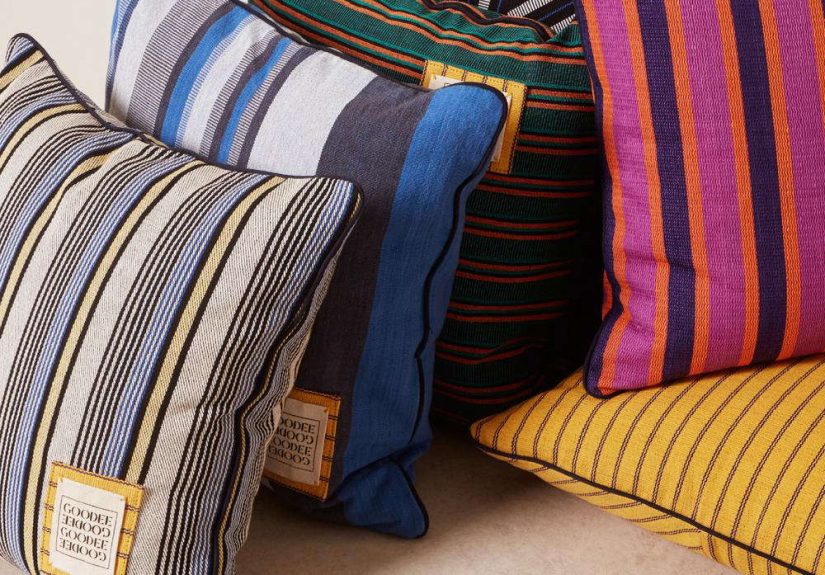
Here is where Goodee gets extra smart. Ethically made home goods can sometimes drift into one of two traps: worthy but visually sleepy, or stylish but vague about what “ethical” actually means. Goodee works hard to avoid both. The pillows are colorful, graphic, tactile, and decorative enough to earn their keep in a real home. At the same time, the brand’s larger philosophy emphasizes impact, transparency, and vetting. That combination is what modern design shoppers actually want. Nobody wants to be guilted into bad taste.
They show that sustainability can still have personality
One of the most refreshing things about the brand is that it does not confuse responsible shopping with beige minimalism. Ethical home decor does not have to look like it was raised on oatmeal and strict rules. Goodee’s assortment often leans into saturated colors, handwoven textures, and globally influenced design. That matters because sustainability sticks better when it feels joyful, not punishing. If a pillow makes your room happier and your shopping habits smarter, that is a pretty good two-for-one deal.
The Bigger Shift: Ethical Design Is Becoming a Baseline
Goodee did not appear in a vacuum. It arrived in a home market that was already moving toward mindful consumption, third-party certification, and stronger scrutiny of brand claims. Design publications, retail analysts, and sustainability-minded editors have all spent the last few years asking variations of the same question: how can shoppers tell the difference between a genuinely responsible brand and one that just discovered the word “planet” in a marketing meeting?
That is where Goodee’s positioning becomes especially relevant. The company has been associated with B Corp certification, a framework that evaluates businesses on social and environmental performance, accountability, and transparency. In plain English, that means the brand is trying to operate with a wider lens than “sell more things faster.” It also aligns with a broader consumer shift toward buying fewer, better-made pieces with traceable backstories.
In home decor, that shift shows up in all kinds of ways: interest in recycled materials, renewed appreciation for handmade work, concern about textile certifications, and more attention to whether products are meant to last past one season of algorithmic trend-chasing. Throw pillows are a surprisingly useful case study here because they sit right at the intersection of comfort, styling, and consumption. They are small enough to be accessible but significant enough to reveal a shopper’s priorities.
Why Ethically Made Pillows Are Worth Talking About
A pillow can reveal a lot. Not just about your living room, but about the design economy that produced it. Was the cover made from conventional materials with little traceability? Was it mass-produced in a way that keeps prices low by squeezing labor? Was it designed to survive six months until next year’s “must-have” pattern takes over? Or was it made with a more considered set of choices, where craft, material quality, and responsible sourcing all play a visible role?
That is why ethically made pillows punch above their weight in the sustainable home conversation. They are often one of the first categories where people are willing to pay a little more for a little more meaning. You may not replace your sofa this year, but you might swap in a few pillows that change the mood of a room. And when those pillows support artisan communities, use more thoughtful materials, or come from a marketplace that screens for impact, the decorating decision starts to feel less superficial.
There is also a practical argument. Better materials and better construction usually age better. Handwoven textiles bring depth that printed imitations often cannot match. Natural fibers tend to offer more richness and texture. And when a product has an actual story attached to it, people are more likely to keep it longer. Emotional durability is real. We hang on to things that mean something.
How to Shop Ethical Home Decor Without Falling for Pretty Nonsense
Look for proof, not just poetry
If a brand says it is sustainable, ask how. Certifications, traceability language, material details, and transparent production information all matter. Terms like organic cotton, recycled fibers, Fair Trade, OEKO-TEX, or GOTS should be supported by specifics rather than floating around like decorative confetti.
Pay attention to who made it
One of the strongest parts of Goodee’s model is its emphasis on makers. Ethical design is not only about the planet. It is also about people. Artisan partnerships, fair wages, skill preservation, and dignified work should not be treated like bonus features. They are central to the value of the product.
Choose pieces with staying power
A responsibly made pillow still has to function as a design purchase. Ask whether you will want it in your home next year. Bold is fine. Character is great. But the best sustainable decor is the kind you do not feel an urge to replace after one mood board refresh.
Buy fewer, but buy with intention
This is the least glamorous advice and maybe the most useful. You do not need 14 throw pillows unless your sofa is moonlighting as a ball pit. A smaller number of well-made pieces usually delivers more visual impact than a pile of random budget buys that flatten, fade, or feel disposable.
Design Lessons You Can Steal From Goodee’s Pillow Story
The first lesson is that values and aesthetics do not need to compete. Good ethical design should still delight the eye. Goodee’s success suggests that shoppers are no longer willing to separate taste from responsibility. They want both, and frankly, that is reasonable. A home should feel beautiful, but it should not require moral amnesia.
The second lesson is that curation matters. In a sea of online decor, trust is becoming one of the most important design services a retailer can offer. If a marketplace meaningfully vets products for social and environmental impact, it reduces the homework for the customer. That does not replace critical thinking, but it does make better choices easier.
The third lesson is that small objects can carry big meaning. We often think purpose-driven design has to come in dramatic forms: a solar-powered house, a circular furniture system, a revolutionary biodegradable material. Those things matter. But so do everyday objects that quietly improve the standards of how home goods are made. A pillow will not save the world. It can, however, reflect a better version of how products move through it.
So, Would These Pillows Still Deserve the Hype?
Honestly, yes. Not because they were free in a giveaway, but because the concept behind them still holds up. They represent a version of home shopping that feels more mature than trend-chasing and more human than faceless mass retail. The appeal is not just that they look good on a sofa. It is that they offer a case for decorating with a little more conscience and a lot more curiosity.
In a market flooded with items designed to be scrolled past, clicked on, and forgotten, Goodee’s ethically made pillows stand out for doing something refreshingly old-fashioned: they give you a reason to care. About the craftsmanship. About the materials. About the supply chain. About the room you are creating and the world that room connects to.
And that, in the end, is why this story still resonates. Good design is not just about how an object looks when you first unwrap it. It is about what the object stands for long after the box is gone.
Experiences: What It Feels Like to Live With Purpose-Driven Design
There is a specific kind of pleasure that comes from bringing a well-made textile into your home. It is not loud. It does not announce itself with blinking lights or a dramatic before-and-after reel. It is quieter than that. You notice it when morning light hits the weave and makes the texture look almost architectural. You notice it when guests absentmindedly touch the fabric and ask where it came from. You notice it when a room that once felt a little generic suddenly feels composed, as if it has found its speaking voice.
That is what purpose-driven decor often does best. It changes the emotional tone of a space. A thoughtful pillow on a chair or sofa can make a room feel layered rather than merely decorated. It can signal care without looking staged. In homes full of practical furniture and daily chaos, those details matter. They soften the room, yes, but they also sharpen your awareness. You start to see design less as accumulation and more as editing.
There is also a different kind of comfort in owning something with a traceable story. You are not just reacting to the color or pattern. You are responding to the human effort behind it. That connection can be subtle, but it changes the experience of ownership. The object feels less anonymous. It earns attention. And in a culture where so many products appear in our lives stripped of context, that sense of origin feels almost luxurious.
Of course, ethical design does not turn anyone into a saint with excellent lumbar support. A beautiful pillow will not fix overconsumption on its own. But living with more intentional objects can influence how you shop next. It can make you pause before buying the cheaper copy. It can make you ask harder questions about materials, labor, and durability. It can make your home feel less like a storage unit for trends and more like a record of values you actually mean.
That may be the best takeaway from the Goodee pillow story. Good purpose is not only something you read about on a product page. When the object is successful, you feel it in use. It is there in the tactile richness, in the confidence that the piece was not designed for a single season, and in the small satisfaction of knowing your decor choice did a bit more than fill an empty corner. Not every purchase needs to carry that much meaning. But when one does, you can tell. It stays with you.