Table of Contents >> Show >> Hide
- What Is a Gourd Pendant Light, Exactly?
- Why the Gourd Shape Works in So Many Homes
- Materials and Finishes: The “Personality Test” Part
- How to Choose the Right Size (So It Looks “Designed,” Not Random)
- Hanging Height and Spacing: The Rules That Save Your Forehead
- Bulbs, Brightness, and the Glow You Actually Want
- Where a Gourd Pendant Light Looks Best
- Natural Gourd Pendants: What to Know Before You Commit
- Installation and Safety (a.k.a. “Let’s Not DIY Electrocution”)
- Styling Ideas: Make It Look Like You Planned It
- Common Mistakes (and How to Avoid Them)
- Real-World Experiences With Gourd Pendant Lights (The Stuff You Don’t Learn From a Product Photo)
- Experience #1: The “Wow, It’s Sculptural” Moment (and Why Scale Matters)
- Experience #2: The “My Bulb Looks… Odd” Realization
- Experience #3: The “Why Is My Pendant a Fingerprint Magnet?” Era
- Experience #4: The “Hanging Height Is Emotional” Adjustment
- Experience #5: The “This Changed the Whole Room” Surprise
- Experience #6: When a Real Gourd Pendant Becomes a Conversation Piece
- Conclusion
There are two kinds of “gourd pendant light” shoppers in the world: the “I just want something cute and curvy”
crowd, and the “Wait… is this made from an actual gourd?” crowd. The good news is that both are right.
A gourd pendant light can mean a gourd-shaped pendant (think: teardrop, bulb, or softly pinched silhouette),
or a pendant that uses a real dried gourd as a shade. Either way, you’re getting something that instantly
reads organic, sculptural, and “I have my life together enough to care about lighting.”
This guide breaks down what makes gourd pendants special, how to choose the right size and finish,
where they look best, and how to avoid the classic lighting mistakes (like hanging them so low your
tallest friend has to limbo to the snack table). Along the way, we’ll keep it practical, a little witty,
and very focused on helping your space look intentionalwithout turning your ceiling into a science project.
What Is a Gourd Pendant Light, Exactly?
1) The gourd-shaped pendant (the most common meaning)
In most lighting catalogs, “gourd” describes the silhouette: a rounded, slightly elongated formoften
like a water droplet or a plump teardrop. These are usually made from hand-blown glass, ceramic,
metal, bamboo, concrete, or composite materials. Some designs are clear and airy; others are opaque and cozy.
The shape is the star: it softens hard lines in kitchens, adds a sculptural focal point in entryways,
and looks surprisingly elegant above a dining table.
2) The real gourd pendant (yes, nature is in the lighting business)
A true gourd pendant uses a dried gourd shell as the shade, often drilled or carved into patterns.
When lit, it throws shadows like a tiny art installation. These pendants can feel global, handmade, and
one-of-a-kindbecause they literally are. If you love texture and imperfect beauty, this category is your
new personality.
Why the Gourd Shape Works in So Many Homes
The gourd silhouette is basically the interior design equivalent of a good sweater: it goes with everything.
Here’s why it plays so nicely in real rooms:
- Soft geometry: Curves balance out cabinets, countertops, and rectangular furniture.
- Scalable style: The same shape looks great as a mini pendant or an oversized statement piece.
- Versatile vibe: Clear glass feels modern; opal glass feels vintage; bamboo feels relaxed; concrete feels edgy.
- Instant focal point: Even one gourd pendant can “finish” a space that feels slightly undone.
Materials and Finishes: The “Personality Test” Part
Glass gourd pendants
Glass is the classic choiceand for good reason. It’s clean, timeless, and can be either subtle or dramatic.
- Clear glass: Bright, airy, shows the bulb (choose a good-looking one). Great for modern and transitional spaces.
- Opal / milk glass: Diffused, softer, forgiving. Great for kitchens and dining rooms where glare is the enemy.
- Smoked / tinted glass: Moodier, more “cocktail hour.” It can reduce brightnessplan your bulb output accordingly.
- Textured glass: Adds sparkle and hides fingerprints better than perfectly smooth clear glass. (Your future self will thank you.)
Ceramic gourd pendants
Ceramic feels earthy and substantiallike the lighting version of pottery you’re “definitely going to start collecting.”
Matte whites and warm neutrals work beautifully in coastal, farmhouse, and Scandinavian-inspired rooms.
Natural materials: bamboo, rattan, and woven shades
A gourd-shaped shade made from bamboo or woven fibers gives you texture and a softer glow. These are fantastic in
relaxed kitchens, breakfast nooks, and bedrooms. They can throw subtle shadow patterns, which adds depthespecially
in the evening.
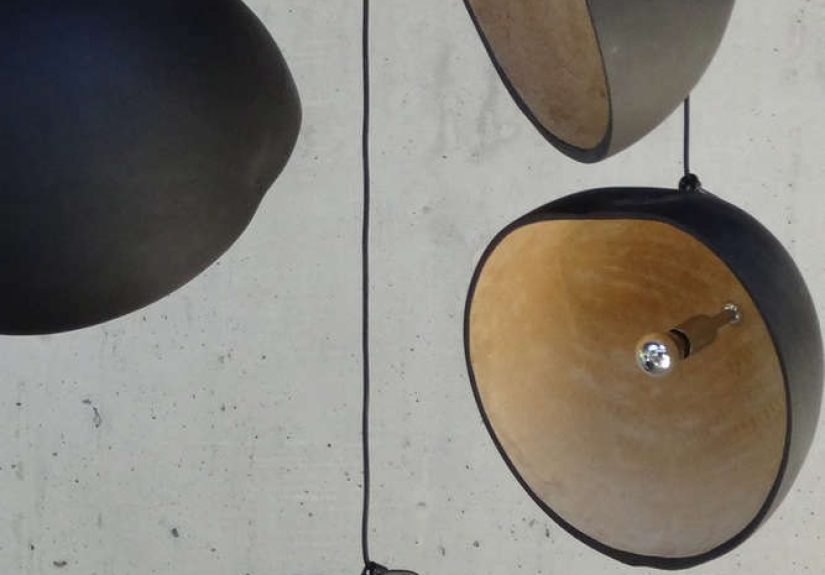
Concrete or stone-look gourd pendants
Want a little edge? Concrete finishes bring weight and contrastespecially in modern, industrial, or minimal spaces.
These tend to feel more sculptural and less “see-through,” so they’re often better for ambient lighting
unless the opening directs light downward.
Hardware finishes that actually matter
The shade gets attention, but the finish is what ties everything together. Quick cheat sheet:
- Warm brass: Adds glow and warmth. Great with white cabinets, wood tones, and classic interiors.
- Black: Graphic and modern. Looks sharp against light ceilings and light kitchens.
- Nickel/chrome: Crisp and clean. Works well when you already have stainless appliances.
- Bronze: Softer than black, warmer than chrome. A good “I can’t decide” middle ground.
How to Choose the Right Size (So It Looks “Designed,” Not Random)
Over a dining table: aim for proportion
A common sizing guideline is that a pendant or chandelier should be about half to two-thirds the width
of the table. For example, if your table is 42 inches wide, a fixture around 21–28 inches in diameter tends to look
balanced. If you’re using multiple smaller gourd pendants, the combined visual width should still feel proportional.
Over a kitchen island: leave breathing room
Islands have a habit of making people overbuy lighting. (It’s okay. We’ve all been emotionally influenced by a pretty product photo.)
The key is spacing and scale:
- Edge clearance: Keep pendants a comfortable distance from the island ends so they don’t look cramped.
- Multiple pendants: Even spacing looks bestespecially if you’re installing three.
- Visual weight: Clear glass looks lighter; opaque shades feel larger. Choose accordingly.
Hanging Height and Spacing: The Rules That Save Your Forehead
The go-to hanging height
For most dining tables and kitchen surfaces, a widely used starting point is to hang the bottom of the pendant
about 28–34 inches above the tabletop or countertop. This usually gives good light without blocking views.
If your ceilings are higher than average, you can bump the drop a bitjust keep the proportions pleasing.
Spacing multiple pendants (kitchen islands especially)
When you’re hanging more than one pendant, designers often start with roughly 24–36 inches on-center spacing
(30 inches is a common sweet spot). This keeps the lights from looking crowded while still providing even illumination.
Practical example: If you have a 7-foot island and you want three mini gourd pendants, choose smaller diameters
(say 7–10 inches each) and space them evenly so the trio reads intentionalnot like you installed one, got excited,
and then added two more during a caffeine surge.
Bulbs, Brightness, and the Glow You Actually Want
Pick a color temperature that matches your home’s mood
In most American homes, 2700K–3000K is the sweet spot for a warm, welcoming glow. Cooler temperatures
can feel more “office” unless you’re intentionally going for crisp and modern.
CRI: the secret to food that doesn’t look sad
CRI (Color Rendering Index) affects how accurately colors appear. For kitchens and dining spaces, a higher CRI
makes food, wood tones, and paint colors look more natural. A good general target is 80+,
and if you’re picky (or your countertops were expensive), aiming higher can be worth it.
Clear glass shows everythingespecially your bulb choice
If your gourd pendant has clear glass or an exposed bulb, choose a bulb that looks good when it’s off and on.
Many people prefer a frosted or “soft white” bulb to reduce glare. And if your pendant is dimmable,
make sure the bulb is toootherwise your dimmer will throw a tantrum.
Where a Gourd Pendant Light Looks Best
Kitchen island
Gourd pendants are practically made for islands because their rounded shape contrasts with the long rectangle below.
Clear glass helps keep sight lines open; opal glass softens the light for a warmer feel.
Dining room
A single larger gourd pendant can feel modern and sculptural. Multiple smaller ones can feel boutique-hotel chic.
The key is centering and hanging height so the fixture feels anchored to the table.
Entryway
In an entry, a gourd pendant creates a welcoming focal point. If your entry has high ceilings,
consider a larger size or a longer drop so it doesn’t look like a lonely grape floating near the ceiling.
Bedroom
Swapping bedside lamps for mini gourd pendants frees up nightstand space and looks elevated.
Choose a softer, diffused shade so you’re not getting interrogated by your own lighting at night.
Bathroom or laundry room
If the fixture will be exposed to humidity or condensation, look for a rating appropriate for the location
(often “suitable for damp locations”). Translation: it can handle moisture in the air, but it’s not meant
to be directly sprayed with water.
Natural Gourd Pendants: What to Know Before You Commit
Real gourd pendants are gorgeous, but they’re also… real plant material. That means a few practical considerations:
- Heat management: Use low-heat lighting (typically LED) to reduce heat buildup inside the shade.
- Humidity: Gourds don’t love damp environments. Avoid bathrooms unless the piece is specifically finished for it.
- Finish and care: Sealed gourds are easier to maintain. Dust gently; avoid soaking or harsh cleaners.
- Uniqueness: Each gourd is differenttexture, shape, thicknessso slight variation is part of the charm.
Installation and Safety (a.k.a. “Let’s Not DIY Electrocution”)
Pendant lights connect to your home’s electrical system, so if you’re not experienced with wiring,
the safest move is to hire a licensed electrician. At minimum, confirm the ceiling box is rated for the fixture’s weight,
use the correct hardware, and follow the manufacturer’s instructions. Also: if you’re installing above an island,
make sure the placement won’t interfere with cabinet doors, tall décor, or ceiling fans that spin like they’re training for the Olympics.
Styling Ideas: Make It Look Like You Planned It
Match the curve somewhere else
Repeat a soft curve in bar stools, a vase, or cabinet pulls. This makes the gourd shape feel intentional instead of accidental.
Choose contrast on purpose
A clear glass gourd pendant with black hardware pops against a white kitchen. An opal glass shade with warm brass
makes wood tones feel richer. If your room is already visually busy, choose a simpler pendant so it doesn’t compete.
Layer your lighting
Pendants work best when they’re part of a lighting “team.” Combine them with under-cabinet lights, recessed lighting,
or wall sconces so your room looks good at noon and at midnight snack o’clock.
Common Mistakes (and How to Avoid Them)
- Hanging too low: Great for drama, bad for conversation and visibility. Start with the standard height range and adjust.
- Undersizing: Tiny pendants over a big island can look like punctuation marks that forgot the sentence.
- Ignoring bulb quality: The wrong bulb can make a beautiful pendant feel harsh or dim.
- Forgetting maintenance: Clear glass shows dust, fingerprints, and regret. Textured or opal glass is more forgiving.
- Skipping ratings: In humid areas, choose fixtures rated for the environment.
Real-World Experiences With Gourd Pendant Lights (The Stuff You Don’t Learn From a Product Photo)
You can read a thousand product descriptions and still be surprised once a gourd pendant light is actually living in your house.
Not because it’s mysteriousbecause real life includes steam, fingerprints, tall friends, and that one moment when you realize
the “perfect” pendant is hanging directly in your line of sight while you’re trying to make coffee like a civilized person.
Here are a few realistic experiences people commonly have when adding a gourd pendant light, plus what you can learn from each.
Experience #1: The “Wow, It’s Sculptural” Moment (and Why Scale Matters)
The first time a gourd pendant is installed, the shape usually feels more three-dimensional than it did online.
That’s the magic of curves: they catch daylight and shadows in a way flat fixtures can’t. Homeowners often notice the pendant
becomes a focal point even when it’s off. This is greatunless you chose a size that’s too small, in which case it can look
like a decorative afterthought. The takeaway: if you’re deciding between two sizes, the slightly larger option often reads
more intentional, especially over an island or dining table.
Experience #2: The “My Bulb Looks… Odd” Realization
Clear glass gourd pendants are stunning, but they’re honest. Like, brutally honest. If your bulb has visible seams,
weird glare, or a color temperature that doesn’t match the rest of your room, you’ll notice. People often end up swapping bulbs
once or twice to get the glow just right. The takeaway: plan the bulb at the same time you plan the pendant.
If you want cozy, stick with warm whites; if you want crisp, go slightly coolerbut keep it consistent throughout the space.
Experience #3: The “Why Is My Pendant a Fingerprint Magnet?” Era
Smooth clear glass is basically a crime scene for fingerprints. In kitchens, it’s common to see smudges appear faster than you
thought possibleespecially if the pendant hangs near a frequently used path (hello, snack traffic). Some people solve this by
switching to textured glass, opal glass, or simply accepting a new hobby: wiping glass. The takeaway: if low-maintenance matters,
choose a finish that hides evidence of being alive.
Experience #4: The “Hanging Height Is Emotional” Adjustment
Many people start with a standard hanging height and then adjust after living with it for a week. Too low can feel visually heavy
and block conversation; too high can feel disconnected and less useful. Over islands, people often raise pendants slightly if they
notice the fixture interrupts sight lines across an open kitchen-living area. The takeaway: treat height like tailoringstart with
a good baseline, then fine-tune for your space and your people.
Experience #5: The “This Changed the Whole Room” Surprise
A gourd pendant light often does more than add illuminationit can change how finished a room feels. Kitchens that felt “fine”
suddenly feel styled. Dining rooms that felt empty suddenly have a center. Entryways that felt temporary suddenly feel welcoming.
People are frequently surprised that lighting can deliver such a strong upgrade without changing furniture or paint.
The takeaway: if you’re on the fence, remember that lighting isn’t just functionalit’s architectural jewelry.
Experience #6: When a Real Gourd Pendant Becomes a Conversation Piece
Real gourd pendants (the actual dried-gourd kind) tend to become the thing guests ask about. The carved patterns cast shadows,
and the shade’s natural texture reads handmade in a way mass-produced fixtures rarely do. Owners often describe the light as
“cozy” or “artsy,” especially at night when the room gets quieter and the shadows become part of the décor. The takeaway:
if you love character and craft, a real gourd pendant delivers itbut plan for LED lighting and a drier location so the material
stays happy over time.
Bottom line: gourd pendant lights are popular because they’re easy to love in real life. They’re sculptural without being fussy,
stylish without being fragile (most of the time), and flexible enough to work in everything from modern kitchens to cozy bedrooms.
Choose the right size, hang them at a comfortable height, pair them with the right bulb, and you’ll get that rare home upgrade
that looks good in the daylight and feels even better after dark.
Conclusion
A gourd pendant light is one of those rare design choices that can be both practical and beautiful. The curvy silhouette adds softness,
the right material controls glare and mood, and good sizing and hanging height make the whole thing feel professionally planned.
Whether you’re drawn to hand-blown glass, natural woven shades, concrete texture, or a true carved gourd statement piece,
the best results come from the same recipe: thoughtful proportion, a flattering bulb, and placement that respects how people actually
live in the space. Do that, and your ceiling won’t just hold a lightit’ll hold the room together.