Table of Contents >> Show >> Hide
- What Is the Grohe Somerset Lavatory Wideset Faucet (20133)?
- Design: Quiet Luxury Before Quiet Luxury Was Trendy
- Construction and Engineering
- Water Efficiency and Performance
- Installation Considerations
- How It Fits Into Bathroom Design Today
- Availability, Value, and Buying Advice
- Why the Grohe Somerset 20133 Still Deserves Attention
- Extended Experiences and Real-World Impressions
- Conclusion
If bathroom faucets had résumés, the Grohe Somerset Lavatory Wideset Faucet (20133) would walk into the interview wearing polished chrome, speak fluent engineering, and quietly slide over a portfolio labeled “timeless.” This is not the kind of faucet that tries too hard. It does not show up with disco lights, a futuristic spaceship silhouette, or a handle design that looks like modern art having a small crisis. Instead, the Somerset 20133 is all about classic styling, practical durability, and the kind of restrained elegance that makes a bathroom feel finished rather than fussy.
Originally designed as a three-hole widespread lavatory faucet, the Grohe Somerset 20133 built its reputation on solid brass construction, ceramic cartridge performance, water-saving efficiency, and a clean low-arc profile that plays nicely with traditional and transitional bathroom designs. Even now, years after it appeared in product catalogs and showroom listings, it still gets attention from homeowners, remodelers, and plumbing enthusiasts who appreciate bathroom fixtures that balance good looks with long-term usability.
This article takes a closer look at what makes the Grohe Somerset Lavatory Wideset Faucet (20133) memorable, where it fits in bathroom design, how it performs in real-world use, and why it still sparks interest despite being harder to find today. Spoiler alert: this faucet is a little bit like a well-tailored blazer. It never screams for attention, but it absolutely knows what it is doing.
What Is the Grohe Somerset Lavatory Wideset Faucet (20133)?
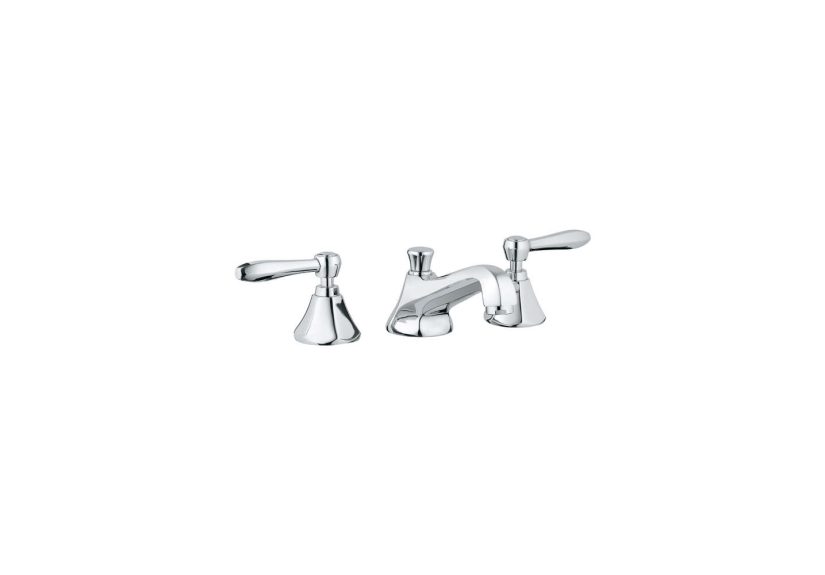
The Somerset 20133 is a widespread bathroom faucet designed for a three-hole lavatory setup. In plain English, that means the spout sits in the center while the hot and cold handles are installed separately on either side. This layout gives the sink area a more custom, upscale appearance than a compact centerset faucet and allows a bit more flexibility in spacing and visual balance.
Grohe positioned the Somerset collection as a refined, traditional-leaning line with updated engineering. The 20133 model delivered that approach through a low-profile spout, understated curves, and a finish-focused presentation that was meant to look polished without becoming flashy. It was offered in finishes such as chrome and brushed nickel, which made it adaptable to a range of vanities, mirrors, and hardware styles.
One detail buyers should know immediately: the faucet body was commonly sold without handles, with matching lever handles ordered separately. That may sound mildly annoying at first, but it gave designers and buyers a bit more control over the final look. It also meant you wanted to read the product description carefully instead of discovering halfway through installation that you had purchased a beautiful spout and exactly zero handles. That would be a bad time.
Design: Quiet Luxury Before Quiet Luxury Was Trendy
The visual appeal of the Grohe Somerset 20133 comes from proportion and restraint. The faucet height is modest, the spout reach is practical, and the overall silhouette feels grounded rather than oversized. In a bathroom, that matters. Some faucets try to become the entire personality of the room. The Somerset does the opposite. It helps the whole vanity composition work together.
A Classic Widespread Look
Because it is a widespread faucet, the 20133 naturally feels more architectural than a single-hole or centerset option. Separate handles add symmetry, and that symmetry tends to read as more luxurious. It is especially effective on stone countertops, furniture-style vanities, and under-mount sinks where the faucet needs to look intentional, not just functional.
Low-Arc, Low-Drama Styling
The Somerset’s spout is not tall and theatrical. It sits lower, with a subtle arc that feels traditional but not old-fashioned. That makes it a smart fit for homeowners who want a bathroom faucet with elegance but do not want the room drifting into ornate, over-decorated territory. It also helps when paired with classic white sinks, marble tops, warm wood vanities, and metal-framed mirrors.
Finish Quality Matters
One of Grohe’s signature selling points has long been finish durability, and the Somerset 20133 benefited from that reputation. Buyers were drawn to finishes designed to resist tarnish and scratching better than bargain-bin alternatives. In practical terms, that means the faucet was intended to keep looking presentable even after years of toothpaste, soap splashes, hurried cleaning, and those mysterious water spots that somehow reappear five minutes after you wipe them away.
Construction and Engineering
A pretty faucet is nice. A pretty faucet that survives daily use without turning into a drip machine is much nicer. The Grohe Somerset lavatory faucet earned attention because it was built around materials and internal components associated with long-term performance.
Solid Brass Body
Solid brass construction has long been a major selling point in quality bathroom faucets, and the Somerset 20133 followed that path. Compared with lighter-duty materials, brass offers better durability, corrosion resistance, and structural stability. For homeowners, that often translates into a faucet that feels more substantial and dependable over time.
Ceramic Cartridge Operation
The faucet used ceramic cartridge technology, which matters more than many buyers realize. Ceramic cartridges are prized for smooth operation and long service life. They help deliver predictable control over water flow and temperature while reducing the wear issues that can develop in older or cheaper valve designs. In day-to-day use, this shows up as handles that feel precise rather than sloppy.
Flexible Supply Connections
Product materials and retailer specifications also point to flexible connection lines and installation-friendly engineering. That does not magically transform every bathroom update into a one-hour DIY victory lap, but it does suggest that Grohe designed the faucet with professional installation standards in mind. The system was built to integrate with typical lavatory plumbing while maintaining a clean, reliable setup below the deck.
Water Efficiency and Performance
The Somerset 20133 was also notable for water efficiency. Listings and spec materials associated the faucet with WaterSense-related performance and flow-conscious design. For homeowners, that matters for two reasons: lower water use and a more responsible fixture choice without sacrificing everyday functionality.
Here is the important distinction: a good low-flow bathroom faucet should not feel weak or annoying. Nobody wants to wash their hands under what feels like a mildly disappointed mist. The strength of a well-engineered faucet is that it manages flow efficiently while preserving a satisfying, usable stream. That was part of the appeal with Grohe’s engineering approach at the time.
For powder rooms, guest baths, and primary bathrooms alike, a faucet like the Somerset offered a balance between performance and conservation. It was never marketed as a gimmick faucet with ten weird spray modes you would use exactly once. It was designed for ordinary daily use, and that is often where the best fixtures shine.
Installation Considerations
If you are evaluating the Grohe Somerset Lavatory Wideset Faucet (20133) from a practical perspective, installation is part of the story. This is a widespread faucet, so it requires a compatible three-hole sink or countertop configuration. That makes it ideal for bathroom vanities already set up for widespread hardware or for remodels where the sink deck is being replaced or drilled accordingly.
Check the Handle Situation
It is worth repeating because it mattered then and still matters now when buying old stock or resale units: some versions were sold less handles. That means buyers needed to purchase the corresponding handle set separately. If you are shopping for this model today through resale channels, surplus suppliers, or discontinued inventory listings, confirm exactly what is included before clicking the buy button with great confidence and very little reading.
Mind the Sink Pairing
Because the faucet has a relatively low profile, it tends to pair best with sinks that do not require an unusually tall spout clearance. In many traditional undermount lavatories, that is perfectly fine. But if you are pairing it with a vessel sink or a thick deck build-up, you will want to verify dimensions carefully.
Pop-Up Drain and Codes
Specification materials for the model also referenced a pop-up waste set and compliance with key plumbing and material standards. That is the kind of detail that does not sound glamorous in a product description, but it matters to installers and homeowners who want a faucet that fits within common code expectations and delivers a complete, professional result.
How It Fits Into Bathroom Design Today
Even though the Grohe Somerset 20133 is often listed as discontinued, its design still works surprisingly well in current bathrooms. In fact, there is an argument that it fits today’s taste even better than some trend-heavy fixtures that may look dated the minute the trend cycle sneezes.
Best for Traditional and Transitional Bathrooms
This faucet is especially well suited to traditional, classic, and transitional bathroom designs. If your vanity includes shaker cabinetry, framed mirrors, marble-look counters, or warm metallic accents, the Somerset can settle right in without visual friction.
A Nice Alternative to Ultra-Modern Faucets
Some homeowners simply do not want a razor-sharp, geometric faucet that looks like it was designed by a committee of very serious rectangles. The Somerset offers a softer, more timeless alternative. It feels intentional and elevated without demanding that the rest of the room become aggressively contemporary.
Works With Thoughtful Material Palettes
Chrome versions pair well with bright white ceramics, cool-toned stone, and polished accessories. Brushed nickel versions tend to work beautifully with warmer neutrals, soft gray walls, unlacquered brass accents, and natural wood finishes. In short, it is the kind of fixture that helps rather than competes.
Availability, Value, and Buying Advice
One reason the Somerset 20133 still generates interest is that it occupies a sweet spot between design credibility and practical engineering. It was not a throwaway builder-grade faucet, and it was not trying to be a museum sculpture either. That makes it attractive to buyers who want a premium feel without diving headfirst into the most expensive designer faucet territory.
That said, the model has been widely listed as discontinued by several retailers and catalog sources. For shoppers today, that means availability can be inconsistent. You may encounter old stock, showroom leftovers, discontinued inventory, parts catalogs, or resale listings rather than fresh, easy-to-order mainstream retail stock.
If you are actively shopping for one, keep these ideas in mind. First, verify the exact finish and model suffix. Second, confirm whether handles are included. Third, check the condition carefully if the faucet is listed through secondary-market sellers. Fourth, make sure replacement parts are still reasonably accessible through Grohe parts channels or specialty plumbing suppliers. A great faucet is only great until one tiny missing component turns the project into a scavenger hunt.
Why the Grohe Somerset 20133 Still Deserves Attention
The best way to understand the Somerset 20133 is to think about what people actually want from a bathroom faucet over the long run. They want it to look good every day. They want it to operate smoothly. They want it to feel sturdy. They want the finish to hold up. They want it to conserve water without acting like it is rationing morale. And they want all of that without the faucet becoming the high-maintenance diva of the vanity top.
On those points, the Grohe Somerset Lavatory Wideset Faucet (20133) made a strong case for itself. Its appeal comes from balance: style without excess, engineering without gimmicks, and efficiency without compromise. That combination is why discontinued fixtures like this one keep turning up in searches, wish lists, renovation notes, and nostalgic plumbing conversations that are somehow more interesting than they have any right to be.
Extended Experiences and Real-World Impressions
Living with a faucet like the Somerset 20133 is less about dramatic revelation and more about steady appreciation. It is the kind of fixture that grows on you because it does its job well, day after day, without demanding applause. In many bathrooms, that quiet consistency is exactly what people end up loving most.
Imagine a homeowner updating a dated vanity in an older house. The original faucet may have been bulky, pitted, or just visually tired. Replacing it with something like the Somerset changes the mood instantly. The sink area looks cleaner, the lines feel more deliberate, and the bathroom starts to read as curated rather than merely functional. It is not a total renovation miracle, of course, but it is the kind of upgrade that makes the rest of the room step up its game.
There is also a tactile experience involved. Higher-quality bathroom faucets tend to feel different in use. The handles do not wobble. The movement is controlled. The water shuts off with confidence. You may not think about those qualities when staring at online photos, but you notice them immediately when you use the faucet every morning while half awake and trying to remember whether today is Tuesday or just emotionally Tuesday.
In guest bathrooms, a faucet like the Somerset often sends a subtle message about the home overall. Guests may not know the model number, but they notice quality. They notice when the metal finish looks rich instead of thin. They notice when the faucet complements the sink and hardware instead of clashing with them. They notice when a bathroom feels assembled by someone who paid attention.
For designers and remodelers, the Somerset 20133 likely appealed because it was easy to work into multiple aesthetics. It could support a traditional powder room with paneled walls and classic sconces, or it could soften a more transitional vanity with a quartz top and understated mirror. That flexibility matters in real projects, where not every client wants the newest trend and not every room needs a dramatic statement fixture.
There is also something satisfying about the faucet’s proportions. Many lavatory faucets miss the mark by going too tall, too chunky, or too stylized. The Somerset’s lower, broader visual stance tends to feel stable and intentional. On the right sink, it looks composed. On the wrong sink, it still behaves politely, which is more than can be said for some fixtures that seem determined to dominate every square inch around them.
Of course, owning or sourcing a discontinued faucet can come with a little adventure. Buyers sometimes find themselves comparing listings, checking finish codes, hunting for included parts, and emailing suppliers with the energy of amateur detectives. But for people who genuinely like the design, that effort can feel worthwhile. There is a particular satisfaction in finding a well-made discontinued fixture that still outclasses many new, mass-market options.
Another real-world experience worth mentioning is maintenance. A faucet with a durable finish and quality internal components usually creates fewer headaches over time. That means less fretting about surface wear, less irritation from handle looseness, and fewer moments of standing at the sink wondering why the faucet suddenly sounds like it has opinions. When a product is engineered well, everyday use simply feels easier.
In the end, the Grohe Somerset 20133 is memorable because it represents a type of bathroom product many people still want: not disposable, not gaudy, not trend-desperate, and not overcomplicated. Just handsome, efficient, well-built, and quietly confident. In home design, that combination never really goes out of style.
Conclusion
The Grohe Somerset Lavatory Wideset Faucet (20133) remains an appealing fixture for anyone who values classic bathroom design, dependable engineering, and a polished widespread layout. With its solid brass construction, ceramic cartridge operation, efficient flow-minded performance, and flexible finish options, it offered the kind of quality that helped Grohe stand out in the bathroom faucet market.
Even though the model is commonly listed as discontinued, its continued visibility in product archives, retailer pages, and design references says a lot. This is a faucet people still look up because it solved the right problems. It looked refined. It worked well. It fit a wide range of bathrooms. And it managed to do all that without turning the sink into a stage production. For many homeowners, that is exactly the point.