Table of Contents >> Show >> Hide
- Why “Dark Side” Animal Comics Hit So Hard
- The Real Dark Side: Nature’s Greatest Plot Twists
- How Comics Turn Biology Into Punchlines
- The 41-Pic Lineup: Caption-Style Highlights
- How to Enjoy Dark Animal Comics Without Turning Into a Villain Yourself
- What It’s Like to Binge These Comics (Reader-Style Notes)
- Conclusion: Nature Is Not a Disney MovieAnd That’s the Joke
- SEO Tags
Animals are adorable. They’re fluffy. They’re majestic. They’re the reason your camera roll is 38% dogs and 62% “look at this raccoon holding cotton candy.”
But nature also runs a little… unhinged. Under the cute packaging, there’s a reality show where the producers are evolution and the prize is
“congratulations, your genes made it to the next season.”
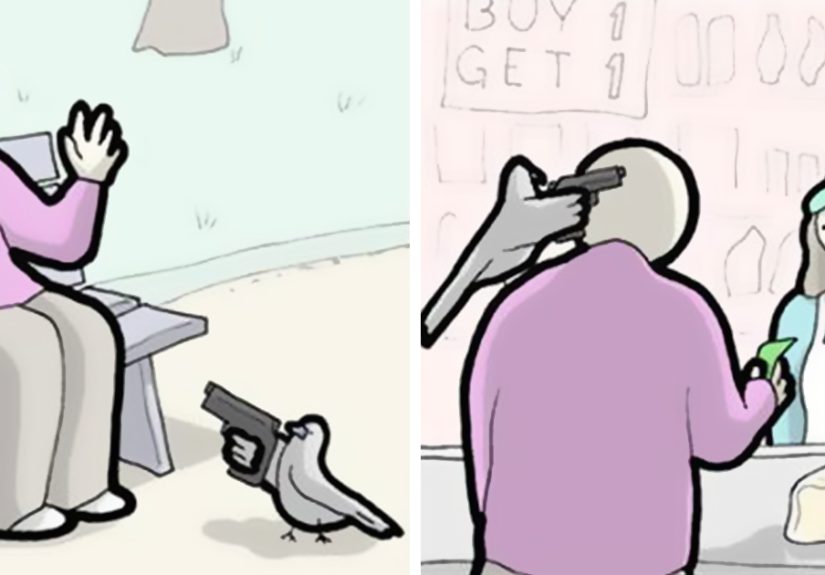
That’s why “dark side of animals” comics hit like a perfectly timed punchline. They take the stuff wildlife documentaries say in a whisper
(“and now the male does something upsetting…”) and turn it into bold captions, exaggerated expressions, and laugh-out-loud chaos.
The best funny animal comics don’t just make you gigglethey make you think: Wait… is that real?
Why “Dark Side” Animal Comics Hit So Hard
1) We grew up on the “nice animal” storyline
Most of us learned animals through cartoons, plush toys, and heartwarming rescue videos. Those are real and wonderfulbut they’re also
a highlight reel. Nature is complicated, and many species have behaviors that look brutal through human eyes because the rules aren’t “be nice,”
they’re “survive and reproduce.”
2) Comedy loves contrast (and nature is packed with it)
A penguin looks like a polite waiter. A goose looks like an inflatable pool toy. A dolphin looks like it should be handing out high-fives.
Then you learn a single fact and suddenly the comic writes itself. Dark humor comics thrive on that whiplash: cute face, questionable résumé.
3) Satire is basically a science communication tool in a funny hat
A great piece of nature satire works because it’s rooted in something true: parasites that manipulate behavior, bizarre mating strategies,
ruthless competition, and social hierarchies that make your office politics look like a kindergarten sharing circle.
The best funny wildlife cartoons don’t need to invent villainynature provides plenty of raw material.
The Real Dark Side: Nature’s Greatest Plot Twists
Romance can be… a competitive sport
In many species, mating isn’t candlelight and a playlistit’s conflict, persuasion, endurance, and sometimes literal anatomical arms races.
Some birds have evolved truly strange reproductive anatomy. Some spiders and insects have infamous “date night” outcomes that can end in cannibalism.
And some marine mammals have mating behaviors that, put politely, are more “aggressive negotiation” than “rom-com.”
Comics take these uncomfortable facts and translate them into a universal language: a wide-eyed animal saying,
“This is not what I signed up for,” while a narrator calmly notes, “Nature, once again, chose chaos.”
Parenting isn’t always nurturingsometimes it’s strategy
Humans are wired to see babies as sacred. Nature sometimes treats babies like a math problem. In certain contexts, adults may kill offspring
(their own or others’) because it changes competition, timing, or access to future mating opportunities. It’s grim. It’s also studied, documented,
andwhen filtered through comedyshockingly effective at teaching people that “natural” doesn’t always mean “gentle.”
Then there’s the animal equivalent of identity theft: brood parasites. Some birds lay eggs in other birds’ nests and outsource the entire parenting job.
In other words, nature invented “drop your kid off and vanish” long before modern group chats existed.
Crime syndicates exist. They’re just smaller and have more legs
If you want real villain energy, look at social parasites and slave-making antsspecies that raid other colonies and steal the young to boost their own workforce.
Add parasites that hijack host behaviorturning animals into unwitting chauffeurs, bodyguards, or snacksand you’ve got a lineup of dark animal facts
that feels like it was written by someone who hates happy endings.
Territorial disputes can escalate to “primate geopolitics”
Some primates engage in coordinated aggression between groups. It’s not “cartoon monkey steals banana.”
It’s patrols, ambushes, and violence that scientists have documented in the wild. Comics, of course, are like:
“So… basically your neighbors are running a very tiny war council.”
How Comics Turn Biology Into Punchlines
They anthropomorphizeon purpose
Giving animals human expressions isn’t “lying,” it’s translating. A cartoon otter with a guilty face helps you process a complex behavior
without needing a 40-minute lecture. You laugh first, then you learn.
They exaggerate, but they don’t fabricate the premise
The premise is usually true (“this species does something wild”), and the exaggeration is the delivery:
dramatic monologues, courtroom scenes, HR complaints, relationship status updates, and a narrator who sounds like they’ve seen too much.
They flip the “cute animal” narrative for shock-value clarity
Modern internet culture loves the “turn the hero into a menace” twistespecially with animals like dolphins.
The joke isn’t that the animal is “evil,” it’s that our expectations were naïve. Nature isn’t moral; it’s functional.
The 41-Pic Lineup: Caption-Style Highlights
Since you can’t scroll through the pics in this post, here’s a comic-style “gallery” of what these jokes typically look likeeach one grounded in
real animal behavior, then dunked in the glorious sauce of cartoon logic.
- Pic 1: A dolphin smiling politely while a narrator whispers, “Do not confuse charisma with kindness.”
- Pic 2: A sea otter holding handsthen the next panel is an otter with a “consent form” and a helmet. Dark, but educational.
- Pic 3: A duck waddles in like, “I’m built different,” and the scientist character simply faints.
- Pic 4: A spider date: roses, candles, and a tiny sign reading, “You may be eaten after dessert.”
- Pic 5: A praying mantis wearing a bib: “Dinner and a show.” The male mantis: “I am the show.”
- Pic 6: A cowbird mom with sunglasses: “I don’t do parenting. I do delegation.”
- Pic 7: A songbird staring at a mystery egg like, “I don’t remember ordering this.”
- Pic 8: A parasite in a tiny puppet-master outfit: “Dance, my host. Dance.”
- Pic 9: An ant with vacant eyes: “I feel like going outside… at the worst possible time.”
- Pic 10: A fungus holding a microphone: “Welcome to the show. Your body is now the venue.”
- Pic 11: A lion with a stopwatch: “New management means… restructuring.” Everyone else: panicking.
- Pic 12: A baboon soap opera caption: “He’s not the dad… and the dad is furious.”
- Pic 13: A chimp council meeting: “We patrol at dawn.” Another chimp: “Can we not?”
- Pic 14: A hyena laughing in the distance while a lion quietly says, “We’re not friends.”
- Pic 15: A goose labeled “Local menace” chasing a jogger who has accepted their fate.
- Pic 16: A penguin presenting a pebble like it’s an engagement ring: “I brought you… this rock.”
- Pic 17: A bowerbird interior designer: “This nest needs more blue. I will commit theft.”
- Pic 18: A cuttlefish in disguise: “Behold, my new identity: ‘definitely not a male.’”
- Pic 19: A male frog holding onto anything that moves: “I’m just… very optimistic.”
- Pic 20: A brood parasite egg with a tiny suitcase: “I’m moving in. Your parents are my parents now.”
- Pic 21: A shark with a smile: “I detect one drop of blood from three zip codes away.”
- Pic 22: An orca wearing a crown: “Apex predator, but make it fashionable.”
- Pic 23: A meerkat gossiping: “She’s not babysitting. She’s doing community service.”
- Pic 24: A cat bringing a “gift” while the human screams internally: “Thanks… I hate it.”
- Pic 25: A housecat in a tiny suit: “I’m an obligate carnivore. This is not a suggestion.”
- Pic 26: A hippo looking cute, then a sign: “Actually, please keep 50 feet away.”
- Pic 27: A swan with villain lighting: “Beauty. Grace. Unreasonable rage.”
- Pic 28: A panda eating bamboo like it’s a full-time job with no benefits: “Evolution didn’t plan a menu.”
- Pic 29: A koala sipping water: “My lifestyle choices have consequences.” (A doctor character sighs.)
- Pic 30: A rabbit reading “reproductive strategy” tips: “Say less.”
- Pic 31: A salmon sprinting upstream: “I will not rest. I will not blink. I will… oh no.”
- Pic 32: A deep-sea fish with a headlamp: “If you saw what I’ve seen, you’d live at the bottom too.”
- Pic 33: A wasp holding paperwork: “I’m not killing you. I’m repurposing you.”
- Pic 34: A beetle in armor: “Predators? I brought a shield. And an attitude.”
- Pic 35: A vulture at a buffet: “Waste not, want not.” Everyone else: horrified.
- Pic 36: A crow solving a puzzle while a human says, “Stop being smarter than me.”
- Pic 37: A raccoon washing food dramatically: “I’m not cleaning it. I’m doing performance art.”
- Pic 38: A squirrel burying snacks everywhere: “This is my retirement plan.”
- Pic 39: A slave-making ant wearing a tiny burglar mask: “We’re just… expanding our workforce.”
- Pic 40: An ant “slave rebellion” panel: “We’re not helpless. We’re just waiting.”
- Pic 41: The narrator closes the book: “Nature isn’t evil. Nature is just allergic to your feelings.”
How to Enjoy Dark Animal Comics Without Turning Into a Villain Yourself
- Laugh… then learn: If a comic shocks you, do a quick fact-check. Half the fun is realizing the weirdness is real.
- Keep it respectful: “Dark side” doesn’t mean “bad animals.” It means “different rules.”
- Share with context: A one-line caption can turn science into misinformation. Add a sentence: “This is a real behavior in some situations.”
- Remember the point of the joke: The target is usually our expectations, not the animal.
What It’s Like to Binge These Comics (Reader-Style Notes)
There’s a specific emotional journey that happens when you marathon a “dark side of animals” comic set. It starts with confidence
the kind you get from having watched exactly three wildlife documentaries and owning a dog who looks like an angel. You click the first panel,
you laugh, and you think, “Okay, this is just cute sarcasm.” Then a few comics later you hit a fact you didn’t know existed, and your brain does
that cartoon-record-scratch thing: Wait… ducks have WHAT?
That’s the magic. These comics feel like snackable entertainment, but they function like tiny pop quizzes on animal behavior facts.
You’ll catch yourself doing the modern ritual: laugh → pause → open a new tab → search the claim → return with the expression of someone who has
stared into the void and found it wearing a furry costume. The jokes don’t just land because they’re edgy; they land because reality is already
stranger than the punchline. The cartoonist is basically holding up a neon sign that says, “You are not prepared for biodiversity.”
Another common experience is realizing how fast we “cast” animals into human roles. In your head, the otter becomes the chaotic ex,
the cowbird becomes the freeloading roommate, the parasite becomes the manipulative manager, and the dolphin becomes that charming person at the party
who somehow always starts drama. It’s anthropomorphism, surebut it’s also a coping mechanism. Turning a harsh survival strategy into a workplace skit
makes it digestible without erasing the underlying truth: nature is full of trade-offs, and a lot of them look rude from our perspective.
The funniest sets also have a weirdly wholesome side effect: respect. Not “I approve of this behavior,” but “I can’t believe evolution engineered
something that effective.” You may end up admiring the sheer creativity of lifehow one species solves a problem with camouflage, another solves it with
cooperation, and another solves it by outsourcing childcare like a feathered consultant. And because the comics jump between species so quickly,
you get a broader, less Disneyfied sense of the animal kingdom: it’s not one big vibe; it’s millions of strategies competing in parallel.
By the end of the binge, most readers land in a sweet spot: amused, slightly unsettled, and oddly curious. You’ve laughed at 41 panels that roast nature,
but you also come away with a better mental model of why animals do what they do. The “dark side” isn’t a secret evil clubit’s the part of biology that
reminds us that cuteness is not a contract. And that’s exactly why these funny animal comics are so addictive: they let you giggle at the chaos,
then walk away smarter, with just enough disbelief left to keep you scrolling.
Conclusion: Nature Is Not a Disney MovieAnd That’s the Joke
The “dark side of animals” isn’t about canceling wildlife. It’s about admitting that the natural world is wildly creative, sometimes brutal,
and always more complicated than our childhood storybooks. Hilarious comics work because they turn that complexity into something we can process:
a laugh, a gasp, and a new fun fact to ruin your friend’s day at brunch.