Table of Contents >> Show >> Hide
- What “Cord Cutting” Usually Means (And Why People Do It)
- So… Does Cord Cutting Affect the Other Person?
- How the Other Person Might “Feel” It (Without Any Magic Required)
- Why Some People React Strongly (Attachment Styles Matter)
- What Cord Cutting Does Not Do (Let’s Save You Some Stress)
- The Practical Mechanism: Cord Cutting Often Looks Like Boundary Setting
- When Cord Cutting Can Improve the Relationship (Yes, Sometimes!)
- When Cord Cutting Can Make Things Messy (And How to Handle It)
- How to Do Cord Cutting in a Grounded, Healthy Way
- How Long Until the Other Person Notices?
- Experiences People Commonly Report (About )
- Experience 1: “They texted the moment I stopped chasing.”
- Experience 2: “They didn’t notice at all, and that was the wake-up call.”
- Experience 3: “They got angry when I got calm.”
- Experience 4: “We stayed connected, but it finally felt optional.”
- Experience 5: “I felt better first, then everything else changed.”
- Conclusion
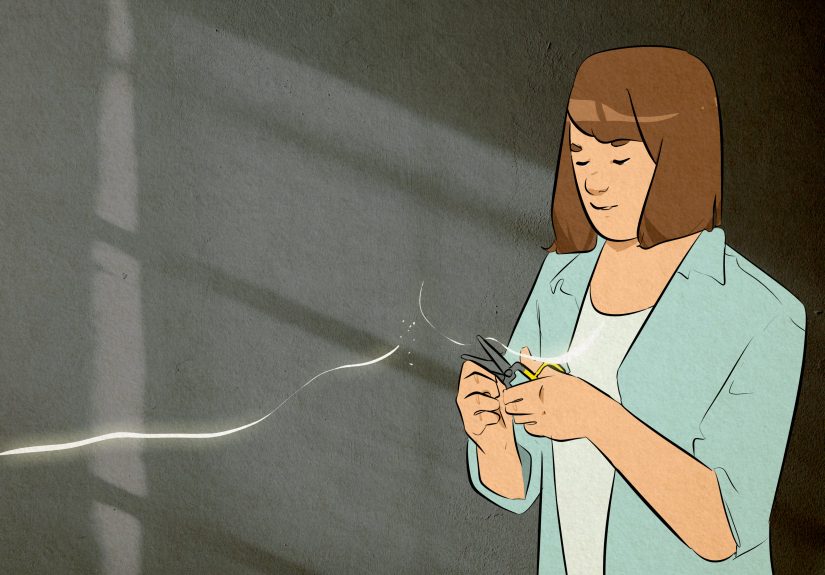
“Cord cutting” sounds like you’re about to grab a pair of scissors and go after an extension cord that’s been tripping you all week.
In reality, most people mean one of two things:
(1) a spiritual/visualization practice meant to release an “energetic tie,” or
(2) a practical relationship shiftboundaries, emotional detachment, or “no contact.”
Either way, the big question is the same: Does it affect the other person?
The honest answer is: it can, but not usually in the spooky “remote-control their feelings” way people hope (or fear).
Cord cutting tends to affect you firstyour attention, reactions, and availabilityand that can absolutely ripple outward.
What “Cord Cutting” Usually Means (And Why People Do It)
In spiritual circles, cord cutting is described as releasing energetic attachments that feel draining, obsessive, or emotionally sticky.
In psychology-friendly language, it’s a symbolic letting-go practice: you stop feeding an old bond with your time, energy, and mental real estate.
People try it when they feel:
- Stuck thinking about someone (ex, friend, family member, situationship, “it’s complicated”)
- Emotionally hookedlike one text can ruin the whole day
- Guilty, resentful, or responsible for someone else’s feelings
- Unable to move forward even when the relationship is over (or should be)
If you’ve ever said, “I’m over them,” while your brain responds, “That’s adorable,” then you understand the appeal.
So… Does Cord Cutting Affect the Other Person?
Directly (mystical cause-and-effect): there’s no solid scientific evidence that a private visualization ritual
automatically changes another person’s emotions from a distance.
Indirectly (real-world cause-and-effect): yes, it often doesbecause cord cutting changes what you do next.
When you stop checking their socials, stop replying instantly, stop rescuing them, or stop replaying old conversations like a hit TV rerun,
the relationship dynamic shifts. And people notice shifts.
Think of it like this
Cord cutting is less like “deleting them from your system” and more like revoking their admin privileges.
They may still exist in your world, but they can’t keep popping up and controlling your mood settings.
How the Other Person Might “Feel” It (Without Any Magic Required)
When you cut an emotional cord, you usually reduce the behaviors that kept the bond active.
That creates changes the other person can experience as emotional, social, or practical consequences.
1) They notice less access to you
If they were used to venting, leaning, flirting, arguing, or getting reassurance on demand, boundaries can feel like a door quietly closing.
Not slammed. Not locked. Just… no longer wide open.
2) They experience “relationship withdrawal”
Humans bond through routine and reinforcement: messages, inside jokes, shared comfort, conflict-and-repair cycles.
When contact drops, the brain can protest. For some people, that protest looks like texting more, checking in “randomly,” or suddenly acting nostalgic.
3) They may feel confused if you stop playing your old role
If you were the fixer, the peacemaker, the always-available one, or the emotional sponge, cord cutting can scramble expectations.
People often don’t miss you firstthey miss the function you served in their life.
(Harsh? A little. True? Often.)
4) They may feel relief
Not every bond is secretly romantic or dramatically toxic. Sometimes both people are exhausted and stuck in a loop.
When one person steps out, the other may finally breathe.
5) They may feel hurtand that doesn’t automatically mean you did something wrong
Boundaries can sting even when they’re healthy. The other person can feel sad, rejected, or defensive,
especially if they relied on the connection for comfort or validation.
Their feelings are real. Your boundary can still be right.
Why Some People React Strongly (Attachment Styles Matter)
Not everyone responds to distance the same way. A helpful lens is attachment stylethe patterns people develop around closeness,
trust, and security.
Anxious-leaning attachment
They may seek reassurance when they feel disconnection. If you pull back, they might reach out more, ask for closure, or panic-scroll your last “seen.”
Cord cutting can feel to them like losing oxygen in a room that was already stuffy.
Avoidant-leaning attachment
They might act unfazed, go quiet, or frame your boundary as “dramatic.” Sometimes they feel it later,
once the distance becomes real and routine.
Secure attachment
They’re more likely to respect boundaries, even if they’re disappointed.
They can feel sad without turning it into a crisis, a chase, or a courtroom drama.
The takeaway: cord cutting doesn’t create the reactionit often reveals what was already there.
What Cord Cutting Does Not Do (Let’s Save You Some Stress)
- It doesn’t erase their free will. If someone says cord cutting “makes them come back,” that’s marketing, not reality.
- It doesn’t instantly delete your feelings. Letting go is a process, not a software update.
- It doesn’t replace communication when communication is needed. If you share kids, work together, or have safety concerns, boundaries should be practical and clear.
- It doesn’t excuse cruelty. “I’m cord cutting” is not a permission slip to ghost with no context in situations where kindness and clarity are appropriate.
The Practical Mechanism: Cord Cutting Often Looks Like Boundary Setting
If you strip away the incense and keep the wisdom, cord cutting often becomes:
“I’m choosing where my energy goes.”
That’s boundaries.
Common “cord cutting” boundary moves
- Muting or unfollowing someone so you’re not emotionally ambushed
- Stopping late-night texting “for closure” that turns into a weekly rerun
- Not responding to bait (guilt trips, vague flirting, drama invitations)
- Ending circular conversations: “I’m not discussing this again.”
- Limiting contact to specific topics (co-parenting, work tasks, logistics)
These changes are exactly how the other person experiences your cord cutting: less access, fewer emotional reactions, and a calmer you.
When Cord Cutting Can Improve the Relationship (Yes, Sometimes!)
Cord cutting isn’t always “goodbye forever.” Sometimes it’s “hello, healthier version.”
If the bond was tangled with guilt, people-pleasing, or resentment, cutting the unhealthy part can actually make the connection clearer.
Examples:
- Family: You stop being the on-call therapist. Conversations get shorterbut kinder.
- Friendships: You stop chasing effort. The friendship either balances out or fades naturally.
- Exes: You stop using contact as pain relief. Both people finally grieve and move forward.
When Cord Cutting Can Make Things Messy (And How to Handle It)
If the other person escalates
Some people react to boundaries with extra contact, guilt, anger, or “emergencies” that aren’t emergencies.
The best response is consistency:
calm language, repeated limits, and no debate marathons.
If you share responsibilities
For co-parenting, caregiving, or work, a total cut may not be realistic. Aim for low-drama structure:
written communication, logistics-only messages, predictable check-in times, and clear topics.
If you feel tempted to “check” whether it worked
The quickest way to reattach a cord is to keep poking it like a loose tooth.
If your goal is peace, treat “checking on them” as a craving: it passes faster when you don’t feed it.
How to Do Cord Cutting in a Grounded, Healthy Way
You can absolutely use spiritual language if it resonatesjust pair it with real-world steps.
Here’s a balanced approach that doesn’t require a full moon (but doesn’t forbid one either).
Step 1: Name the cord
Ask: “What am I actually attached to?”
The person? The apology you never got? The fantasy version of them? The role you played?
Naming it makes it workable.
Step 2: Decide what you’re cutting
Sometimes you’re not cutting loveyou’re cutting obsession.
Sometimes you’re not cutting connectionyou’re cutting responsibility for their emotions.
Step 3: Do a simple visualization
Picture a cord between you and the person. Then imagine gently removing it and returning your energy to yourself.
The point isn’t special effects. The point is training your attention to come home.
Step 4: Add one real boundary
Pick one action that supports the release: mute, unfollow, stop rereading texts, limit conversations, or set a “reply window.”
Ritual without behavior change is just a nice imagination vacation (which is fine, but it won’t change your Tuesday).
Step 5: Replace the habit
If you remove contact, your brain will want a substitute.
Replace “check them” with something that gives you calm: a walk, journaling, a friend, a workout, a hobby, or a playlist that makes you feel like the main character.
How Long Until the Other Person Notices?
If your relationship had frequent contact, they may notice quicklysometimes within days.
If your bond was more emotional than logistical (you thought about them more than you actually spoke), the “notice” may be subtler:
fewer reactions from you, less engagement, less drama fuel.
But here’s the twist: the goal isn’t to be noticed. The goal is to be free enough to live your life.
Anything else is just cord cutting with a side of audience participation.
Experiences People Commonly Report (About )
Below are real-world-style experiences many people describe after cord cuttingwhether they frame it spiritually (“energy cords”)
or practically (“I finally set boundaries”). Names and details vary, but the patterns are surprisingly consistent.
Experience 1: “They texted the moment I stopped chasing.”
A common story goes like this: you stop initiating contact, you mute their social media, you stop reacting to breadcrumbs…
and suddenly they reach out. It can feel mystical, but it usually isn’t. When you stop providing predictable attention,
the other person notices the change in the pattern. They may check in to regain certainty, soothe their own anxiety,
or see if they still have access. If you respond with clarity instead of old habits (“I’m taking space right now”),
the dynamic often shifts fasteither toward healthier respect or toward an obvious pattern of pushing boundaries.
Experience 2: “They didn’t notice at all, and that was the wake-up call.”
This one stings, but it’s oddly empowering. Some people report doing the inner work, stepping back, and realizing:
the relationship existed mostly in their head and effort. The other person may not reach out because they were comfortable
with you doing the emotional labor. The “effect” of cord cutting is that you stop investing in a one-sided bond,
and your life gets quieterin a good way. The lesson isn’t “I was unimportant.” The lesson is “I deserve mutuality.”
Experience 3: “They got angry when I got calm.”
When someone is used to you explaining, apologizing, or negotiating your boundaries, calm can feel provocative.
People sometimes mistake your peace for punishment: “So you’re just going to ignore me?” What’s actually happening is that
you’re no longer participating in the emotional ping-pong game. In these cases, cord cutting affects the other person
by removing the reward of dramano long debates, no instant reassurance, no crisis management. If the relationship was built
on intensity, it may wobble when you replace intensity with structure.
Experience 4: “We stayed connected, but it finally felt optional.”
Not every cord cut ends with total separation. Some people report that once they released resentment or guilt,
they could interact without being pulled under. You might still talk to a family member, but you don’t absorb their mood.
You might still co-parent, but you stop reading every message like it’s a hidden insult crossword puzzle.
The other person often experiences this as you being “different”less reactive, more direct, sometimes harder to manipulate,
and generally more steady. The relationship becomes a choice, not a compulsion.
Experience 5: “I felt better first, then everything else changed.”
Many people expect fireworks: the other person calls, cries, or has an epiphany. More often, the biggest change is internal:
you sleep better, ruminate less, and stop rehearsing conversations in the shower. Then, because you feel steadier,
you make better decisionswho you spend time with, what you tolerate, how you communicate. That’s when the outside world responds.
In other words, cord cutting “affects the other person” most reliably when it changes the person it has the most access to:
you.
Conclusion
Cord cutting is best understood as a release practice: you stop feeding an attachment that’s draining you.
It usually doesn’t flip a switch in someone else’s heart from a distance, but it can absolutely affect them through the very real,
very human ways relationships workaccess, habits, boundaries, and emotional reinforcement.
If you do cord cutting to control someone else, you’ll stay tied to them.
If you do it to reclaim your attention and peace, you’ll finally have room for healthier connectionwhether that’s with them,
with someone new, or with your own life (which deserves top billing).