Table of Contents >> Show >> Hide
- Before You Cook: Quick Prep That Makes Everything Easier
- How Long to Boil Lobster Tails
- How to Grill Lobster Tails
- How to Broil Lobster Tails
- Troubleshooting: When Lobster Tails Don’t Go to Plan
- Serving Ideas: Make It Feel Like a Feast
- Extra : Real-World “Lobster Tail Night” Experiences (What Usually Happens and How to Win)
- Conclusion
- SEO Tags
Lobster tails are basically the “nice jeans” of the seafood world: you don’t wear them every day, they’re not cheap, and you definitely don’t want to ruin them with a single bad decision (like overcooking them into rubber erasers). The good news? Lobster tails are surprisingly easy to cook once you know what to look forbecause time alone is only half the story.
Below you’ll get a practical boiling-time guide (with doneness checks that actually work), plus step-by-step instructions for grilling and broiling lobster tails so they come out tender, sweet, and “restaurant-fancy” without requiring restaurant-level stress.
Before You Cook: Quick Prep That Makes Everything Easier
1) Thaw frozen lobster tails the right way (so they cook evenly)
Frozen tails are commonand totally finebut they need to be fully thawed before cooking. If the center is still icy while the outside is cooking, you’ll get a tail that’s both overdone and underdone. (Yes, that is as annoying as it sounds.)
- Best method: thaw overnight in the refrigerator.
- Fast method: place tails in a sealed bag and submerge in cold water, changing the water every 30 minutes until thawed (often 30–60 minutes depending on size).
2) Decide: boil in the shell, split for grill/broil
You can boil lobster tails in the shell (easy, forgiving, and great for first-timers). For grilling or broiling, splitting the shell helps heat reach the meat quickly and gives you that classic “lobster tail on top of the shell” presentation that screams “special occasion,” even if it’s just Tuesday.
3) Prevent the “shrimp curl” (optional, but pretty)
Lobster tails like to curl while cooking. If you want them to stay straight for nicer plating, slide a skewer lengthwise through the tail (especially helpful for boiling). This is optionalbut if you’re trying to impress someone, straight tails photograph better. (It’s science.)
4) A note about the “vein” and darker bits
Some tails have a dark line running along the meat (the digestive tract). If you see it, remove it with the tip of a knife before cookingor rinse it away after cooking if it’s easier. You may also notice darker greenish/blackish stuff in the shell area. It can be natural lobster parts; if it bothers you, rinse it away after cooking.
How Long to Boil Lobster Tails
Boiling is the most straightforward method: it’s fast, consistent, and ideal when you want classic “dip in butter” lobster. The key is to avoid boiling too aggressively or too longbecause lobster turns from tender to tough in a hurry.
Boiling time rule of thumb
A widely used guide is about 1 minute per ounce of tail weight once the tails go into the pot. Many mid-size tails (around 5–6 ounces) cook in roughly about 5 minutes. Start checking early and use the doneness cues below to finish confidently.
Boiled lobster tail time chart (start here, then verify doneness)
| Tail Size (each) | Suggested Boil Time | What to Check |
|---|---|---|
| 3–4 oz | 3–4 minutes | Meat opaque, firm, pulls from shell easily |
| 5–6 oz | 5 minutes | Opaque throughout; thickest part no longer translucent |
| 7–8 oz | 6–8 minutes | Use thermometer if possible; pull before it toughens |
| 9–10 oz | 8–10 minutes | Check at 8 minutes; carryover cooking is real |
| 10–12 oz | 10–12 minutes | Consider gentler boil; verify doneness carefully |
Important: Times vary with tail thickness, whether tails were fully thawed, and how quickly your pot returns to a boil after adding the tails. Use this chart as a starting pointthen confirm with the checks below.
Step-by-step: how to boil lobster tails (tender, not tragic)
- Bring water to a boil. Use enough water to fully submerge the tails.
- Salt the water. Think “pleasantly salty,” not “ocean cosplay,” but don’t be shy.
- Reduce to a gentle boil. A raging boil can bang tails around and overcook the outside quickly.
- Add tails one at a time. Start timing once they’re in and the water stays hot/boiling.
- Cook using the chart above. Start checking 1 minute before the low end of the range.
- Remove promptly. Overcooking happens after the timer ends, toothanks, residual heat.
- Optional (but smart): If you’re not serving immediately, dip tails briefly in cold water/ice water to stop cooking. If you are serving right away, go straight to the plate and butter.
How to know lobster tails are done (without guessing)
- Color/texture: Meat should be opaque and firm (not mushy), and it should pull away from the shell more easily.
- Translucent = not done: If you see glassy, translucent areas in the thickest part, give it another 30–60 seconds and check again.
- Thermometer check: Insert into the thickest part of the tail meat. For food-safety guidance, seafood is often cited at 145°F. Many cooks pull lobster earlier for tenderness and rely on carryover heat, aiming roughly in the 135–145°F range depending on preference.
Common boiling mistakes (and how to avoid them)
- Boiling too long “just to be safe”: Lobster doesn’t reward caution. It rewards accuracyand butter.
- Cooking partially frozen tails: Uneven doneness and a rubbery outside. Thaw completely.
- Forgetting carryover cooking: Lobster continues to cook after you pull it from heat unless you chill it quickly.
How to Grill Lobster Tails
Grilling lobster tails is the “summer flex” method: a little smoky char, a little butter drip drama, and a lot of compliments. The biggest risk on the grill is overcooking from high direct heator flare-ups from dripping butter. The solution: split the shell, use a two-zone grill if you can, and cook quickly.
Best grill setup
- Two-zone heat: one side hot (direct), one side medium (indirect).
- Prep the tails: split or butterfly so the meat is exposed for basting and faster cooking.
- Dry the surface: pat the meat dry so it browns instead of steams.
Grilling time guide (split/butterflied tails)
| Tail Size (each) | Total Grill Time | Simple Method |
|---|---|---|
| 4–6 oz | 6–8 minutes | 2–3 min meat-side down (direct), then 4–5 min shell-side down (indirect) |
| 7–8 oz | 8–10 minutes | Sear briefly, then finish over indirect heat with lid closed |
| 9–10 oz | 10–12 minutes | Mostly indirect; use thermometer to avoid toughness |
Step-by-step: grilled lobster tails (buttery, lightly charred)
- Preheat grill. Clean grates and oil them lightly to prevent sticking.
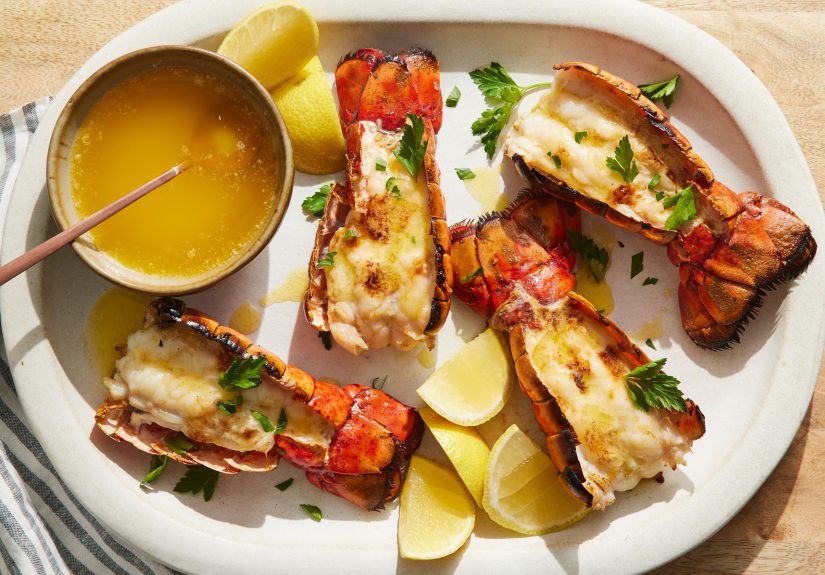
- Split/butterfly the tails. Cut the top shell lengthwise with kitchen shears. Loosen meat from the shell and rest it on top for even cooking and great presentation.
- Season simply. Salt, pepper, and a brush of melted butter (or oil if you’re worried about flare-ups). Add garlic/lemon later if your grill runs hotgarlic burns fast.
- Sear briefly. Place meat-side down over direct heat for 2–3 minutes to get light grill marks.
- Flip and finish. Move to indirect heat shell-side down, close the lid, and cook until opaque and firm. Baste once or twice with butter near the end.
- Rest 2 minutes. Let juices settle. Then serve immediately with lemon and butter.
Grill doneness cues
- Meat is opaque and pearly white (no translucent center).
- Texture is firm but still springynot stiff.
- If using a thermometer, check the thickest part and pull before it overshoots your preferred doneness.
How to Broil Lobster Tails
Broiling is the fastest route to “steakhouse lobster tail at home.” High heat from above melts butter, browns edges, and cooks the tail quickly. The trick is distance: too close and your butter smokes while the center stays underdone; too far and you’ll wait forever and lose moisture.
Broiling rule of thumb
A reliable starting point is about 1 to 1.5 minutes per ounce depending on thickness, rack distance, and how cold the tails are when they go in. Always verify with color/texture (and ideally temperature).
Broiled lobster tail time chart (butterflied tails)
| Tail Size (each) | Broil Time | Rack Position |
|---|---|---|
| 3–4 oz | 5–7 minutes | About 4–6 inches from broiler |
| 5–6 oz | 6–8 minutes | About 4–6 inches from broiler |
| 7–9 oz | 8–12 minutes | Consider moving rack slightly lower to prevent burning |
| 10–12 oz | 10–14 minutes | Lower rack; check early and often |
Step-by-step: broiled lobster tails (classic garlic-lemon butter style)
- Preheat the broiler. Give it a few minutes so it’s actually hot when the tails go in.
- Position the rack. Place it about 4–6 inches from the broiler element (adjust based on your oven’s intensity).
- Butterfly the tails. Cut the top shell lengthwise with shears. Loosen the meat and rest it on top of the shell.
- Pat dry. Dry meat browns better and prevents watery butter puddles.
- Make quick butter. Melt butter and stir in lemon juice, minced garlic (or garlic powder for less burning risk), paprika, salt, and pepper.
- Broil. Place tails on a sheet pan. Brush with butter. Broil using the chart above.
- Baste once more near the end. This keeps flavor fresh and reduces burned garlic bitterness.
- Rest briefly and serve. Finish with lemon zest, parsley, and extra warm butter.
Broil doneness cues (the “don’t ruin it” checklist)
- Meat is opaque and slightly firm when pressed.
- Edges may be lightly browned, not charred black.
- Thermometer reads in your target range; remember carryover cooking after removal.
Troubleshooting: When Lobster Tails Don’t Go to Plan
“My lobster is rubbery.”
That’s almost always overcooking. Next time, pull earlier and let carryover finish the job. If you’re trying to salvage tonight’s batch, slice the meat and toss it into warm butter or a creamy pastasauces are kinder than truth.
“The center is still translucent.”
Return it to heat briefly. For boiling, give it 30–60 seconds more. For grill/broil, add 1–2 minutes and check again. This is exactly why checking early beats guessing late.
“Butter burned under the broiler.”
Move the rack down a notch, use garlic powder instead of fresh garlic in the first baste, and re-baste near the end with fresh garlic for flavor without bitterness.
“The meat stuck to the shell.”
Some people find boiling helps reduce sticking. Fully thawing also makes a difference. If you’re grilling/broiling, loosening the meat from the shell before cooking (while leaving the tail end attached) makes serving easier.
Serving Ideas: Make It Feel Like a Feast
Classic butter upgrades
- Garlic-lemon butter: butter + lemon juice + garlic + pinch of paprika
- Herb butter: butter + parsley/chives + lemon zest
- Spicy butter: butter + cayenne + smoked paprika
Side dishes that play nice with lobster
- Roasted asparagus or broccolini
- Simple salad with citrus vinaigrette
- Corn on the cob (because lobster loves a summer friend)
- Garlic mashed potatoes or a crispy baked potato
Extra : Real-World “Lobster Tail Night” Experiences (What Usually Happens and How to Win)
Here’s the part nobody tells you in the neat little recipe card: lobster tails don’t fail dramatically. They fail quietly. They fail in the final two minutes when you step away to grab plates, answer a text, or admire your own confidence. Lobster tails are not impressed by confidence. They are impressed by timing and attentionlike a cat.
In a typical kitchen, the most common “experience” goes like this: you buy lobster tails because you want a special dinner, then you realize every tail is a different size. One is a polite 4-ounce tail. Another is a heavyweight 10-ounce tail that looks like it has a gym membership. The mistake is cooking them all the same way for the same time. The win is treating each tail like an individual with its own destiny. Use the time charts as a starting point, but check the thickest part of each tailespecially the biggest onebecause size differences can be the entire difference between “tender” and “chewy.”
Another common moment: the “curl.” You drop tails into boiling water and suddenly they’re bending into little commas. That’s normal, but if you want them to plate beautifully, the skewer trick helps. It feels slightly ridiculous the first time you do itlike you’re building tiny seafood kebabsbut it works. And if you’re serving guests, those straight tails look more “steakhouse” and less “sea creature doing yoga.”
On the grill, the most frequent experience is the “butter flare-up.” Butter drips, flames leap, and suddenly you’re playing a very exciting game called Protect the Lobster at All Costs. The easy fix is to use a two-zone grill: quick sear over direct heat, then move to indirect heat to finish with the lid closed. Save heavy basting for the last couple of minutes so the butter flavors the meat instead of fueling a tiny fire festival.
Under the broiler, the experience is usually the opposite: things happen too fast. You’ll see recipes that say “just broil it”as if your oven’s broiler is identical to everyone else’s broiler on Earth. In reality, broilers vary wildly. The best real-world move is to position the rack 4–6 inches from the heat, then check early. If your butter is browning aggressively at minute three but the meat still looks translucent, your rack is too high. Drop it down one notch and continue. Also: fresh garlic can burn quickly. Many cooks learn (the hard way) that garlic powder in the first baste is safer, then fresh garlic can go into a finishing butter after cooking.
Finally, the biggest “aha” experience is realizing lobster doesn’t need heroic seasoning. If the lobster is decent quality, it mainly needs salt, gentle heat, and butter. Lemon brightens. Herbs make it feel fancy. But the real luxury is texture. If you nail tender textureopaque, firm, still juicyyou’ll get that sweet lobster flavor that makes people pause mid-bite and do the universal sign of happiness: the quiet nod.
Conclusion
If you remember only one thing, make it this: lobster tails cook quickly, and the line between “perfect” and “rubbery” is thinner than a lemon slice. Use the time charts to get close, then trust doneness cuesopaque meat, firm texture, and (best of all) a quick thermometer check. Boil for classic simplicity, grill for smoky char, or broil for fast, steakhouse-style results. Then serve with butter, because lobster tails and butter are basically a love story.