Table of Contents >> Show >> Hide
- What You’ll Learn
- Active vs. Passive Voice (Fast Refresher)
- The Step-by-Step Method to Convert Active Voice to Passive Voice
- Step 1: Confirm the sentence has a direct object
- Step 2: Move the object to the subject position
- Step 3: Keep the original verb tense (but switch the structure)
- Step 4: Change the main verb to its past participle form
- Step 5: Decide whether to include the agent (“by…”)
- Step 6: Fix pronouns and word order
- Step 7: Read it once for meaning (not just grammar)
- Passive Voice Across Verb Tenses (Chart + Examples)
- Special Cases and Common Traps (So You Don’t Accidentally Invent New Grammar)
- When Passive Voice Is the Best Choice (Yes, Really)
- A Quick Checklist for Clean, Effective Passive Voice
- Practice: Convert Active to Passive (Then Check Your Answers)
- Conclusion: The Simple Formula That Makes Passive Voice Easy
- Real-World Experiences Writers Run Into (And What Passive Voice Fixes)
Passive voice gets blamed for everything from boring essays to the downfall of Western civilization (okay, maybe not that last one).
But it’s not “bad”it’s a tool. Sometimes it’s the right tool. Sometimes it’s the tool you grab when you’re trying to hide who forgot
to attach the file. (“The attachment was not included.” Mysterious!)
In this guide, you’ll learn exactly how to convert an active-voice sentence to passive voice without breaking verb tense,
without mangling meaning, and without accidentally creating a sentence that sounds like it was written by a robot wearing a trench coat.
We’ll use clear steps, lots of examples, and a few quick checks to keep your writing sharp.
Active vs. Passive Voice (Fast Refresher)
Active voice
In active voice, the subject does the action:
The chef burned the toast.
- Subject (doer): the chef
- Verb (action): burned
- Object (receiver): the toast
Passive voice
In passive voice, the subject receives the action:
The toast was burned (by the chef).
The core passive formula looks like this:
New subject (the old object) + form of “be” + past participle + (optional “by” phrase)
The “by” phrase is optional because sometimes you want the doer… and sometimes you’d like the doer to remain in witness protection.
The Step-by-Step Method to Convert Active Voice to Passive Voice
Here’s the reliable method you can use on almost any sentencewhether you’re editing a research paper, writing instructions, or trying to
sound politely vague in an email.
Step 1: Confirm the sentence has a direct object
Passive voice needs an object to promote into the subject position. If there’s no direct object, you usually can’t make a true passive.
- Works: “The team completed the project.” (object: the project)
- Doesn’t work well: “The baby slept.” (no direct object)
If you don’t see an object, you may need a different rewriteor you may be dealing with an intransitive verb that simply won’t cooperate.
Step 2: Move the object to the subject position
Take the active sentence’s object and move it to the front. That object becomes the passive sentence’s subject.
Active: The committee approved the proposal.
Passive (start): The proposal …
Step 3: Keep the original verb tense (but switch the structure)
This is where many people slip. You don’t just toss in “was” and call it a day. You match the tense using the correct form of “be”.
Active (simple past): The committee approved the proposal.
Passive (simple past): The proposal was …
Step 4: Change the main verb to its past participle form
Past participles are forms like approved, eaten, written, built, seen.
Regular verbs usually end in -ed. Irregular verbs are the ones that make English learners (and spellcheckers) sigh dramatically.
Passive (now complete): The proposal was approved …
Step 5: Decide whether to include the agent (“by…”)
If the doer mattersor clarity requires itinclude a by-phrase.
If the doer is unknown, irrelevant, obvious, or intentionally unstated, leave it out.
- With agent: The proposal was approved by the committee.
- Without agent: The proposal was approved.
Step 6: Fix pronouns and word order
Pronouns often need to change form in the “by” phrase:
- Active: I repaired the laptop.
- Passive: The laptop was repaired by me.
Also keep modifiers close to what they modify:
- Clear: The report was carefully reviewed by the editor.
- Awkward: The report was reviewed by the editor carefully. (Not wrong, just clunky.)
Step 7: Read it once for meaning (not just grammar)
Passive voice changes emphasis. If your new subject is the receiver, your sentence now “spotlights” that receiver. That’s the point.
But if the receiver isn’t what you want readers focusing on, passive may be the wrong tool.
Quick sanity check: Ask “Who did what to whom?” If your passive sentence makes it hard to answer that question,
you may need to add the “by” phraseor choose active voice instead.
Passive Voice Across Verb Tenses (Chart + Examples)
The passive voice keeps the same tense as the active voicebut uses be + past participle.
Here’s a practical chart using the verb explain.
| Tense / Aspect | Active Example | Passive Example |
|---|---|---|
| Simple Present | The tutor explains the rule. | The rule is explained (by the tutor). |
| Present Progressive | The tutor is explaining the rule. | The rule is being explained (by the tutor). |
| Present Perfect | The tutor has explained the rule. | The rule has been explained (by the tutor). |
| Simple Past | The tutor explained the rule. | The rule was explained (by the tutor). |
| Past Progressive | The tutor was explaining the rule. | The rule was being explained (by the tutor). |
| Past Perfect | The tutor had explained the rule. | The rule had been explained (by the tutor). |
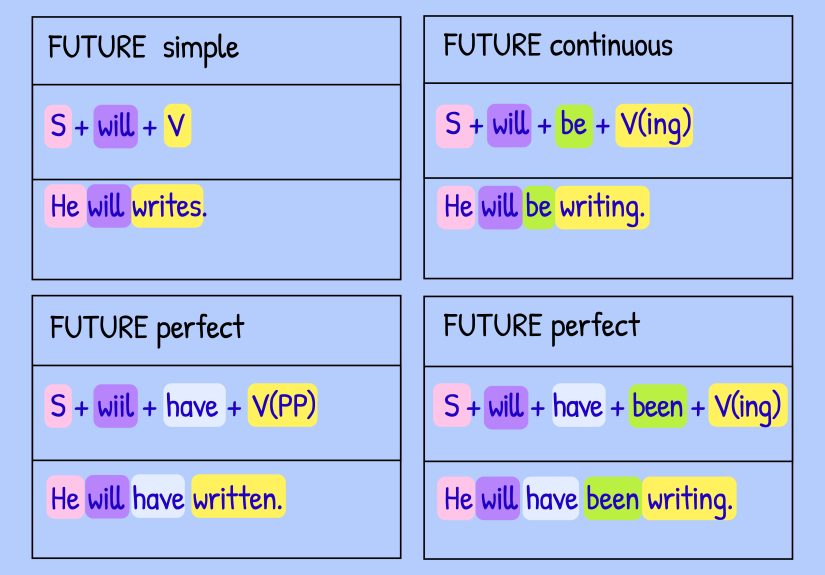
| Simple Future | The tutor will explain the rule. | The rule will be explained (by the tutor). |
| Future Perfect | The tutor will have explained the rule. | The rule will have been explained (by the tutor). |
Notice how the “be” verb changes (is, was, will be, has been), while the main verb becomes a past participle
(explained).
Special Cases and Common Traps (So You Don’t Accidentally Invent New Grammar)
1) Modals (can, should, must, might, etc.)
With modals, passive voice uses:
modal + be + past participle
- Active: You must submit the form by Friday.
- Passive: The form must be submitted by Friday.
- Active: The team can finish the design today.
- Passive: The design can be finished today.
2) Questions
Keep question structure, but use passive verb construction:
- Active: Did the manager approve the budget?
- Passive: Was the budget approved (by the manager)?
3) Negatives
- Active: The chef didn’t cook the steak.
- Passive: The steak wasn’t cooked (by the chef).
4) Phrasal verbs and prepositions
Keep the phrasal verb together so it still means the same thing:
- Active: The office manager turned down the request.
- Passive: The request was turned down (by the office manager).
5) Double objects (“give,” “send,” “teach,” “offer”)
Some verbs take two objects. You can often make either object the passive subjectchoose the one you want to emphasize.
- Active: The coach gave the players new drills.
- Passive option A (emphasize people): The players were given new drills (by the coach).
- Passive option B (emphasize thing): New drills were given to the players (by the coach).
6) “Passive voice” vs. “state of being” (the adjective look-alike)
Some sentences look passive because they use “be” + a past participle, but they can describe a state rather than an action.
- Possibly passive action: The door was closed (by someone).
- Possibly a state: The door was closed all afternoon. (This can simply describe condition.)
If adding a “by…” phrase makes sense, you’re more likely dealing with passive voice. If it sounds weird, you might be looking at an adjective.
7) The “by zombies” test (useful, but not magic)
A quick trick: if you can add “by zombies” and the sentence still makes sense, you probably have passive voice.
- “The budget was approved by zombies.” (Grammatically works → likely passive.)
- “The manager approved the budget by zombies.” (Nonsense → active.)
It’s a fast diagnostic, not a courtroom-grade lie detector. Use it to notice patterns, then revise with judgment.
When Passive Voice Is the Best Choice (Yes, Really)
Many writing instructors push active voice because it’s often clearer and shorter. But passive voice is genuinely useful in specific situations.
The key is intent: use passive because it helps the readernot because you fell into it accidentally.
Use passive voice when the receiver is the main topic
- Passive: The final decision was announced at noon.
- Why: The decision is the headline, not the announcer.
Use passive voice when the doer is unknown or irrelevant
- Passive: The package was delivered this morning.
- Why: You may not knowor carewho delivered it.
Use passive voice in process-focused or methods writing
In lab reports, instructions, and “how it was done” sections, writers often emphasize the procedure over the person doing it.
- Passive: The solution was heated to boiling and then cooled.
- Why: The process matters most; the actor is predictable (“the researcher”).
Use passive voice to soften blame or reduce conflict (carefully)
- Passive: An error was made in the invoice.
- Why: This can keep the tone professionalthough it can also be used to dodge responsibility, so don’t overdo it.
Bottom line: Passive voice is a spotlight. Aim it where you want attention to go.
A Quick Checklist for Clean, Effective Passive Voice
- Do I have a direct object? If not, passive may not be possible.
- Did I keep the tense? Match the original tense using the right “be” form.
- Did I use the correct past participle? Especially for irregular verbs.
- Is the agent necessary? Add the “by” phrase if clarity needs it.
- Is the sentence still clear? Passive that hides meaning isn’t stylishit’s confusing.
Practice: Convert Active to Passive (Then Check Your Answers)
Try these first
- The marketing team designed the new logo.
- The mechanic is fixing the brakes.
- Someone has stolen my bike.
- The manager will review your request tomorrow.
- You must complete the training module.
Sample answers
- The new logo was designed by the marketing team.
- The brakes are being fixed by the mechanic.
- My bike has been stolen.
- Your request will be reviewed by the manager tomorrow.
- The training module must be completed.
Notice the pattern: the object becomes the subject, the tense stays the same, and the agent is optional depending on your goal.
Conclusion: The Simple Formula That Makes Passive Voice Easy
Converting active voice to passive voice is less about “rules” and more about a repeatable process:
find the object, move it to the subject spot, and use be + past participle while keeping the original tense.
Then decide if the “by” phrase belongsor if it should quietly step offstage.
When you use passive voice on purpose, it can create emphasis, keep tone diplomatic, or highlight a process. When you use it by accident,
it can make sentences wordy or vague. The difference is intentionalityand now you have the tools to choose.
Real-World Experiences Writers Run Into (And What Passive Voice Fixes)
Writers usually don’t “choose” passive voice in a dramatic, cinematic moment. It tends to show up in ordinary situations:
a rushed email, a formal report, a résumé draft, a methods section, or a document written by committee (which is how many committees prove they exist).
In real editing and writing workflows, passive voice is less a grammar topic and more a clarity-and-emphasis tool.
One common experience: a workplace email thread where nobody wants to sound accusatory. Instead of “You entered the wrong number,” someone writes,
“The wrong number was entered.” That passive sentence shifts the focus from who to what happened, which can calm the tone when emotions
are running hot. The tradeoff is that readers may wonder, “Okay… but who’s fixing it?” In practice, the best version is often a hybrid:
“The wrong number was entered, so I corrected it and updated the file.” Passive for the fact, active for the solution.
Another frequent scenario: student essays that try to sound “academic” by draining out the humans. Students write things like,
“It is believed that…” or “It was shown that…” because it feels formal. Sometimes that’s acceptableespecially when the actor is truly general
(“researchers believe…”) or the claim is widely supported. But many instructors prefer a clearer agent when it matters:
“Researchers believe…” or “The study showed…” In real revisions, the question isn’t “Is passive allowed?” but
“Would naming the doer improve credibility and precision?”
In scientific and technical writing, writers often experience the opposite: they’re encouraged to be objective and process-focused, so passive voice
becomes practical. A lab report might say, “The samples were weighed and stored at 4°C.” That sentence emphasizes procedure. If you rewrite everything
into active voice (“We weighed the samples and stored them…”), it can sound repetitive, especially across multiple steps. In real documents,
passive voice becomes a rhythm choice: active voice appears where responsibility, interpretation, or decision-making matters; passive voice appears
where the method is the star of the show.
Legal, policy, and corporate writing adds another layer: passive voice can either increase neutrality or decrease accountability.
“The policy was not followed” is neutral; “The policy was ignored” is sharper; “The supervisor ignored the policy” is clearest.
In real revisions, editors often hunt for passive voice not because it’s wrong, but because it can hide critical information. When the document needs
to establish who did whatespecially in contracts, incident reports, and proceduresoveruse of passive voice becomes a practical risk.
Readers may misinterpret responsibility or miss required actions entirely.
Then there’s the résumé and cover letter experience: passive voice and “to be” verbs often make achievements sound foggy.
Compare “Customer complaints were handled” with “I resolved customer complaints and reduced response time by 20%.”
The passive version is vague and flat; the active version is direct and measurable. In real job materials, passive voice can accidentally make you
disappear from your own story. That’s why career centers often recommend active voice: it naturally highlights your actions and outcomes.
Finally, writers often experience confusion between true passive voice and sentences that simply describe a state.
“The door was closed” could mean someone closed it (action) or it was in a closed state (description). In real editing, context decides:
in a mystery novel, “The door was closed” might hint at an unseen action; in a building description, it might just set the scene.
This is why the best “fix” for passive voice isn’t always switching to active voiceit’s deciding what meaning you want the sentence to carry.
The practical takeaway from all these experiences is simple: passive voice is most helpful when it controls emphasis,
keeps tone appropriate, or highlights a process. It becomes a problem when it creates confusion about the doer,
weakens accountability, or turns clear actions into fog. With the step-by-step conversion method you learned above, you can switch voices on purpose
which is the real writing superpower.