Table of Contents >> Show >> Hide
- What Is a Buffalo Nickel?
- Step 1: Check the Date First
- Step 2: Identify Type 1 or Type 2
- Step 3: Look for a Mint Mark
- Step 4: Learn the Buffalo Nickel Key Dates
- Step 5: Grade the Coin Carefully
- Step 6: Compare Price Guides and Real Sales
- What Makes One Buffalo Nickel Worth More Than Another?
- Are Dateless Buffalo Nickels Worth Anything?
- When Should You Get a Buffalo Nickel Professionally Graded?
- A Quick Example of How to Value One
- Common Mistakes People Make
- What the Buffalo Nickel Hunt Is Really Like
- Final Thoughts
- SEO Tags
If you have a Buffalo nickel tucked inside a drawer, coin jar, or mystery tin that also contains two paper clips and a button from 1997, you are not alone. Buffalo nickels are one of those coins people save almost by instinct. They look old, they feel historic, and they have a buffalo on them, which is already doing more for branding than most coins ever manage.
But here is the big question: is your Buffalo nickel actually valuable? Sometimes yes. Sometimes it is worth a few dollars. Sometimes it is worth serious money. And sometimes it is worth exactly enough to make you say, “Well, at least it’s neat.”
The good news is that learning how to find the value of a Buffalo nickel is not especially complicated once you know what to check. You do not need a magnifying monocle, a velvet cape, or a dramatic auctioneer voice. You just need to understand the date, mint mark, type, condition, and whether your coin has a rare variety.
What Is a Buffalo Nickel?
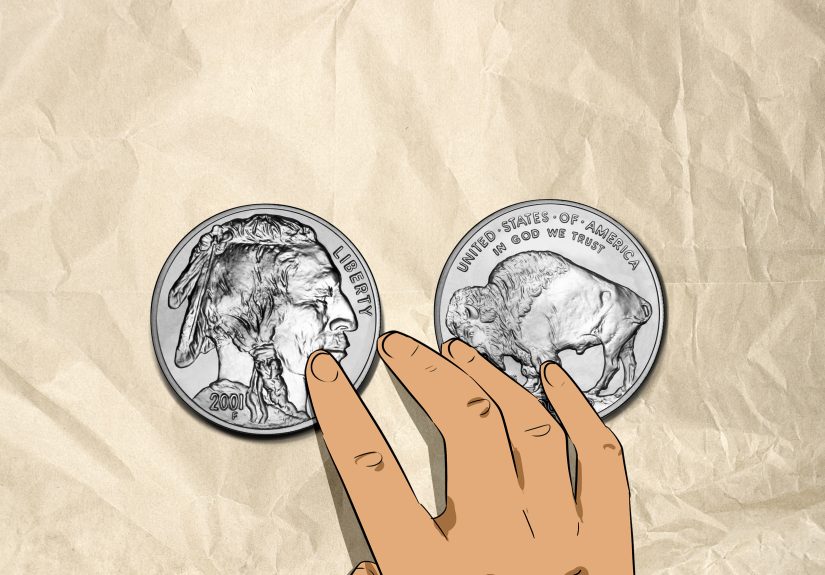
The Buffalo nickel, also called the Indian Head nickel, was minted from 1913 to 1938. It features a Native American profile on the front and an American bison on the back. It remains one of the most recognizable U.S. coin designs ever made, which is one reason collectors still love it.
Its popularity also creates confusion. Many people assume that every Buffalo nickel is rare because it looks old. That would be nice. Unfortunately, coin values are rarely that generous. Age matters, but scarcity, condition, and collector demand matter much more.
Step 1: Check the Date First
The first thing to do is look for the date on the obverse, or front, of the coin. On a Buffalo nickel, the date appears on the shoulder of the Native American portrait. That location turned out to be a bit of a design trap, because the date sits on a high point and often wears away in circulation.
If your coin still has a full date, great. You are already ahead of the many collectors staring sadly at a smooth patch of metal where the numbers used to be.
If the date is missing, the coin is considered dateless. Dateless Buffalo nickels usually carry only a modest premium unless they can be attributed to something special. In most ordinary cases, collectors value dated examples far more highly than worn, undated pieces.
Step 2: Identify Type 1 or Type 2
Here is one detail beginners often miss: not all 1913 Buffalo nickels are the same.
Type 1 Buffalo Nickel
The earliest 1913 coins show the buffalo standing on a raised mound, with the words FIVE CENTS placed on that mound. This is known as the Type 1 design.
Type 2 Buffalo Nickel
Later in 1913, the design was modified. The denomination was moved into a recessed area below the buffalo to reduce wear. This is known as the Type 2 design.
That means a 1913 Buffalo nickel can be one of two major design types, and the distinction affects value. When pricing a 1913 coin, always identify whether it is Type 1 or Type 2 before comparing it with online price guides or auction results.
Step 3: Look for a Mint Mark
The next thing to check is the mint mark. On Buffalo nickels, a D or S mint mark appears on the reverse beneath the words FIVE CENTS. If there is no mint mark, the coin was struck in Philadelphia.
Mint marks matter because the same date can have dramatically different values depending on where it was made. A common Philadelphia issue might be affordable in lower grades, while a Denver or San Francisco example from the same era can be much tougher to find.
One more thing: the little F near the front of the coin is not a mint mark. It is the initial of designer James Earle Fraser. So if you thought you had discovered the mysterious “F Mint,” congratulations on your imagination. Sadly, that is not how this one works.
Step 4: Learn the Buffalo Nickel Key Dates
If you want to know whether your coin might be worth more than average, start by checking whether it belongs to a key date, semi-key date, or famous variety.
Major Buffalo Nickel Key Dates
- 1913-S Type 2 – One of the classic keys in the series.
- 1918/7-D – A famous overdate and one of the most valuable Buffalo nickels.
- 1921-S – Scarce and popular with date-and-mint collectors.
- 1924-S – Better in higher grades and watched closely by collectors.
- 1926-S – One of the most important regular-date keys, especially in nicer condition.
- 1931-S – A low-mintage issue that gets plenty of attention.
Famous Buffalo Nickel Varieties
- 1916 Doubled Die Obverse – Strong doubling makes this a celebrated variety.
- 1918/7-D Overdate – The superstar of the series.
- 1937-D 3-Legged Buffalo – One of the best-known U.S. coin errors ever.
- 1938-D/S – A notable overmintmark variety.
If your coin matches one of these dates or varieties, stop casually dropping it on the kitchen table and treat it with some respect. At that point, authentication and grading become much more important.
Step 5: Grade the Coin Carefully
Condition, or grade, has a huge impact on the value of a Buffalo nickel. Two coins with the same date and mint mark can have wildly different prices depending on wear, sharpness, surface quality, and eye appeal.
What to Look For
On Buffalo nickels, collectors often focus on these wear points:
- The date on the obverse
- The cheek and braid details on the portrait
- The buffalo’s horn
- The fur detail on the shoulder and hip
In lower grades, the date may be weak but readable, and the buffalo’s horn may be mostly worn away. In middle circulated grades, more detail returns to the portrait and reverse. In mint state, the coin shows no circulation wear, though strike quality can still vary because Buffalo nickels were not always struck sharply.
This last point matters. A Buffalo nickel can be uncirculated and still have weak detail in some areas. That is why beginners sometimes confuse a weak strike with wear. If you are unsure, compare your coin with photo grading guides from major grading services rather than trusting a random internet comment written by someone whose username is probably “CoinWizard420.”
Step 6: Compare Price Guides and Real Sales
Once you know the date, mint mark, type, and approximate grade, you can start checking value references. The smartest approach is to use more than one source.
Use Price Guides for Ballpark Value
Professional coin sites such as PCGS and NGC offer retail-style price guides. These are useful for getting a quick estimate of what a coin might be worth in a given grade.
Use Auction Results for Real-World Demand
Auction archives from companies like Heritage Auctions and Stack’s Bowers show what collectors actually paid for similar coins. That is especially helpful for scarcer dates, certified coins, and high-grade examples.
Think of it this way: a price guide tells you what the menu says, while auction records tell you what people actually ordered and paid once they got hungry.
What Makes One Buffalo Nickel Worth More Than Another?
Several factors combine to determine the price:
1. Date and Mint Mark
Some years and mints are much scarcer than others. This is the first filter every collector uses.
2. Type
For 1913 coins, Type 1 and Type 2 matter.
3. Variety
Overdates, doubled dies, and famous errors can turn an ordinary-looking nickel into a serious collectible.
4. Grade
Condition can multiply value dramatically, especially for scarcer dates.
5. Eye Appeal
Original surfaces, attractive color, and fewer distractions can make one coin sell better than another coin with the same grade.
6. Authentication
For expensive Buffalo nickels, certification by a major grading service is often essential. Counterfeits and altered coins exist, especially for famous varieties like the 1918/7-D and 1937-D 3-Legged nickel.
Are Dateless Buffalo Nickels Worth Anything?
Usually, but not a fortune. A Buffalo nickel with no visible date is almost always worth much less than a dated example. Collectors want identifiable coins, and a missing date removes one of the most important pieces of information.
That does not mean dateless nickels are worthless. Some sell in bulk, some are used in jewelry or crafts, and some hobbyists try date restoration methods. But in everyday market terms, dateless pieces are usually the bottom tier of Buffalo nickel value.
So yes, your dateless nickel still matters. It just probably is not funding your beach house.
When Should You Get a Buffalo Nickel Professionally Graded?
You do not need to submit every Buffalo nickel for grading. In fact, doing so for common, heavily worn pieces usually makes no financial sense.
Professional grading is most worth considering when:
- The coin appears to be a key date or rare variety
- The coin may be uncirculated or unusually well preserved
- You suspect it could be worth enough that authenticity matters
- You plan to sell it in a stronger marketplace
For a better regular-date coin in average circulated condition, it is often enough to identify it correctly and compare recent sales. For a 1918/7-D, 1916 doubled die, or 1937-D 3-Legged example, certification is a very good idea.
A Quick Example of How to Value One
Let’s say you find a Buffalo nickel dated 1930-S. Here is how the process works:
- Read the date: 1930.
- Check the reverse: there is an S mint mark.
- Confirm it is a standard Type 2 reverse, which all later-date Buffalo nickels are.
- Estimate the grade by looking at the horn, braid, and overall wear.
- Compare that date and grade in PCGS and NGC guides.
- Look up recent auction or dealer sales for similar examples.
If the coin is worn, it may be modestly valuable. If it is sharply struck with strong surfaces and little wear, the price rises. The exact same routine works for nearly any Buffalo nickel.
Common Mistakes People Make
- Assuming all old nickels are rare – They are not.
- Ignoring the mint mark – That tiny letter can change everything.
- Confusing the F initial with a mint mark – It is the designer’s initial.
- Calling a worn coin “mint state” because it looks shiny – Shine is not the same as no wear.
- Cleaning the coin – This can reduce collector value fast.
- Trusting one price source only – Always compare guides with actual sales.
What the Buffalo Nickel Hunt Is Really Like
There is a reason Buffalo nickels hook people so quickly. The search feels personal. You are not just checking a coin for metal and numbers; you are trying to decode a tiny piece of American history that has spent decades getting bumped around in pockets, drawers, and coffee cans.
A typical experience starts with optimism. You find a Buffalo nickel, wipe your glasses, tilt it toward the light, and convince yourself the date might say 1918. Then you look again and realize it might also say 1916. Or 1913. Or nothing at all. Buffalo nickels are masters of suspense. They wear in exactly the places collectors wish they would not.
Then comes the thrill of details. You spot the mint mark under FIVE CENTS. Suddenly this is not just an old nickel. It is a 1926-S, or a 1931-S, or maybe an ordinary Philadelphia issue that still feels like a small victory because at least it has a date. That moment of identification is part of the fun. A coin goes from mystery object to specific artifact with a story, a place of origin, and a collector market of its own.
Collectors also learn quickly that Buffalo nickels teach patience. Some dates are easy. Others are the numismatic version of hide-and-seek champions. You start by thinking you will build a nice little group from flea markets or inherited jars. Before long, you are squinting at horn detail, comparing braid lines, and muttering things like “That might be Fine-12 on a good day.” This is how the hobby gets you.
There is also a practical lesson buried in the experience: value is not always dramatic, but knowledge always pays. A common worn nickel may be worth only a small premium, yet knowing why it is common helps you avoid overpaying and spot the coins that do deserve more attention. And when a genuine better date or rare variety does show up, the prepared collector notices it while everyone else keeps flipping through the box.
Perhaps the most satisfying part is that Buffalo nickels reward careful observation more than brute luck. Yes, everyone dreams of stumbling across a 1918/7-D overdate in a forgotten album. In real life, the more common win is learning to separate ordinary coins from scarcer ones, recognize the difference between wear and strike weakness, and understand why two similar-looking nickels can have very different prices.
That is what makes this series so enjoyable. It is part treasure hunt, part history lesson, and part exercise in not getting too excited until you have checked the mint mark twice. Even when the coin turns out to be modest in value, the process is still rewarding. You handled a classic American coin, learned something real, and got one step better at spotting the next one. Not bad for five cents.
Final Thoughts
If you want to find the value of a Buffalo nickel, start with the basics: date, type, mint mark, condition, and variety. From there, compare trusted price guides with real auction results. The coin may be common, scarce, or somewhere in between, but the method stays the same.
The biggest takeaway is simple: Buffalo nickels are not valuable just because they are old. They become valuable when the right date, the right mint, the right grade, and the right collector demand come together. Learn those pieces, and you will be able to judge your coin much more confidently.
And if your coin turns out to be a dateless common piece? Keep it anyway. It is still one of the coolest nickels America ever made, and frankly, the buffalo is doing enough heavy lifting to earn a little respect.