Table of Contents >> Show >> Hide
- Before You Start: What Makes “KFC-Style” Chicken Taste Right?
- Ingredients for a Home-Style “Original Recipe” Copycat
- How to Make KFC Original Fried Chicken: 11 Steps
- Pro Tips for That “Original Recipe” Vibe
- Common Mistakes (and How to Fix Them)
- FAQ
- Real-Kitchen Notes: of “Experience” So You Don’t Have to Learn the Hard Way
- Conclusion
Let’s be honest: the words “KFC Original Recipe” hit the brain like a nostalgic drumroll. Crispy, craggy crust.
Peppery, savory flavor. And that unmistakable “what is in this?” vibe. The bad news is that KFC’s exact
formula is a closely guarded trade secret, and the restaurants use specialized pressure fryersaka equipment most of
us do not keep next to the toaster. The good news? You can absolutely make a KFC-style copycat fried chicken
at home that scratches the same itch: bold seasoning, ultra-crispy coating, and juicy meat.
This guide focuses on what actually makes “Original-style” chicken work: a well-seasoned flour blend, a tangy
buttermilk soak, a coating that forms crunchy ridges, and proper cooking to a safe internal temperature. We’ll keep
it practical, flavorful, and just a little playfulbecause frying chicken is serious business, but you don’t have to
be serious while doing it.
Before You Start: What Makes “KFC-Style” Chicken Taste Right?
1) It’s not just spicesit’s spice balance
Most “Original Recipe” copycat attempts lean on a familiar Southern-style flavor family: salt, black pepper, white
pepper, paprika, garlic/onion powders, and dried herbs like thyme and oregano. The goal isn’t “hot.” It’s
savory, pepper-forward, and aromatic.
2) Crunch comes from technique, not wishful thinking
The crunch you want is “craggy,” with lots of little ridges and flakes. Home-cook methods that consistently get you
there include: (a) adding a little cornstarch and a pinch of leavening to the flour, and (b) creating tiny flour
clumps by mixing a splash of buttermilk into the dredge. Then you rest the breaded chicken so the coating grips
instead of sliding off like a bad toupee.
3) Food safety is part of the recipe
Two big non-negotiables: don’t wash raw chicken (it can spread germs around your kitchen), and
cook poultry to 165°F internal temperature for safety. A basic instant-read thermometer is the most
valuable ingredient you’re not sprinkling in.
Ingredients for a Home-Style “Original Recipe” Copycat
This is an inspired blend designed to taste like the classic “11 herbs and spices” vibe without
pretending we cracked a corporate vault. It’s pantry-friendly and adjustable.
Chicken
- 3 to 4 pounds bone-in chicken pieces (thighs/drumsticks are the easiest to keep juicy)
- Kosher salt (for seasoning)
Buttermilk soak
- 2 cups buttermilk
- 1 egg (helps coating cling)
- 1 to 2 teaspoons hot sauce (optionalthis is for tang, not heat)
Seasoned flour dredge (makes the “Original-style” crust)
- 2 cups all-purpose flour
- 1/2 cup cornstarch (extra crisp)
- 1 to 1 1/2 tablespoons kosher salt
- 2 teaspoons paprika
- 1 1/2 teaspoons black pepper
- 1 teaspoon white pepper
- 1 teaspoon garlic powder
- 1 teaspoon onion powder
- 1 teaspoon dried thyme
- 1 teaspoon dried oregano
- 1/2 teaspoon dried basil
- 1/2 teaspoon celery salt
- 1/2 teaspoon dry mustard powder
- 1/4 teaspoon ground ginger (optional but surprisingly “KFC-ish”)
- 1/2 teaspoon baking powder (helps texture)
- Optional: a pinch of MSG if you use it (savory boost, not required)
How to Make KFC Original Fried Chicken: 11 Steps
-
Choose the right pieces (and pat them dry).
Thighs and drumsticks are forgiving and stay juicy. Breasts can work, but they dry out fasterso keep an eye on
temperature. Pat the chicken dry with paper towels so the coating doesn’t turn gummy. -
Season the chicken early.
Salt the chicken lightly on all sides and let it sit 15–30 minutes in the fridge. This builds flavor under the
crust, not just on it. -
Make the buttermilk soak.
Whisk buttermilk, egg, and hot sauce (if using). Add chicken, coat well, cover, and refrigerate at least 2 hours
(overnight is even better). This helps tenderness and gives the coating something to grab. -
Mix the seasoned dredge like you mean it.
In a wide bowl, combine flour, cornstarch, salt, spices, and baking powder. Taste a pinchit should be pleasantly
salty and peppery. If it tastes bland now, it’ll taste like disappointment later. -
Create “craggy bits” for that crunchy crust.
Drizzle 2–3 tablespoons of the buttermilk mixture into the flour and toss with your fingers. You’re making tiny
clumpsthose clumps become crispy ridges. -
Dredge the chicken (press, don’t just dust).
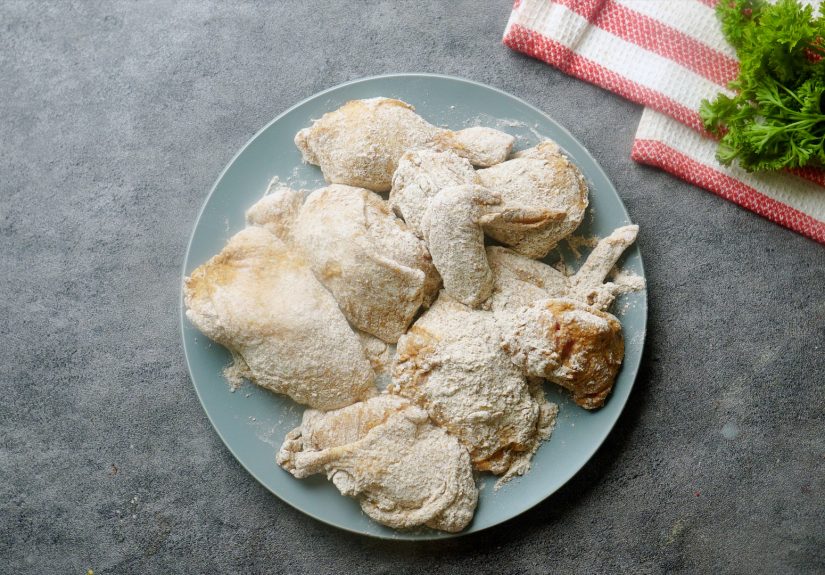
Lift a piece from the buttermilk, let excess drip off, then press it firmly into the flour mixture. Flip and
press again. You want a thick, textured coatingnot a polite sprinkle. -
Double-dip if you want extra crunch.
For a thicker crust, dip the floured chicken back into the buttermilk briefly, then back into the flour. This
adds serious crunch and a more “restaurant-style” coating. -
Rest the breaded chicken.
Place coated pieces on a wire rack (not a flat plate) and let them rest 10–20 minutes. This helps the coating
hydrate and stick so it doesn’t fall off during cooking. -
Pick your cooking method: skillet-fried (most classic) or oven/air-fried (lower mess).
Skillet-frying gives the most authentic “fried chicken” texture. Oven/air-frying can still be very crispy if you
oil the surface well. If you’re new to hot-oil cooking, use extra caution and cook with adult supervision. -
Cook until golden and 165°F internal.
Skillet-fry: Use a heavy skillet or Dutch oven with enough oil to come about halfway up the
chicken. Cook in batchescrowding drops temperature and makes the coating soggy. Turn occasionally until deep
golden and the thickest part hits 165°F.
Oven-fry: Preheat to 425°F. Place chicken on an oiled rack set over a sheet pan. Spray or brush
the chicken generously with oil. Bake until crispy and 165°F, flipping once.
Air-fry: Spray the basket and the chicken generously with oil. Cook in a single layer, turning
once, until deeply crisp and 165°F. -
Drain and rest (yes, again).
Let cooked chicken rest on a rack for 5–10 minutes. This keeps the crust crisp and lets juices settle so the
first bite doesn’t turn into a steam geyser.
Pro Tips for That “Original Recipe” Vibe
Use white pepper on purpose
White pepper is one of those “wait, what is that?” flavors. It’s peppery, but differentless sharp, more earthy. In
combination with black pepper, it reads surprisingly close to classic fast-food fried chicken seasoning.
Cornstarch + a pinch of baking powder = lighter crunch
Cornstarch helps the coating fry up crisp instead of bready. A little baking powder can create a more airy texture.
You’re not baking a cakedon’t go overboard.
Let the coating set
That short rest after dredging is the difference between “crispy chicken” and “crispy coating, now available as a
separate side dish at the bottom of your pan.”
Common Mistakes (and How to Fix Them)
-
My crust is pale and soft.
Likely crowding or not enough heat. Cook in smaller batches and give each piece space.
-
My coating fell off.
You skipped the rack rest, or the chicken was too wet. Press the flour on firmly and rest the coated pieces.
-
It tastes seasoned but not “KFC-ish.”
Increase pepper (both kinds) slightly, add a touch more thyme/oregano, and don’t forget celery salt and mustard
powderthose add “mystery” flavor without screaming “ITALIAN SEASONING!” -
It’s crispy… and dry.
You overshot the internal temperature. Pull it right at 165°F and rest. Thighs are more forgiving than breasts.
FAQ
Is this the exact KFC Original Recipe?
No. The original blend is a protected trade secret, and the restaurant process includes pressure frying. This is a
well-tested copycat-style approach designed to get you close in flavor and texture using typical home
equipment.
Do I really need a thermometer?
For best results (and safety), yes. “Looks done” can lie, especially with bone-in pieces. 165°F is the safety
benchmark for poultry.
Should I wash the chicken first?
Nope. Raw chicken doesn’t need washing, and rinsing can spread germs around your sink, counters, and utensils.
Pat it dry instead and focus on clean hands, clean tools, and proper cooking.
Real-Kitchen Notes: of “Experience” So You Don’t Have to Learn the Hard Way
Making KFC-style fried chicken at home is one of those cooking projects that teaches you a lotmostly because it
refuses to be rushed. The first time people try it, they often treat the coating like it’s a jacket the chicken can
casually slip into. Then they wonder why it comes out looking like “chicken with flour suggestions.” The reality is
that a great crust is built in layers: moisture, flour, pressure, and time. Pressing the dredge onto the chicken
feels slightly ridiculous the first time, but it’s the move that turns the coating from powdery to properly rugged.
Another “I didn’t know that mattered” moment is the rest after breading. It sounds optional, like a recipe author
being dramatic for attention. But in practice, resting the coated chicken is what helps the flour hydrate and bind.
Without it, you can get that heartbreak scene where a gorgeous crust detaches and floats away like a tragic little
raft. With it, the coating sets up and becomes a unified crispy shell. If you’re chasing that classic fast-food
crunch, this is a habit worth adopting permanently.
Home cooks also discover that the spice blend is more about balance than fireworks. If you go heavy on paprika and
cayenne, you can end up with “spicy barbecue chicken” instead of “Original-style.” The more convincing copycat vibe
usually comes from pepper (black and white), gentle dried herbs, and subtle savory boosters like celery salt
and mustard powder. Those ingredients don’t taste loud on their own, but together they create that “I can’t identify
it, but I want another bite” effect.
Then there’s the doneness issuebecause fried chicken has a cruel sense of humor. It can look beautifully browned on
the outside and still need time inside, especially with bone-in pieces. That’s why people who make this regularly
tend to become thermometer believers. Once you’ve had one batch that’s overcooked and dry or undercooked and
stressful, the thermometer suddenly feels like a tiny, trustworthy superhero. Pulling the chicken right at the safe
temperature and letting it rest is the easiest way to keep it juicy without guessing.
Finally, “KFC-style” chicken is often a group activity in real life: someone mixes the flour, someone handles the
chicken, someone keeps the cooking area tidy, and everyone hovers nearby like snack-seeking raccoons. If you’re
writing this recipe for readers, it helps to mention that the process is smoother when you set up a little assembly
lineraw chicken area, dredging area, resting rack, cooking area, and a clean plate for finished pieces. That small
organization upgrade makes the whole project feel less chaotic and a lot more repeatable, which is really the secret
ingredient: not mystery herbs, but a method you can do again and again.
Conclusion
You may not have KFC’s pressure fryer or the Colonel’s locked-up recipe card, but you can get remarkably
close to that Original-style magic at home. Focus on a peppery, herb-forward seasoning blend; use a buttermilk soak
for tenderness; build craggy crunch with cornstarch and flour clumps; and let the coating rest before cooking. Most
importantly: cook poultry safely to 165°F, keep your kitchen clean, and serve immediately while that crust is still
singing.