Table of Contents >> Show >> Hide
- The Viral Post Isn’t About ChoresIt’s About Reality
- Cancer Fatigue: The Symptom That Doesn’t Care About Your Chore Chart
- Why the Internet Yells “Divorce!” So Fast
- Caregiver Stress Is RealBut It’s Not a License to Be Mean
- What Healthy Couples Do Instead: A “Minimum Viable Household” Plan
- Red Flags vs. Repairable Mistakes
- Conversation Starters That Won’t Set the Kitchen on Fire
- Conclusion: The House Can Be Messy. The Marriage Can’t Be Mean.
- Experiences From Real Life: What This Conflict Looks Like Off-Screen (Extra )
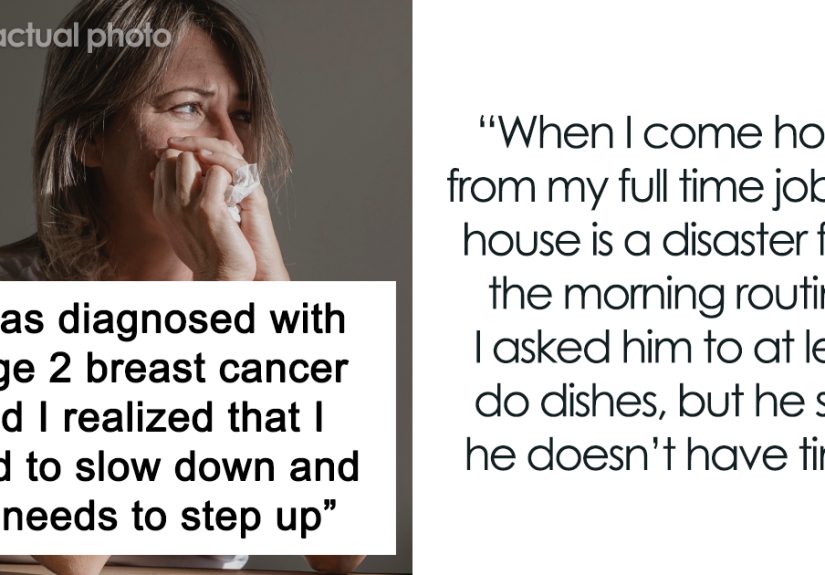
When “Did you take out the trash?” becomes a relationship Rorschach test, the internet will not be calm about it.
Somewhere on the great digital prairie where strangers gather to judge other strangers’ life choices, a familiar storyline showed up wearing a new (and
especially infuriating) outfit: a wife is going through cancer treatment, her energy is wrecked, and her husband decides the real emergency is that the
house is not running like a boutique hotel.
The gist goes like this: she can’t keep up with the usual routinelaundry, meals, tidying, kid logistics, the million little tasks that magically happen
until they don’t. She asks for help. He counters with something along the lines of, “You’re not doing enough chores,” as if chemotherapy comes with a
complimentary burst of enthusiasm for scrubbing baseboards. The comments section, predictably, hits the big red button labeled: DIVORCE.
And before we roll our eyes at the internet’s favorite one-word solution, it’s worth asking why this kind of post lights people up like a fireworks show.
Because it’s not really about dishes. It’s about how couples handle power, compassion, and responsibility when life gets brutally real.
The Viral Post Isn’t About ChoresIt’s About Reality
On paper, “help with chores” sounds like a practical request. In real life, it’s a referendum on whether a marriage functions as a partnership or a
performance review.
Cancer treatment rearranges everything: time, money, emotions, priorities, bodies, routines. It can turn a normal day into a scavenger hunt for enough
stamina to take a shower, answer texts, eat something that doesn’t taste like metal, and make it to an appointment on time. The household doesn’t just
need “a little help”it needs a new operating system.
So when a spouse says, “You aren’t doing enough,” it lands like: “Your illness is inconvenient, and I’m grading you on how well you hide it.”
That’s the spark. The internet’s “divorce” chant isn’t only moral outrageit’s a reaction to what looks like contempt dressed up as logistics.
Cancer Fatigue: The Symptom That Doesn’t Care About Your Chore Chart
If you haven’t experienced cancer-related fatigue up close, it’s easy to confuse it with everyday tired. But cancer fatigue is a different animal. It’s
not “I stayed up too late.” It’s more like “my body’s battery fell out onto the highway.”
What it actually feels like
People describe it as heavy, persistent exhaustion that doesn’t fully lift with sleep. You can rest all day and still feel like you ran a marathon in a
winter coat. The fatigue can be physical, mental, and emotionalso even small tasks (standing at the stove, folding laundry, focusing on paperwork) can
feel steep.
Why chores become so hard, so fast
Treatment side effects stack. Pain, nausea, sleep disruption, anemia, stress, medication changeseach one can drain the tank. Meanwhile, the “invisible”
work of cancer (appointments, labs, insurance calls, managing symptoms, tracking meds) quietly eats the hours and whatever focus is left.
A household can’t run on vibes. If one partner’s capacity drops because of illness, the options are: redistribute the labor, reduce the standard, bring
in help, or watch resentment grow mold in the corners like an unwanted science experiment.
Why the Internet Yells “Divorce!” So Fast
1) People recognize the pattern: scorekeeping during illness
“Doing enough” is loaded language. It implies a quota. It suggests one partner’s worth is measured by output. When the person being measured is sick,
commenters read it as cruelty, not cluelessness.
2) Chores often represent deeper inequality
A lot of households run on unspoken defaults: who notices what needs doing, who plans meals, who keeps track of school forms, who buys toothpaste before
everyone is suddenly brushing with hope and mouthwash. When illness hits, the “default manager” can’t keep the system runningand the other partner
sometimes realizes, for the first time, that the house was never self-cleaning. It had a person behind it.
3) Comment sections are allergic to nuance
Online advice tends to be binary because it’s fast. Leave him. Stay and communicate. Burn it all down. But real relationships aren’t a three-button
vending machine. There’s a difference between a partner who’s overwhelmed and under-skilledand a partner who’s contemptuous and controlling.
Caregiver Stress Is RealBut It’s Not a License to Be Mean
Here’s the part that gets missed in a lot of “internet court” rulings: caregiving can be exhausting, scary, and disorienting. Even devoted spouses can
feel grief, anger, burnout, or panic. That doesn’t make them villains. It makes them human.
The problem isn’t that the husband is stressed. The problem is the direction the stress takes. If stress becomes blame“You’re not doing enough chores”
it turns the sick partner into an employee and the marriage into a hostile workplace. Nobody thrives in that.
A more honest translation of the husband’s complaint, when it’s coming from overwhelm (not contempt), might be:
“I’m scared. I’m drowning. I don’t know how to do all of this. And I don’t want to admit it.”
That’s still not a great script. But it’s a fixable starting pointif the couple can talk without turning the kitchen into a courtroom.
What Healthy Couples Do Instead: A “Minimum Viable Household” Plan
If you’re dealing with cancer in the family, the goal isn’t to “keep up.” The goal is to keep the people okay. That means renegotiating home life with
the same seriousness you’d give a treatment plan.
Step 1: Hold a weekly “team meeting” (yes, like a tiny business)
Set a calm timenot during a post-chemo crash, not at midnight, not while someone is holding a dripping trash bag. Talk logistics like teammates:
what absolutely must happen this week, what can slide, what needs outside help.
Step 2: Pick your “non-negotiables” and let the rest be merely… negotiable
Think in tiers:
- Tier 1: meds, meals, basic hygiene, transportation, child safety, bills
- Tier 2: laundry, dishes, school logistics, pet care
- Tier 3: deep cleaning, perfect organizing, holiday-level standards
During treatment, Tier 3 can take a long vacation.
Step 3: Use “energy budgeting,” not guilt
Many patients do better when they plan around energy peaks and dipsdoing important tasks when they feel best, delegating the rest, and resting in short
breaks instead of trying to “push through” until they crash.
Step 4: Bring in help like it’s a smart strategy (because it is)
People want to help but don’t know how. Give them assignments: grocery drop-offs, rides, meal trains, a once-a-month cleaning service if possible,
school pickup swaps, a friend to sit with the patient while the spouse runs errands or takes a nap.
If money allows, outsourcing a few tasks can lower conflict fast. Nobody should be fighting over vacuum lines while trying to survive cancer.
Step 5: If resentment is rising, add a pro
Counseling (individual or couples), a social worker through the cancer center, or a caregiver support group can help translate fear into communication.
“We need help” is not a failure. It’s a plan.
Red Flags vs. Repairable Mistakes
Red flags that deserve serious attention
- Contempt: mocking symptoms, rolling eyes, calling the patient “lazy”
- Control: policing rest, demanding chores as “proof” of effort
- Isolation: discouraging the patient from asking friends/family for help
- Scorekeeping: “I did X, so you owe me Y,” especially around basic care
Repairable mistakes (if there’s accountability)
- Underestimating cancer fatigue because you’ve never seen it before
- Feeling overwhelmed and blurting out something awful
- Not knowing how to organize the household without the usual “manager”
The dividing line is whether the partner can learn, apologize, and changeor whether they double down and blame the illness for making their life harder.
Conversation Starters That Won’t Set the Kitchen on Fire
If you’re the patient
- “I’m not choosing rest over chores. I’m choosing survival over collapse.”
- “Let’s decide together what ‘clean enough’ looks like this month.”
- “When you say I’m not doing enough, it makes me feel like a burden. I need support, not a score.”
If you’re the partner/caregiver
- “I’m overwhelmed and I need a plan. Can we list what must happen this week?”
- “I’m scared and I’m not handling it well. I’m sorry I took it out on you.”
- “I need breaks so I can be kind. Let’s figure out help we can ask for.”
Humor helps, toowhen it’s aimed at the situation, not the person. Try: “Our house is entering its ‘cozy clutter era.’ We’ll be back to showroom mode in
a future season.”
Conclusion: The House Can Be Messy. The Marriage Can’t Be Mean.
The internet loves a dramatic exit ramp, so “divorce!” shows up early and loud. Sometimes, that reaction is pointing at something real: contempt during
illness is a relationship emergency.
But the deeper takeaway is simpler (and harder): cancer forces couples to renegotiate fairness, empathy, and labor in real time. If one partner treats the
other’s illness like a character flaw, the relationship breaks. If both partners treat the household like a shared problemand bring in support when needed
the relationship has a fighting chance.
Either way, the lesson remains: nobody beats cancer with a mop in their hand and a spouse on their back.
Experiences From Real Life: What This Conflict Looks Like Off-Screen (Extra )
In cancer support circles, the “chores argument” is practically a recurring character. Not because couples are shallow, but because household tasks are the
most visible proof of who’s carrying what. When a diagnosis lands, many families discover they were running on a fragile, unspoken system: one person
quietly managed the home, and the other benefited from it without ever having to think about it.
One common experience is the energy mismatch. The patient may look “fine” from the outsidemaybe they can chat, maybe they can attend a
kid’s event, maybe they can smile in photos. Then they come home and crash for hours. To a partner who hasn’t learned the rhythm of treatment, that can
read as inconsistency: “You had energy for that, so why not for laundry?” Patients often describe it as choosing the one meaningful thing they can do that
daylike being present for a childbecause it feeds the soul even when the body is struggling. The chores, meanwhile, are less meaningful and sometimes
physically impossible.
Another frequent pattern is the standards showdown. Some caregivers cope with fear by controlling the environment: a spotless kitchen,
perfectly organized closets, meals done “the right way.” It can be their attempt to restore order when cancer has introduced chaos. The patient, however,
may experience those standards as pressurelike they’re failing at home on top of fighting for their health. When couples do better, they explicitly lower
the bar together: paper plates for a while, simplified meals, fewer social obligations, and a mutual agreement that “clean enough” is the new gold
standard. Oddly, many report that this choice reduces tension and creates a sense of teamwork: the house becomes a place to recover, not a place to
perform.
You also hear about the help paradox: friends say “Let me know if you need anything,” but nobody knows what to ask for, and the couple is
too exhausted to coordinate. The families who seem to breathe a little easier are the ones who get specificsomeone handles grocery deliveries, someone
schedules a rotating meal drop, someone takes the kids for a Saturday outing, someone pays for a cleaning service as a gift. The relief isn’t only physical.
It changes the emotional temperature in the home. When a caregiver gets a real break, they’re less likely to snap. When a patient feels supported, they’re
less likely to spiral into guilt.
Finally, there’s the experience nobody wants to admit out loud: caregiver grief. Partners sometimes mourn the old normal while it’s still
technically “there,” and that grief leaks out as irritabilityoften aimed at chores because chores are safer than saying, “I’m terrified.” The healthiest
turning point many couples describe is naming the fear. Not blaming. Not keeping score. Just naming it: “This is scary. I don’t know how to do this.”
Once the fear is on the table, the conversation shifts from accusation to strategy, and the couple can build a plan that protects both people.
If this story felt personal to read, you’re not alone. It’s a modern stress test: illness meets household labor meets expectations. The fix isn’t perfect
productivityit’s a kinder partnership, a simpler home, and more help than you think you’re “allowed” to ask for.