Table of Contents >> Show >> Hide
- What Is Syringe Painting?
- The Story Behind A Nurse Painting With Syringes
- Why Nurses Understand This Technique So Well
- How Syringe Art Actually Works
- Why This Art Feels So Personal
- The Connection Between Art, Stress Relief, And Health Care Work
- What Makes Syringe Painting Different From Brush Painting?
- Popular Subjects For Syringe Art
- Safety Tips For Syringe Painting At Home
- Why People Love Watching Syringe Painting
- The Bigger Message: Your Profession Can Feed Your Passion
- What Syringe Painting Teaches About Creativity
- Experiences From The Studio: Painting After A Shift
- Conclusion: Injecting Color Into Everyday Life
- Note
Most artists have a favorite brush. Mine just happens to look like it belongs on a medication cart.
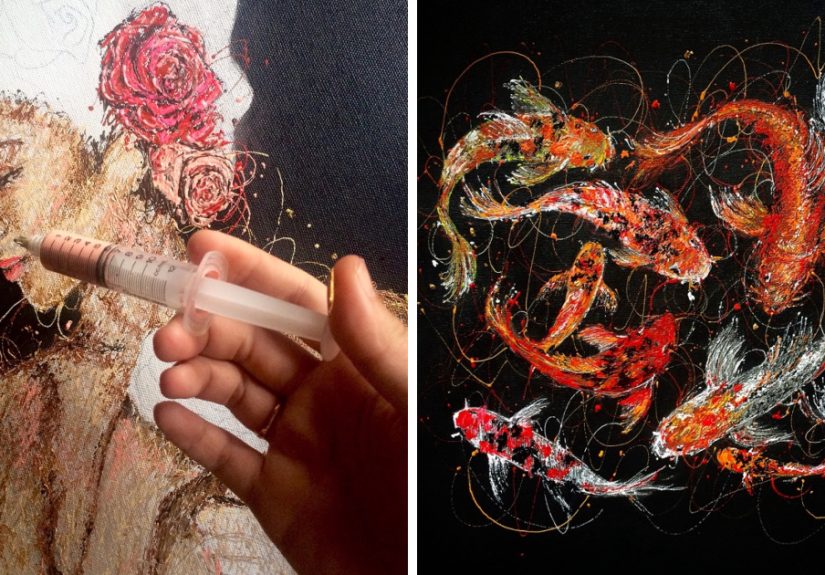
Yes, I use syringes to paint. No, I do not recommend raiding a hospital supply closet like a raccoon with an art degree. And no, the paintings are not “medical waste chic.” Syringe painting is a careful, colorful, surprisingly delicate art technique that turns a tool associated with precision, pressure, and healing into a tool for creativity, release, and joy.
As a nurse, I spend much of my professional life measuring, observing, responding, and staying calm when the room decides to become dramatic. In my free time, I still reach for precisionbut instead of drawing medicine into a syringe, I draw in paint. Instead of injecting a solution, I “inject” color onto canvas. It is strange, beautiful, messy, and oddly poetic. It is also proof that creativity has a wonderful habit of sneaking into the places we least expect it.
What Is Syringe Painting?
Syringe painting is a visual art technique that uses syringesusually without sharp needles, or with modified tips for controlled applicationto place paint onto a surface. The artist pushes the plunger to release thin lines, dots, curves, drips, and textured streams of color. Think of it as the cousin of acrylic pouring, line drawing, and pastry piping, except the pastry bag has gone to nursing school.
The result can look fluid and spontaneous, but the method is not random. Syringe art depends on pressure control, paint consistency, timing, and hand stability. Too much pressure and the line splatters. Too little and nothing comes out. Paint that is too thick clogs the tip. Paint that is too thin runs like it has somewhere urgent to be. The magic happens in the middle: a texture that flows, holds shape, and lets the artist guide the color like a tiny river.
The Story Behind A Nurse Painting With Syringes
The idea of a nurse using syringes to paint gained attention online because it connects two worlds people do not usually place in the same sentence: clinical care and fine art. Nurses are trained to use syringes for accuracy, safety, and patient care. Artists use tools to express memory, emotion, movement, and imagination. Syringe painting brings those two forms of discipline together.
In a hospital, a syringe is practical. It measures. It delivers. It must be handled with caution and respect. In a studio, that same shape becomes symbolic. It can deliver color instead of medication, softness instead of stress, and playfulness instead of pressure. That contrast is exactly why the technique feels so fascinating. It takes something familiar from a high-stakes environment and gives it a second life as a creative instrument.
Why Nurses Understand This Technique So Well
Nursing is often described as both an art and a science, and syringe painting makes that phrase feel very literal. Nurses use science every day: anatomy, pharmacology, assessment, infection control, documentation, and critical thinking. But they also use artistry: communication, empathy, timing, intuition, and the ability to notice small changes before they become big problems.
Those same qualities show up in syringe painting. A steady hand matters. Patience matters. Observation matters. A nurse already understands how pressure changes flow. A nurse knows that small movements can make a big difference. A nurse knows that preparation can save the whole process from chaos. If that sounds dramatic, you have never tried unclogging acrylic paint from a narrow tip while your canvas slowly dries and judges you.
How Syringe Art Actually Works
1. Choosing The Right Paint
Acrylic paint is commonly used because it is flexible, vivid, and easier to clean than oil-based materials. However, straight-from-the-tube acrylic can be too thick for syringe work. Many artists mix acrylic paint with a pouring medium, flow medium, or small amounts of water to achieve a smoother consistency. The goal is paint that moves through the syringe without becoming watery.
2. Loading The Syringe
Loading paint into a syringe can be done by pulling the plunger back slowly or by removing the plunger and filling the barrel from the top. Either way, air bubbles are the tiny villains of the process. They interrupt the line and create unexpected bursts. Sometimes those bursts look artistic. Sometimes they look like the paint sneezed.
3. Testing Pressure
Before touching the canvas, it helps to test the flow on scrap paper. This step reveals whether the paint is too thick, too thin, or just right. The artist can also test line width, dot size, and how quickly the paint settles.
4. Building The Image
Syringe painting can be used for abstract designs, florals, portraits, religious imagery, landscapes, animals, and decorative patterns. Some artists use it to create raised lines with a tactile texture. Others use it for controlled drips and layered color fields. The technique rewards experimentation. A single piece may include fine lines, bold outlines, blended puddles, and dramatic splashes.
5. Letting The Work Dry
Because syringe painting often places paint in thicker lines or dots, drying time matters. A surface may look dry on top while still soft underneath. Moving the canvas too soon can distort the work. Patience is not optional. It is the unpaid assistant in the studio.
Why This Art Feels So Personal
Painting with syringes is not just a quirky technique. For a nurse, it can feel personal because it transforms the emotional weight of the profession into something visible. Nurses see fear, recovery, grief, relief, humor, exhaustion, and hopesometimes all before lunch. Art becomes a way to process that intensity without turning every feeling into a full staff meeting.
Creative hobbies can help health care workers create distance from stress. They do not erase hard shifts, but they can offer a healthy place to put the feelings that follow those shifts home. Painting gives the mind a task that is focused but not clinical. It invites attention without alarms. It asks for presence without demanding a chart note.
The Connection Between Art, Stress Relief, And Health Care Work
Health care workers often face emotional strain, long hours, unpredictable schedules, and the pressure of caring for people during vulnerable moments. Nurses especially carry a combination of physical labor and emotional labor. That is why creative outlets matter. Art gives the brain a different kind of work: sensory, playful, expressive, and self-directed.
Art therapy is a professional mental health field led by trained art therapists, but people also use art informally as a form of relaxation and self-expression. Painting, drawing, coloring, sculpting, and crafting can all create a sense of control and calm. For nurses, that can be especially meaningful. In a hospital, many things cannot be controlled. In a painting, at least the blue can go where you put itunless it drips, in which case the painting has chosen independence.
What Makes Syringe Painting Different From Brush Painting?
A brush spreads paint. A syringe places it. That difference changes everything.
With a brush, the artist often works through strokes, pressure, bristles, and blending. With a syringe, the artist works through flow, release, and direction. The line comes from inside the tool rather than from the surface of bristles. This creates a raised, dimensional effect that can make the artwork feel almost sculptural.
Syringe painting is also less forgiving in some ways. A brush can soften an edge. A syringe line lands with commitment. It is a little like sending a text message without proofreading: once it is out there, you must either own it or creatively turn it into a flower.
Popular Subjects For Syringe Art
Floral Designs
Flowers work beautifully with syringe painting because petals, stems, and veins can be created through curved lines and layered dots. Peonies, roses, lilies, and wildflowers all benefit from the technique’s dimensional quality.
Portraits
Portraits are more challenging because the artist must control subtle shadows, facial structure, and expression. Syringe painting can create striking portraits when the artist uses layered tones and carefully controlled linework.
Birds And Animals
Feathers, fur, scales, and wings are excellent subjects for syringe detail. A bird’s body can be built from small, repeated strokes of color, while the background can remain loose and abstract.
Abstract Color Studies
Abstract syringe painting may be the most freeing approach. The artist can explore movement, pressure, rhythm, and texture without worrying about realistic proportions. It is also a terrific way to learn the tool before attempting complex subjects.
Safety Tips For Syringe Painting At Home
Anyone inspired to try syringe art should treat the process like an art project, not a medical procedure. Use clean, unused craft syringes or needle-free applicators whenever possible. Avoid used medical supplies. Do not use sharps casually. Keep materials away from children and pets. Work in a ventilated space, especially when using mediums, varnishes, or any product with strong fumes. Wear gloves if your skin is sensitive, and clean spills quickly before they become permanent roommates.
The safest version of syringe painting uses blunt-tip applicators or plastic syringes without needles. These are often sold for crafts, glue, resin, baking decoration, and laboratory-style dispensing. The art is in the control, not in the sharpness.
Why People Love Watching Syringe Painting
There is something hypnotic about seeing paint pushed through a syringe. The motion is slow, controlled, and satisfying. Viewers can watch a blank canvas become a flower, face, or burst of color one line at a time. It has the soothing quality of cake decorating videos, the suspense of a medical drama, and the joy of a craft table after too much coffee.
Online audiences also love the surprise factor. A syringe is not the tool most people expect to see in an art studio. That unexpected twist makes the technique memorable. It invites the viewer to ask, “How did you even think of that?” And the answer is often simple: creative people see ordinary tools and wonder what else they can do.
The Bigger Message: Your Profession Can Feed Your Passion
Many people separate work and creativity into different rooms of the mind. Work is serious. Art is fun. Work is responsibility. Art is freedom. But syringe painting suggests that the two can overlap in strange and wonderful ways.
A nurse can bring clinical precision into painting. A teacher can turn lesson planning into storytelling. An engineer can create sculpture from structure. A chef can think like a color theorist. A mechanic can understand form, movement, and material better than most people realize. Our daily tools shape the way we see the world. Sometimes, the thing we use at work becomes the thing that unlocks our imagination after work.
What Syringe Painting Teaches About Creativity
Syringe art teaches that creativity does not always begin with expensive supplies or formal training. Sometimes it begins with curiosity. What happens if I use this differently? What if this tool has another purpose? What if I stop waiting for the “right” time and make something with what I already know?
That mindset is powerful. It turns limitation into style. It turns routine into inspiration. It reminds us that art is not always about escaping life. Sometimes it is about remixing life into something brighter.
Experiences From The Studio: Painting After A Shift
After a long shift, the first few minutes in front of a canvas can feel awkward. My hands still remember the rhythm of work: sanitize, assess, prepare, document, repeat. The quiet of the studio feels almost suspicious. There are no call lights, no monitors, no hurried footsteps in the hallway. Just paint, canvas, and the small click of a syringe plunger moving under my thumb.
I usually begin by mixing colors. This part feels like taking a deep breath. I thin the acrylic until it moves smoothly, then test it on a scrap surface. If the line comes out too thick, I adjust it. If it runs too quickly, I thicken it. There is something comforting about a problem that can be solved with a stir stick and patience. Not every problem in nursing is that polite.
Some nights, I paint flowers because they feel gentle. Petals let me use curved lines and soft layers. Other nights, I paint bold shapes because I need the color to be louder than the day was. Red, yellow, cobalt, violetcolors have their own personalities. Yellow arrives like it owns the room. Blue behaves until it suddenly becomes dramatic. White fixes almost everything, which is why I respect it deeply.
The best part is the moment when the syringe stops feeling like a medical tool. At first, my mind recognizes it from work. Then, little by little, it becomes something else. It becomes a pen, a brush, a tiny paint cannon with manners. My thumb controls the pressure. My wrist controls the curve. My breathing slows down because the line depends on steadiness. The canvas asks for focus, and focus is a relief.
Not every painting succeeds. Some pieces look like I had a plan and then the plan left the building. Sometimes the paint clogs. Sometimes a line lands in the wrong place. Sometimes a beautiful detail gets swallowed by a background that became too enthusiastic. But those mistakes are part of the process. In nursing, mistakes are serious and must be prevented. In art, mistakes can become texture, shadow, movement, or an unexpected bird. That difference feels freeing.
Friends often ask whether syringe painting reminds me of work. The honest answer is yes, but not in a heavy way. It reminds me that tools do not have only one meaning. A syringe can belong to a hospital, but it can also belong to a canvas. A tired hand can still create beauty. A person who spends the day caring for others can still make something just for the joy of it.
That is why I keep painting. It is not only about the finished artwork. It is about reclaiming a little space at the end of the day. It is about turning pressure into color. It is about proving that even after the hardest shifts, there is still room for play, wonder, and a tiny bit of controlled chaos.
Conclusion: Injecting Color Into Everyday Life
Syringe painting is more than a clever art technique. It is a reminder that creativity can come from anywhereeven from the tools we associate with routine, responsibility, or stress. For a nurse, painting with syringes turns precision into expression and transforms a familiar object into a source of beauty.
The technique is unusual, but the lesson is universal: your life already contains materials for art. Your work, your habits, your skills, your memories, and even your tired evenings can become part of the creative process. You do not need a perfect studio or a perfect schedule. You need curiosity, patience, and the courage to ask, “What else can this become?”
And if the answer involves filling a syringe with paint and making a flower bloom across a canvas, well, that is one very colorful prescription.
Note
This article was written in original language for web publication and synthesized from real public information about syringe art, nurse creativity, art therapy, acrylic painting methods, clinician well-being, and safe studio practice. It is informational and does not encourage unsafe use of medical supplies.