Table of Contents >> Show >> Hide
- What Makes the Kuhn Rikon Mortar and Pestle Different?
- What You Can Actually Do With It (Beyond Looking Like a Cooking Show Host)
- Porcelain vs. Granite vs. Molcajete: Where Kuhn Rikon Fits In
- How to Use It Like You’ve Been Doing This for Years
- Cleaning and Care: Keep the Flavor, Lose the Funk
- Who This Mortar and Pestle Is Perfect For
- Quick Recipe Ideas That Show Off the Tool
- FAQ
- Real-Kitchen Experiences With the Kuhn Rikon Mortar and Pestle (Extra )
- Conclusion
Some kitchen tools are loud about their importance. Stand mixers flex. Air fryers beep like they’re running a tiny airport.
And then there’s the mortar and pestle: an ancient bowl and a blunt stick that somehow makes your food taste like you suddenly got
promoted to “person who knows what they’re doing.”
The Kuhn Rikon Mortar and Pestle sits right in the sweet spot between “timeless” and “actually designed.”
It’s known for a Swiss-minded approach: thoughtful materials, clever storage, and a modular feel that lets you grind, crush, and blend
without turning your counter into a spice crime scene. If you’ve ever smelled fresh-crushed cumin or basil and thought,
Why doesn’t my food always smell like this?welcome. You’re in the right kitchen.
What Makes the Kuhn Rikon Mortar and Pestle Different?
It’s not just a bowl. It’s a system.
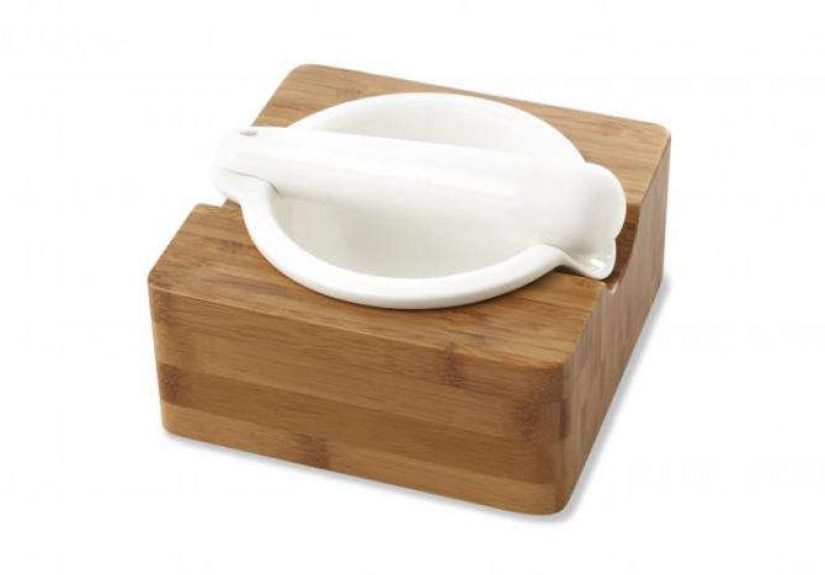
Many sets are a single heavy mortar with one pestlegreat, but not exactly flexible. Kuhn Rikon’s design is commonly sold as a
stacking, multi-piece setup that combines an unglazed porcelain grinding surface with a
sustainably sourced wood component (often described as bamboo or beechwood, depending on the edition/retailer).
The goal is simple: the pieces nest together for compact storage, and you can choose the “right size” working area for what you’re making.
Unglazed porcelain = more grip than you expect
People sometimes assume porcelain is only for pretty, delicate tasks. But the key word here is unglazed.
That slightly matte texture adds friction, which is what you need to grab whole spices and tear herbs instead of letting them skate around
like tiny figure skaters. The result: faster grinding, better control, and fewer peppercorns launching into low orbit.
Designed to feel good in your hands (and on your counter)
A mortar and pestle is basically hand-powered culinary physics. Weight and stability matter. The Kuhn Rikon approach emphasizes
a secure base, comfortable handling, and a design that looks nice enough to leave outbecause the best tool is the one you don’t hide
behind the waffle iron you used once in 2019.
What You Can Actually Do With It (Beyond Looking Like a Cooking Show Host)
1) Grind whole spices for louder flavor
Freshly ground spices aren’t a “food snob” thingthey’re a “my chili suddenly tastes like chili” thing. Crushing spices breaks cell walls,
releases aromatic oils, and gives you control over texture: fine powder for baking, coarse crack for rubs, or a rustic grind for sauces.
Try this: Toast cumin and coriander in a dry pan for 60–90 seconds, cool slightly, then grind. Add a pinch of salt as traction.
You’ll get a warmer, rounder flavor than anything that’s been sitting pre-ground in a jar since the last presidential administration.
2) Turn garlic, ginger, and chiles into paste (aka “instant depth”)
If you’ve only chopped garlic, you’ve met garlic’s polite cousin. When you pound garlic into a pasteespecially with saltit becomes smoother,
more evenly distributed, and more aromatic. Same for ginger and chiles. This is how you build the foundation for curries, stir-fries, marinades,
and sauces where flavor should feel woven in, not sprinkled on top.
3) Make pesto, chimichurri, and herb sauces with better texture
Blenders can make pesto fast, but they also tend to whip, heat, and over-pulverize. A mortar and pestle bruises herbs and emulsifies in a way
that’s slightly chunky, glossy, and deeply fragrant. It’s the difference between “green sauce” and “why is this so good?”
4) Crush nuts and seeds for baking, salads, and snack upgrades
Nuts don’t always need to become nut butter. A quick crush can give you crunchy topping for yogurt, texture for salads, and a better base for
sauces like romesco. The wood component in some Kuhn Rikon sets is often described as particularly useful for cracking and crushing hard foods
like nuts.
Porcelain vs. Granite vs. Molcajete: Where Kuhn Rikon Fits In
Let’s be honest: the “best” mortar and pestle depends on what you cook. Testing from major cooking publications tends to favor
large, heavy, coarse granite for all-purpose grindingespecially for tough spices and big batchesbecause weight and texture do a lot
of work for you. Molcajetes (volcanic stone) shine for salsas and rough pastes. Marble can be great for pesto and fresh ingredients but may struggle
with hard spices if the interior is too smooth.
The Kuhn Rikon styleunglazed porcelain paired with a wood base/cupoffers a different set of strengths:
- Cleaner flavor transitions: Porcelain is less likely than porous stone to hold onto aromas over time (helpful if you don’t want yesterday’s garlic to haunt today’s cinnamon).
- Great for small-to-medium tasks: Spice blends, garlic paste, herbs, quick saucesespecially when you want control more than brute force.
- Modular convenience: If your set includes multiple bowl sizes, you can go from grinding spices to mixing without fully washing and drying a massive stone mortar mid-recipe.
- Counter-friendly storage: Stackable design means it’s more likely to live within reach, which means it’s more likely to get used.
The trade-off: if you regularly grind large volumes of hard spices (think: making curry paste for a crowd every weekend),
a big Thai-style granite mortar may still feel faster simply because mass and roughness are relentless.
But for everyday cookingwhere you want a tool that’s effective, tidy, and not a gym membershipthe Kuhn Rikon approach is compelling.
How to Use It Like You’ve Been Doing This for Years
Step 1: Start with the right motion
Grinding isn’t just pounding. Use a mix of press-and-twist (for spices) and pound-and-smear (for garlic and herbs).
The bowl does half the work if you keep ingredients under the pestle, not on the rim plotting an escape.
Step 2: Add salt at smart moments
Salt is more than seasoningit’s traction and abrasion. A pinch helps grab spices and break down garlic into paste faster.
For herbs, a small sprinkle can help bruise leaves and pull out juices.
Step 3: Work in batches when needed
If you overload the bowl, ingredients bounce. Grind spices in smaller amounts and combine after.
If your Kuhn Rikon set includes multiple bowl sizes, use the smaller working space for tiny batches so the pestle has better contact.
Step 4: Build pastes in layers
For curry paste or marinades, start with tough aromatics first (garlic, ginger, chiles), then add spices, then softer ingredients,
then oil or acid. This layering helps everything turn cohesive instead of chunky in the wrong way.
Cleaning and Care: Keep the Flavor, Lose the Funk
Porcelain: easy mode (usually)
Porcelain is generally straightforward: rinse promptly, wash gently, and dry. If food sits and dries, you’ll need more scrubbing,
which is not a personality trait you want to develop. For stubborn aromas (garlic, curry), a soak in warm water and a little baking soda
can helpjust avoid anything that might damage wood if your pieces are attached or stored together.
Wood components: treat them like wood
If your set includes a beechwood or bamboo cup/base, avoid prolonged soaking.
Wipe clean, rinse quickly if needed, and dry thoroughly. Wood likes to be clean and drynot waterlogged and sad.
If it starts looking thirsty, a tiny amount of food-safe mineral oil can help maintain the finish.
A quick odor reset trick
If you’re switching from garlic-heavy cooking to baking spices, grind a spoonful of dry rice (or coarse salt) to “scrub” the surface,
then discard and rinse. It’s a fast way to refresh without turning cleanup into a whole episode.
Who This Mortar and Pestle Is Perfect For
You’ll love it if you…
- Cook often and want spices to taste like they’re alive (not like they’ve been in time-out for two years).
- Make sauces, marinades, rubs, and pastes and want more control than a blender gives you.
- Prefer tools that store neatly and look good enough to stay on the counter.
- Want a mortar and pestle that feels designed, not just quarried.
You might want a different style if you…
- Regularly grind large batches of very hard spices and want maximum weight and rugged texture (big granite can be a beastin a good way).
- Primarily make Mexican salsas and guacamole and want the authentic rough grind of volcanic stone (a molcajete is hard to beat for that job).
- Need the absolute quietest option (ceramic-on-ceramic can be louder than you expectnothing dramatic, just “someone is cooking” energy).
Quick Recipe Ideas That Show Off the Tool
Weeknight “Better Than a Jar” Taco Spice
Grind: 1 tsp cumin, 1 tsp coriander, 1 tsp smoked paprika, 1/2 tsp oregano, 1/2 tsp black pepper, 1/2 tsp salt.
Add a pinch of chili flakes if you like heat. Use on chicken, mushrooms, roasted caulifloweranything that needs a confidence boost.
Garlic-Herb Paste for Everything
Pound: 2–3 garlic cloves + 1/2 tsp salt until smooth. Add chopped parsley and/or basil, then grind into a thick paste.
Finish with lemon zest and a drizzle of olive oil. Stir into yogurt, smear on bread, toss with roasted veggies, or rub on steak.
Fast Pesto (No Blender, No Drama)
Crush garlic with salt, then add basil in handfuls, bruising as you go. Add toasted pine nuts (or walnuts), then parmesan, then olive oil.
Keep it slightly chunky for texture. Taste. Suddenly you’re the pesto person.
FAQ
Do I need to “season” the Kuhn Rikon Mortar and Pestle?
Traditional seasoning is most important for porous stone mortars (like granite or volcanic rock) to remove grit and reduce dust.
With unglazed porcelain, the process is typically simplermore about washing and using it than grinding multiple sacrificial batches of rice.
If you want extra peace of mind, a quick rice grind and rinse won’t hurt, but it’s usually not the same ritual stone requires.
Is it good for curry paste?
Yesespecially for small-to-medium batches where control matters. For very large batches with tough ingredients, a heavier granite mortar may feel faster.
But for everyday curry pastes, marinades, and spice-forward sauces, it performs well and cleans up more easily than many porous stones.
Will it replace my electric spice grinder?
It depends on your goal. Electric grinders are fast and consistent for dry spices, but they can struggle with small quantities, oily spices,
and fresh pastes. A mortar and pestle gives you texture control, handles wet ingredients beautifully, and doesn’t require plugging anything in.
Many cooks end up using both.
Real-Kitchen Experiences With the Kuhn Rikon Mortar and Pestle (Extra )
The first real experience most people have with a mortar and pestle isn’t a recipeit’s a moment of surprise. You drop in a teaspoon of cumin,
give it a few presses, and the smell hits like a headline: “Spices have been holding out on you.” That’s the hook.
With the Kuhn Rikon style of unglazed porcelain, the surprise often comes with a second thought: “Wait, this is actually gripping the spices.”
If you’ve used glossy ceramic before, you know the slip-and-slide feeling. Here, that matte texture behaves more like a helpful coworker
and less like a coworker who “forgets” deadlines.
Then comes the learning curvetiny, but real. At first you might pound like you’re mad at the garlic. The paste splats outward,
and suddenly you’re chasing aromatics around the rim with the pestle like a slow-motion hockey puck. But after a few tries,
you start using the smarter move: press, drag, rotate. You figure out that a pinch of salt is basically traction control.
You learn that working in smaller batches is faster than overfilling and fighting gravity. It’s not complicated; it’s just the kind of knowledge
that lives in your hands, not in a bullet list.
A very “real kitchen” moment with the Kuhn Rikon modular sets (especially those sold with more than one bowl size) is the mid-recipe pivot.
You’re cooking something that has a spice blend and a sauce. With a big stone mortar, you either wash and dry the whole thing
or you accept a little flavor overlap and pretend it was intentional. With a multi-piece setup, people often find themselves doing the
practical thing: grind spices in one component, then switch to another bowl/cup to mash garlic or mix a wet paste. It feels like cheating
the legal kind.
Another common experience is the “texture revelation.” Pesto is the classic: once you’ve made it by hand, you notice how the sauce clings
differently to pasta. It’s not just green; it’s dimensional. The basil tastes brighter, the nuts taste toastier, and the oil feels integrated
instead of just blended in. The same thing happens with guacamole-style mashes and salsa bases: smashing and grinding changes mouthfeel,
which changes how flavor lands. It’s why so many chefs still keep a mortar and pestle nearby even in high-tech kitchens.
Finally, there’s the oddly satisfying ritual side. A mortar and pestle forces you to slow down by about thirty seconds.
Not enough to derail dinnerjust enough to pay attention. You smell the spice bloom. You see the paste become glossy.
You taste earlier, adjust sooner, and end up with food that feels more deliberate. And once you’ve got it on the counter,
you’ll use it more: a quick crushed peppercorn blend here, a garlic-lemon paste there, a handful of nuts smashed for salad topping.
In a world of appliances that demand storage space and emotional commitment, that kind of casual usefulness is a win.
Conclusion
The Kuhn Rikon Mortar and Pestle is for cooks who want better flavor without more chaos. It’s thoughtfully designed, satisfying to use,
and versatile enough to earn a permanent spot in your workflowwhether you’re grinding whole spices for Tuesday tacos or building a silky herb paste
that makes a plain chicken breast feel like it has a résumé.