Table of Contents >> Show >> Hide
- What You’ll Learn
- So, What Is a “Sticks” Chandelier?
- From Curing Barn to Conversation Piece
- Why the Design Works (Even If It Looks Like Controlled Chaos)
- Safety + Wiring: Make It Gorgeous, Not Sketchy
- Sizing and Hanging Height (A.K.A. How to Avoid Bonking Your Guests)
- Where Sticks Chandeliers Shine Best
- Color, Bulb Style, and the Mood You’re Actually Buying
- Care and Feeding of a Reclaimed-Wood Chandelier
- Buying Tips: What to Ask Before You Commit
- Real-World Experiences With Sticks Chandeliers (The 500-Word “Living With It” Section)
- Conclusion
Some chandeliers whisper, “I’m classy.” A Sticks chandelier by Jeff Jones Design shows up and says,
“I used to dry tobacco in a barn, and now I’m the star of your dining room.” That’s not a metaphorit’s basically the plot.
In a world full of polite little pendant lights, Jeff Jones’ Sticks chandeliers are the design equivalent of wearing cowboy boots to a black-tie event:
unexpected, confident, and somehow… absolutely right.
What You’ll Learn
- What a Sticks chandelier actually is (and why it works)
- The tobacco-stick origin story: reclaimed, Southern, and clever
- Design details: cords, bulbs, Bakelite, and the “organized chaos” silhouette
- Safety + installation: UL components and real-world wiring tips
- Sizing + placement: rules of thumb that keep heads un-bonked
- Room-by-room styling ideas
- 500-word lived-in experience section (the stuff nobody tells you)
So, What Is a “Sticks” Chandelier?
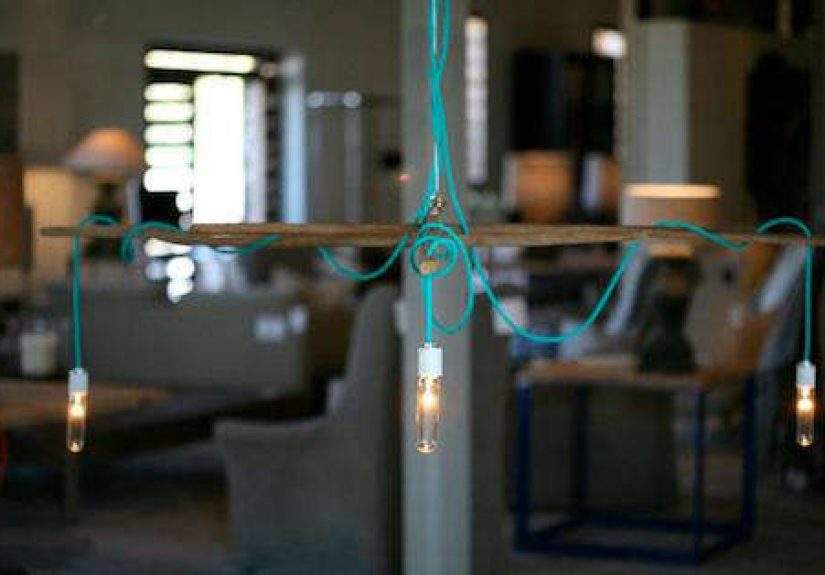
The short answer: it’s a chandelier built around vintage tobacco stickswooden laths once used in curing barnspaired with multiple
fabric-covered cords and exposed sockets. The longer answer: it’s a sculptural lighting piece that looks like a floating constellation made of
reclaimed wood and colorful lines, with bulbs acting like punctuation marks.
Unlike a crystal chandelier that sparkles politely from the center of the room, a Sticks chandelier spreads outward. It’s airy. It’s a little wild.
And it has that rare talent of feeling both rustic and modern at the same timelike a farmhouse that learned how to read design magazines.
From Curing Barn to Conversation Piece
The tobacco-stick backstory (without the boring lecture)
A “tobacco stick” (also called a tobacco lath) is literally a lath used to hang tobacco leaves or stalks for curing. These sticks lived hard lives:
they carried heavy bundles, got soaked in humidity, and spent years in barns doing their job with zero appreciationuntil someone with a designer’s eye
looked at them and thought, “You’d make a fantastic chandelier.”
Why reclaimed wood hits different
Reclaimed materials aren’t just a sustainability flex (though they can be). They also bring instant character. New wood can be pretty, surebut old wood
has a résumé. It shows wear, grain variation, and little imperfections that make the whole fixture feel more human.
With Sticks chandeliers, that history becomes part of the aesthetic: the raw, linear wood creates structure, while cords and bulbs add rhythm and light.
Why the Design Works (Even If It Looks Like Controlled Chaos)
1) The silhouette is “open,” so it plays nice with your space
Big fixtures can feel heavy. Sticks chandeliers cheat the system: they’re visually large, but not visually dense. Because the frame is essentially a
network of thin lines, the room still feels breathableeven when the chandelier is making a very loud statement.
2) The cords do the decorating
Most chandeliers rely on metalwork or glass to bring personality. Here, the personality is in the cordsoften bright, fabric-covered lines that drape and
loop. That means you can echo (or intentionally clash with) other colors in the room: a rug detail, bar stools, cabinet paint, even a single piece of art.
3) Bakelite sockets: a small detail with big style energy
Bakelite is one of the earliest synthetic plastics and became common in electrical applications because of its strong insulating properties and heat
resistance. In plain English: it’s historically legit, visually iconic, and it makes exposed sockets look intentional instead of “unfinished renovation
chic.”
4) It’s rustic… but not costume-rustic
There’s a fine line between “authentic” and “I bought this at a themed restaurant gift shop.” Sticks chandeliers stay on the right side because the form
is modern: clean geometry, minimal ornamentation, and a sculptural, gallery-like presence.
Safety + Wiring: Make It Gorgeous, Not Sketchy
UL matters (because your ceiling should not become a campfire)
When lighting mixes reclaimed wood, multiple cords, and exposed sockets, safety isn’t optionalit’s the whole deal. Look for UL-listed
components and assemblies where appropriate. UL certification indicates a product has been evaluated to meet recognized safety standards, and ongoing
compliance checks are part of the ecosystem.
Hardwired installation is normal here
Many statement chandeliersespecially those meant to live over dining tables or in foyersare designed to be hardwired and installed by a professional.
That’s not the chandelier being “high maintenance”; it’s the chandelier being a grown-up.
Bulbs + heat: don’t turn “warm ambience” into “warm… smoke”
If your fixture specifies lower wattage limits, treat that like the speed limit in a small town where the sheriff is bored. LEDs are your friend: you get
warm light with dramatically less heat. Pair with a compatible dimmer and you’ll have everything from bright dinner-party lighting to moody “we’re
definitely ordering dessert” glow.
Sizing and Hanging Height (A.K.A. How to Avoid Bonking Your Guests)
Chandelier diameter: the classic room formula
A widely used guideline: add the room’s length and width (in feet). The total, converted to inches, gives a safe chandelier diameter starting point.
It’s not a law of physics, but it’s a reliable launchpadespecially for statement pieces.
Over a dining table: keep it in the sweet spot
For dining rooms, many designers aim for the bottom of the fixture to sit roughly 32–36 inches above the tabletop, depending on ceiling
height and the fixture’s scale. Lower tends to feel more intimate; higher feels more open (and safer for enthusiastic hand-talkers).
Open areas and foyers: clearance is king
In a circulation space (foyer, living room center, stairwell), you generally want at least 7 feet of clearance from floor to the lowest
point of the chandelier. For taller ceilings, a common rule adds a few inches of clearance per extra foot of ceiling height.
Pro tip: table width matters too
Over a table, many designers recommend keeping the chandelier’s diameter comfortably inside the table edges, so the fixture feels centered and the room
doesn’t look like it’s wearing a hat that’s too big.
Where Sticks Chandeliers Shine Best
Dining rooms: the natural habitat
A Sticks chandelier over a dining table is basically a guaranteed conversation starter. It’s also practical: multiple bulbs distribute light more evenly
than a single pendant. If your dining room leans modern, the reclaimed wood adds warmth. If your dining room leans rustic, the cords and exposed sockets
keep it from feeling too traditional.
Kitchens: yes, especially in open-concept spaces
In a kitchen-adjacent dining zoneor above an oversized islandthis fixture can define the “gathering” area. The open form helps it coexist with cabinets,
vent hoods, and all the other visual busy-ness kitchens love to accumulate.
Entryways and stairwells: instant identity
In a foyer, lighting is your first impression. A Sticks chandelier can say “This house has personality” before anyone even finds the coat closet.
Because the fixture reads sculptural from multiple angles, it works beautifully in vertical sightlinesespecially stairwells.
Bedrooms: for the design-brave (and dimmer-committed)
If you want a bedroom that feels boutique-hotel cool, a smaller Sticks chandelier can workespecially with warm LEDs and a dimmer. Keep the scale calm;
bedrooms don’t need overhead drama that competes with sleep.
Hospitality + retail: the “Instagram moment” effect
Restaurants, boutiques, and lounges love lighting that feels handmade and photogenic. A Sticks chandelier reads as custom, and its color cords can be tuned
to brand palettes without screaming “corporate.”
Color, Bulb Style, and the Mood You’re Actually Buying
Cord color is your design dial
Want playful? Go bright. Want sophisticated? Choose muted or tonal cords that echo your wall color. Want to split the difference? Use one bold color as an
accent and keep the rest neutral. The cords can act like lines in a drawing: they pull the eye around the room.
Bulb shape changes the personality
Globe bulbs feel classic and friendly. Tubular bulbs look sleek and modern. Exposed filament-style LEDs add a vintage wink without the heat of old-school
incandescents. Whatever you choose, aim for warm color temperature if you want the room to feel inviting instead of “urgent email.”
Use a dimmer (seriously)
A chandelier like this is a mood machine. A dimmer lets you switch from bright, task-friendly light to soft ambient glow without swapping fixturesor
personalities.
Care and Feeding of a Reclaimed-Wood Chandelier
Dusting: the unglamorous reality
Any chandelier with multiple arms and cords will collect dust. The good news: the open design makes it easier than densely ornamented fixtures. Use a soft
microfiber cloth or a gentle duster, and turn the fixture off first (your future self will thank you).
Let the wood be wood
Reclaimed pieces may have natural variation, patina, and subtle marks. That’s not damage; that’s the charm. If you want a perfectly uniform surface,
reclaimed anything is going to disappoint youlike expecting a vintage leather jacket to look freshly ironed.
Buying Tips: What to Ask Before You Commit
- Exact dimensions: overall diameter/length and drop height
- Ceiling conditions: flat vs. sloped ceiling compatibility
- Electrical details: bulb base type, maximum wattage, dimmer compatibility
- Certifications: UL-listed components and safe assembly practices
- Finish + cord options: color choices, replacement parts, maintenance guidance
- Installation plan: hardwired requirements and who’s doing the work
The goal is simple: you want the chandelier to feel like art, but function like a trustworthy appliance.
Real-World Experiences With Sticks Chandeliers (The 500-Word “Living With It” Section)
People don’t just buy a Sticks chandelier for lightthey buy it for the reaction. Designers and homeowners often describe the same pattern:
the day it goes up, the room suddenly feels “finished,” like it put on a tailored jacket. Even spaces that were already nice get an instant upgrade in
personality, because the fixture isn’t just overhead lightingit’s a sculptural centerpiece with a sense of humor.
One of the first practical lessons is that cord color is not a small decision. On a product page, a bright cord reads like a fun accent.
In real life, it can become a dominant visual line that ties together (or loudly argues with) everything else in the room. People who love the result tend
to pick up a color already present somewheremaybe a rug stripe, a cabinet tone, or a piece of artso the chandelier feels “meant to be” instead of “I
impulse-bought a fireworks display.”
The second lesson: the dimmer is non-negotiable. Because Sticks chandeliers often use multiple exposed bulbs, full brightness can feel
like you’re hosting a cooking show. With a dimmer, though, the fixture becomes flexible: bright enough for homework and food prep, low enough for dinner
parties where everyone suddenly gets philosophical after the second glass of wine.
Installation tends to be straightforward for a qualified electrician, but owners quickly learn to prep the “boring” details:
confirming ceiling box support, verifying the drop length, and making sure the chandelier sits level. A small tilt looks charming on a painting; on a
chandelier, it looks like the ceiling is judging your life choices. Many people also keep a note of bulb type and color temperature for easy replacement
laterbecause nothing ruins the vibe like one bulb aging into a different shade of “dentist office.”
Then comes the long-term reality: dust. Not “dealbreaker dust,” just “welcome to owning interesting objects” dust. The best approach is
light, regular maintenance rather than a once-a-year deep-clean that turns into a ladder-based workout. Owners who are happiest with the fixture tend to
treat it like a piece of furniture: quick, routine care instead of dramatic cleaning day rituals.
Finally, the surprise benefit: Sticks chandeliers often become a social anchor. Guests gather under them. Conversations happen around
them. People ask about them. And because the fixture blends reclaimed wood with modern wiring and bold cords, it reads as personallike you chose it for a
reason, not because it was the first thing the algorithm showed you. In the age of copy-paste interiors, that sense of intention might be the best
lighting feature of all.
Conclusion
A Jeff Jones Design Sticks chandelier is what happens when history, craftsmanship, and playful modern styling collidein a good way.
It brings reclaimed character without feeling kitschy, it creates atmosphere without visual heaviness, and it gives your room something most homes lack:
a little bit of daring.
If you want lighting that’s more than “bright enough,” this is the kind of fixture that turns the act of turning on a light into a small daily event.
And honestly, we could all use more daily events that don’t involve email.