Table of Contents >> Show >> Hide
- Who Is Studio Gorm?
- The Design Philosophy Behind Studio Gorm Lamps
- Notable Studio Gorm Lamp Designs
- Why Studio Gorm Lamps Work in Modern Interiors
- How to Decorate With Studio Gorm-Inspired Lighting
- What Makes Studio Gorm Lamps SEO-Worthy and Design-Worthy?
- Buying Considerations: Availability, Alternatives, and Expectations
- Experiences and Practical Lessons From Living With Studio Gorm-Style Lamps
- Conclusion: Why Studio Gorm Lamps Still Feel Fresh
- SEO Tags
Some lamps shout for attention. They arrive in a room with the confidence of a chandelier wearing sunglasses indoors. Studio Gorm lamps do something more interesting: they quietly ask better questions. What if a cord were not something to hide? What if a lamp could be adjusted without a complicated hinge, a glossy app, or a tiny manual written by someone who has never met a human hand? What if lighting could be practical, poetic, and just a little bit funny?
That is the charm of Studio Gorm, the Oregon-based design office founded by John Arndt and Wonhee Arndt. Their work moves across furniture, objects, lighting, interiors, exhibitions, and research, but it keeps returning to a simple idea: everyday things deserve serious thought without becoming too serious themselves. Their lamps are especially good examples of that philosophy. They are minimal, but not cold. Clever, but not gimmicky. Functional, but not boring enough to make a beige wall yawn.
In the world of modern lighting design, Studio Gorm lamps occupy a thoughtful middle ground between utility and sculpture. They do not merely illuminate a room; they reveal how objects can adapt, hang, rest, pivot, and participate in daily life. For homeowners, decorators, collectors, and design lovers, these lamps offer a useful lesson: the best lighting is not always the flashiest fixture. Sometimes it is the one that solves a small problem so elegantly that you wonder why everything else is trying so hard.
Who Is Studio Gorm?
Studio Gorm was founded in 2007 by John Arndt and Wonhee Arndt, designers and educators based in Eugene, Oregon. Their background in sculpture, craft, product design, and academic research gives their work a distinctive personality. Instead of beginning with surface decoration, they often begin with behavior: how people cook, gather, work, read, clean, store, hang, carry, and live with objects over time.
This matters because lighting is not just a category of home decor. Lighting is behavior in physical form. A bedside lamp changes how you read. A task lamp changes how long you can work comfortably. A pendant changes the mood at dinner. A portable or adjustable lamp changes where you sit, what corner becomes useful, and whether a room feels like a showroom or a place where actual coffee gets spilled.
Studio Gorm’s designs are commonly described as simple, practical, and thoughtful, but those words should not be mistaken for plain. Their best pieces often contain a small twist: a visible cord, a movable shade, a surprising material, or a familiar shape reconsidered. The studio’s lighting projects show how a lamp can be reduced to its essential parts while still having personality.
The Design Philosophy Behind Studio Gorm Lamps
Studio Gorm lamps feel rooted in three ideas: usefulness, material honesty, and quiet humor. These are not lamps that try to disguise their working parts. Instead, they often celebrate them. Cords, hooks, frames, poles, blocks, and shades become part of the visual language. The mechanics are not hidden behind unnecessary drama; they become the story.
Function First, But Never Function Only
A Studio Gorm lamp usually begins with a practical need. You need light by a chair. You need flexibility near a work table. You need a lamp that can move higher or lower. You need a cord to reach the wall without looking like an afterthought. In many homes, cords are treated like embarrassing relatives at a dinner party: everyone knows they are there, but nobody wants to talk about them. Studio Gorm talks about them beautifully.
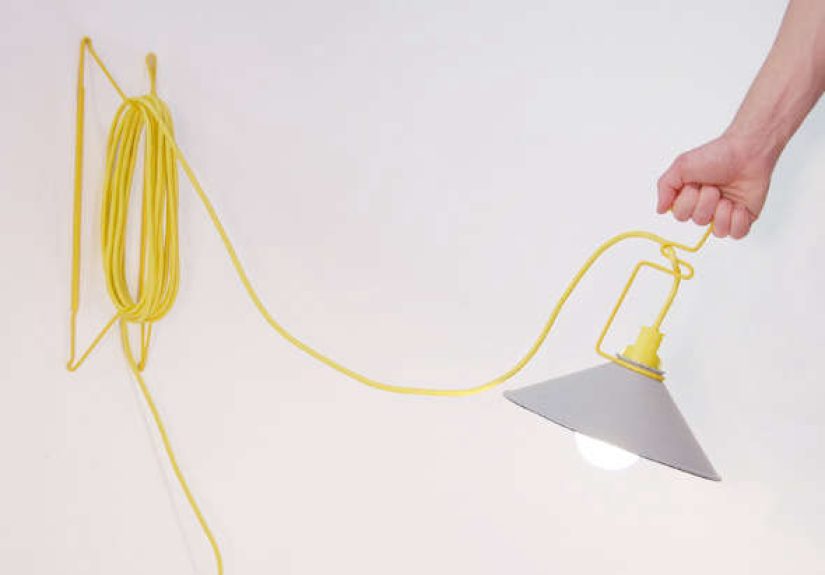
The Plug Lamp is a strong example. It turns the extension cord into a central design feature rather than a nuisance. The lamp’s minimal frame holds the cord in a way that allows repositioning, while the shade can be hooked where needed. The result feels almost like a tool from a very charming workshop: direct, useful, and unexpectedly graceful.
Minimalism With a Human Pulse
Minimalist lighting can sometimes feel severe, as if the lamp is judging your clutter from across the room. Studio Gorm’s minimalism is different. It is approachable. Their pieces tend to use clear geometries and restrained forms, but they do not feel sterile. They suggest making, testing, adjusting, and living. That handmade intelligence is part of the appeal.
This is where the studio’s craft background becomes important. A lamp may look simple, but simplicity is rarely simple. A good minimal lamp has to get proportion, balance, light direction, material thickness, and user interaction exactly right. Remove too much and the lamp becomes flimsy. Add too much and the idea disappears under decoration. Studio Gorm often finds the sweet spot where the object feels both designed and discovered.
Notable Studio Gorm Lamp Designs
Studio Gorm’s project archive includes several lighting concepts and lamp designs, including the Plug Lamp, Cap Lamp, Hat Lamp, Milk Bottle Lamp, Block Lamp, Cloud Lamp, Lighting Bug, Hexahedra Lamp, and Hexahedra Pole Lamp. Some of these are limited-run works, prototypes, or conceptual projects rather than mass-market fixtures you can order with two-day shipping. That rarity is part of their charm, but it also means the real value of these lamps is not only as products. They are design studies in how light can behave.
The Plug Lamp: Making the Cord the Hero
The Plug Lamp may be the easiest entry point into Studio Gorm’s lighting logic. It celebrates the ordinary extension cord and transforms it into a functional design element. Rather than pretending electricity appears magically from the design fairy, the lamp acknowledges the cable, organizes it, and uses it as part of the lamp’s adjustability.
In a small apartment, studio, reading corner, or workshop-like interior, this idea is especially smart. Many people do not have perfectly placed outlets. Many renters cannot rewire walls or add sconces wherever they want. A lamp that embraces its cord offers flexibility without pretending the room is a catalog spread untouched by physics.
The Pole Lamp: Adjustable Height Without the Fuss
The Pole Lamp concept focuses on vertical adjustment. A freestanding lamp with a shade that can be positioned at different heights sounds simple, but it answers a common lighting problem: one room often needs several lighting moods. Low light works for reading or evening calm. Higher light helps spread illumination. Adjustable height lets the lamp respond to the room instead of forcing the room to behave.
This is the kind of design that does not scream innovation, which is exactly why it is good. The improvement is not theatrical. It is practical. The lamp gives the user control in a visible, understandable way.
Hexahedra Lamp and Hexahedra Pole Lamp: Geometry With Purpose
The Hexahedra Lamp and Hexahedra Pole Lamp explore a more geometric language. The name suggests solid form, structure, and planes, and the imagery associated with the projects reinforces Studio Gorm’s interest in basic shapes that become useful objects. These lamps fit well within interiors that value architectural calm: white walls, wood furniture, concrete floors, linen upholstery, open shelving, and objects that look like they know how to behave themselves.
But geometry here is not only about looks. A strong geometric lamp can help anchor a room. It gives the eye a clear object to rest on. In spaces with soft textiles, plants, books, and natural surfaces, a structured lamp can provide contrast without visual chaos.
Milk Bottle Lamp, Cloud Lamp, and Lighting Bug: Familiar Forms Reimagined
Studio Gorm’s lighting projects also show a willingness to borrow from familiar objects and natural associations. A milk bottle, a cloud, or a bug suggests something recognizable before the lamp even turns on. This is where the studio’s humor appears. The references are friendly, not cartoonish. They invite curiosity without turning the lamp into a novelty item.
That balance is harder than it looks. Many playful lamps become tiring after a week, like a joke repeated at every meal. Studio Gorm’s better pieces avoid that problem because their playfulness is tied to form, use, and material logic. The idea does not sit on top of the lamp; it shapes the lamp.
Why Studio Gorm Lamps Work in Modern Interiors
Modern interiors often struggle with a strange problem: they look finished but feel flat. The sofa is correct. The rug is tasteful. The coffee table books are stacked with the mathematical precision of a tiny cultural monument. And yet the room feels like nobody wants to sit down. Lighting is often the missing ingredient.
Studio Gorm lamps work because they bring visual interest at a human scale. They are not just ceiling jewelry. They belong near hands, chairs, desks, books, and daily rituals. Their forms encourage interaction, which makes a room feel less staged and more alive.
They Add Warmth Without Clutter
Because many Studio Gorm lamps rely on simple structures, they can add character without adding visual noise. This makes them ideal for small spaces, Scandinavian-inspired rooms, Japandi interiors, modern cabins, creative studios, and homes where every object has to earn its place.
A Studio Gorm-style lamp beside a low lounge chair can soften a modern room. On a work table, it can make task lighting feel intentional rather than office-like. In a bedroom, a simple adjustable lamp can replace the predictable matching nightstand lamps that often look like they came free with the mattress.
They Make Utility Beautiful
The biggest lesson from Studio Gorm lighting is that utility does not need to be hidden. A hook can be beautiful. A cord can be honest. A pole can be elegant. A shade can move because life moves. This is the opposite of decorative excess. Instead of adding flourishes, the designer refines the useful parts until they become expressive.
For homeowners, this is a powerful decorating principle. When choosing lamps, do not only ask, “Is it pretty?” Ask, “What does it help me do?” A good lamp should improve a habit: reading, cooking, drawing, relaxing, hosting, or finding your slippers before your toes discover the chair leg.
How to Decorate With Studio Gorm-Inspired Lighting
Even if you do not own an original Studio Gorm lamp, you can apply the studio’s design lessons to your own lighting choices. Look for lamps that are clear in construction, flexible in use, and honest about materials. Avoid fixtures that rely entirely on trend appeal. A lamp should still make sense when the internet moves on to its next obsession, which should happen any minute now.
Use Lamps as Tools, Not Just Accessories
Start by identifying the task. Do you need light for reading? Choose a lamp with directional control. Do you need atmosphere? Look for a soft shade and warm bulb. Do you need flexibility in a rental? Consider plug-in lamps, portable lamps, or fixtures with visible cords that look intentional rather than accidental.
This approach is very Studio Gorm: define the need, then let the object solve it clearly. A beautiful lamp that fails at lighting is basically a sculpture with a power bill.
Layer the Room
Good lighting rarely comes from one heroic fixture in the ceiling. A comfortable room usually includes layers: ambient lighting for general glow, task lighting for specific activities, and accent lighting for mood or emphasis. Studio Gorm lamps naturally fit into the task and accent layers because they often operate at the scale of the hand, table, chair, or corner.
For a living room, try a ceiling fixture or indirect source for ambient light, a reading lamp near the sofa, and a small sculptural lamp on a shelf or side table. For a bedroom, use warm bedside lighting, a dimmable overhead source, and perhaps a low lamp on a dresser. For a home office, combine a desk lamp with soft background light so the room does not feel like an interrogation chamber with a laptop.
Choose the Right Bulb
The lamp is only half the story. The bulb determines how the room actually feels. For most living rooms and bedrooms, warm white light around 2700K to 3000K creates a relaxed atmosphere. Kitchens, studios, and workspaces may benefit from slightly cooler neutral light, especially where clarity matters. Lumens measure brightness, while Kelvin describes color appearance. CRI, or Color Rendering Index, helps indicate how naturally colors appear under a light source.
Modern LEDs are usually the smartest choice for energy efficiency and longevity. The best pairing for a Studio Gorm-style lamp is an LED bulb that supports the intended mood: warm and dimmable for atmosphere, brighter and more directional for tasks, and high-CRI when color accuracy matters for art, textiles, food, or design work.
What Makes Studio Gorm Lamps SEO-Worthy and Design-Worthy?
From a web publishing perspective, “Studio Gorm lamps” is a compelling topic because it connects several search-friendly themes: modern lighting design, minimalist lamps, Oregon design, functional objects, sustainable product thinking, and craft-based design. But beyond keywords, the topic has real editorial depth. It is not merely a shopping guide. It is a story about how designers rethink ordinary domestic tools.
Studio Gorm’s lighting has the kind of specificity that readers enjoy. The Plug Lamp is memorable because it gives dignity to a cord. The Pole Lamp is memorable because it adjusts in a straightforward way. The Cloud Lamp and Milk Bottle Lamp are memorable because they borrow from familiar imagery without becoming silly. These examples make the article useful for both design lovers and homeowners searching for practical lighting ideas.
Buying Considerations: Availability, Alternatives, and Expectations
One important note: many Studio Gorm lamps should be understood as design projects, limited editions, or studio works rather than standard retail products. Availability can vary, and some pieces may not be widely sold. That does not make them less relevant. In fact, it makes them more valuable as inspiration. Their ideas can guide better buying decisions even when the exact lamp is not available.
When shopping for lighting with a Studio Gorm sensibility, look for these qualities:
- Visible, honest construction rather than overdecorated styling
- Adjustability that solves a real problem
- Materials that feel tactile, durable, and appropriate
- A shade that controls glare and supports the lamp’s purpose
- A cord, switch, hook, or joint that feels intentional
- A form simple enough to age well
In other words, do not chase a lamp that merely looks “designer.” Chase the lamp that behaves like a good designer was actually involved.
Experiences and Practical Lessons From Living With Studio Gorm-Style Lamps
The most useful way to understand Studio Gorm lamps is to imagine living with them, not simply photographing them. A lamp can look perfect in a studio image and still annoy you every evening if the switch is awkward, the shade glares, or the cord creates a tiny obstacle course for your ankles. Studio Gorm’s lighting ideas feel compelling because they appear to respect the small rituals of daily use.
Picture a reading corner with a Plug Lamp-style fixture. Instead of hiding the cord behind furniture, the cord becomes organized, visible, and part of the object’s rhythm. This changes the mood of the room. The lamp feels less like a decorative purchase and more like a tool you have chosen carefully. There is satisfaction in that. It is the same quiet pleasure as a well-balanced kitchen knife, a chair that supports your back, or a notebook that opens flat without requiring negotiation.
In a home office, a Studio Gorm-style lamp can reduce the harshness of purely technical lighting. Many desk lamps look as if they were designed during a meeting about productivity and mild panic. A more thoughtful lamp brings focus without turning the desk into a corporate cubicle. The key is to position the lamp so that the light falls across the work surface without reflecting directly into the eyes or screen. A warm-neutral LED with good color rendering can make paper, wood, and fabric look natural while keeping the workspace clear.
In a bedroom, the lesson is softness and reach. A lamp should be easy to switch off from bed, provide enough light for reading, and avoid blasting the room with overhead brightness at 11:47 p.m., when everyone’s nervous system would prefer not to meet the sun indoors. A simple adjustable lamp near the bed can make the space feel calmer, especially when paired with a warm bulb and a shade that diffuses glare.
In a living room, Studio Gorm’s philosophy suggests using lamps to create zones. One lamp can define a reading chair. Another can warm a shelf or sideboard. A third can add low light near the sofa during conversation. The room becomes more flexible because the lighting is distributed. Instead of one ceiling fixture doing all the work like an exhausted parent at a birthday party, several smaller sources share the job.
There is also an emotional lesson. Studio Gorm lamps remind us that domestic objects can be intelligent without being complicated. The best home design often comes from small improvements: a cord that makes sense, a shade that moves, a form that feels balanced, a material that invites touch. These details may seem minor, but they shape how a room feels every day.
If you are decorating with this mindset, avoid buying lighting only because it matches a trend name. “Minimalist,” “Scandinavian,” “Japandi,” and “modern rustic” are useful search terms, but they are not guarantees of quality. Instead, handle the lamp if possible. Check the stability. Look at the switch. Notice whether the shade directs light well. Ask whether the lamp would still appeal to you in five years. Good lighting should not feel disposable.
The Studio Gorm approach is especially relevant now because many homes have become hybrid spaces: office, classroom, studio, gym, restaurant, cinema, and occasional laundry mountain. Flexible lighting helps these spaces change roles throughout the day. A lamp that can move, dim, hang, or redirect light is more valuable than a static object chosen only for a photo.
Ultimately, living with Studio Gorm-style lighting is about appreciating clarity. The lamp does not need to dominate the room. It needs to improve the room. It should make reading easier, evenings warmer, corners more useful, and ordinary objects more visible. If it can do all that while making an extension cord look charming, frankly, it deserves applause.
Conclusion: Why Studio Gorm Lamps Still Feel Fresh
Studio Gorm lamps remain compelling because they treat lighting as a relationship between object, user, and space. Their designs are not just about illumination; they are about adjustment, honesty, material intelligence, and everyday delight. The Plug Lamp, Pole Lamp, Hexahedra Lamp, Milk Bottle Lamp, Cloud Lamp, and other lighting projects show how simple forms can carry rich ideas when the design process is rooted in observation and making.
For anyone interested in modern lighting, Studio Gorm offers a valuable reminder: the most memorable lamp is not always the most dramatic one. It may be the lamp that quietly solves a problem, reveals its construction, warms a corner, and makes daily life feel a little more considered. That is the kind of design that does not go out of style. It simply keeps working.