Table of Contents >> Show >> Hide
- What Is a “Straight Woman” in Comedy?
- Why Marge Simpson Matters to The Simpsons
- Marge as the Audience’s Reality Check
- The Straight Woman Is Not the Boring One
- Marge and Homer: Comedy Built on Contrast
- Marge as More Than “The Sitcom Mom”
- Julie Kavner’s Voice and the Sound of Moral Exhaustion
- Examples of Marge’s Straight-Woman Power
- The Gender Politics of Being the “Responsible One”
- Why the Straight Woman Makes Satire Stronger
- Marge Simpson and Emotional Intelligence
- Why Marge Still Feels Relevant
- Experiences Related to Marge Simpson and the Straight Woman Role
- Conclusion: Marge Simpson Is the Quiet Architecture of the Joke
Note: In this article, “straight woman” refers to the classic comedy role: the grounded character who reacts to chaos, anchors the joke, and makes the louder characters even funnier. It is not a reference to sexual orientation.
Marge Simpson may have the tallest blue hair in American television, but her real superpower is much harder to animate: patience. Since The Simpsons expanded from shorts into a full prime-time series in 1989, Springfield has given audiences nuclear meltdowns, monorails, alien cameos, political satire, celebrity guest stars, and enough donuts to make a cardiologist whisper, “Please, no.” Yet through all that glorious cartoon disorder, Marge remains the person trying to get everyone to school, church, dinner, work, or at least out of the living room before the house catches fire again.
That is why Marge Simpson is one of television’s great examples of the straight woman in comedy. She is not “unfunny.” That misunderstanding should be placed gently in the trash, right next to Homer’s diet plans. The straight woman is the comic anchor. She holds the rope while everyone else swings from the chandelier. She gives the audience a sane place to stand while the absurdity grows taller than her beehive.
In the world of The Simpsons, Homer is impulse, Bart is rebellion, Lisa is intellect with a saxophone, Maggie is silent mystery, and Springfield is a town where common sense has apparently been declared illegal. Marge is the balancing force. She reacts, redirects, forgives, scolds, worries, loves, and occasionally snaps in a way that reminds us that even saints need a minute in the driveway.
What Is a “Straight Woman” in Comedy?
The comedy “straight man” or “straight woman” is the serious, grounded counterpart to a more ridiculous character. In classic comedy duos, this role feeds the joke, questions the nonsense, raises an eyebrow at the perfect time, and lets the absurd character bounce off a wall of reality. Without that wall, the joke often collapses into noise. Comedy needs contrast. A clown is funnier beside someone holding a clipboard.
Marge Simpson performs this role in a family sitcom structure, but with more emotional texture than the label usually suggests. She is not only there to say, “Homer, no.” Although, to be fair, “Homer, no” could be Springfield’s emergency broadcast system. She is there to make the stakes feel real. When Homer gambles away stability, Bart crosses a moral line, Lisa feels isolated, or the family loses its direction, Marge gives the story emotional gravity.
Why Marge Simpson Matters to The Simpsons
The Simpsons is one of the longest-running scripted prime-time shows in U.S. television history, and much of its endurance comes from its ability to balance satire with recognizable family life. The show can parody politics, religion, schools, corporations, media panic, celebrity culture, and small-town weirdness because the Simpson family remains emotionally legible. At the center of that emotional map is Marge.
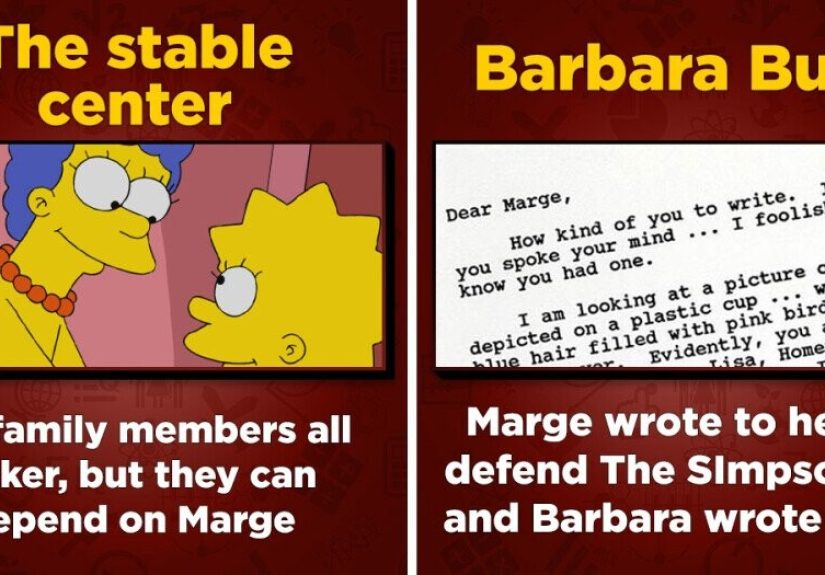
Marge is the mother of Bart, Lisa, and Maggie, the wife of Homer, and the unofficial repair department for nearly every disaster that crashes into Evergreen Terrace. She is often described as the family’s moral center, but that phrase can sound too tidy. Marge is not a greeting card with hair. She is a character full of contradictions: traditional but curious, patient but not endlessly passive, domestic but capable of surprising ambition, forgiving but not blind.
Her importance becomes clearest when she is absent, ignored, or pushed too far. Episodes that focus on Marge often reveal how much invisible labor holds the Simpson household together. She remembers the appointments, notices the emotional weather, manages the family’s social obligations, and tries to keep Homer from treating adulthood like a buffet he forgot to pay for. In sitcom terms, she is the straight woman. In human terms, she is the load-bearing wall.
Marge as the Audience’s Reality Check
One reason Marge works so well is that she often reacts the way the audience would react if trapped inside Springfield. When Homer turns a small problem into a public catastrophe, Marge’s concern tells us, “Yes, this is ridiculous.” When Bart’s prank crosses from funny to hurtful, Marge’s disappointment gives the joke a moral edge. When Lisa feels misunderstood, Marge’s attempts to comfort her remind us that intelligence and childhood can be a lonely combination.
This grounding function is essential because The Simpsons is not merely a joke machine. Its best episodes mix satire with emotion. The absurdity lands harder when someone inside the story still believes in decency, responsibility, and dinner at a reasonable hour. Marge’s reactions create that contrast. Her raised voice, raspy concern, or exhausted silence can be funnier than a punchline because it tells the audience exactly how far the chaos has gone.
The Straight Woman Is Not the Boring One
A common mistake is assuming the straight character is less interesting because they are less visibly outrageous. Marge proves the opposite. Comedy needs rhythm, and the straight woman controls rhythm in ways viewers may not consciously notice. She slows down the madness just enough for the punchline to breathe. She asks the practical question that exposes the absurd answer. She brings consequence into a world that constantly tries to escape it.
Think about Homer. He is one of television’s great comic fools: impulsive, loud, hungry, sentimental, and occasionally brilliant by accident. But Homer is funnier because Marge exists beside him. Her stability makes his instability readable. Her concern makes his recklessness matter. Her love makes his flaws more than a pile of jokes in a white shirt.
Without Marge, Homer could become pure cartoon mayhem. With Marge, he becomes a husband, father, and flawed human being inside the mayhem. That difference is enormous. The straight woman does not reduce comedy; she gives comedy a skeleton.
Marge and Homer: Comedy Built on Contrast
The Marge-Homer dynamic is one of the clearest examples of why straight-woman comedy works. Homer often charges into life with the strategy of a raccoon in a vending machine. Marge, meanwhile, tries to preserve order without crushing the family’s spirit. Their marriage is funny because it is mismatched, but it is durable because the show usually allows both characters to need each other.
Marge is not simply Homer’s babysitter, even though some episodes make it look as if she deserves hazard pay. She is his emotional translator. She sees the frightened or loving motive under the foolish act. She is often angry with him, but she also understands his soft center. This is why their best stories do not depend only on Homer messing up and Marge forgiving him. The stronger episodes show Marge drawing boundaries, questioning her own choices, or demanding that Homer become better than his worst instinct.
The Joke Needs the Boundary
Homer’s absurdity becomes funnier when Marge marks the boundary. If Homer says something wildly irresponsible and nobody reacts, the line may float away. When Marge reacts with disbelief, worry, or a tired kind of love, the joke gains shape. Her response tells the viewer: this is not normal, and that is why it is funny.
Marge as More Than “The Sitcom Mom”
At first glance, Marge fits the classic sitcom mother mold. She cooks, cleans, worries, volunteers, attends church, manages the children, and tries to keep the home functioning. But The Simpsons has lasted long enough to complicate that image many times. Marge has worked outside the home, explored creative ambitions, faced temptation, challenged social expectations, and admitted dissatisfaction with the narrowness of her role.
That complexity is important. If Marge were only a saintly housewife, she would become a symbol rather than a character. Instead, the show often reveals her frustration. She wants stability, but she also wants recognition. She loves her family, but she sometimes resents being the only adult in the room. She believes in doing the right thing, but she can be stubborn, judgmental, anxious, or surprisingly rebellious.
This is where Marge becomes more than a comedy mechanism. She represents the emotional cost of being the person everyone depends on. She is funny because she is grounded, but she is memorable because the ground sometimes cracks.
Julie Kavner’s Voice and the Sound of Moral Exhaustion
No discussion of Marge Simpson works without recognizing Julie Kavner’s performance. Marge’s voice is instantly recognizable: raspy, warm, worried, and flexible enough to move from gentle affection to volcanic irritation. Kavner gives Marge a sound that feels lived-in. It is not the voice of a generic cartoon mother; it is the voice of someone who has packed lunches, survived PTA meetings, and said “Homer” in every emotional temperature known to science.
Voice acting is especially important in animation because the actor must create emotional detail without physical presence. Kavner’s performance gives Marge texture. A simple murmur can communicate disappointment. A nervous laugh can reveal discomfort. A sharp call across the house can carry years of marital history. That vocal humanity helps make Marge’s straight-woman role feel active rather than mechanical.
Examples of Marge’s Straight-Woman Power
Across the series, Marge repeatedly proves that the straight woman is not a side character but the engine that keeps stories emotionally coherent. In episodes centered on Homer’s schemes, she often represents the practical and ethical consequences. In episodes about Bart, she becomes the parent who sees the hurt behind the mischief. In Lisa stories, she sometimes struggles to understand her daughter’s intensity but still tries to support her. With Maggie, Marge’s care adds warmth to a character who communicates mostly through pacifier sound effects and suspiciously perfect timing.
“Marge vs. the Monorail” and the Sensible Voice
When Springfield gets swept into the excitement of a flashy monorail project, Marge is one of the few people willing to ask whether the town has lost its collective mind. The comedy comes from the mob-like enthusiasm, the musical salesmanship, and the town’s eagerness to buy a dream with no brakes. Marge’s skepticism is essential. She makes the satire sharper because she notices the obvious problem everyone else ignores.
“Homer Alone” and the Limits of Patience
When Marge reaches a breaking point and leaves for a rest, the episode highlights how much of the household depends on her. The humor of Homer struggling without her is funny, but the deeper point is that Marge’s labor has been treated as background noise. Once it disappears, the family hears the silence very loudly.
“Marge Be Not Proud” and Moral Parenting
When Bart makes a serious mistake, Marge’s disappointment lands harder than any punishment. Her role is not simply to scold. She shows how love can include accountability. The episode works because Marge’s emotional response gives Bart’s actions weight. The joke-filled world suddenly has consequences, and that makes the story stronger.
The Gender Politics of Being the “Responsible One”
Marge’s role is brilliant, but it also opens a fair critique. In many animated sitcoms, women are assigned the job of being responsible so men can be chaotic. The husband gets the big comic explosions; the wife gets the mop. This pattern can be funny, but it can also become lazy if the female character is only allowed to nag, forgive, and reset the house for next week’s disaster.
The Simpsons has sometimes fallen into that trap, but Marge survives it because she has been given enough inner life to resist becoming only “the nagging wife.” Her episodes show desire, pride, loneliness, creativity, anger, and moral courage. She can be wrong. She can be tempted. She can embarrass herself. She can be ridiculous, too. That matters because a great straight woman is still a full comic character, not a human speed bump placed in front of a male goofball.
The best Marge stories understand that responsibility itself can be funny. Trying to keep a family normal in Springfield is an impossible job. Marge is not funny because she lacks chaos; she is funny because she keeps trying to organize chaos with a casserole dish and a concerned expression.
Why the Straight Woman Makes Satire Stronger
Satire needs a measuring stick. If every character is equally absurd, the audience may laugh, but the target can blur. Marge often supplies the measuring stick. Her valuesfamily, honesty, kindness, faith, community, basic hygieneare traditional enough to make Springfield’s nonsense look even more unhinged.
When the town chases trends, Marge asks what is being lost. When corporations behave badly, Marge worries about ordinary people. When Homer follows appetite over ethics, Marge reminds him that choices have consequences. She does not always win, and she is not always right, but her presence keeps the satire connected to human stakes.
This is one reason Marge remains culturally important. She is not merely the person who says no. She is the person who asks why. Why are we doing this? Who gets hurt? What happens to the family? What happens to the town? What happens when everyone laughs at responsibility until responsibility leaves the room?
Marge Simpson and Emotional Intelligence
Marge’s emotional intelligence is one of her defining traits. She reads moods, anticipates conflict, and notices when someone is quietly suffering. That does not mean she handles everything perfectly. Sometimes she suppresses her own needs. Sometimes she enables Homer’s behavior by cleaning up the mess too quickly. Sometimes she expects Lisa or Bart to fit into a version of family life that does not fully match who they are.
But those flaws make her more believable. Emotional intelligence does not mean endless wisdom. It means paying attention. Marge pays attention in a town built for distraction. She knows when Homer is ashamed beneath his bluster. She knows when Bart is acting tough to hide hurt. She knows when Lisa needs someone to listen rather than solve. In comedy terms, this makes her a great reactor. In storytelling terms, it makes her the family’s emotional archive.
Why Marge Still Feels Relevant
Marge remains relevant because the straight-woman role still exists everywhere: in families, workplaces, classrooms, group chats, and friend circles. Every chaotic plan has someone asking, “Have we thought about parking?” Every wild idea has someone checking the budget. Every group project has a Marge, quietly preventing disaster while everyone else takes credit for “vibes.”
Modern audiences may be more aware of how unfair that burden can be, especially when women are expected to perform emotional labor automatically. That awareness makes Marge more interesting, not less. She can be admired as a comic anchor while also being read as a character shaped by uneven expectations. She is both the solution and the evidence of the problem.
Experiences Related to Marge Simpson and the Straight Woman Role
One reason Marge Simpson resonates so strongly is that many viewers recognize her from real life. Almost every family has someone who remembers birthdays, finds the missing permission slip, notices the weird sound the car is making, and asks whether anyone has eaten something that is not shaped like a nugget. This person is not always a mother, and not always a woman, but culturally the role has often been pushed onto women. Marge turns that familiar experience into comedy without making it meaningless.
In everyday life, the straight woman role can feel both powerful and exhausting. Being the sensible one gives a person influence. They become trusted. People come to them for advice, comfort, planning, and crisis management. But the same role can become a trap when everyone assumes they will always be available. Marge’s funniest moments often carry this hidden truth. She is not simply reacting to one foolish act; she is reacting to the thousandth foolish act, plus laundry.
Many people have had a “Marge moment” in a group setting. Someone suggests an unrealistic road trip with no money, no map, and no idea who is driving. Everyone gets excited. Then one person asks about gas, time, safety, and whether the destination is even open. Suddenly, that person is treated like the enemy of fun. In reality, they are the reason the fun has a chance to survive contact with reality. That is Marge’s comic position: she protects the party from burning down the house, even when the party calls her a buzzkill.
This experience also appears in workplaces. The loudest personality may pitch the bold idea, but the straight-woman figure turns it into a plan. They ask what the goal is, who is responsible, when it is due, and what happens if the first plan fails. Their contribution may not be flashy, but it is essential. Without them, the team may have energy but no direction. Marge’s role in Springfield works the same way. She may not always drive the plot, but she keeps the plot from flying completely off the road.
There is also a personal lesson in Marge’s character: being responsible does not mean erasing yourself. Some of Marge’s strongest stories happen when she claims space for her own needs. She takes breaks, explores interests, challenges Homer, and occasionally lets the family discover what happens when they take her for granted. Those stories matter because they show that the straight woman is allowed to be more than a support beam. She can be funny, angry, ambitious, confused, playful, and deeply human.
For writers, Marge offers a useful creative lesson. A grounded character should not be written as a dull character. The straight woman needs goals, pressure points, contradictions, and a private emotional life. Her reactions should reveal personality, not just deliver punctuation. Marge’s sighs, warnings, and worried speeches work because they come from a specific person with specific values. She is not “the normal one.” She is Marge: loving, stubborn, anxious, principled, forgiving, and occasionally ready to throw politeness into the Springfield Gorge.
For viewers, Marge can be a reminder to appreciate the people who stabilize life. The ones who plan, care, notice, organize, and repair are often treated as background characters. But when they stop, the whole episode changes. Comedy has always known this secret. The straight woman is not standing outside the joke. She is holding the frame that lets the joke exist.
Conclusion: Marge Simpson Is the Quiet Architecture of the Joke
Marge Simpson proves that the straight woman is not secondary to comedy. She is one of comedy’s most important engines. She gives absurdity contrast, gives satire a moral compass, and gives the Simpson family emotional weight. Homer may get many of the loudest laughs, Bart may get the rebellious one-liners, and Springfield may provide endless madness, but Marge gives the chaos meaning.
Her greatness lies in balance. She is traditional without being simple, patient without being powerless, funny without always chasing the punchline, and iconic without needing to dominate every scene. She is the blue-haired reminder that comedy is not only about who makes the biggest mess. Sometimes it is about the person standing in the doorway, staring at the mess, and making the audience laugh because yes, someone finally noticed.
In the end, Marge Simpson matters because she makes everyone else funnier while remaining fascinating herself. That is the art of the straight woman. That is the secret architecture behind some of television’s best comedy. And that is why, after decades of Springfield insanity, Marge still stands tallpartly because of the hair, yes, but mostly because the whole show keeps leaning on her.