Table of Contents >> Show >> Hide
- What the Bored Panda story highlights (and why it works)
- The most relatable “mom life truths” these comics tap into
- 1) Sleep deprivation: the original parent subscription you never canceled
- 2) Food battles and tiny dictators with very specific opinions
- 3) Tantrums: big emotions in a small body
- 4) The mental load: parenting’s invisible to-do list that never closes
- 5) Relationship changes: teamwork, tension, and love with no privacy
- 6) The whiplash of emotions: joy, guilt, pride, and “what am I doing?”
- Why laughing at parenting can be a real coping tool (not just entertainment)
- Reality check: what child development and mental health guidance adds to the conversation
- How to use honest parenting comics in real life (beyond scrolling)
- What makes these “honest mom comics” so shareable online
- Practical takeaways for parents who relate a little too much
- 500 more words of real-life “behind the comic” experiences
- Conclusion
There are two kinds of parenting content on the internet: the kind that makes you feel like you should be storing
homemade granola in matching jars, and the kind that makes you whisper, “Oh thank God, it’s not just me.”
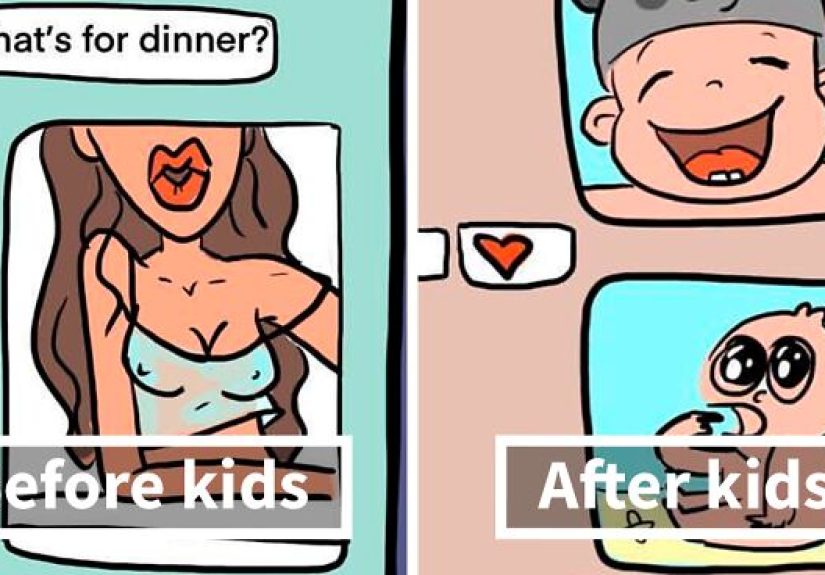
The Bored Panda feature “Mom Creates 30 Hilariously Honest Comics About What It’s Like Raising A Child” falls
gloriously into the second categorylike a warm, slightly sticky hug from someone who also has mysterious applesauce
on their sleeve.
The comics don’t romanticize motherhood into a pastel mood board. Instead, they sketch the real stuff: the exhaustion,
the mental gymnastics, the relationship curveballs, the tiny wins that feel like Olympic medals, and the deeply weird
logic children use to operate the universe. It’s funny because it’s trueand it’s comforting because it admits the
truth out loud.
What the Bored Panda story highlights (and why it works)
Bored Panda spotlights artist Inna Sacali, an architect and illustrator from Moldova who began creating parenting
comics during maternity leave. Her drawings pull directly from everyday life with her husband and young son: pregnancy
and relationship stress, sleep deprivation, toddler chaos, and the tender moments that somehow make the chaos feel
worth it. The article’s tone is basically: “No sugar-coatingcome laugh and relate with the rest of us.”
That honesty is the secret sauce. Parenting often comes with invisible pressure: be patient, be present, be productive,
be grateful, be everythingwhile also preventing your child from licking the shopping cart handle. Honest comics cut
through the performative layer and say what many parents think but don’t always share: this is hard, hilarious, and
human.
The most relatable “mom life truths” these comics tap into
Even if you haven’t seen all 30 panels, you can feel the themes immediately. They’re the same moments parents swap in
group chats at 1:07 a.m. with one hand and a baby monitor with the other.
1) Sleep deprivation: the original parent subscription you never canceled
Parenting tired is a special type of tired. It’s not “I stayed up too late watching a show” tired. It’s “I can’t
remember my own phone number, but I can list every food my child refuses in alphabetical order” tired.
The humor in these comics lands because sleep loss isn’t just inconvenientit changes how everything feels. A minor
inconvenience becomes a dramatic event. A quiet moment becomes suspicious. And the idea of “me time” starts sounding
like folklore.
2) Food battles and tiny dictators with very specific opinions
Kids can be extremely passionate about foods they have never tasted. The same child who once lived happily on
buttered noodles may suddenly announce that noodles are “too noodley.” Comics capture this perfectly: the parental
effort, the careful plating, the optimistic new recipe… and the child’s immediate rejection based on vibes.
Under the joke is something real: parents are constantly negotiating nourishment, autonomy, routine, and sanityoften
while eating leftover crusts like a raccoon who pays taxes.
3) Tantrums: big emotions in a small body
Few things feel as public as a toddler meltdown in a grocery store. Parenting comics love this moment because it’s a
universal rite of passage: you’ve done your best, your child has feelings the size of the sun, and a stranger nearby
is quietly pretending not to listen while absolutely listening.
Tantrums are often a developmental realitykids are learning self-control, and their emotions can overwhelm their
skills. Comics turn that intense moment into something shareable: a reminder that your child isn’t “bad,” your
parenting isn’t “failed,” and you’re not the only one sweating under fluorescent lighting.
4) The mental load: parenting’s invisible to-do list that never closes
Parenting isn’t only the physical tasks. It’s also remembering: appointments, snacks, nap windows, shoe sizes,
daycare forms, comfort objects, new fears, old fears, and that one oddly specific thing your child needs for “spirit
day” tomorrow.
Honest mom comics make this visible. They show how a parent can look “fine” while mentally running seventeen tabs at
once, plus one tab playing a song they didn’t choose.
5) Relationship changes: teamwork, tension, and love with no privacy
Couples don’t stop being couples when they have a kidthey just become couples who discuss romance in 45-second bursts
between “Where is the other sock?” and “Please don’t lick that.” Comics often highlight the sweet solidarity and the
occasional friction: the “we’re in this together” moments, and the “why are you sleeping while I’m not?” moments.
6) The whiplash of emotions: joy, guilt, pride, and “what am I doing?”
The funniest parenting comics often sit right next to the tender ones because that’s how parenting feels in real
life. One minute you’re overwhelmed; the next minute your child says a new word or falls asleep on your shoulder and
you feel your chest do something dramatic and poetic.
Why laughing at parenting can be a real coping tool (not just entertainment)
Humor doesn’t erase hard moments, but it can change the way you carry them. When you laugh, your body shifts gears:
your stress response eases, and you feel more relaxed afterward. That physical “release” is one reason parenting
comics hit so hardyou’re not only reading a joke; you’re exhaling.
Comedy also creates connection. When a comic nails a universal momentlike stepping on a toy in the dark or finally
sitting down only to hear “Moooom!”it quietly tells you: you belong to a very large club of people trying their best.
The laughter is social glue, even if it’s happening alone on your couch while someone yells from the bathroom.
And then there’s reframing. A rough moment can feel like failure when you’re in it. But when it becomes a story you
can laugh about later, it shifts from “I’m not good at this” to “This is part of the dealand I survived it.”
Reality check: what child development and mental health guidance adds to the conversation
Parenting comics are funny, but they’re also accidentally educational. They reflect patterns that pediatric and
mental-health guidance has been describing for yearsjust with better punchlines and fewer pamphlet fonts.
Tantrums are common (and often predictable)
Many children begin having tantrums around the toddler years, when frustration outpaces language and self-regulation.
Knowing this doesn’t magically make a meltdown pleasant, but it can make it less personal. You’re not battling a tiny
villain; you’re helping a small human learn emotional skills.
Sleep needs are real, and they change by age
One reason parents feel like zombies is that kids’ sleep requirements are substantial, especially in early yearsand
kid sleep isn’t always steady. Recommended sleep ranges vary by age (including naps for younger kids), which is why
bedtime can feel like a full-time job with overtime. When parents understand the “why” behind sleep needs, routines
become less like arbitrary rules and more like support for development.
Postpartum mood changes deserve compassion and support
The early parenting period can come with intense emotional shifts. Some parents experience short-term “baby blues”
soon after delivery, while others face more serious and longer-lasting perinatal depression that can occur during
pregnancy or after childbirth. Comics that gently acknowledge mental health struggles can help normalize asking for
help rather than suffering silently.
Parental burnout is a thingand it’s not a character flaw
When stress accumulates with too little rest or support, parents can experience burnout: emotional exhaustion,
feeling detached, and struggling to show up the way they want to. The point isn’t to diagnose yourself from a meme.
The point is to notice when “this is hard” has turned into “I have nothing left,” and to treat that as a signal, not
a shame sentence.
How to use honest parenting comics in real life (beyond scrolling)
If a comic makes you laugh so hard you snort, you can turn that moment into something genuinely helpful. Here are a
few ways parents use humor as a tool, not an escape hatch.
Share the comic, then name the real feeling underneath
Send the panel to your partner or a friend and add one honest line: “This is me today.” Humor makes it easier to
admit you’re overwhelmed without feeling dramatic. It can open a conversation that might otherwise stay stuck behind
“I’m fine.”
Use comics as a “normal meter”
Parenting can distort your sense of normal. When you’re in the thick of it, you may assume everyone else has it
together. Honest mom life comics work like a reality mirror: other people are also bribing kids with stickers to put
on socks.
Turn the laugh into a reset ritual
Pick one reliable source of light humor (a comic account, a book of cartoons, a saved folder on your phone). When
you feel yourself getting sharp or depleted, take two minutes. Not to ignore the problemjust to calm your nervous
system enough to respond instead of explode.
Borrow the comic format for your own mini-journal
You don’t need to be an artist. Try the “three-panel method” once a week:
- Panel 1: The expectation (what you hoped would happen).
- Panel 2: The reality (what actually happened).
- Panel 3: The lesson (or the joke you found in it).
This works because it captures your lived experience in a way that feels lighter than a full diary entryand it
trains your brain to find perspective without dismissing difficulty.
What makes these “honest mom comics” so shareable online
Parenting is intensely personal, yet surprisingly universal. Honest comics travel fast because they do three things
at once:
- They validate: “You’re not imagining itthis is hard.”
- They reduce isolation: “Other families live this exact scene, too.”
- They add hope: “Hard doesn’t mean broken; it can be survivable and even funny.”
Bored Panda-style features also work because the format is snackable. A parent can read a few panels during a
preschool pickup line, a nap window, or the two minutes their child is quietly suspicious in the other room.
Practical takeaways for parents who relate a little too much
If these comics feel like someone secretly filmed your kitchen, here are a few grounded reminders to carry with you:
Lower the bar on perfect, raise the bar on sustainable
The goal isn’t a flawless day; it’s a day you can repeat without breaking. Sustainable parenting looks like simple
meals sometimes, earlier bedtimes for everyone, and saying no to one more commitment.
Choose one tiny support upgrade this week
- Prep snacks once so you’re not making eight separate snack decisions daily.
- Make “outside time” a default reset button for everyone’s mood.
- Swap one scroll session for a quick shower or a short nap.
- Ask for help with a specific task (not a vague “help more”).
If your mood feels heavy or scary, take it seriously
Humor can coexist with help. If you’re experiencing persistent sadness, anxiety, numbness, or intrusive thoughts,
you deserve professional support. Parenting is demanding; you don’t have to white-knuckle it.
500 more words of real-life “behind the comic” experiences
Parenting comics are drawn in clean lines, but the moments behind them are messy, loud, and oddly cinematic. If you
’ve ever wondered why these panels feel like documentary footage, it’s because so many families live variations of
the same scenesjust with different wall colors and different snack crumbs in the car seats.
Take the classic “I just sat down” moment. A parent spends twenty minutes assembling dinner, cutting grapes into
legally acceptable sizes, and locating the one cup that is apparently the only cup on Earth that counts as a cup.
Finally, they sit. The couch receives their body like a promised land. And thenlike a law of physicssomeone needs
something. Not in five minutes. Right now. Usually from the bathroom. Often with urgency that suggests the building
is on fire, but the request is actually: “Can you look at this Lego I made?”
Or consider the bedtime routine, that nightly Broadway show parents perform with no understudy. The script includes:
“one more story,” “one more drink,” “one more hug,” “my blanket is wrong,” “the other blanket is also wrong,” and a
surprise confession delivered at 9:48 p.m. that begins with “I have to tell you something important.” The important
thing is frequently about dinosaurs, a made-up rule at preschool, or the existential unfairness of tomorrow being a
weekday. Parents nod like therapists while quietly calculating how many hours of sleep remain if the child falls
asleep in the next twelve minutes.
Then there’s the food phase roulette. One week your child eats blueberries like a tiny health influencer. The next
week they look at a blueberry as if you offered them a suspicious rock. Parents become short-order chefs without
meaning to. They learn to say sentences that sound fake but are somehow real, such as: “We can’t have crackers unless
you put your pants back on,” and “Please stop crying; it’s the same mac and cheese you requested.”
Public outings add a special sparkle. You pack the bag like you’re preparing for a small expeditionsnacks, wipes,
spare clothes, sunscreen, a toy, a second toy in case the first toy becomes emotionally unacceptableand you still
end up improvising. A child will insist on wearing rain boots in July, and you will allow it because you value peace.
You will receive a judgmental glance from a stranger, then later you will see the same stranger negotiating with a
toddler about the moral right to press an elevator button. Humility comes for everyone.
And yet the comics always circle back to the tender parts, because parents do, too. The sleepy “I love you” whispered
at the exact moment you thought your kid was too wired to ever close their eyes. The sudden proud announcement“I did
it!”after a small task you didn’t realize was such a big deal. The way a child reaches for your hand in a parking
lot like you’re the safest place on Earth. Those moments don’t cancel out the hard ones, but they explain why people
keep showing up again the next day, tired and determined, with snacks.
That’s the real magic of hilariously honest parenting comics: they don’t tell parents to “cherish every moment”
(because some moments are objectively weird). They say, “This is complicated, and you’re allowed to laugh.” Then they
quietly add: “You’re doing better than you think.”
Conclusion
The Bored Panda feature on Inna Sacali’s parenting comics is popular for a simple reason: it tells the truth with
kindness and comedy. The drawings don’t shame parents for struggling; they recognize the struggle and hand you a
laugh like a small survival tool. If you relate to these comics, you’re not aloneyou’re part of a large, exhausted,
loving crowd raising tiny humans the best way they can.