Table of Contents >> Show >> Hide
- The Deal, in Plain English (No Coupon-Code Acrobatics)
- What “AR Smart Glasses” Means Here (And What It Doesn’t)
- Why Xreal One Is My Favorite
- How to Know If They’ll Work With Your Devices
- The Best Use Cases (Where These Glasses Feel Like Cheating)
- What You Might Not Like (Because Nothing Is Perfect)
- Quick Comparisons: If You’re Shopping the Whole Category
- How to Shop This Deal Like a Pro (After Prime Day)
- Bottom Line
- Real-World Experiences: What Using AR Display Glasses Actually Feels Like (500+ Words)
Prime Day ends. Your cart empties. Your group chat goes quiet. And yet somehow, the one deal you
actually wanted is still hanging around like a leftover slice of pizza that’s somehow even better the next day.
If you’ve been eyeing AR smart glasses (the “wear a movie theater on your face” kind), this is your sign.
My favorite pair is still discounted $80 off after Prime Dayand unlike that blender you impulse-bought,
you’ll probably use these more than once.
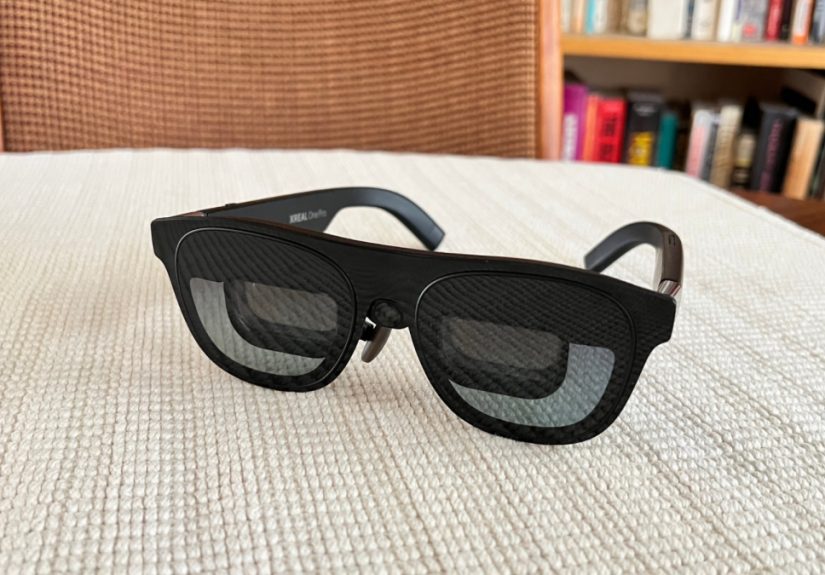
The glasses I keep recommending? The Xreal One. They’re not “full sci-fi holograms floating over your kitchen counter”
AR glasses. They’re the kind that matter right now: lightweight “display glasses” that create a big, private virtual screen
wherever you areplane, couch, hotel desk, or your favorite spot to avoid everyone at family gatherings.
The Deal, in Plain English (No Coupon-Code Acrobatics)
Prime Day gave these glasses a bigger discount, but the post-Prime Day pricing is still legit. We’re talking
$80 off the typical list priceenough savings to cover a decent carrying case, a dongle you didn’t know you needed,
and the emotional cost of explaining to your partner why you’re wearing sunglasses indoors.
Deals change fast (because the internet runs on chaos), but the headline remains simple:
my favorite AR display glasses are still meaningfully discounted after Prime Day.
What “AR Smart Glasses” Means Here (And What It Doesn’t)
Let’s set expectations so nobody rage-returns anything.
These are “portable big-screen” glasses
Xreal One-style glasses plug into a compatible device and give you a floating virtual displaylike a giant monitor
that only you can see. For streaming, gaming, and getting work done on the go, that’s the magic trick.
They are not “walk around with holograms everywhere” glasses
You’re not mapping your room like a high-end mixed reality headset. You’re not placing a life-size dragon on your coffee table.
Think “private theater + portable monitor,” not “digital wizardry in your living room.”
Why Xreal One Is My Favorite
I’ve read, watched, and compared a lot of smart-glasses coverage because (1) it’s my job and (2) I’m nosy.
Xreal One keeps standing out for one big reason: it fixes the annoying parts that made earlier display glasses feel
like prototypes you tolerate rather than products you enjoy.
1) The built-in chip makes the glasses feel less “fussy”
Earlier generations of display glasses often needed extra accessories, extra apps, or extra patience to do basic things like
resizing the screen, anchoring it more comfortably, or reducing the “why does this feel slightly off?” factor.
Xreal One’s onboard processing helps deliver a smoother, more self-contained experienceso you can adjust your setup
without feeling like you’re assembling a tiny tech altar every time you want to watch YouTube.
2) The screen experience is the pointand it delivers
Here’s what matters for display glasses: the image should look sharp, bright, and stable, with a refresh rate that doesn’t make your
eyeballs negotiate with your brain.
- Crisp micro-OLED visuals that feel like a real screen instead of a novelty overlay
- High refresh rate support for smoother gaming and motion
- A wide, immersive view that makes “I’ll just watch one episode” a hilarious lie
Translation: the Xreal One is strong where it countspicture qualitywhile keeping the “tech demo vibes” to a minimum.
3) Comfort matters more than specs (and these get it)
Specs sell glasses. Comfort makes you keep them.
Display glasses fail when they pinch your head, slide down your nose, or make you feel like you’re wearing a small appliance.
The Xreal One line has been repeatedly praised for being more wearable than many rivalslight enough for extended sessions
without turning your face into a pressure-map infographic.
4) They’re genuinely useful for the stuff you already do
The best tech doesn’t demand a lifestyle change. It quietly upgrades what you already do:
- Streaming: a “bigger than your laptop” screen without disturbing everyone around you
- Gaming: handheld consoles feel instantly more cinematic
- Work: a private second screen (or multi-screen feel, depending on setup) in cramped spaces
- Travel: less neck craning, more comfortable viewing angles
How to Know If They’ll Work With Your Devices
This is the part where people get burnedso let’s do it right.
Look for USB-C with video output (DisplayPort Alt Mode)
Many laptops, handheld gaming PCs, and newer phones support USB-C video out. Some phones do not. Some tablets do. Some do…
until you realize you’re using the wrong port. Welcome to modern technology.
Common “it usually works” devices
- Handheld gaming PCs: Steam Deck, ROG Ally-style devices (great match)
- Laptops: many USB-C/Thunderbolt laptops support video out
- Phones: many newer USB-C phones do, but confirm your model
- Tablets: some iPads and Android tablets support USB-C video out
Consoles can be trickier
Some setups need a dock, adapter, or a mobile dock accessory to behave nicelyespecially if the device doesn’t output video over USB-C the way you’d expect.
It’s not “hard,” but it’s not “grandma-proof” either.
The Best Use Cases (Where These Glasses Feel Like Cheating)
1) Flights and long travel days
If you travel even a little, display glasses make instant sense: you get a large screen without balancing a laptop on a tray table
or hunching over a phone. It’s also easier to keep your neck in a natural position instead of doing the “airplane shrimp posture.”
2) Handheld gaming, upgraded
Handheld PCs and smart display glasses are a perfect pairing. You keep the portability, but your game suddenly feels like it moved
from “tiny screen” to “private theater.” If you’re the kind of person who says, “One more match,” these glasses are an enabler.
(This is not a judgment. It’s a diagnosis.)
3) Hotel-room productivity
The hotel desk is always too small, the chair is always too low, and the TV is always positioned like it was installed by someone
who hates ergonomics. A private floating screen can make quick work sessions or email cleanup far less annoying.
4) Late-night streaming without waking the house
Big screen energy. Low noise. Maximum peace. This is the grown-up version of watching TV under the covers with a flashlight
except now you’re doing it with micro-OLEDs and a suspiciously expensive USB-C cable.
What You Might Not Like (Because Nothing Is Perfect)
Let’s be honest: display glasses are amazing… and also picky. Here are the common pain points buyers should know up front.
1) Device compatibility is real
The glasses are only as good as the device driving them. Some setups are plug-and-play. Others are plug-and-then-Google-for-45-minutes.
If your device doesn’t support proper USB-C video out, you’ll need an alternative path (adapter/dock/compatible source).
2) “AR” here is not the same as headset AR
These are primarily display glasses. They’re excellent at that job. But if you want rich, room-anchored AR apps and deep immersive computing,
you’re shopping in a different category (and a different price bracket).
3) Some people get eye strain or motion discomfort
Most folks are fine, but a subset of people feel fatigueespecially with long sessions, bright settings, or lots of motion content.
Taking breaks and tuning brightness helps, but it’s worth knowing your own tolerance.
4) They’re still an investment
Even discounted, these aren’t bargain-bin gadgets. The $80 off helps, but you should buy them for a real use case (travel, gaming, work),
not just because “future.”
Quick Comparisons: If You’re Shopping the Whole Category
Xreal isn’t the only player. Here’s a quick, no-drama comparison to help you pick the right lane.
Xreal One vs. Xreal Air-series glasses
The Air line helped popularize the category, and the later Air models improved comfort and visuals. But the “One” generation is where
the experience starts to feel more integrated and less accessory-dependentespecially for controlling and stabilizing your virtual screen.
Xreal One vs. Viture
Viture’s ecosystem is strong, and some models shine in brightness and feature depth. If you want a very “platform-like” experience,
it can be compelling. But Xreal One tends to win people over with a simpler, more universal “big-screen anywhere” vibe.
Xreal One vs. Rokid
Rokid has attractive value plays and strong specs on paper, especially when heavily discounted. If price is the main driver, Rokid can be a smart
entry point. If you want the most refined day-to-day experience, Xreal One is usually the safer bet.
How to Shop This Deal Like a Pro (After Prime Day)
- Check the “was/now” pricing and confirm you’re actually seeing the discount (not a weird bundle or accessory)
- Look for instant coupons on the product pagesometimes the best discount hides in plain sight
- Confirm return policy because comfort is personal and faces are… diverse
- Plan your accessories (optional): mobile docks/adapters can make consoles and certain setups much easier
Bottom Line
If you want AR smart glasses that you’ll actually useon planes, with handheld gaming, for late-night streaming, and for “I need a second screen”
momentsthe Xreal One is still my top pick. Prime Day may be over, but the deal isn’t, and $80 off is a meaningful nudge
when you’re buying a piece of tech that’s supposed to make your life more comfortable (not just more futuristic).
Buy them for the practical magic: a private big screen you can take anywhere. Everything else is just icing.
Very expensive, very cool icing.
Real-World Experiences: What Using AR Display Glasses Actually Feels Like (500+ Words)
Most tech promises a “new lifestyle.” AR display glasses are refreshing because they mainly promise a better version of your current lifestyle.
You’re still watching shows, still gaming, still answering emails you swear you’ll get to earlier next time. The difference is the way your screen
follows youwithout requiring you to carry a laptop stand, a portable monitor, or the emotional baggage of neck pain.
Scenario 1: The Flight That Turns Into a Private Theater
Imagine you’re on a packed flight and the seatback screen is either missing, broken, or running a user interface designed in 2006.
You plug the glasses into a compatible device, dim your environment (or just let the glasses’ optics handle contrast), and suddenly you have a
floating “big screen” that doesn’t need a tray table. That’s the first “oh… I get it now” moment for most people. You can lean back naturally,
keep your head in a comfortable position, and stop doing the awkward chin tuck that turns a long flight into a neck workout. The best part?
You’re not blasting a bright laptop display at your seatmate. It’s private, contained, and feels surprisingly normal after a few minutes
like you brought your living room TV into economy class without paying living room prices for a seat upgrade.
Scenario 2: Handheld Gaming That Suddenly Feels Console-Size
Handheld gaming is awesome until you realize your “epic open world” is happening on something roughly the size of a large Pop-Tart.
Display glasses flip that. The first time you load into a game and it feels like it’s on a giant screen in front of you, handheld gaming stops being
a compromise and starts being a flex. Fast-paced titles benefit from higher refresh support, and slower story-driven games feel ridiculously cinematic.
It’s also a sneaky way to keep your posture better: instead of curling around a small screen, you can sit comfortably while the action stays
in your line of sight. Just know the trade-off: your device is powering that screen experience, so battery drain becomes part of the equation
which is why travel-friendly charging solutions (or a smart dock) can be the unsung hero of the whole setup.
Scenario 3: The “Hotel Desk” Becomes a Real Workspace
If you’ve ever tried working from a hotel room, you know the desk is usually either too small, too wobbly, or positioned under lighting that makes
you look like you’re auditioning for a corporate horror film on Zoom. Display glasses can make a laptop feel bigger and more workable,
especially for tasks that benefit from extra screen real estateresearch, writing, spreadsheets, and the never-ending tab chaos that modern work demands.
What’s interesting is that the “wow” factor fades quicklyin a good way. After a short adjustment period, it just feels like you have a better monitor
than you deserve in a temporary space. That’s when you know the tech is doing its job: it stops feeling like a gadget and starts feeling like a tool.
Scenario 4: Late-Night Streaming Without Waking Anyone
This is the quiet superpower of AR display glasses. You can watch a show in bed without the TV on, without the laptop fan spinning like it’s trying
to achieve liftoff, and without lighting up the entire room. Pair with headphones if you want true privacy, or rely on built-in audio if you’re alone.
The experience is cozy in a strangely futuristic waylike you’ve hacked comfort. And because the “screen” is right where you’re looking, you’re not
constantly shifting positions to find the right viewing angle. It’s a small quality-of-life upgrade that adds up fast, especially if you stream often.
Put all these scenarios together, and the pattern is obvious: the best AR display glasses aren’t about novelty. They’re about convenience, comfort,
and portabilityturning the screens you already use into something bigger and more enjoyable, wherever you happen to be.