Table of Contents >> Show >> Hide
- RMDs in Plain English: What They Are and Why They Exist
- Why Rebalancing Gets Harder Once You’re Taking Withdrawals
- The Core Idea: Use RMDs as “Automatic Rebalancing Fuel”
- Specific Rebalancing Tactics That Work Well With RMDs
- RMD Timing: Rebalance Once a Year or Spread It Out?
- Common Mistakes (and How to Avoid Them)
- Three Detailed Examples: Rebalancing With RMDs in the Real World
- How to Think About RMDs as Part of Your Long-Term Withdrawal Plan
- Practical Checklist: Your Annual “RMD Rebalance Routine”
- Extra: of “Experience” (What People Commonly Run Into)
Required Minimum Distributions (RMDs) have a funny way of showing up right when you’d prefer your portfolio to
behave like a well-trained golden retriever: calm, loyal, and not chewing up the furniture. Instead, the IRS
basically taps you on the shoulder and says, “Heynice tax-deferred growth you’ve got there. Mind sharing some?”
But here’s the twist (and the “wealth of common sense” part): an RMD doesn’t have to be a tax-season nuisance.
It can be a built-in rebalancing toolan annual nudge that helps you trim what’s grown too large, refill your
spending cash, and keep your risk level from drifting into “surprise roller coaster” territory.
In this guide, we’ll break down how RMDs work, why rebalancing gets trickier in retirement, and how to use the
forced withdrawal to keep your portfolio alignedwithout turning your financial life into a spreadsheet-themed
escape room.
RMDs in Plain English: What They Are and Why They Exist
RMDs are the minimum amounts you must withdraw each year from certain tax-deferred retirement accounts once you
reach the required starting age. The government gave you a tax break on contributions and growthRMDs are how it
eventually collects income tax on those dollars.
Which accounts typically have RMDs?
- Traditional IRAs
- Most traditional employer plans (like traditional 401(k)s and 403(b)s)
- Some inherited retirement accounts (rules vary by beneficiary type and timing)
Roth IRAs generally do not have RMDs during the original owner’s lifetime. And starting in 2024, many
Roth accounts inside employer plans (like Roth 401(k)s) no longer require RMDsbringing them closer to Roth IRA
treatment.
When do RMDs start?
Under current rules, the required beginning age is generally 73 (and later increases are scheduled
in the future). Your first RMD has a special deadline option: you can take it by April 1 of the following year.
But beware the “double RMD” trapdelaying the first one can force you to take two taxable distributions in the
next calendar year.
How is an RMD calculated?
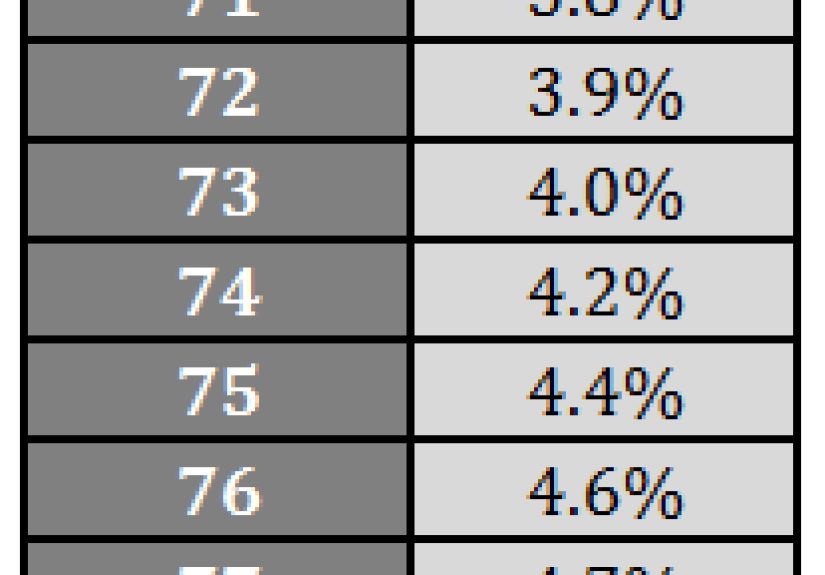
The classic approach uses your prior year-end account balance (typically December 31) divided by a life expectancy
factor from IRS tables (often the Uniform Lifetime Table). The result is your minimum withdrawal for the year.
You can always withdraw more; the IRS will not complain about you taking extra.
What happens if you miss an RMD?
The penalty used to be the stuff of legend (and not the fun kind). It has since been reduced, but it can still be
painful. The good news: the IRS now has a more forgiving structure if you correct mistakes in a timely manner.
Still“avoid the penalty” is a low-effort, high-reward life strategy.
Why Rebalancing Gets Harder Once You’re Taking Withdrawals
In accumulation mode (aka the “save-and-invest” years), rebalancing is relatively simple: you add money, and you
aim new contributions toward whatever is underweight. Easy.
In retirement, money flows the other direction. Now you’re selling assets to fund spending, taxes, and sometimes
that once-in-a-lifetime trip that becomes a “we should do this every year” trip.
Three reasons rebalancing feels different in retirement
-
Withdrawals change the math: Your portfolio may shrink in down years, so selling the wrong
assets at the wrong time can magnify losses. -
Taxes matter more: The account you sell from affects your tax bill, Medicare-related income
thresholds, and how long different buckets of money may last. -
Multiple accounts complicate allocation: Many retirees spread assets across IRAs, 401(k)s,
Roth accounts, and taxable brokerage accounts. Your “true” allocation is the combined picture.
This is where RMDs can help. Since you have to withdraw anyway, you can choose which assets to sell (or
transfer) to meet the requirementturning a forced event into a strategic one.
The Core Idea: Use RMDs as “Automatic Rebalancing Fuel”
The cleanest concept is this: take your RMD from whatever is overweight. If your target allocation
is 60/40 (stocks/bonds) and a long bull run has turned you into 70/30, an RMD is a natural moment to trim stocks
and bring risk back in line.
A simple step-by-step framework
- Start with your target allocation. (Example: 60/40 or 70/30.)
- Calculate your current “whole household” allocation. Include all accounts.
- Identify what’s overweight. Often it’s the asset class that performed best recently.
-
Source the RMD from that overweight slice.
Sell overweight assets (or transfer them in-kind) to meet the required amount. - Direct the proceeds intelligently. Use for spending, taxes, or reinvest in taxable according to your plan.
The key is not treating the RMD like a random withdrawal. Treat it like a portfolio decision with a tax deadline.
Specific Rebalancing Tactics That Work Well With RMDs
1) “Trim the winners” inside the tax-deferred account
If your IRA or 401(k) holds both stocks and bonds, you can often meet the RMD by selling whichever asset class is
overweight in that account. Because trades inside tax-deferred accounts generally don’t trigger capital gains
taxes, the rebalancing is operationally simpler than doing the same thing in taxable.
Example: Your IRA is 75% stock funds and 25% bond funds after a strong market run, but your target is 60/40.
You sell stock funds to generate the RMD cash. The withdrawal both satisfies the IRS and nudges the remaining IRA
closer to target.
2) Use RMDs to refill a “cash bucket” (without drifting risk)
Many retirees keep 6–24 months of spending in cash or short-term bonds to avoid selling stocks in a downturn.
An RMD can be the annual moment you replenish that bucket.
Here’s the rebalancing twist: if you replenish cash by selling bonds when bonds are already underweight, you can
accidentally increase stock exposure. Better approach: fund the RMD from whichever asset class is overweight,
then keep your cash bucket at its planned size.
3) Take an in-kind RMD when you don’t want to sell
An “in-kind” distribution means you transfer shares (like an ETF or mutual fund position) from the IRA into a
taxable brokerage account instead of selling to cash. The value transferred counts toward the RMD for the year.
This can be useful if:
- You want to keep market exposure and avoid selling at an uncomfortable time
- You’d rather move the investment “as is” and decide later whether to sell
- You want to rebalance by relocating assets between account types
Important detail: the taxable account typically receives a cost basis based on the value at the time of transfer.
That means future gains/losses are measured from that new starting point, not your original IRA purchase price.
(Translation: you’re not “escaping taxes”you’re changing where and how they show up later.)
4) Use RMDs to rebalance across accounts (not just within one account)
Many retirees hold most stocks in taxable and most bonds in tax-deferred (or the opposite). If your overall
allocation is off, you can use the RMD to fix it in a coordinated way.
Example: Your IRA is mostly bonds, your taxable account is mostly stocks, and stocks have surged. Your household
allocation is now stock-heavy. You can:
- Take the IRA RMD,
- Use the proceeds for spending,
- Then sell fewer stocks in taxable than you otherwise would haveletting the allocation drift back toward target.
This “sell less elsewhere” effect is a quiet but powerful way RMDs can stabilize your allocation.
5) Pair RMD rebalancing with charitable giving (QCD strategy)
If you’re charitably inclined, a Qualified Charitable Distribution (QCD) can be a high-impact move: it sends funds
directly from an IRA to eligible charities. The distribution can count toward satisfying your RMD and may be
excluded from taxable income (subject to rules). This can potentially lower adjusted gross income and reduce
knock-on effects like Medicare surcharges for higher-income retirees.
The annual QCD limit is now indexed for inflation, which has pushed the maximum above the old $100,000 ceiling.
For many retirees, this turns “money I don’t need to spend” into “money that doesn’t inflate my tax bill.”
RMD Timing: Rebalance Once a Year or Spread It Out?
There’s no single correct rhythm, but these approaches are common:
Option A: One annual “RMD + rebalance day”
Some retirees prefer the simplicity of a single yearly routine: calculate the RMD, take the distribution, rebalance,
and move on with life. This works especially well if:
- You have a straightforward portfolio (index funds, ETFs, simple target)
- You don’t mind a little short-term drift during the year
- You value simplicity over precision
Option B: Monthly or quarterly distributions
Others treat the RMD like a paycheck replacement: automatic distributions throughout the year. This can smooth
out timing risk and make budgeting easier. If you go this route, you can still rebalancejust do it with a
“rebalance band” approach (for example, only rebalance when an asset class is 5%+ away from target).
Common Mistakes (and How to Avoid Them)
Mistake 1: Taking the RMD without checking allocation drift
A default “sell pro-rata across everything” distribution might be fine, but it can also preserve an allocation
that’s already off. At least glance at your weights before you push the button.
Mistake 2: Delaying the first RMD without understanding the tax effect
The first-year delay option can be helpful, but it can also create a year with two taxable RMDs. That can bump
income, raise marginal tax rates, or affect Medicare-related thresholds. Sometimes taking the first RMD in the
first year is the “less exciting but more efficient” choice.
Mistake 3: Forgetting the deadline (and paying a penalty)
The easiest penalty to avoid is the one you never trigger. Automate distributions if you can, consolidate accounts
if it reduces complexity, and put a recurring reminder on your calendar. “Set it and forget it” is underrated when
the alternative is “forget it and regret it.”
Mistake 4: Ignoring the still-working exception for certain employer plans
Some employer plans allow a “still-working” exception that lets you delay RMDs if you’re still employed and not a
more-than-5% owner (plan rules vary). This can be useful for late-career workers who don’t need the money yet.
Just be careful: this generally doesn’t apply to traditional IRAs, and not every plan offers it.
Three Detailed Examples: Rebalancing With RMDs in the Real World
Example 1: The “Stocks ran up” retiree
Jordan (age 74) targets a 60/40 portfolio. After a strong market run, the portfolio drifts to 68/32. Jordan’s IRA
is large enough that the RMD is meaningful.
- Jordan calculates the RMD for the year.
- Instead of selling bonds (which are already underweight), Jordan sells stock funds inside the IRA to generate the RMD cash.
- The withdrawal funds living expenses, and the remaining IRA allocation moves closer to 60/40.
Result: The RMD doubles as a risk-control move. No extra trading needed. Common sense wins.
Example 2: The “Market is down and I hate selling” retiree
Denise (age 76) has an IRA heavy in a broad stock index fund and doesn’t want to sell during a downturn.
Denise still has to satisfy the RMD requirement.
- Denise transfers shares in-kind from the IRA to a taxable account to satisfy part (or all) of the RMD.
- The value on the transfer date counts toward the RMD.
- Denise keeps market exposure and can decide later whether to sell in taxable for spending.
Result: Denise avoids a forced “sell low” moment and keeps flexibility. (Taxes still apply to the distribution,
but the investment decision isn’t dictated by panic.)
Example 3: The charitable rebalancer
Luis (age 75) doesn’t need the full RMD for spending and gives regularly to charity. Luis uses a QCD from the IRA.
- Luis directs a QCD to qualified charities, counting toward the RMD.
- This reduces taxable income compared to taking the RMD personally and then writing a check.
- For the remaining RMD amount (if any), Luis sells overweight positions to rebalance.
Result: Taxes may be lower, giving is simpler, and the portfolio is nudged back toward target.
How to Think About RMDs as Part of Your Long-Term Withdrawal Plan
One of the smartest mindset shifts is treating RMDs as a minimum baseline, not “the” retirement
spending rule. Your spending plan might be lower than the RMD (in which case, you’ll reinvest excess in taxable
or give via QCD), or higher than the RMD (in which case, the RMD is only one piece of the withdrawal puzzle).
Either way, integrating rebalancing into the distribution process reduces the number of independent decisions you
have to make. Fewer moving parts means fewer mistakesand fewer “why did I do that?” moments.
Practical Checklist: Your Annual “RMD Rebalance Routine”
- Confirm your accounts subject to RMDs (and whether any still-working exception applies).
- Calculate the RMD using the prior year-end balance and the appropriate IRS factor.
- Review your target allocation and your current household allocation.
- Choose the source (sell overweight assets or use an in-kind distribution where appropriate).
- Decide where the money goes: spending, cash bucket, taxable reinvestment, or QCD giving.
- Set tax withholding if needed so you’re not scrambling later.
- Document and automate what you can for next year.
Extra: of “Experience” (What People Commonly Run Into)
The first year someone takes an RMD is often less “financial strategy” and more “wait… I have a deadline?”
It’s a totally normal reactionbecause for decades, retirement accounts are taught as “hands off, let it grow.”
Then suddenly the rules change, and your portfolio feels like it has a new roommate named Uncle Sam who expects rent
once a year.
A common experience is the accidental over-withdrawal. Someone takes the RMD early in the year, parks it in cash,
and then realizes their allocation quietly changedbecause now the portfolio has less exposure to whatever they sold.
If they sold bonds to meet the RMD (because “bonds are safer”), they may unintentionally become stock-heavy, which
is a funny way of reducing risk by increasing risk. The fix usually comes with a lightbulb moment: “Ohthis isn’t
just a withdrawal. It’s a rebalancing decision.”
Another frequent scenario is the “double RMD surprise.” A retiree delays the first RMD into the next year because
it feels good to postpone taxes. Then they realize they must take the second RMD by December 31 of that same year.
Two distributions in one calendar year can push taxable income higher than expected. The emotional experience is
basically: confidence → confusion → calculator → mild annoyance → acceptance. (And then a sticky note appears on the
fridge that says, “Don’t do that again.”)
Down markets create their own brand of stress. People don’t mind selling “a little” when the portfolio is up.
But when headlines are scary and balances are down, selling feels like locking in losseseven if the long-term plan
is sound. That’s where some retirees discover in-kind distributions and feel immediate relief: “I can satisfy the
requirement without making a big ‘sell’ decision today.” The experience becomes less about market timing and more
about keeping options open.
Finally, many retirees describe the first year they successfully use an RMD to rebalance as oddly empowering.
They’ll say something like: “I stopped treating the RMD as a tax punishment and started treating it like a
portfolio tune-up.” That shiftturning a forced rule into a planned routineis what makes the whole thing feel
less like bureaucracy and more like control. And in retirement, control (or at least the feeling of it) is worth a lot.