Table of Contents >> Show >> Hide
- Meet the Lamp Everyone Keeps Noticing
- Why This Design Lamp Is Suddenly Everywhere
- What Makes It Better Than a Passing Trend Piece
- How Designers Are Using It in Real Rooms
- Why the Moment Is Bigger Than One Lamp
- Should You Buy the Look?
- Experience Notes: What It Feels Like When a Lamp Becomes the Room’s Main Character
- Conclusion
Every so often, one lamp escapes the lighting aisle and starts behaving like a celebrity. It is suddenly perched on a side table in a serene rental, glowing in a designer’s office, and quietly stealing scenes from otherwise very disciplined interiors. That is exactly what has happened with the sculptural bronze table lamp spotlighted by Remodelista. It is not loud in the usual sense. It does not scream with color, glitter, or a look-at-me silhouette that belongs in a spaceship. Instead, it does something much trickier: it makes a room feel more expensive, more intentional, and somehow more alive, all while pretending it just wandered in and leaned against the books.
The design lamp of the moment is not a cheap trend toy or a disposable social media darling. It is the kind of piece that shows up in thoughtfully designed homes because it solves several problems at once. It gives light, yes, but it also adds patina, texture, tension, and personality. In a decorating era obsessed with warmth, layered lighting, and objects that feel collected rather than algorithmically assigned, this lamp makes perfect sense.
This article takes a closer look at why this fixture keeps popping up everywhere, what makes it different from the average “statement lamp,” and how its rise reflects a larger shift in American interiors. Spoiler alert: the era of sad overhead lighting is still over, and frankly, good riddance.
Meet the Lamp Everyone Keeps Noticing
The fixture at the center of this design mini-frenzy is Lindsey Adelman’s hammered bronze table lamp, often referenced as the TL.01.01 or Table Lamp T1.01.01. At first glance, it looks simple: a rounded metal shade, a compact base, a silhouette with just enough asymmetry to feel handmade without becoming fussy. But the details are doing the heavy lifting. The contrast between machined components and the hand-forged bronze shade gives it that rare quality designers love to chase: polish with soul.
That contrast is exactly why the lamp lands so well in photographed interiors. It has industrial discipline, but it does not feel cold. It has artisanal texture, but it does not veer rustic. It is sculptural, but it still knows it is there to provide light and not audition for a museum label. In other words, it behaves like functional art, which is precisely where luxury home design has been heading.
And unlike trendier lamps that depend on novelty alone, this one has staying power. Bronze ages gracefully. Handworked surfaces catch light in a nuanced way. The small scale makes it versatile. Its profile is distinct, but not so weird that it becomes the interior equivalent of buying pants you can only wear with one shirt. That matters.
Why This Design Lamp Is Suddenly Everywhere
1. It fits the return to warm modernism
For the last several years, interiors have been moving away from icy minimalism and toward rooms that feel softer, moodier, and more tactile. Homeowners still want clean lines, but they also want warmth. They want natural materials, earth-toned metals, richer finishes, and pieces that look touched by human hands. This lamp slips neatly into that mood. The bronze shade adds warmth without requiring a room to go full Tuscan villa. It gives modern spaces some pulse.
That is a big reason the lamp keeps surfacing in homes that are otherwise restrained. A quiet room needs one object with texture and gravity. Not drama in the reality-show sense. Drama in the “this room has a point of view” sense.
2. It supports the layered-lighting mindset
Designers have spent years trying to rescue people from the tyranny of the single overhead fixture. The best rooms are built with layers: ambient light, task light, accent light, and the all-important low glow that makes everyone look slightly more charming than they did five minutes earlier. A sculptural table lamp is a perfect layer because it performs even when switched off.
This particular lamp thrives in that role. On a console, it punctuates a corner. On a desk, it adds concentration without clinical harshness. On a bedside table, it replaces generic hotel-lamp energy with something far more intentional. It is the design equivalent of a great supporting actor: maybe not the only reason the room works, but absolutely the reason the room feels complete.
3. It acts like jewelry for the room
One of the most useful ways to understand current lighting trends is to think of lighting as jewelry. Not every space needs ten necklaces and seven rings. But one strong piece in the right finish can transform everything. This lamp does exactly that. The bronze surface gives a room a little gleam, a little weight, and a little contrast. It catches the eye without turning the whole space into a showroom flex.
That is why it photographs so beautifully in both traditional and contemporary interiors. In a neutral room, it adds tension. In a more layered room, it keeps the story from becoming too soft. It is the lamp equivalent of putting on one excellent cuff instead of fourteen bracelets that jangle like a percussion section.
What Makes It Better Than a Passing Trend Piece
Let us be honest: the internet has seen a lot of lamps become famous for reasons that are not exactly noble. Some are viral because they are cheap. Some are viral because they glow in seven colors and turn your den into a suspicious nightclub. Some are viral because they resemble giant mushrooms, which is delightful, but not always timeless. The Lindsey Adelman lamp plays in a different league.
First, it is rooted in craftsmanship. Hand-forged metal has a depth that mass-produced finishes struggle to fake. Second, it has design pedigree. Adelman’s work has long been associated with sculptural lighting that bridges art, architecture, and utility. Third, it resists easy categorization. It can read as modern, vintage-adjacent, gallery-like, or quietly industrial depending on what you put around it.
That flexibility is what separates a future classic from a short-lived obsession. Trend pieces demand a room revolve around them. Better pieces adapt. They keep revealing new sides of themselves as your taste evolves.
How Designers Are Using It in Real Rooms
In the living room
This is perhaps the lamp’s natural habitat. Place it on a side table beside a low sofa, and suddenly the seating area has a visual anchor. Because the form is compact, it does not overwhelm a conversational arrangement. Because the finish is rich, it holds its own against upholstery, wood, stone, and art. It is especially effective in rooms that rely on texture more than color.
Think linen upholstery, plaster walls, oak cabinetry, vintage books, and one moody lamp that quietly says, “We do not use the big light unless absolutely necessary.” That is not just a decorating strategy. It is a philosophy.
In the bedroom
On a nightstand, the lamp brings intimacy. Bedrooms benefit from lighting that feels lower, warmer, and less bossy than overhead fixtures. A lamp with sculptural presence also helps a bedroom feel designed instead of merely furnished. It can sit beside crisp bedding and make the room feel collected. Or it can sit beside rumpled linen and make the room feel cinematic. Both are valid life paths.
In the office or study
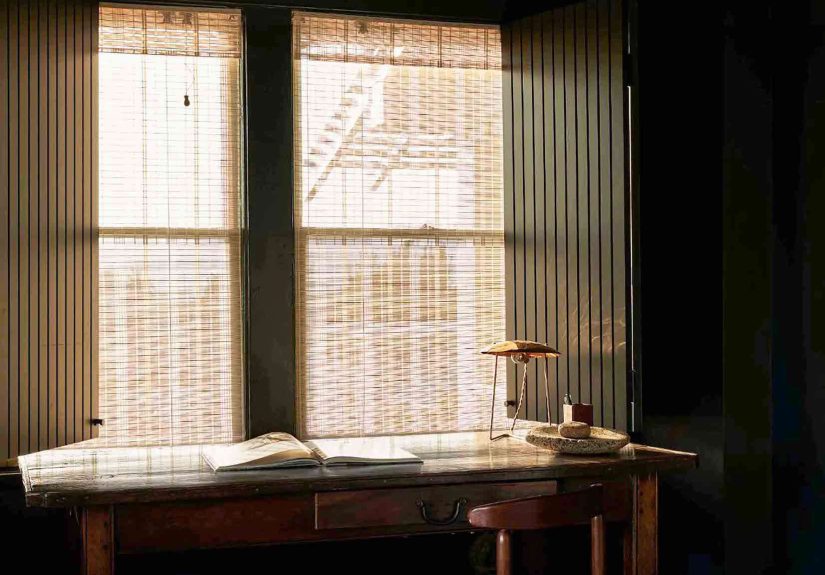
Home offices have finally stopped pretending they should look like corporate holding pens. People want workspaces that inspire focus without draining the soul. A desk lamp with artistic character signals that the room belongs to an actual human, not a software tutorial. This lamp works particularly well in offices with wood desks, matte walls, and a mix of functional shelving and personal objects.
It also softens the visual edge of work technology. Laptops are useful. They are not beautiful. A good lamp helps restore dignity.
In unexpected places
One reason the lamp keeps being spotted is that it is surprisingly portable in a visual sense. It does not need a grand room to justify its presence. Put it on a kitchen counter at the far end of an island. Place it on an entry console. Let it warm up a guest room. This is not a chandelier that demands ceiling height and a renovation budget. It is a relatively small object with disproportionate influence.
Why the Moment Is Bigger Than One Lamp
The popularity of this lamp says something useful about design right now. People are tired of rooms that feel flat, interchangeable, or designed only for a quick scroll. They want pieces with evidence of process. They want materials that age well. They want objects that can sit somewhere between sculpture and utility without becoming pretentious about it.
That is why sculptural lighting keeps gaining ground. It offers atmosphere, individuality, and permanence all at once. A strong lamp can change how a room looks in daylight, how it feels at dusk, and how people move through it at night. It is not a filler accessory. It is architecture in miniature.
And unlike some home trends that burn bright and vanish, better lighting choices tend to stick because they improve daily life in practical ways. Warm pools of light are useful. Lower-level illumination is flattering. Layered rooms are more comfortable. If a beautiful bronze lamp happens to make your bookshelf corner look like it belongs in a design magazine, that is simply a bonus. A very good bonus, but still.
Should You Buy the Look?
If you love interiors that feel calm, collected, and a little artful, yes, this is the sort of lamp worth studying. That does not mean everyone needs this exact investment piece. But the lesson behind its popularity is incredibly useful: choose lighting with material presence, visible craftsmanship, and a shape that contributes something even when the bulb is off.
If your style leans warm modern, transitional, organic contemporary, or quietly eclectic, a lamp like this makes immediate sense. If your room already has a lot of visual noise, however, be strategic. Sculptural lighting works best when it has enough breathing room to read as intentional rather than lost in a traffic jam of decorative objects.
The best approach is not to chase the lamp because it is popular. It is to understand why it became popular in the first place. The answer is not hype. It is that the piece solves a modern decorating problem beautifully: how to make a room feel edited, atmospheric, and alive without stuffing it with unnecessary stuff.
Experience Notes: What It Feels Like When a Lamp Becomes the Room’s Main Character
There is a particular kind of experience that happens when you live with a sculptural lamp instead of a purely practical one. At first, you think you bought light. Then you realize you bought mood, rhythm, and a surprisingly persuasive argument for slowing down. A lamp like this changes the room before it even changes the brightness. In the morning, when the shade catches indirect daylight, it looks almost like an object discovered rather than purchased. The bronze surface feels warm even before the bulb is on, and that visual warmth matters more than people think. It takes a corner that was merely empty and turns it into a destination.
By late afternoon, the lamp starts doing something even better. It creates anticipation. You know that as the room darkens, you are not going to flip on a harsh ceiling fixture and flatten everything in sight. You are going to reach for a lower, softer source of light that makes bookshelves look deeper, textiles look richer, and your stress level look slightly less employed. That shift is subtle, but it is part of why design lovers get so attached to good lamps. They are daily rituals disguised as objects.
In a living room, a lamp like this has a social effect too. People gravitate toward the warm pool of light. They sit closer. The room suddenly encourages conversation instead of passive scrolling. Even a quiet night at home feels a little more deliberate. Tea tastes more thoughtful. Music sounds better. Leftover pasta somehow becomes “a simple supper.” That may not be the lamp’s official product description, but spiritually, it is accurate.
In a workspace, the experience is different. A sculptural lamp makes the desk feel less like an obligation station and more like a place where ideas are allowed to happen. The shape gives your eye something beautiful to rest on between tasks. The focused light makes the surface usable, but the object itself keeps the room from becoming purely utilitarian. That balance matters, especially in homes where one corner has to work hard all day and still look civilized by evening.
What is most interesting, though, is how quickly a lamp like this becomes part of the identity of a room. Guests notice it. They ask about it. They remember it later. Not because it is oversized or flashy, but because it feels specific. It has point of view. It suggests that somebody made a decision here, and that decision was not “grab whatever is on sale and hope for the best.”
That is the real experience of the design lamp of the moment. It is not just about trend awareness. It is about the pleasure of living with an object that earns its place every day. It holds light, yes, but it also holds atmosphere. It makes ordinary evenings feel a little more composed and ordinary rooms feel a little more finished. And for a single lamp, that is a pretty impressive résumé.
Conclusion
The lamp popping up everywhere is more than a stylish object having a lucky season. It is a perfect symbol of where interiors are headed: toward warmth, craftsmanship, layered light, and pieces that function as art without losing their usefulness. Lindsey Adelman’s hammered bronze table lamp resonates because it checks every one of those boxes. It is tactile, sculptural, adaptable, and memorable. It can ground a room without dominating it, elevate a corner without overcomplicating it, and make a home feel more personal without adding clutter.
That is why designers keep returning to it, and why homeowners keep noticing it. In a world full of fast furniture and faster trends, this lamp offers something more durable: presence. Not the loud, attention-seeking kind. The confident kind. The kind that makes you rethink what lighting can do when it is chosen with intention. And if that means the big light loses one more battle, so be it. Some defeats are good for everybody.