Table of Contents >> Show >> Hide
- What “Idle” Means (And Why It Matters More Than You Think)
- Carb vs. Fuel Injection: Don’t Turn the Wrong “Magic Screw”
- Before You Adjust Idle: The Three Checks That Save You Hours
- Tools You’ll Want (No, You Don’t Need a Space Program)
- Simple Ways to Adjust Idle on a Motorcycle: 10 Steps
- Step 1: Find the factory idle RPM spec (don’t guess)
- Step 2: Warm the engine properly
- Step 3: Set the bike safely in a stable position
- Step 4: Turn off extra “idle helpers”
- Step 5: Locate the correct idle adjustment point
- Step 6: Make small adjustmentslike you’re seasoning food, not pouring the whole shaker
- Step 7: Let RPM stabilize after each change
- Step 8: Aim for the target range, not the razor’s edge
- Step 9: Do the “blip test” and the “bar turn test”
- Step 10: Recheck after a short ride, then record what you did
- If Idle Still Isn’t Happy: What Your Bike Might Be Trying to Tell You
- Common Mistakes (AKA “How People Accidentally Invent New Problems”)
- Safety Reminders (Because Skin and Lungs Are Hard to Replace)
- Quick FAQ
- Real-World Experiences: What Adjusting Idle Actually Feels Like (An Extra )
- Conclusion
A motorcycle that idles correctly is like a good drummer: it keeps a steady beat without showing off.
Too low and your bike stalls at stoplights like it’s playing dead. Too high and it sounds like it’s
trying to win an argument with the neighborhood. The good news? On many bikes, adjusting idle speed is
one of the simplest “small wins” in DIY maintenanceassuming you do it the right way, on the right
engine, and at the right temperature.
This guide walks you through 10 simple steps to adjust motorcycle idle safely and accurately,
plus how to tell whether you’ve got a carburetor, fuel injection, or some “it’s complicated” hybrid situation.
We’ll keep it practical, slightly funny, and very focused on what actually works in garages across America.
What “Idle” Means (And Why It Matters More Than You Think)
Idle speed is the engine RPM when your throttle is closed and the bike is running in neutral (or
with the clutch pulled in). At idle, the engine must spin fast enough to:
- stay running smoothly (no stalling or shaking like a nervous chihuahua),
- maintain oil pressure and charging output,
- transition cleanly when you crack the throttle.
Many street motorcycles idle somewhere around the low-thousands RPM range, but the real answer is:
whatever your owner’s manual says. Some bikes are happy at ~1,000 RPM, others want ~1,300 RPM,
and small singles often idle higher. If you guess, you’re basically playing darts… while holding a wrench.
Carb vs. Fuel Injection: Don’t Turn the Wrong “Magic Screw”
Before you adjust anything, identify what you’re working with:
-
Carbureted bikes: Usually have an idle speed screw (often called a throttle stop screw)
that physically props the throttle open a tiny bit. Many also have an idle mixture screw (air/fuel screw)
that fine-tunes how the engine runs at idle/off-idle. -
Fuel-injected (EFI) bikes: Typically control idle electronically through the ECU and an idle
air control system. Some models provide a simple idle adjust knob; others require a specific “idle learn”
procedure or dealer-level software/tuning tools. On many modern EFI bikes, there is no manual idle screw
you should touch.
Translation: If your bike is EFI and you go cranking on a throttle stop screw because a random comment section
told you to… you may create problems you can’t fix with more cranking.
Before You Adjust Idle: The Three Checks That Save You Hours
Idle speed is often the messenger, not the villain. Do these quick checks first so you don’t “adjust around”
a real issue:
1) Confirm the engine is healthy enough to idle
- Fresh fuel (old gas can make idle erratic).
- Clean air filter (a clogged filter can richen/strangle the idle).
- Good spark plug condition (fouled plugs make idle rough and inconsistent).
2) Check throttle free play and cable routing
If your throttle cable is too tight, routed wrong, or binding at full lock, the idle can “hang” high.
Turn the bars left and right with the bike idling: RPM should not climb like it just heard dessert was served.
3) Make sure the bike is actually warmed up
Idle changes as the engine reaches operating temperature. If you set idle cold, you may end up with a hot idle
that’s too high (or too low) once everything expands and the ECU/choke/enricher stops compensating.
Tools You’ll Want (No, You Don’t Need a Space Program)
- Owner’s manual or service manual (for the correct idle RPM spec)
- Tachometer (your dash tach is fine; an external tach is nice for bikes without one)
- Screwdriver (often Phillips or flathead for carb idle screws)
- Flashlight (because idle screws are always hiding in the shadows)
- Gloves (engines get hot; skin is optional but recommended)
- A fan (helpful if you’ll be idling in place for more than a couple minutes)
Simple Ways to Adjust Idle on a Motorcycle: 10 Steps
-
Step 1: Find the factory idle RPM spec (don’t guess)
Look up the recommended idle speed in your owner’s manual/service manual. Write it down.
You’re aiming for the specified range, not “whatever sounds cool on my driveway.” -
Step 2: Warm the engine properly
Start the bike and let it come up to normal operating temperature. On many motorcycles, a short idle period
followed by gentle riding is a better warm-up than letting it sit and bake in one place.
If you must warm it on the stand, keep it brief and use a fan if needed. -
Step 3: Set the bike safely in a stable position
Park on level ground. Use the center stand if you have one; otherwise the side stand is fine.
Keep the bike in neutral. Ensure there’s good ventilationnever run a motorcycle in an enclosed garage. -
Step 4: Turn off extra “idle helpers”
If you have a carbureted bike, make sure the choke/enricher is fully off once the engine is warm.
On EFI, let the bike settle for 30–60 seconds after warm-up so the ECU stops doing its cold-start routine. -
Step 5: Locate the correct idle adjustment point
Carburetor: Look for an idle speed screw (often spring-loaded) that contacts the throttle linkage.
It may be a knob you can turn by hand or a screw tucked in tight.EFI: Check your manual. Some EFI bikes have an idle adjust knob; many do not.
If your manual doesn’t describe an idle adjustment, assume it’s ECU-controlled and skip the screwdriver heroics. -
Step 6: Make small adjustmentslike you’re seasoning food, not pouring the whole shaker
Adjust in tiny increments (think: a quarter-turn at a time). In many cases:
clockwise raises idle and counterclockwise lowers idle on idle speed screws/knobs.
But confirm with your manual if possibledesigns vary. -
Step 7: Let RPM stabilize after each change
After each small adjustment, wait a few seconds for the engine to settle. RPM can “lag” slightly as the engine
responds, especially if it’s EFI or if the fan kicks on/off. -
Step 8: Aim for the target range, not the razor’s edge
If your manual gives a range (example: X ± 100 RPM), set it comfortably within that range.
A slightly higher idle within spec often improves stability and reduces stallingespecially on older carb bikes.
Too high, though, can cause clunky shifting and extra heat. -
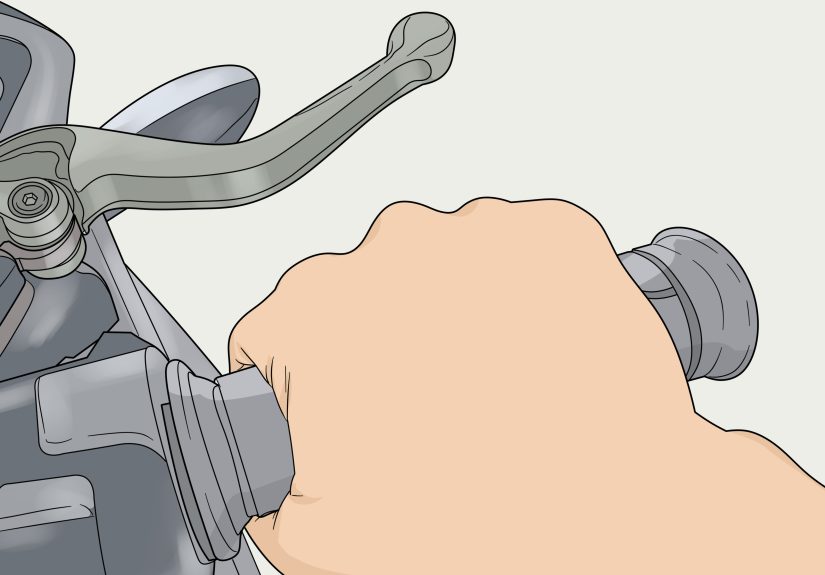
Step 9: Do the “blip test” and the “bar turn test”
Gently blip the throttle and let it return to idle. The RPM should drop smoothly and settle without hanging.
Then turn the bars left and right: idle should stay steady. If RPM changes, check throttle free play, cable routing,
and binding before you touch the idle again. -
Step 10: Recheck after a short ride, then record what you did
Take a 10–15 minute ride, come back, and verify idle again at full operating temperature.
If it’s still correct, jot down your final setting and symptoms. Future-you will treat past-you like a genius.
If Idle Still Isn’t Happy: What Your Bike Might Be Trying to Tell You
If you adjusted idle speed correctly and it’s still rough, surging, stalling, or hanging high, the fix may not be
the idle screw. Here are common culprits:
- Vacuum leak (cracked intake boot, loose clamp, leaking vacuum cap)
- Dirty pilot jet or passages (carb bikes often hate tiny clogs)
- Incorrect pilot mixture setting (carb bikes may need a careful mixture adjustment)
- Idle learn needed (some EFI bikes need a reset/learn procedure after battery disconnect or changes)
- Valves out of spec (tight valves can cause hard starting and unstable idle)
- Charging/voltage issues (very low idle RPM can reduce charging output and cause weird behavior)
A quick note on carb mixture screws
Many carbureted motorcycles have a separate screw that adjusts idle mixture. This is not the same as idle speed.
A common, safe approach is to adjust mixture in small increments and seek the smoothest/fastest idle, then set idle speed back
to spec. If you’re not sure which screw is which, stop and consult the manualbecause turning the wrong one can turn a simple
job into a weekend hobby you didn’t ask for.
Common Mistakes (AKA “How People Accidentally Invent New Problems”)
- Adjusting cold: The bike seems fine until it warms up… then it idles at “angry lawnmower.”
- Using idle speed to mask a dirty carb: It may run “okay,” but you’re hiding the real issue.
- Cranking the screw like it owes you money: Tiny adjustments win. Big twists create chaos.
- Messing with EFI throttle stops: Many EFI bikes are not meant to be mechanically adjusted at idle.
- Ignoring overheating: Prolonged idling without airflow can overheat some bikesespecially in warm weather.
Safety Reminders (Because Skin and Lungs Are Hard to Replace)
- Ventilation: Exhaust fumes can be deadly. Work outside or with doors wide open and strong airflow.
- Hot parts: Exhaust headers, radiators, and engine cases get extremely hotmove carefully.
- Stability: Keep the bike upright and secure; don’t rev aggressively on a stand.
- Know your limits: If the bike won’t hold idle at all, it’s time for diagnosisnot more turning.
Quick FAQ
What’s the easiest way to know if idle is too low?
Stalling at stops, shaky idle, and needing throttle to keep it running are common signsespecially once warm.
Is a higher idle always safer?
Not always. Slightly higher within spec can improve stability, but too high increases heat, can make shifting harsher,
and may indicate you’re compensating for another problem.
Can I adjust idle on every motorcycle?
You can verify idle on every motorcycle. But adjusting it depends on design:
many carb bikes are straightforward; many modern EFI bikes are ECU-controlled and require manufacturer procedures or tuning tools.
Real-World Experiences: What Adjusting Idle Actually Feels Like (An Extra )
Here’s the part nobody puts in the manual: adjusting idle is half science, half “getting to know your bike’s personality.”
I’ve seen riders treat the idle screw like a panic buttonstall once at a red light, then crank the idle up until the bike sounds
like it’s impatiently tapping its foot. The result is predictable: the bike stops stalling… but now it clunks into first like it’s
offended, creeps forward at stop signs, and runs hotter in traffic. Fixing one annoyance by creating three new ones is the most
motorcycle thing imaginable.
One common experience on older carbureted bikes is the “two-idle lifestyle.” Cold idle needs help (choke/enricher and sometimes a
slightly higher setting), but hot idle wants to be lower and smoother. Riders who set idle while the engine is cold often end up with
a hot idle that’s too high. Then they chase it back down, and the next morning it stalls again. The breakthrough usually happens when
they warm the bike fully, set the idle to spec, and accept that a carbureted engine may need a minute of civilized warm-up before it
behaves like a responsible adult.
On EFI bikes, the experience is often the opposite: people assume there’s an idle screw because “every engine has one,” then spend
20 minutes looking for a part that doesn’t exist. EFI idle control is typically managed by the ECU, responding to coolant/air temperature,
battery voltage, and load. If the idle is weird, the fix is frequently not a screwdriverit’s cleaning a throttle body,
checking for intake leaks, or performing the correct idle relearn procedure after maintenance. The “aha” moment is realizing that EFI
is a smart thermostat, not a dumb light switch. If it’s acting strange, you diagnose the system instead of twisting random knobs.
My favorite real-world lesson is the “bar turn test” revelation. A rider adjusts idle perfectly in the drivewaysteady RPM, nice sound,
no stalling. Then they roll out, turn the bars at the first intersection, and the idle jumps. That’s not the idle screw misbehaving;
that’s a throttle cable routed too tight or free play set too close. Fixing the cable slack suddenly makes the “mystery idle problem”
vanish. It’s a great reminder that idle is a whole system: airflow, fuel, spark, mechanical friction, and cable geometry. When everything
is right, the engine idles like it’s meditating. When something’s off, idle becomes your bike’s way of waving a tiny red flag.
Bottom line: adjusting motorcycle idle speed is satisfying because it’s immediateyou hear the change, you feel the stability, and
you stop fearing red lights. But the best experience comes from doing it methodically: warm engine, tiny changes, stabilize, test, ride,
confirm. That’s how you get an idle that’s not just “good enough,” but genuinely dialed.
Conclusion
If you want a smoother rideespecially around townproper idle speed adjustment is one of the easiest improvements you can make.
Follow the 10 steps, use the correct RPM spec, and remember: the goal is stable, consistent idle at operating temperature. If your bike
still won’t idle right after a proper adjustment, treat that as a diagnostic clue instead of a reason to keep turning screws forever.
(Your screwdriver deserves boundaries, too.)