Table of Contents >> Show >> Hide
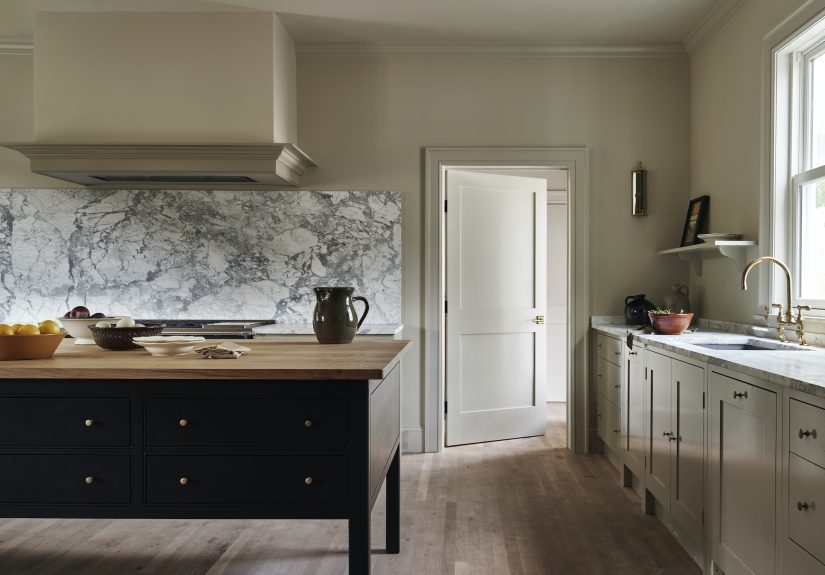
Some kitchens are just places to cook. And then there are kitchens that make you want to move in, pull up a stool, and start casually baking sourdough even if you’ve never successfully baked anything in your life. The painterly farmhouse kitchen at Inness, a design retreat in Upstate New York, falls squarely into the second category: serene, slightly rustic, quietly luxurious, and somehow both Scandinavian and all-American at the same time.
Remodelista’s “Steal This Look” feature breaks down the key sources behind this space, from the fireclay sink and bridge faucet to British-style painted cupboards and simple pottery on the counters. The good news: you don’t need to own a Hudson Valley design hotel to borrow the vibe. With the right mix of color, texture, and unfussy details, you can channel that same painterly farmhouse look at home.
Think of this guide as your design cheat sheet. We’ll unpack what makes this Upstate New York kitchen special, then translate it into specific choices you can actually make: paints, cabinets, hardware, lighting, and styling tricks that work just as well in a rental as in a full gut renovation.
Inside the Painterly Farmhouse Kitchen at Inness
The kitchen in question sits at Inness, a rural retreat in Upstate New York where designer and restaurateur Taavo Somer teamed up with landscape designer Miranda Brooks and Post Company to craft a Scandinavian-meets-American farmhouse interior. The vibe is relaxed but intentional: every object looks like it has a job and a backstory, but nothing shouts for attention.
At the core is a classic farmhouse combination: painted Shaker-style base cabinets, a deep apron-front sink (here, a professional-grade Franke model), and a traditional bridge faucet with cross handles and side spray in a warm metal finish, like the Georgian-style Perrin & Rowe fixture sourced for the project. Open countertops are styled with just a few key pieces: a French cider pitcher, a Manufacture de Digoin utensil crock, stacked plates, and everyday tools that double as decor.
Instead of gleaming show-home perfection, the room leans into soft edges and subtle contrast. Floors are likely wood or stone with visible grain, walls are painted in a milkier, warmed-up white rather than stark gallery white, and cabinets pick up muted color in a way that feels like brushstrokeshence “painterly.” It’s the opposite of high-gloss minimalism: still edited, but not sterile.
Key Elements That Make the Look Work
1. A Painterly, Soft-Contrast Color Palette
The color story is where the “painterly” part really comes through. Instead of strong, high-contrast black-and-white, you get:
- Warm off-white or greige walls that feel like stretched canvas rather than bright printer paper.
- Cabinetry in subtle tonesthink soft putty, pale stone, muted blue-gray, or a Scandinavian-inspired dusty green.
- Natural wood moments: a tabletop, cutting boards, stools, or ceiling beams adding warmth and grain.
- Metal finishes in aged brass, unlacquered brass, or muted nickel rather than mirror-polished chrome.
Color trends in current kitchen design show a move away from stark, cool whites toward warmer neutrals, powdery blues, and nature-inspired greens for cabinets and islands. That aligns perfectly with the Inness kitchen: calm, layered, and never shouty.
2. Shaker Cabinets with a Scandinavian Twist
At heart, this is a Shaker kitchen, which explains why it feels both historical and fresh. Shaker doors, with their simple recessed panel and slim frame, are a go-to for farmhouse and modern interiors alike. Here, they’re likely:
- Painted rather than stained, in a matte or eggshell finish.
- Paired with minimal hardware: small knobs, simple bin pulls, or thin bar pulls in a warm metal.
- Installed as mostly lower cabinets, leaving the upper half of the room open and airy.
This combination keeps the kitchen grounded in tradition while still feeling light enough to sit inside a contemporary boutique hotel. The lack of heavy wall cabinets also leaves more breathing room around the range and sink, which lets the architecture shine.
3. A Deep Farmhouse Sink and Classic Bridge Faucet
The sink setup in the Remodelista feature is pure functional beauty: a professional-grade Franke stainless or fireclay basin paired with a Georgian-style bridge faucet by Perrin & Rowe. Together, they hit that sweet spot between restaurant-level performance and old-world charm.
To recreate the feel without matching the exact spec:
- Choose an apron-front (farmhouse) sink in fireclay, enamel, or stainless steel, sized generously so it can swallow sheet pans and stockpots.
- Opt for a bridge or bridge-style faucet with exposed shaping and cross handles in brass, bronze, or brushed nickel.
- Include a side spray if possible. Your future self, scrubbing roasting pans, will be grateful.
This old-new mix instantly signals “considered farmhouse” instead of “basic builder kitchen.”
4. Natural Materials and Objects with Patina
The painterly farmhouse look depends heavily on texture. You’ll see:
- Wood: floorboards, stools, cutting boards, and serving pieces.
- Ceramics: crocks, pitchers, bowls, and mugs that look like they could have come from a local potter’s studio.
- Textiles: linen tea towels, cotton napkins, a striped runner, or seat pads in natural fibers.
- Stone or composite counters with subtle movement rather than dramatic veining.
The goal is to make the room feel like a still life in motion: every object has a little character, and together they read as an easy, lived-in composition.
5. Edited, Not Empty, Styling
One of the reasons this kitchen feels so good in photos is that it’s not over-styled. There’s negative space on the counters and open stretches of wall, but there are also visible tools: a crock of wooden spoons, a pitcher waiting to be filled, maybe a small stack of cookbooks.
Instead of hiding everything, the design leans into the idea that a working kitchen will have stuffjust the right stuff, in the right quantities. That makes the room look warm in photos and actually usable in real life.
How to Recreate the Upstate Painterly Farmhouse Look at Home
Step 1: Start with the Envelope (Walls, Floors, and Light)
You don’t have to start by ripping out your cabinets. Begin with what designers call the “envelope” of the room.
- Walls: Choose a warm white, soft greige, or barely-there putty. Avoid stark, cool whites if your goal is cozy farmhouse rather than lab-chic.
- Floors: If you have wood floors, consider a matte finish that shows grain. If you’re choosing new flooring, think about wide planks, stone-look tiles, or terracotta for added character.
- Light: Swap any harsh blue-white bulbs for warm, dimmable LED bulbs. Painterly spaces need flattering, candle-like lighting, not interrogation-room fluorescents.
Even before you touch cabinets or hardware, these tweaks will pull your kitchen closer to that soft, Upstate-New-York-at-sunset feeling.
Step 2: Simplify the Cabinet Story
If a full cabinet replacement is in the plans, Shaker-style doors in a matte painted finish are the easiest path to the look. Choose:
- A neutral or desaturated hue for perimeter cabinets.
- A slightly deeper or different color for an island (for example, a powdery blue or bluish gray against warm white walls).
- Simple knobs and pulls with a classic profilenothing too shiny, nothing too futuristic.
If replacing cabinets isn’t on the menu, paint is your best friend. Sand, prime, and repaint existing doors in a farmhouse-appropriate palette, then swap cheap hardware for something heftier in brass, bronze, or brushed nickel. The change in hand-feel alone can make the entire kitchen feel more expensive.
Step 3: Upgrade the Sink Zone
The sink wall is the star of many Remodelista kitchens, including this painterly farmhouse one. If you’re going to splurge anywhere, here’s a good place to do it.
Try this formula:
- Apron-front sink with a deep single bowl.
- Bridge or bridge-style faucet in a warm metal.
- Simple, low-profile backsplash in white tile, plaster, or stone that doesn’t fight the rest of the room.
- One great-looking crock or jug plus a few everyday dishes on the counterno clutter.
You may not have the exact Franke sink or Perrin & Rowe faucet used at Inness, but you can echo the same proportions, finishes, and vintage-meets-professional mood.
Step 4: Curate Your Countertop Still Life
This is where the “painterly” part is the most literal. Look at your countertop as a canvas and your everyday objects as the still life. Instead of scattering things randomly, compose:
- A cluster of items near the stove: a utensil crock, salt cellar, oil bottle, and small tray.
- A single vignette near the sink: a pitcher, hand soap, brush, and folded towel.
- A bowl of fruit or stack of breadboards at the end of the counter.
Everything should be useful, but visually pleasing. This is why designers love classic European pottery and simple French-style pitchersthey look good even when they’re just holding tap water or a handful of wildflowers.
Step 5: Layer in Textiles and Softness
Soft surfaces keep a farmhouse kitchen from feeling too hard and echo the painterly, layered feel of the Inness space. Consider:
- Linen or cotton tea towels in stripes or checks draped over the oven handle.
- A flatweave rug or runner in front of the sink (washable is ideal for sanity).
- Cushions or covers on bar stools in natural fabrics.
These pieces add color and pattern in a way you can easily swap seasonally or when you get the itch for a refresh.
Budget-Friendly Ways to Steal the Look
Not everyone has a design-retreat budget. Fortunately, the genius of this painterly farmhouse kitchen is that the most important moves are relatively affordable.
- Paint first, always. A new cabinet and wall color can do more for mood than almost any other change per dollar spent.
- Swap hardware. Trade flimsy knobs for solid metal hardware with a bit of heft and a timeless shape.
- Upgrade lighting. Replace a dated flush mount or track light with a simple, well-proportioned pendant or two, ideally in a warm-toned metal or painted finish.
- Curate your tools. Donate the chipped, unloved mugs and keep the pieces you actually enjoy seeing every day. Buy one really good crock instead of three okay ones.
- Shop vintage and handmade. Thrift stores, antique markets, and small ceramics studios are treasure troves for pitchers, bowls, and boards that bring instant character.
Bit by bit, your kitchen will start to feel less like a random assortment of stuff and more like a deliberate, quiet, painterly compositionjust like the one in Upstate New York.
Extra Design Notes: Real-Life Experiences with the Painterly Farmhouse Look
Spend enough time analyzing spaces like the Inness kitchen and patterns start to emergenot just in the photos, but in how people actually live in similar rooms. Here are some lived-in observations and lessons designers and homeowners often share when they lean into this painterly farmhouse style.
Lesson 1: “Soft” Doesn’t Mean High-Maintenance
One fear many people have is that a pale, soft-colored kitchen will be harder to keep clean than a dark, ultra-modern one. Ironically, the opposite is often true. Warm whites and greiges are forgiving; they don’t show every crumb the way a high-gloss black counter or cabinet front might. A matte paint finish can also be touched up more easily than a glassy, super-slick one.
Homeowners who’ve made the switch report that a painterly, layered kitchen often feels less stressful to maintain because minor scuffs and daily wear blend in instead of screaming, “Look at me!” The room ages gracefully, which is exactly what you want in a farmhouse-inspired space.
Lesson 2: The Right Sink Setup Changes How You Cook
People who upgrade from a shallow double-bowl sink to a deep farmhouse basin almost always say the same thing: they can’t imagine going back. A sink that fits large sheet pans and tall stockpots changes the rhythm of prep and cleanup. Add a high-quality bridge faucet with a generous reach, and suddenly rinsing vegetables and filling big pots feels almost ceremonial instead of annoying.
In a painterly farmhouse kitchen, the sink doesn’t hide in a corner. It’s a focal point. That encourages you to keep it tidy, which, in turn, makes the entire room feel more serenelike a reset button you can hit every evening after dinner.
Lesson 3: Editing Your Stuff Feels Like Getting a New Kitchen
One of the most eye-opening experiences people have when trying to “steal” a Remodelista look is realizing how much of the transformation comes from subtraction, not addition. Clearing overcrowded counters, donating unused gadgets, and keeping out only the most beautiful and useful objects can change the room even before you pick up a paintbrush.
That’s very much in the spirit of the Inness kitchen: it’s not about having more things; it’s about having fewer things that are better chosen. A single handmade crock on an empty stretch of counter can feel more luxurious than twelve mismatched accessories vying for attention.
Lesson 4: Natural Light and Artificial Light Have to Be Friends
Another common discovery: the same color scheme can look flat and muddy in one kitchen but magical in another purely because of lighting. Painterly farmhouse spaces depend on natural lightthose soft upstate skies do a lot of heavy liftingbut artificial lighting is the quiet co-star.
Homeowners who get the look right often describe a little experiment: turning off all the lights during the day to see what the sun actually does in the room, then layering back in pendants and sconces where they’re truly needed. The result is a kitchen that glows at night instead of glaring, and that feels consistent from morning coffee to late-night tea.
Lesson 5: The Room Works Best When It’s Actually Used
Finally, the most charming thing about the painterly farmhouse kitchen is that it never feels precious. The ceramics get used. The wood boards get knife marks. The linen towels actually dry dishes. People who live with this style report that the more they cook, host, and generally live in the space, the better it looks.
That’s the real secret hiding behind the product lists and carefully curated sources: the kitchen at Inness looks so good partly because it’s designed to be lived in, not just photographed. If you borrow that attitude along with the Shaker cabinets, farmhouse sink, and painterly palette, your own kitchen will start to feel less like a project and more like a place you love coming home to.