Table of Contents >> Show >> Hide
- How BHG Tested Bread Machines
- The Quick Take: BHG’s 5 Best Bread Machines
- 1) Best Overall: Zojirushi Home Bakery Virtuoso Plus
- 2) Best Budget: Amazon Basics Nonstick Bread Making Machine
- 3) Best Small (Compact Footprint): Cuisinart Compact Automatic Bread Maker (CBK-110)
- 4) Best for Settings & Versatility: Panasonic Automatic Bread Maker (SD-R2550)
- 5) Best for Beginners: Elite Gourmet Programmable Bread Maker (2-lb class)
- Side-by-Side Comparison
- What to Look for in a Bread Machine (So You Don’t Buy a Countertop Brick)
- Tips for Better Bread Machine Bread (Without Becoming a Spreadsheet Person)
- Frequently Asked Questions
- Final Thoughts
- Real-Life Bread Machine Experiences (The Stuff Reviews Don’t Always Say Out Loud)
If the smell of fresh bread makes you feel like a responsible adult with their life together (even if your laundry is
auditioning for a reality show), a bread machine is your new best friend. You add ingredients, press a button, and a few
hours later: a warm loaf that makes your kitchen feel like a bakeryminus the 4 a.m. wake-up call and the existential
dread of shaping baguettes.
Better Homes & Gardens (BHG) put multiple bread makers through real lab testing and narrowed things down to five standout
machines. Below, you’ll get the top picksplus what they’re best at, what to watch out for, and how to choose a machine
that fits your kitchen (and your patience level).
How BHG Tested Bread Machines
Bread machines can look similar on the outsidelike little stainless-steel robots that refuse to fold your towelsbut
their results can be wildly different. BHG tested several machines in a lab setting and scored them on the things that
matter in real life: versatility (settings that actually work), ease of use (buttons that don’t require a decoding ring),
performance (rise, crumb, crust), ease of cleaning, and overall value.
The goal wasn’t just “does it make bread?”because technically, a lot of things make bread if you try hard enough. The goal
was consistent loaves with a good shape, pleasant texture, reliable browning, and settings that produce what they promise
(like whole wheat that isn’t a brick, or gluten-free that isn’t a sad sponge).
The Quick Take: BHG’s 5 Best Bread Machines
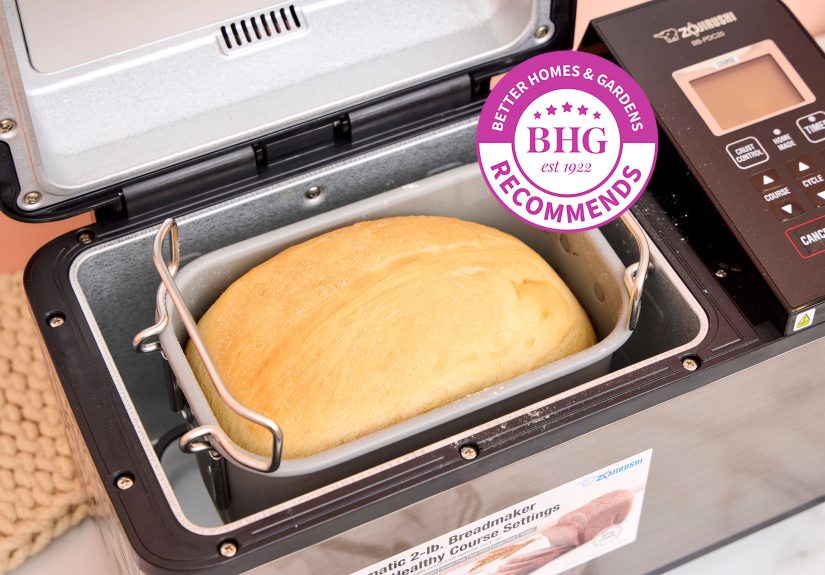
1) Best Overall: Zojirushi Home Bakery Virtuoso Plus
If you want the “I can’t believe this came out of a machine” loaf, this is the splurge that earns its counter space.
The Virtuoso Plus is known for consistently strong results and a user-friendly setup that doesn’t punish beginners.
- Loaf capacity: 2 lb (classic sandwich-loaf shape)
- Settings/courses: 15
- Pan & paddles: Rectangular pan with dual kneading paddles
- Why it wins: Great mixing and even baking; reliable bread quality across batches
In BHG’s testing, the Virtuoso Plus turned out loaves that were consistent in flavor, appearance, and texture, with bake
times averaging around the mid–3-hour range. The dual paddles help mix and knead efficientlyespecially useful in an
elongated pan where single-paddle machines sometimes leave dry flour hiding in corners like it’s playing tag.
It’s also a versatility champ: beyond standard loaves, you’ll find settings that cover dietary needs and specialty styles.
Some owners even use machines like this for extras (think starter, jam, or dough-only cycles) when they want the machine
to do the time-consuming parts.
Keep in mind: Premium machines can be big, and BHG noted loaves can occasionally come out a little lopsided.
Also, dual paddles mean dual cleanupnothing tragic, but it’s not exactly a spa day for your sink.
2) Best Budget: Amazon Basics Nonstick Bread Making Machine
This pick is for anyone who wants homemade bread without taking out a second mortgage. BHG liked it as a quality option
for under the “fancy dinner out” price range, and it’s refreshingly straightforward to operate.
- Loaf capacity: Up to 2 lb (often around 1.5–2 lb in real use)
- Settings: 14
- Standout feature: Express-style cycles for faster loaves
- Why it wins: Big feature-to-price ratio; beginner-friendly controls
In testing, BHG found the bread had a homemade vibe: a light tan, crunchy exterior and an interior that can skew denser
than supermarket white bread (more “French-bread-ish” than “pillow-soft sandwich loaf”). That’s not a flawit’s often
exactly what people want when they say “homemade.”
Keep in mind: BHG wished it had an internal light for checking progress. Also, the included measuring
tools did the job but weren’t the easiest to use (small details like hard-to-read markings can be annoying when you’re
sleepy and trying to remember what day it is).
3) Best Small (Compact Footprint): Cuisinart Compact Automatic Bread Maker (CBK-110)
If you want full-size bread results but don’t want your counter to look like an appliance showroom, this compact,
vertical-style machine is a smart compromise.
- Loaf options: 1 lb, 1.5 lb, and 2 lb
- Settings: 12
- Crust control: Light, medium, dark
- Why it wins: Great bread quality in a smaller, space-friendly design
BHG testers were impressed with the bread qualityprofessional-tasting results with a firmer crust and an airy, pleasantly
sweet interior. For a machine in this size/price neighborhood, that’s a win. It’s also a good choice if you like options:
beyond basics like white, whole wheat, and French-style, you’ll typically see settings for things like gluten-free, jam,
and mixes.
Keep in mind: With some compact machines, ingredient order matters more. BHG noted the instructions were
more prescriptive than othersso you can’t always just dump everything in and hope for the best (which, to be fair, is
not a great life strategy either).
4) Best for Settings & Versatility: Panasonic Automatic Bread Maker (SD-R2550)
If you’re the kind of person who reads menus for funor you want a machine that can handle everything from brioche to
gluten-free to dough and “bake only”Panasonic’s settings are the headline here.
- Settings: 20 (with subcategories for bread, gluten-free, dough, sweet, and manual modes)
- Loaf size options: Medium, large, extra large
- Crust control: Light, medium, dark
- Why it wins: A deep bench of programs and clear guidance that makes them usable
In BHG’s evaluation, this Panasonic model stood out as a close contender for best overall because it’s versatile without
being confusing. It comes with guides and recipes that encourage you to actually use the settings instead of ignoring
them. BHG also liked the end result: bread that was dense yet soft in the center, with a firm bottom and a nicely golden
crust.
Keep in mind: BHG reported it took longer than the other tested models for breadroughly around the
four-hour mark. Also, BHG wished for a viewing window. If you’re the type who likes to “just check on it,” you may have
to trust the process like it’s a slow cooker with a diploma.
5) Best for Beginners: Elite Gourmet Programmable Bread Maker (2-lb class)
This is the “start here” pick: friendly controls, consistent results, and enough settings to keep things interesting
without becoming overwhelming.
- Loaf sizes: 1 lb, 1.5 lb, 2 lb
- Settings: 19
- Convenience: Delay timer + keep-warm style function
- Why it wins: Simple workflow: add ingredients, press a button, enjoy bread
In BHG’s testing, the Elite Gourmet made a loaf with a crisp, golden exterior and a light, fluffy interiorexactly what
many first-time bread machine owners hope for. It also includes non-bread options (often things like cake or jam), which
is a fun bonus when you’re experimenting.
Keep in mind: The pan typically needs hand-washing. That’s common with nonstick bread pans; dishwashers
can shorten their lifespan.
Side-by-Side Comparison
Here’s a quick way to see which machine matches your goalswhether that’s “maximum versatility,” “minimum spending,” or
“I want sandwich bread that looks like it went to finishing school.”
| Pick | Best For | Capacity / Sizes | Settings | Pan Shape | Paddles |
|---|---|---|---|---|---|
| Zojirushi Virtuoso Plus | All-around performance | 2 lb | 15 | Rectangular | 2 |
| Amazon Basics | Best value | Up to 2 lb | 14 | Square | 1 |
| Cuisinart CBK-110 | Small kitchens | 1 / 1.5 / 2 lb | 12 | Square (vertical bake) | 1 |
| Panasonic SD-R2550 | Most programs | Multiple sizes (M/L/XL) | 20 | Rectangular | 1 |
| Elite Gourmet | First-time users | 1 / 1.5 / 2 lb | 19 | Square | 1 |
What to Look for in a Bread Machine (So You Don’t Buy a Countertop Brick)
Loaf size: 1 lb vs. 2 lb vs. “my family inhaled it”
A 2-pound machine is usually the most versatile: you can bake a big loaf, or often choose smaller sizes. Smaller machines
save space, but their loaves can be shorter or more cube-shapedfine for toast, slightly odd for sandwiches if you’re picky.
If you’re feeding a household or meal-prepping breakfast toast, 2-pound capacity makes sense.
Pan shape: rectangular vs. vertical
Rectangular, horizontal loaves tend to slice like classic sandwich bread. Vertical loaves can be taller and narrower,
which some people love and others side-eye. Neither is “wrong”it’s about what you want to eat all week.
Kneading paddles: one vs. two
Dual paddles can knead more evenly in longer pans, helping incorporate ingredients quickly. The trade-off is extra cleanup
and, sometimes, extra paddle-shaped holes in your loaf. (Pro tip: if your machine allows it, you can sometimes remove the
paddle after the final kneadcarefullyto avoid a crater in the finished bread.)
Programs you’ll actually use
More settings are only helpful if they’re easy to navigate and clearly explained. The most useful programs for many home
bakers are: basic/white, whole wheat, quick/rapid, dough-only, jam, and gluten-free. If you’re adventurous, look for
brioche, sourdough-related options (or “starter”), and mix-in cycles that beep when it’s time to add nuts or fruit.
Timers, keep-warm, and “wake up to bread” dreams
A delay timer is the feature that turns bread machines into lifestyle accessories. Load ingredients at night, schedule the
bake, and wake up to fresh bread. Just be smart about food safety: avoid leaving highly perishable ingredients sitting at
room temp for long periods.
Cleaning reality check
Most bread pans are nonstick and meant to be hand-washed. It’s not hard, but it is a routine. The stickiest part is often
the kneading paddle shaftwarm water and a short soak usually solves it without drama.
Tips for Better Bread Machine Bread (Without Becoming a Spreadsheet Person)
-
Measure like you mean it: For consistent results, consider weighing flour. Small measurement errors can
turn “soft sandwich loaf” into “why is it so dense?” -
Respect ingredient order: Some machines want liquids first, then dry, then yeast last. Follow your
manualbread machines are helpful, but they’re also very literal. -
Check the dough early: During the first knead, peek inside. If it looks like dry crumbs, add a teaspoon
of water. If it looks like soup, add a teaspoon of flour. Tiny fixes early can save the loaf. -
Use the mix-in beep: Add nuts, dried fruit, or chocolate chips when the machine tells youtoo early and
they can shred; too late and they sit on top like confused confetti. -
Cool before slicing: Bread continues to set after baking. Cutting too soon can make it gummy, even if it
smells like heaven.
Frequently Asked Questions
Do bread machines really save money?
Often, yesespecially if you bake regularly. Flour, yeast, salt, and a little fat are typically cheaper per loaf than many
bakery options. The bigger savings is control: you can tailor ingredients, skip additives, and make specialty loaves that
cost more in stores.
Can I make gluten-free bread in a bread maker?
Many machines include gluten-free settings designed for different mixing and baking patterns. Results vary by recipe, but
having a dedicated gluten-free program generally improves consistency compared to forcing it through a standard cycle.
What about sourdough?
Some machines offer sourdough-related programs (like a starter or sourdough-style cycle). Even without a dedicated program,
you can use the dough cycle to mix and knead, then shape and bake in a conventional oven if you want a more artisan crust.
Why does my loaf sometimes come out lopsided?
Common causes include uneven ingredient distribution, the dough riding up one side during kneading, or small measurement
differences. Making sure the paddle is seated correctly and measuring carefully usually reduces the issue.
Why is there a hole in the bottom of my bread?
That’s the kneading paddle’s signature autograph. Some machines have collapsible paddles, and some bakers remove the paddle
before the bake phase (if feasible with their model). Otherwise, consider it the loaf’s “belly button.”
Final Thoughts
The best bread machine is the one that matches your habits. If you bake often and care about classic sandwich slices, the
Zojirushi Virtuoso Plus is the premium pick BHG rated best overall. If you want maximum programs, Panasonic’s deep settings
menu is a dream. If you’re watching your budget, Amazon Basics does a lot for a little. And if your goal is “easy wins,”
both Cuisinart (compact) and Elite Gourmet (beginner-friendly) are strong choices.
500-word experiences section
Real-Life Bread Machine Experiences (The Stuff Reviews Don’t Always Say Out Loud)
Owning a bread machine is a little like adopting a low-maintenance pet that rewards you with carbs. The first experience
most people have is pure disbelief: you add ingredients, press a button, and thenhours lateryour kitchen smells like a
cozy bakery that sells cinnamon rolls and good decisions. It’s the kind of smell that makes you want to text someone,
“I’m baking,” even if the machine did the work and you mostly supervised from the couch.
The second experience is learning that bread machines have opinions. Some models are chill and let you add ingredients in
a simple “liquid then dry then yeast” pattern. Others are more particularespecially compact machinesand they’ll reward
you for following the manual precisely. This is usually when people discover the bread-machine life lesson: the order of
ingredients matters, and so does measuring. (It’s not a moral failing if your first loaf is dense; it’s just flour math.)
Then comes the “dough window moment.” Even if your machine doesn’t have a big viewing window, you’ll eventually peek during
the knead phase. You’ll see a dough ball formingsometimes perfect, sometimes looking like damp sand. That’s when you learn
the tiny-adjustment trick: add a teaspoon of water if it’s too dry, or a teaspoon of flour if it’s too wet. It feels
almost magical because that tiny tweak can take a loaf from “kinda okay” to “why is this so good?”
Next up: the add-in beep, aka the most exciting beep in your home. It’s when you toss in nuts, dried fruit, chocolate
chips, or seeds and feel like you’re running a micro-bakery. But it’s also a humbling momentbecause if you ignore the
beep and add ingredients too early, the machine may chop your raisins into “raisin confetti.” If you add them too late,
they sit on top like accessories nobody asked for. Timing makes the difference between “artisan cinnamon raisin” and
“interesting loaf with surprises.”
You’ll also experience the great paddle debate. Every bread machine owner has had at least one loaf with a paddle stuck in
the bottom like a treasure you didn’t want. Some people fish it out after baking; others accept the hole as a quirky
design feature. Eventually, you get good at the routine: tip the loaf out, check for the paddle, and decide whether it’s
worth performing a minor bread surgery.
Finally, there’s the lifestyle shift: you start planning meals around your bread. Soup night becomes “bread night.” Eggs
become “toast night.” Even leftovers feel fancier next to a warm slice with butter. And once you realize you can use a dough
cycle for pizza night, you may never go backbecause the machine kneads while you argue with your toppings like a true
adult.
In short: the best bread machine experiences are a mix of convenience, small learning curves, and the oddly satisfying
feeling that your kitchen is producing something real. You’ll make a few imperfect loaves, you’ll find your favorite
settings, and you’ll eventually become the person who says, “We have bread at home,” and actually means it as good news.