Table of Contents >> Show >> Hide
- What Is Kryptos, and Why Is It Still a Big Deal?
- The “Reveal” Is RealBut It’s Not Public
- What We Know About K4 Clues So Far
- Why the Method Matters More Than the Message
- The New Twist: K5 and the Long Game
- What This Means for SEO, Culture, and Curiosity
- Research Synthesis Base (U.S. Publications and Primary Sources)
- Experience Section (): What Living With Kryptos Feels Like
- Conclusion
Some mysteries fade. Kryptos mutates.
For 35 years, the giant copper sculpture at CIA headquarters has taunted everyone from hobbyist puzzle nerds to elite cryptanalysts. Three sections were cracked decades ago. The fourth sectionK4still sits there like a smug crossword clue wearing sunglasses. And now, artist Jim Sanborn, the creator of Kryptos, has done something that sounds impossible and a little dramatic: he has agreed to pass the full K4 solution and method to a new keeper.
Problem solved, right? Not quite. The catch is the whole story.
The answer is not being released to the world as a neat public reveal. Instead, it is being transferred in private, along with working charts, notes, and an evolving stewardship plan. In other words: the lock might move to a new owner, but the door is still closed. If you expected a global “case closed” moment, Kryptos politely declines.
This article breaks down what’s happening, why it matters for cryptography and internet culture, and why Kryptos may remain legendary precisely because it refuses to become “content.” If that sounds like performance art with extra encryption, yesthat’s exactly the vibe.
What Is Kryptos, and Why Is It Still a Big Deal?
The sculpture that turned secrecy into public art
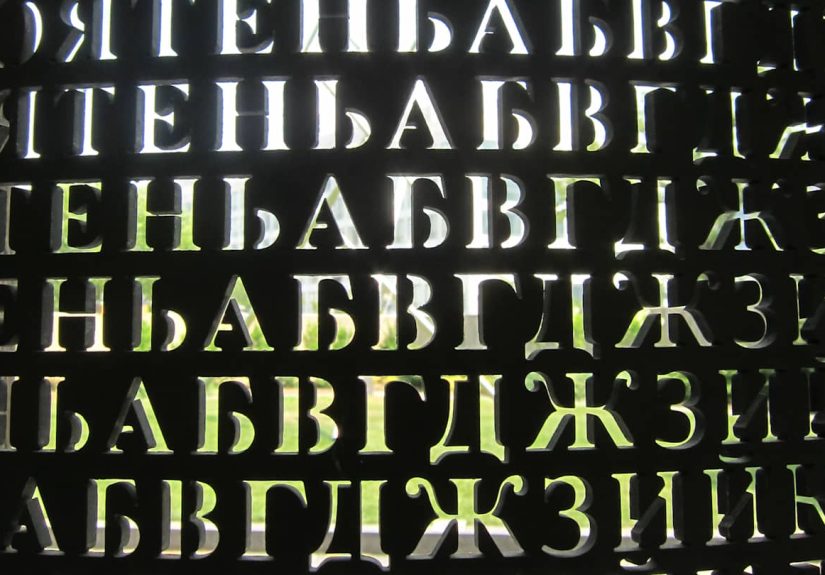
Kryptos is not a puzzle website, an app, or a scavenger hunt with merch. It is a physical sculpture on CIA grounds in Langley, Virginiaan S-shaped copper screen paired with other elementsdedicated in 1990. Its stated theme is intelligence gathering, which is either perfectly on-brand or the most understated joke in modern public art.
The sculpture contains four encrypted passages (K1, K2, K3, K4). Over time, K1–K3 were solved; K4 remains the one that keeps everyone up at night. The unresolved segment is 97 characters long, and short does not mean easy. If anything, it means less room for statistical comfort and more room for cryptographic pain.
Why experts still care
Kryptos sits at a rare crossroads:
- Art history: It is one of the most famous unsolved artworks in America.
- Cryptography: It blends classical systems, layered construction, and intentional misdirection.
- Culture: It has built a multi-decade community that behaves like a research lab and a fan club at once.
- Narrative power: Every near-solution adds another chapter without ending the book.
Most puzzles are solved and forgotten. Kryptos became a living system.
The “Reveal” Is RealBut It’s Not Public
The catch in plain English
Sanborn’s move was not “I’m publishing K4 tomorrow.” It was “I’m transferring the full knowledge package to a new holder.” That package includes decoding materials, process logic, and contextplus a private meeting structure around stewardship.
So yes, the answer exists in complete form beyond Sanborn. But no, the public does not automatically get it. The mystery can survive, only now with a successor.
Why this happened now
Several forces converged:
- Sanborn has openly discussed age, energy, and the practical burden of managing constant solution submissions.
- The volume of claims has intensified in the AI era, including many confidently wrong answers.
- A major auction framework created a legal and logistical path to transfer not just text, but method and intent.
In short: this was succession planning for a puzzle-kingdom.
What We Know About K4 Clues So Far
The famous “cribs”
Over the years, Sanborn released selective clues for K4 that became legendary in codebreaking circles:
- BERLIN (2010)
- CLOCK (2014)
- NORTHEAST (2020)
- EAST (later acknowledged as an accidental reveal)
Each clue triggered a wave of new theories. None produced a universally accepted decryption method for K4. That distinction matters: producing plausible plaintext is one thing; proving a robust method is another.
“Discovered” versus “deciphered”
In 2025, two researchers found plaintext-related material in archival papers, causing major headlines and immediate chaos. But multiple reports emphasized the key difference: finding text fragments is not the same as demonstrating the original decryption method. In serious cryptographic communities, method is everything.
That distinction essentially saved the mystery’s core. The story changed shape, but did not collapse.
Why the Method Matters More Than the Message
If you ask casual observers what they want, many say: “Just tell me what K4 says.”
If you ask hardcore solvers, they say: “Show me the path.”
The pathcipher structure, transformations, keying logic, and constraintsis the intellectual heart of Kryptos. Without method, plaintext can feel like trivia. With method, plaintext becomes proof.
That is why this whole episode is not merely about a sentence hidden in copper.
It is about epistemology: how do we know we know?
In an era where AI can generate persuasive nonsense at industrial scale, Kryptos suddenly looks less like an old puzzle and more like a philosophy seminar disguised as public art.
The New Twist: K5 and the Long Game
Kryptos may be bigger than K4
Reporting around the transfer and Sanborn’s public statements points to a “K5” elementan additional cryptographic extension tied conceptually to K4. In short, even if K4 becomes privately known, the larger riddle architecture may continue.
That reframes the drama. We are not watching a finale. We are watching a handoff in a serialized universe.
Why this is brilliant (and mildly diabolical)
From a design perspective, Kryptos has always worked because it balances closure and continuation:
- It gives enough clues to sustain hope.
- It withholds enough structure to preserve mystery.
- It encourages community while preventing consensus collapse.
It’s the opposite of disposable internet puzzles. Kryptos doesn’t trend and vanish; it recruits generations.
What This Means for SEO, Culture, and Curiosity
Why people keep searching “Kryptos solution”
Search behavior around Kryptos tends to spike whenever new clues, interviews, or auction developments appear. The core search intent remains stable:
- Is K4 solved?
- Who has the answer?
- Will the plaintext be released?
- What is the catch?
This is classic evergreen-plus-news behavior: a timeless puzzle with periodic jolts of fresh drama. It is exactly the kind of topic that performs well when content combines historical context, current updates, and clear explanation.
Why Kryptos still beats “instant answer culture”
The internet rewards speed, certainty, and hot takes. Kryptos rewards patience, rigor, and humility.
That friction is part of its staying power.
Also, it offers a useful life lesson for anyone doing knowledge work in 2026: confidence is not evidence.
Whether you are decoding ciphers, reading AI outputs, or interpreting headlines, method beats vibes.
Research Synthesis Base (U.S. Publications and Primary Sources)
This article synthesizes reporting and reference material from 10+ U.S.-based sources, including:
CIA, AP News, WIRED, The Washington Post, Scientific American, Smithsonian Magazine,
Popular Mechanics, RR Auction, and publicly posted document records tied to Sanborn’s statements.
No direct links are embedded in the article body so it remains clean for web publishing, but the analysis is grounded in verifiable reporting and official records.
Experience Section (): What Living With Kryptos Feels Like
Ask ten people in the Kryptos community what this puzzle feels like, and you’ll get ten variations of the same sentence: “I came for the code and stayed for the obsession.”
Not obsession in the movie-villain sensemore like a slow, intellectual weather system that moves into your life and quietly rearranges furniture.
First comes the honeymoon phase. You discover the story, read the clues, and think, “Okay, I’ve solved escape rooms. I make spreadsheets for fun. I can do this.” You print ciphertext. You annotate margins. You open too many tabs. Coffee consumption escalates. The puzzle stares back with the emotional energy of a locked safe and a raised eyebrow.
Then comes the pattern phase. You begin noticing things everywhere: directional language in ordinary books, strange clock references in old documentaries, odd letter groupings on street signs. Your friends think you’re joking when you mention Vigenère tables at dinner. You are not joking.
Somewhere around week three (or year threetime gets weird), you realize Kryptos is less a single puzzle and more a relationship with uncertainty. You propose theories, eliminate them, return with better assumptions, and repeat. If you are lucky, you learn to enjoy being wrong quickly. If you are very lucky, you learn to enjoy being wrong publicly.
The emotional rhythm is familiar to researchers, engineers, and artists:
tiny breakthroughs, long plateaus, and occasional beautiful failures.
One candidate decryption feels promising until it collapses under its own contradictions.
Another looks impossible until a single clue reframes everything.
You celebrate intermediate structure the way normal people celebrate touchdowns.
Community becomes the stabilizer. In forums and discussion groups, veterans challenge newcomers with equal parts rigor and kindness (plus occasional sharp elbows when evidence is thin). The strongest norm is simple: show your method. Not your confidence, not your chatbot transcript, not your dramatic all-caps announcementyour method.
That norm is why the 2025 “found plaintext” moment hit so hard. It was thrilling, alarming, and emotionally messy. Some people felt relief. Others felt grief, like a mountain had been lowered overnight. But as details emergedthat discovery is not the same as decryptionthe community’s center of gravity returned to first principles.
In that sense, Kryptos still functions exactly as intended. It stretches attention spans. It rewards disciplined imagination. It invites people into a shared pursuit where certainty must be earned, not declared. And maybe that is the deepest experience of all: not solving a puzzle, but becoming the kind of person who can keep investigating when the answer does not arrive on schedule.
If that sounds dramatic for a sheet of copper text in a secured courtyard, fair point. But anyone who has spent real time with Kryptos will tell you the same thing: it is not just a cipher. It is a long conversation between secrecy and curiosity, and neither side has won yet.
Conclusion
So, is Jim Sanborn ready to reveal the solution to Kryptos?
Yesthrough transfer, not mass disclosure.
And that is the catch that keeps the legend alive.
The mystery has moved, not ended.
K4 may now have a successor guardian, but the public challenge still breathes, and the argument over what counts as a true solutiontext, method, or bothhas only become more relevant in the AI age.
If Kryptos teaches one final lesson, it is this:
secrets are powerful, but process is power.
The world may eventually read K4.
The real prize, as always, is understanding how to get there.