Table of Contents >> Show >> Hide
- The Sitcom Trey Parker Couldn’t Stand Was Full House
- Why Full House Got Under His Skin
- The John Stamos Twist Makes the Story Better
- Why the Hatred Fits Trey Parker So Perfectly
- The Real Cultural Clash: Sentimentality vs. Satire
- Final Verdict
- A Longer Reflection on the Experience Behind This TV Divide
Some TV feuds are loud, messy, and played out in public like a food fight in a high school cafeteria. Others are much funnier. Trey Parker’s long-running disgust for one famously wholesome sitcom belongs in the second category. For all the cultural panic that South Park has caused over the years, one of Parker’s most memorable TV grudges was aimed not at a politician, celebrity cult, or sacred cow, but at one of America’s safest comfort watches.
The sitcom in question is Full House. Yes, that Full House: the endlessly sincere family hit with hugs, lessons, catchphrases, soft lighting, and enough emotional resolution to make a greeting card blush. According to commentary tied to South Park’s early years, Parker described it in spectacularly brutal fashion, and the insult was so sharp that it became part of South Park lore. In the world of Trey Parker comedy, this was not just a passing joke. It was a statement of taste, a small manifesto, and maybe the most Parker thing imaginable.
And honestly, once you look at what Full House represented versus what Parker and Matt Stone built with South Park, the hatred starts to make a weird amount of sense. One show wanted to tuck America into bed with a warm blanket. The other wanted to yank the blanket off, point at the hypocrisy, and then make a fart joke before the commercial break.
The Sitcom Trey Parker Couldn’t Stand Was Full House
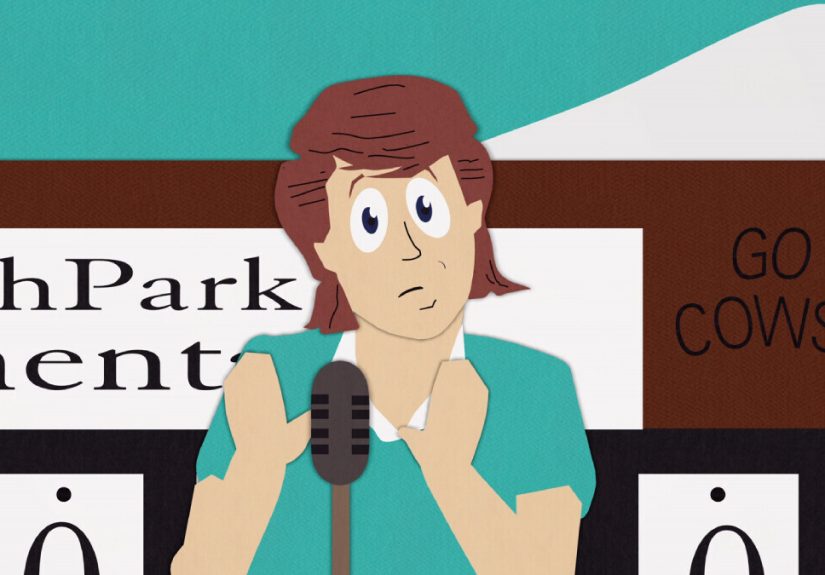
The connection between Parker and Full House is not random trivia pulled from a dusty fan forum. It traces back to South Park’s first season, specifically the episode “Big Gay Al’s Big Gay Boat Ride.” That episode introduced a one-off gag character named Richard Stamos, the fictional brother of John Stamos. The joke was aimed squarely at the actor most closely associated with Full House, and by extension, the sitcom’s polished, squeaky-clean image.
What makes the story deliciously petty is that Parker’s dislike was apparently less about John Stamos the person and more about what Stamos represented at the time: a poster boy for glossy, sentimental network sitcom television. The target was not just a handsome TV star. It was an entire entertainment style. Full House was the symbol; Parker brought the flamethrower.
That matters because Full House was no fringe oddity. It was a massive mainstream success. The series ran from 1987 to 1995, followed widowed dad Danny Tanner and his improvised household, and became one of those family shows that critics rolled their eyes at while audiences ate up by the spoonful. Critics often considered it corny or lightweight, but viewers loved the warmth, the repetition, the emotional clarity, and the fantasy that every domestic crisis could be solved in twenty-two minutes and a group hug.
To a lot of people, that formula felt comforting. To Trey Parker, it seems to have felt like televised wallpaper.
Why Full House Got Under His Skin
If you want to understand why Parker hated Full House, you have to understand what kind of comedy he and Matt Stone were trying to make. South Park, which premiered in 1997, did not arrive as polite family entertainment with a moral tucked neatly into the last scene. It arrived like a small profanity-powered meteor. Its humor was abrasive, fast, cynical, crude, topical, and often smarter than people wanted to admit. Even in its earliest stretch, the show was already built around poking at things television usually treats gently.
Full House, by contrast, was built on predictability. That predictability was not an accident. It was the product. Viewers knew what they were getting: a misunderstanding, a little chaos, a lesson, a hug, some swelling music, and a reset button. It was engineered comfort food. Parker’s work, on the other hand, thrives on discomfort. He likes jokes that sting, stories that turn sideways, and scenes that refuse to settle into a safe groove.
So when Parker blasted Full House, he was not just mocking a sitcom. He was rejecting a whole set of assumptions about what TV comedy should do. In a Full House-style universe, sitcoms smooth over conflict until everybody learns something wholesome. In Parker’s universe, conflict is the point, sentimentality is suspicious, and a clean lesson often deserves to be roasted like a marshmallow held too long over the fire.
It Was About TV Philosophy, Not Just One Show
That distinction is important. Parker and Stone have spent years making clear that they care deeply about how comedy is written. Their criticism of other shows has often come down to structure, effort, and the difference between story-driven humor and jokes that feel tossed into a blender. That broader philosophy helps explain why Full House would be especially irritating to Parker. To him, it likely represented comedy with the edges filed off, a sitcom machine so devoted to being agreeable that it became artistically annoying.
And that is where the grudge gets funnier. Parker did not reserve his contempt for shows that were edgy, provocative, or trying to be his competition. He seemed just as willing to go after a beloved family sitcom that many viewers saw as harmless. In fact, the harmlessness may have been part of the problem. There is nothing that makes a satirist itch quite like a cultural institution that acts as if its own formula is above ridicule.
The John Stamos Twist Makes the Story Better
Here is the twist that keeps the whole thing from sounding mean-spirited for its own sake: Parker and Stone later softened on John Stamos himself. They eventually said that when they got to know him, he turned out to be a genuinely nice guy. That is almost funnier than the original insult. Imagine hating a sitcom so much that you create a parody sibling for one of its stars, only to later admit, “Actually, he’s cool.”
That split says a lot. Parker’s real enemy was not Stamos the person. It was the aura. The vibe. The soft-focus TV universe in which every emotional beat is telegraphed from a mile away, everybody learns a tidy lesson, and sincerity is treated like a miracle cure. In other words, Parker hated the television packaging more than the human being inside it.
Ironically, Stamos himself has spoken over the years about having a complicated relationship with Full House. He did not always embrace the role of Uncle Jesse as eagerly as fans did, and only later came to fully appreciate the show’s legacy. That makes Parker’s old distaste feel a little less like a one-man vendetta and a little more like a hyperbolic version of a tension that already existed around the show: even people inside the machine knew it could be awfully sugary.
Why the Hatred Fits Trey Parker So Perfectly
Parker’s disgust for Full House tracks perfectly with the larger comedy brand he and Stone have built over decades. Their work usually treats polish with suspicion. They are more interested in exposing how culture works than in flattering the audience. They love pop culture, but they rarely trust it. They can admire craft while still demolishing the final product if it feels lazy, manipulative, or emotionally fake.
That helps explain why Parker has also been vocal about other forms of comedy he considers too gaggy or too easy. His issue is not simply that a show is popular. It is that popularity can sometimes reward formulas he dislikes. Full House was massively successful despite being widely regarded by critics as syrupy and simplistic. To Parker, that kind of success probably looked like proof that television often confuses comfort with quality.
And if you put that next to South Park, the contrast becomes almost cartoonishly perfect. Full House told America, “Everything will be okay.” South Park said, “Everything is ridiculous, and also maybe not okay, and we’re going to laugh at that until the censors faint.” One show cleaned up the mess. The other rolled around in it and wrote a song.
The Real Cultural Clash: Sentimentality vs. Satire
At a bigger level, Parker’s hatred for Full House reflects a real cultural shift in television comedy. Full House belonged to an era where sitcoms often worked as family rituals. They reinforced stability. Even when they dipped into serious themes, they did so carefully and reassuringly. The point was not to blow up the viewer’s assumptions. The point was to make the viewer feel restored.
By the time South Park arrived, there was a growing appetite for comedy that did the opposite. Audiences were increasingly interested in satire that punctured authority, mocked media language, and treated reverence itself as suspicious. Parker and Stone did not create that shift on their own, but they became two of its loudest, crudest, and most influential champions.
So when Parker singled out Full House, he was also symbolically rejecting the previous TV order. It was a generational shrug turned into a flamethrower. The old model said sitcoms should soothe. Parker’s model said comedy should unsettle. The old model valued niceness. Parker valued nerve.
And Yet, Full House Kept Winning
Of course, the funniest part is that Parker’s contempt did absolutely nothing to erase Full House from pop culture. The show remained beloved in reruns, lived on in nostalgia, and later returned through Fuller House. Uncle Jesse did not vanish into the mist. He came back with great hair and an even stronger nostalgia halo.
That endurance makes the story richer, not weaker. It means Parker was not punching down at some forgotten sitcom nobody remembers. He was lashing out at a show that kept surviving because it gave audiences something they clearly wanted. In that sense, his hatred becomes part of the larger conversation about what comedy is for. Is it supposed to comfort, challenge, or both? Is a “good” sitcom the one that makes you laugh hardest, or the one that makes you feel safest?
Parker’s answer has always been obvious. He would rather make you squirm than tuck you in.
Final Verdict
So yes, the sitcom Trey Parker appears to hate more than anything is Full House. Not because it failed, but because it succeeded so completely at being exactly the kind of television he rejects. It was neat where he was jagged, wholesome where he was corrosive, sentimental where he was skeptical, and reassuring where he preferred chaos.
But the story is not really about one old sitcom. It is about two radically different ideas of comedy staring each other down across the decades. One says television should smooth life over. The other says life is a mess, and pretending otherwise is the joke. Parker picked his side a long time ago.
And somewhere in TV heaven, Danny Tanner is probably still wiping down the kitchen counters while Eric Cartman screams from the driveway.
A Longer Reflection on the Experience Behind This TV Divide
There is also a more human reason this whole story keeps sticking around. A lot of viewers have lived both sides of this argument without even realizing it. They grew up with comforting sitcoms on one channel and sharper, more confrontational comedy on another. Maybe they watched something warm and family-friendly with parents or siblings, then later discovered comedy that felt riskier, meaner, or more honest. That shift can feel like growing up in public. One kind of television tells you the world can be cleaned up. The other tells you the mess was the point all along.
That is why Parker’s hatred for Full House lands as more than a celebrity insult. It taps into a viewing experience a lot of people recognize. Plenty of us have had that moment where a show we once found sweet suddenly feels too polished, too obvious, or too determined to teach us what to feel. Then, years later, we circle back and see why people loved it in the first place. We may not want to live inside that tone anymore, but we understand the comfort it offered.
Full House gave viewers a fantasy of emotional order. The adults were goofy but dependable. The kids were cute but redeemable. Every disaster came with a repair kit. For families, that sort of storytelling can feel less like art criticism bait and more like a kind of emotional furniture. It is there, it is familiar, and it makes the room feel livable. That matters. Even the most sarcastic TV snob usually has at least one comfort show that logic alone cannot explain.
Parker, though, comes from the opposite emotional instinct. His comedy does not trust furniture. He wants to know what is under the carpet, behind the wall, and inside the smiling TV formula. That instinct can produce brilliant satire, but it also explains why something as earnest as Full House would drive him up the wall. To a creator wired like Parker, hyper-managed niceness can feel less innocent than artificial. It is not just wholesome. It is suspiciously wholesome.
And maybe that is the real experience at the heart of this story: the tug-of-war between comfort and honesty. Some viewers want television that reassures them. Others want television that tells them they are not crazy for noticing the absurdity. Most of us, if we are being honest, want both depending on the day. On Tuesday night, maybe we want hugs and a lesson. On Wednesday night, maybe we want a cartoon to kick the lesson down the stairs and ask why it was there in the first place.
That is why the Trey Parker versus Full House story still works. It is funny, yes, but it also captures a real split in American pop culture. We do not just choose shows. We choose what kind of emotional contract we want with them. Full House offered safety. South Park offered a verbal flamethrower. The fact that both became iconic says something revealing about viewers: we like comfort, but we also like watching comfort get roasted.
In the end, Parker’s disgust and Full House’s durability can both be true at once. He could hate it with theatrical intensity, and millions could still adore it. That contradiction is not a flaw in television history. It is television history.