Table of Contents >> Show >> Hide
- What Makes the Vola Built-In Towel Warmer Different?
- Why Stainless Steel Still Wins in a Bathroom
- How It Performs in Everyday Use
- Installation, Planning, and the Things Smart Buyers Think About Early
- Is It Worth It?
- Who Should Buy the Vola Stainless Steel Built-In Heated Towel Warmer?
- Real-Life Experiences With a Vola Stainless Steel Built-In Heated Towel Warmer
- Final Thoughts
Some bathroom upgrades whisper. Others politely clear their throat, straighten their collar, and announce, “Yes, this house has standards.” The Vola stainless steel built-in heated towel warmer belongs firmly in the second camp. It is not the loud, ladder-style towel rack that dominates a wall like it is auditioning for a hotel lobby. Instead, Vola’s approach is far more architectural: slim heated bars, built into the wall, arranged to suit the room, and finished with the kind of understated confidence that Scandinavian design has been showing off for decades.
If you are shopping for a heated towel warmer because you want spa vibes, cleaner-looking tile lines, and a bathroom that feels more intentional than accidental, this model deserves attention. It is especially interesting for people who love minimalist bathrooms but still want real functionality. Warm towels are nice. Dry towels are practical. A built-in system that looks like it was always supposed to be there? That is where luxury starts acting useful.
What Makes the Vola Built-In Towel Warmer Different?
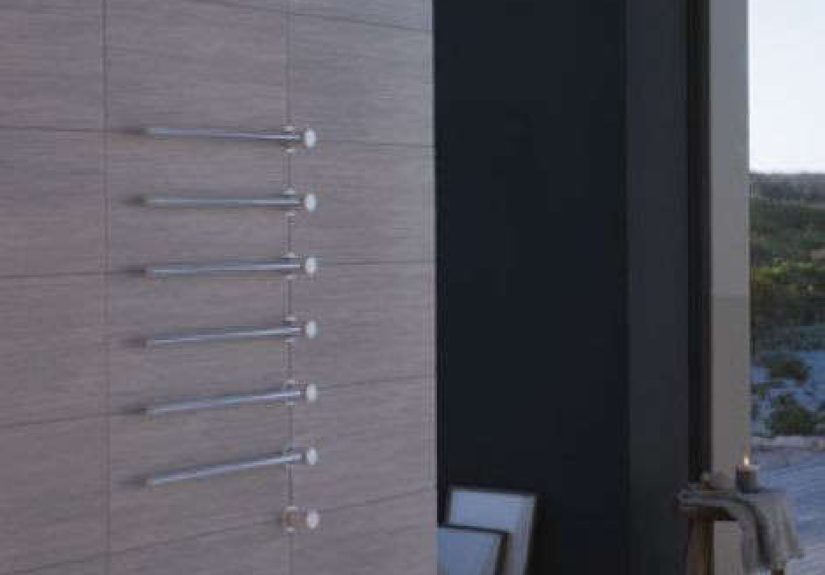
The defining feature of the Vola built-in heated towel warmer is not just that it warms towels. Plenty of products do that. The real difference is how the system is designed. Vola’s towel warmer uses a modular arrangement of bars that can be positioned to suit the customer’s layout, tile pattern, and wall composition. That means it behaves less like a standard off-the-shelf bathroom accessory and more like a design component.
This matters in real life. In many bathrooms, a conventional towel warmer forces the room to adapt to it. The Vola concept flips that relationship. The bars can be configured with different spacing and overall height, so the layout can work with your wall rather than bully it. For homeowners and designers chasing a clean, built-in look, that flexibility is a major selling point. You are not simply adding a warm place to hang a towel; you are integrating function into the architecture of the room.
The electric U.S. version is also impressively specific in its performance details. Vola’s published information for the 120V T39ELUS describes stepless temperature regulation from 68°F to 122°F, separate handles for on/off and temperature control, a self-closing timer that returns the unit from full power after two hours, and power consumption of 10 watts per bar. In plain English, that means you are getting a system that is meant to feel refined, not fussy. No mystery buttons. No futuristic user interface that requires a PhD in blinking lights. Just a clean, tactile control concept that matches the brand’s design language.
Why Stainless Steel Still Wins in a Bathroom
Stainless steel remains one of the smartest choices for a heated towel warmer, especially in a humid bathroom. It has the durability people expect, but it also carries a visual neutrality that works in modern, transitional, and even more classic interiors. In a Vola context, stainless steel looks particularly right, because the company’s entire design vocabulary leans toward precision, restraint, and long-term relevance rather than trend-chasing.
A stainless steel built-in towel warmer also tends to age gracefully. The finish plays well with stone, large format tile, glass partitions, and muted palettes. It feels premium without becoming showy. In a world where some bathroom fixtures seem determined to become the room’s main character, stainless steel is refreshingly good at collaboration.
That is part of the broader appeal of Vola as a brand. Its design heritage goes back to the wall-mounted minimalism associated with Arne Jacobsen and the company’s original built-in fixture philosophy. Even though the T39 towel warmer itself was designed later, it fits naturally into that tradition. The result is a towel warmer that feels less like an appliance and more like a continuation of the room’s design logic.
How It Performs in Everyday Use
Let us address the cozy elephant in the room: yes, the point is warm towels, and yes, that still feels great every single time. But the daily value of a heated towel warmer goes beyond that first post-shower moment. Electric towel warmers are often appreciated because they help dry towels between uses, which can cut down on the musty smell that shows up when damp fabric lingers in a humid bathroom. That drying function is the quiet hero of the category.
In practical terms, the Vola built-in format is best for people who want warm towels as part of a larger bathroom experience rather than as a stand-alone gadget. It is ideal in primary baths, upscale guest baths, boutique-hotel-style remodels, and custom homes where visual clutter is the enemy. It can also be a smart choice in smaller bathrooms, because the built-in approach preserves visual breathing room. A bulky ladder rack can make a small bath feel busy. Slim bars embedded into the wall do not.
It is also worth setting expectations properly. A towel warmer is a comfort product first and a room-heating product second. Some models can add a touch of supplemental warmth, but no one should expect one to replace a dedicated bathroom heating strategy. Think “pleasant assist,” not “Arctic survival base camp.”
What you do get is a better daily rhythm. Towels dry more efficiently. Robes feel inviting. Swimwear, delicates, or a hand-washed item can benefit from gentle warmth. And the whole bathroom routine starts to feel less rushed and more composed, which is a fancy way of saying mornings become slightly less annoying.
Installation, Planning, and the Things Smart Buyers Think About Early
The Vola built-in heated towel warmer is not a last-minute add-on. It is a planning product. That is not a drawback; it is part of the reason it looks so good when it is done right. Because the system is built into the wall, it rewards early coordination with your designer, builder, tile installer, and electrician. This is the kind of fixture that likes a plan and punishes improvisation.
For the electric version, qualified electrical installation is part of the equation. That makes sense. Clean built-in results usually come from doing hidden work properly, not from trying to wing it on a Sunday afternoon while watching tutorials with a drill in one hand and false confidence in the other.
Placement matters too. You want the warmer close enough to the shower or tub to feel convenient, but not jammed into a layout where hanging and removing towels becomes awkward. Since Vola’s system allows different bar quantities and spacing, buyers should think beyond simple symmetry. Consider who will use it, how large the towels are, whether robes will hang there, and how the bars line up with grout joints or slab seams. That is where the built-in concept goes from “nice product” to “beautiful solution.”
Another consideration is connection philosophy. Many electric towel warmers on the U.S. market are available in plug-in, hardwired, or dual-connect styles. Vola’s built-in model is for buyers who want the most integrated, least visible result. In other words, if you hate seeing cords and love the phrase “concealed technical units,” you are in the right neighborhood.
Is It Worth It?
For the right buyer, absolutely. But this is not a value-engineered impulse purchase. The Vola stainless steel built-in heated towel warmer appeals to people who care about design continuity, finish quality, and the difference between “installed” and “integrated.” If your bathroom goals are purely utilitarian, there are cheaper towel warmers that will warm fabric just fine. Vola enters the conversation when aesthetics and architecture matter as much as heat.
It is especially worth considering when you are already remodeling. During a renovation, opening the wall and coordinating finishes are part of the normal workflow, so that is the moment when a built-in towel warmer makes the most sense. Retrofitting one later can still be done, but the best results come when the warmer is treated as part of the original bathroom composition.
The design credentials help, too. The T39 concept has been recognized with a GOOD DESIGN Award, and that feels believable the moment you understand the product. This is not decorative excess dressed up as luxury. It is a disciplined solution to a familiar problem: how do you add warmth, convenience, and elegance without cluttering the wall? Vola’s answer is simple: hide the technical guts, let the bars do the work, and make the whole thing look inevitable.
Who Should Buy the Vola Stainless Steel Built-In Heated Towel Warmer?
Best for design-first remodels
If you are renovating a primary bathroom and already investing in built-in mixers, premium tile, stone surfaces, or custom millwork, this warmer makes perfect sense. It belongs in projects where the details are expected to behave.
Best for minimalist bathrooms
Homeowners who dislike bulky hardware will appreciate how little visual noise this system creates. It gives you the benefit of a heated towel rack without the “I rented this from a spa supplier” look.
Best for luxury everyday use
People who shower daily, use larger bath sheets, or want towels to dry better between uses will notice the benefit quickly. This is one of those upgrades that seems indulgent until you live with it, and then suddenly a cold damp towel feels like a personal insult.
Less ideal for casual retrofits
If you want something portable, plug-and-play, or budget-oriented, this is not that product. Vola’s built-in system is about permanence, coordination, and finish quality, not convenience-store instant gratification.
Real-Life Experiences With a Vola Stainless Steel Built-In Heated Towel Warmer
Living with a built-in heated towel warmer is different from admiring one in a showroom. In a showroom, it looks sculptural and clever. At home, it starts to change small habits in ways that are easy to underestimate. The first shift is timing. You stop thinking of towels as things that happen to be in the bathroom and start treating them as part of the bathing ritual. That sounds dramatic, but so does putting warm croissants in a basket, and nobody complains about that.
In the morning, the experience is subtle but persuasive. The bathroom is quiet, the shower ends, and the towel waiting on the warmer feels dry, soft, and intentional. Not overheated. Not aggressively crispy. Just warm enough to feel like the room has good manners. In colder months, that small comfort punches far above its weight. It can make an early routine feel less mechanical and more civilized.
Households also notice the hygiene difference. Towels that dry more thoroughly between uses tend to smell fresher, and that means fewer moments of grabbing a towel and realizing it has somehow developed the emotional aura of a forgotten gym bag. Families who rotate multiple towels often appreciate the way the bars encourage better airflow and cleaner storage. The towel warmer starts earning its keep not just as a luxury object but as a quiet maintenance tool.
Guests notice it too, though often in a funny way. Some people immediately understand what it is and become deeply impressed. Others stare at it for a few seconds as if it might be modern art with responsibilities. Then they use it once and become instant believers. That is one of the pleasures of a built-in Vola system: it does not scream for attention, but it rewards curiosity.
There is also an emotional side to the design. A conventional towel warmer can feel like an add-on. The Vola built-in approach feels native to the room, which makes the whole bathroom seem more resolved. When the bars align nicely with the tile layout, the effect is especially satisfying. Designers love that because it shows discipline. Homeowners love it because the room simply looks expensive in that calm, unbothered way that real luxury usually does.
Another common experience is discovering that the warmer ends up doing more than expected. Robes live there. Swimwear dries there. A child’s damp hoodie mysteriously appears there. Hand-washed pieces visit the bars for a quick dry. The product becomes one of those household features that quietly expands its job description because it is useful and easy.
Of course, expectations matter. A towel warmer does not create instant oven-hot towels, and it is not meant to turn the bathroom into a sauna. Owners who are happiest with them usually understand that the luxury is in the consistency: dry towels, gentle warmth, less dampness, less clutter, and a routine that feels better organized. It is not theatrical luxury. It is lived-in luxury.
Over time, that may be the best argument for the Vola stainless steel built-in heated towel warmer. It does not rely on novelty. The appeal deepens with repetition. A year later, it still feels good. Five years later, it still looks right. And because the design is so restrained, it is unlikely to age into one of those “What were we thinking?” remodel decisions. In the world of bathroom upgrades, that kind of staying power is about as sexy as responsibility gets.
Final Thoughts
The Vola stainless steel built-in heated towel warmer is a smart match for buyers who want more than warmth. They want integration, flexibility, and a bathroom that feels carefully composed. Its modular built-in concept, hidden technical components, and refined control system help it stand apart from standard towel racks, while stainless steel keeps the look timeless and practical.
In the end, this is a product for people who understand that comfort and design do not need to compete. A warm towel is lovely. A warm towel delivered by a beautifully resolved built-in system is even better. That is the Vola difference: less clutter, more intention, and one very persuasive excuse to linger in the bathroom just a little longer.